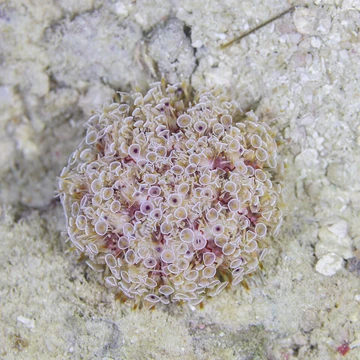
Spatangoida
Heart urchins are bilaterally symmetrical sea urchins with a distinct heart shape.

The order Spatangoida contains the sea urchins known as heart urchins. Their bodies are shaped like elongated ovals, and they are set apart by having the mouth at one end and the anus at the other. This arrangement gives them bilateral symmetry and a clear front side, unlike most other sea urchins. The placement of the mouth and anus is what creates the characteristic heart-like outline that inspired their common name. Heart urchins lack a feeding lantern, and their petaloids are often set into grooves. This order is fairly diverse, containing many different species.
Quick Facts
- Taxon
- Spatangoida
Facts from the source article.
Lore & Background
The heart urchins are members of the order Spatangoida of sea urchins. Their body are somewhat elongated ovals in form, and are distinguished by the mouth being placed towards one end of the animal, and the anus towards the other. As a result, unlike most other sea urchins, heart urchins are bilaterally symmetrical, and have a distinct anterior surface. The presence and position of the mouth and anus typically give members of this group the distinct 'heart' shape from which they get their common name. Heart urchins have no feeding lantern, and often have petaloids sunk into grooves. They are a relatively diverse order, with a number of varying species.
Reader's Guide
The order Spatangoida, commonly known as heart urchins, is notable for its bilateral symmetry, a departure from the typical radial symmetry of most sea urchins. This symmetry arises from the placement of the mouth at one end of the elongated oval body and the anus at the opposite end, which also gives them their characteristic heart shape. The absence of a feeding lantern and the presence of petaloids sunk into grooves are additional distinguishing features. The order is relatively diverse, encompassing a number of varying species. The taxonomy of Spatangoida, as recorded by the World Register of Marine Species, includes three suborders: Brissidina, Micrasterina, and Paleopneustina, each containing multiple families, some of which are extinct. This classification reflects the order's evolutionary history and morphological variation. The entry references works by Barnes (1982) and the National History Museum, providing a foundation for understanding these echinoderms.
Frequently Asked Questions
What is Spatangoida?
Spatangoida is an order of sea urchins commonly called heart urchins, recognized for their elongated oval bodies and a clear front-to-back body plan. They place the mouth at one pole and the anus at the opposite pole, a layout that gives them bilateral symmetry unlike most other urchin orders.
Why are Spatangoida called heart urchins?
The name comes from the distinctive heart-like silhouette their body produces. That outline is a direct consequence of having the mouth at one end and the anus at the other, which pulls the overall shape into the recognizable form.
How does Spatangoida's symmetry differ from other sea urchins?
Whereas most sea urchins display radial symmetry, Spatangoida members are bilaterally symmetrical with a clearly defined front side. This is made possible by the mouth-and-anus arrangement at opposite ends of their elongated oval body.
Do heart urchins have a feeding lantern?
No, Spatangoida species lack the feeding lantern structure found in many other urchin orders. Instead, their petaloids are typically set into grooves in the body wall, another structural trait that sets them apart from their relatives.
How diverse is the order Spatangoida?
Spatangoida is a fairly diverse order encompassing a number of different species. Despite sharing the heart-shaped body plan and bilateral symmetry, the various species show a range of forms and adaptations within the group.
More in Sea Urchins, Part 2 1-24
Spotted an error? Know more?
Reader corrections go straight into our review queue. Suggest an edit · How this site is sourced