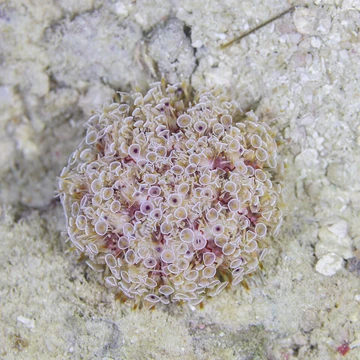
Psammechinus miliaris
A shallow-water sea urchin with depth-dependent coloration.

Naturalis Biodiversity Center · CC0
Psammechinus miliaris is a species of sea urchin in the family Parechinidae, sometimes known as the green sea urchin or shore sea urchin. It is notable for its occurrence in shallow areas of the eastern Atlantic Ocean and the North Sea, and for its variable coloration depending on depth.
Quick Facts
- Genus
- Psammechinus
- Species
- miliaris
Facts from the source article.
Lore & Background
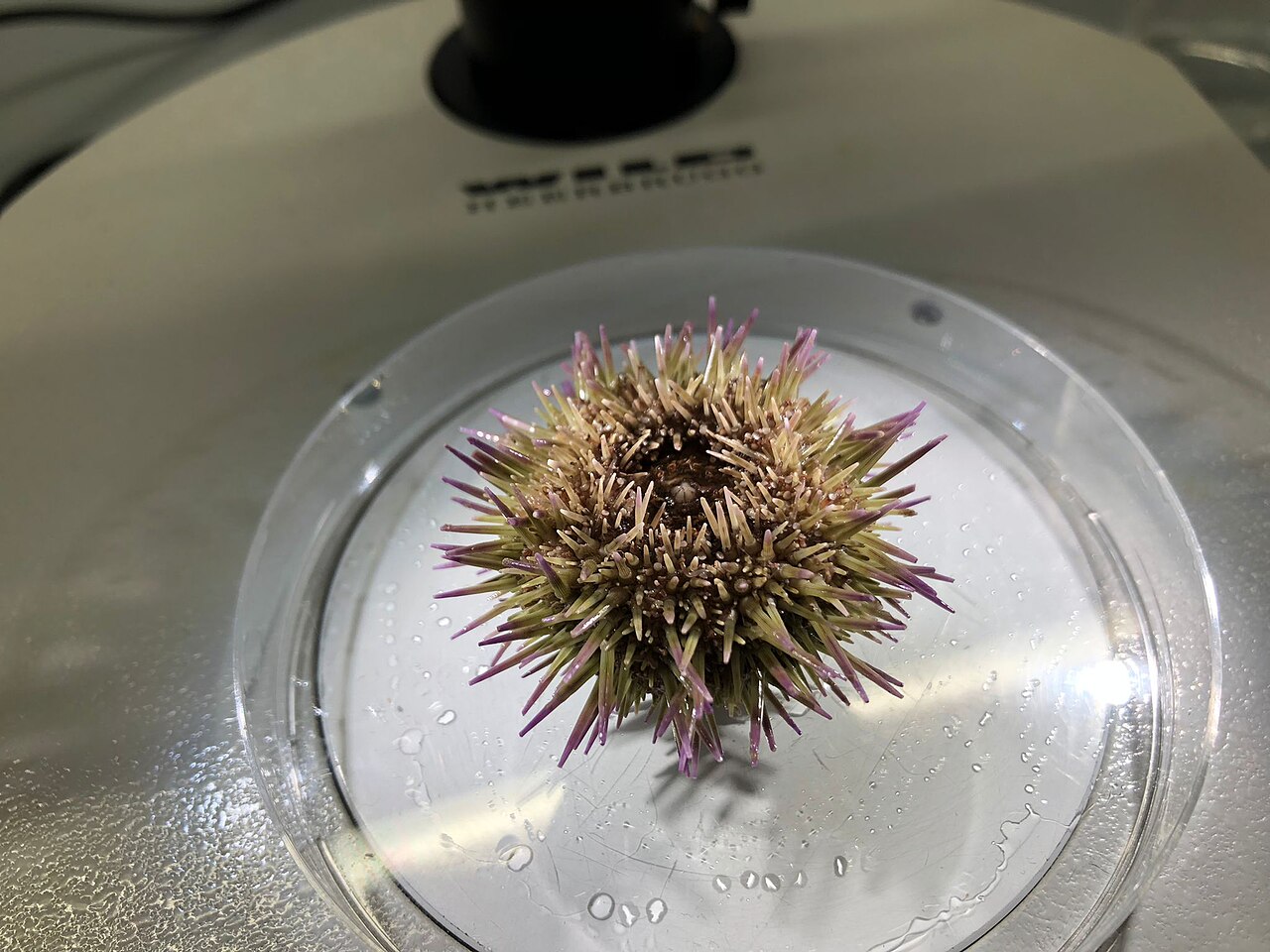
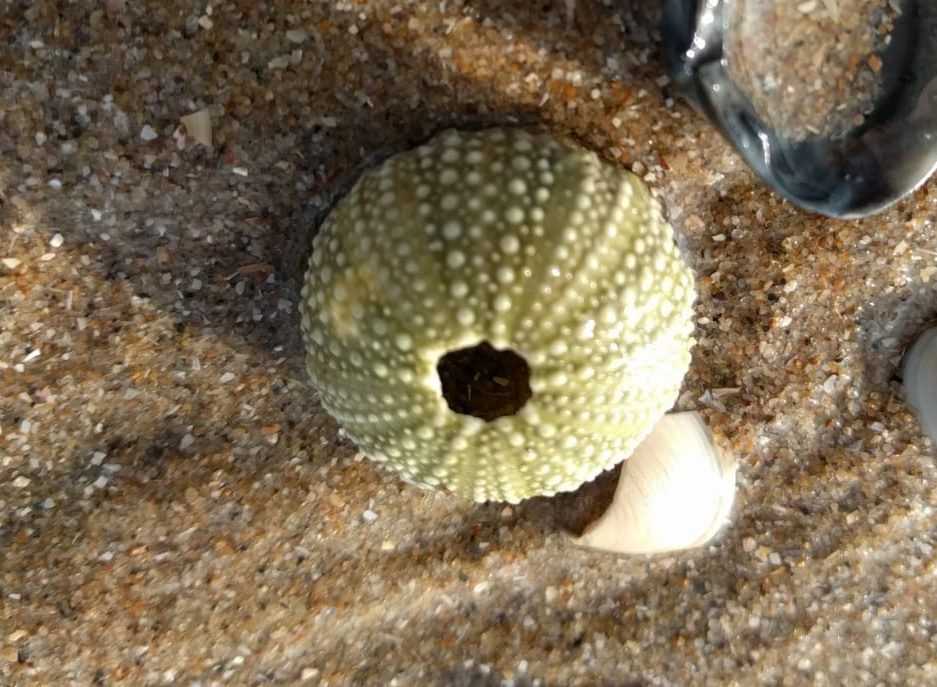
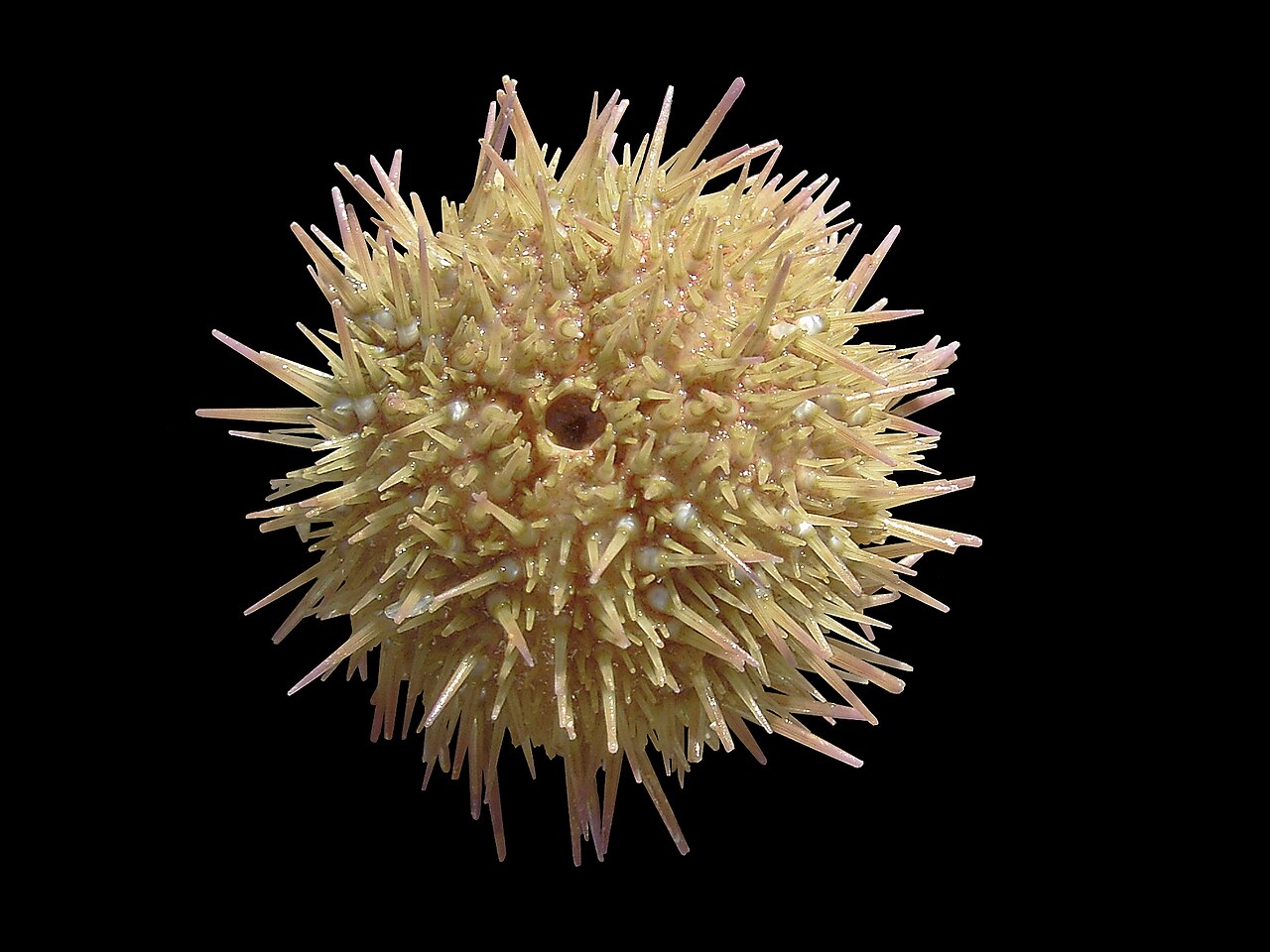
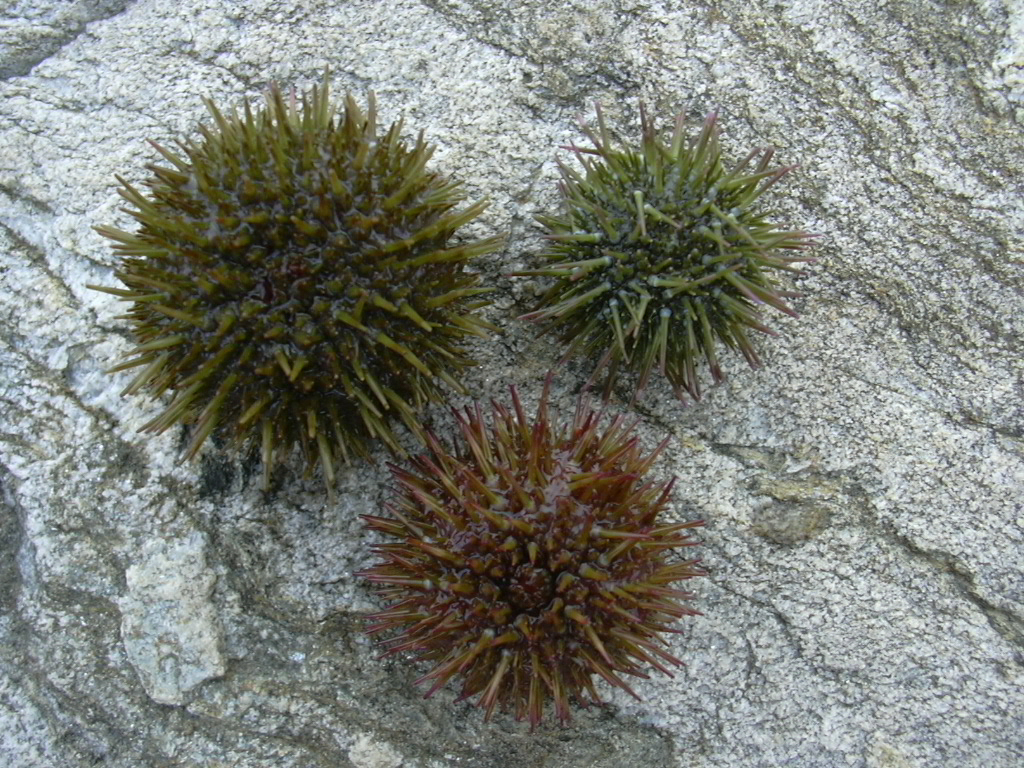
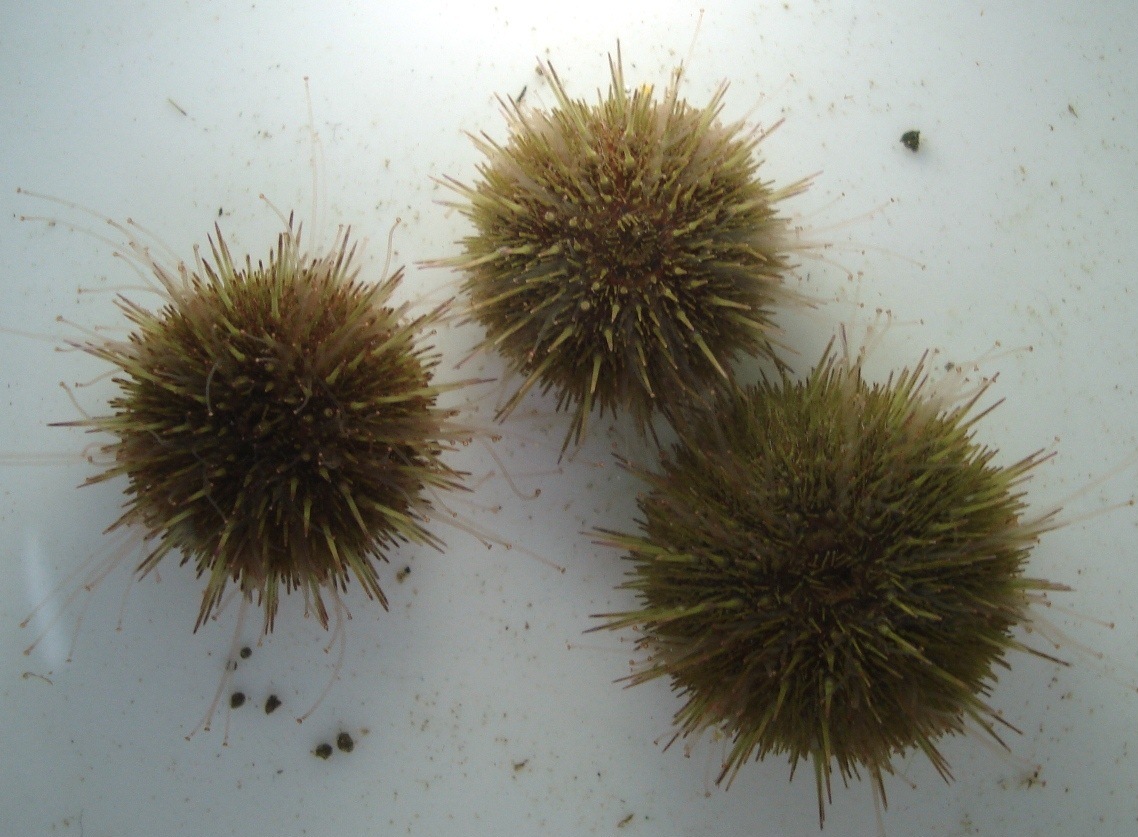
Psammechinus miliaris has a globular test, somewhat flattened dorso-ventrally, covered in short, robust spines of equal length. Shallow water specimens have purplish-brown tests and spines, while deeper water specimens have greenish tests and pale spines with purple tips. Individuals retain their original coloration if moved to a different depth. On each ambulacral plate there are three pairs of tubercles, each with a spine, the central one being a primary spine. The ventral orifices are relatively small, and the buccal membrane is packed with thick plates bearing many pedicellariae but no spines. Globiferous pedicellariae are numerous but small; tridentate pedicellariae are stout with broad blades.
It occurs from Scandinavia south to Morocco, but not in the Mediterranean Sea, and is particularly common in the North Sea. It is mostly littoral but can be found down to 100 meters. It is often found on or under the brown seaweed Saccharina latissima, as well as under boulders, among seaweed, on oyster banks, in gravelly burrows, and on the rhizomes of Zostera marina in seagrass meadows. Larvae often settle on man-made structures near aquaculture facilities.
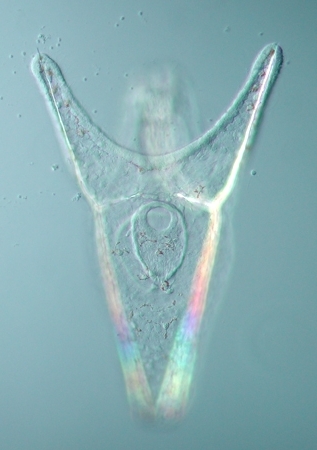
Psammechinus miliaris is an omnivore, feeding on marine worms, hydroids, small crustaceans, molluscs, diatoms, macroalgae, and detritus. It eats both fresh and rotting kelp, though fresh kelp is harder to digest. It effectively removes fouling organisms from salmon cages and oyster trays. Spawning occurs in spring and early summer; females release a single batch of 80,000 to 2,500,000 eggs. The echinopluteus larvae are planktonic for one to two months before settling and metamorphosing. In suitable habitats, densities can reach 352 per square meter in littoral areas. Their grazing significantly affects benthic ecology; experimental removal leads to increases in the tube worm Pomatoceros and ephemeral algae. An individual can eat 8 to 12 barnacles or 6 mussels per day.
Reader's Guide
Psammechinus miliaris is significant as a common and ecologically influential species in shallow eastern Atlantic and North Sea habitats. Its grazing and predation substantially shape benthic communities; experimental removal of this urchin led to increases in the tube worm Pomatoceros and ephemeral algal species, demonstrating its role as a keystone grazer. The species is also notable for its depth-correlated coloration, which is fixed and does not change upon relocation. Its ability to remove fouling organisms from salmon cages and oyster trays highlights its potential for biocontrol in aquaculture settings. The gonads are sometimes eaten, particularly in Mediterranean cuisine, though wild specimens yield small gonads; larger gonads occur in individuals fed prepared salmon food, prompting investigation into aquaculture. The species' high densities—up to 352 per square meter in littoral zones and 182 per square meter in seagrass meadows—underscore its local abundance and ecological impact. Its larvae often settle on man-made structures near aquaculture facilities, indicating a close association with human activity. The urchin's diet includes a wide range of prey, from marine worms to macroalgae, and it can consume 8 to 12 barnacles or 6 mussels daily, further emphasizing its role in controlling sessile organisms. Overall, Psammechinus miliaris serves as a model for understanding depth-related phenotypic variation, benthic community dynamics, and potential applications in sustainable aquaculture.
Did You Know?
- Psammechinus miliaris can reach a diameter of 5.75 cm (2.26 in).
- Shallow water specimens have purplish-brown tests, while deeper water specimens have greenish tests with pale spines tipped in purple.
- An individual urchin can eat 8 to 12 barnacles or 6 mussels in a day.
Physical Form and Colour
The green sea urchin, also called the shore sea urchin, is a compact creature whose body plan is defined by a rounded, slightly compressed shell known as the test. This test can grow to roughly five centimetres across, and its surface is studded with short, uniformly sized, sturdy spines that give the animal a bristly appearance. One of the most striking features of this species is its depth-dependent colouration: individuals living in shallow, sunlit waters display a purplish-brown hue across both the test and the spines, while those inhabiting deeper zones develop a greenish shell paired with pale spines tipped in purple. Remarkably, if a specimen is relocated from one depth to another, it keeps the colour scheme it had at its original site rather than adapting to the new environment. Structurally, each ambulacral plate bears three pairs of tubercles, each supporting a spine, with the central one designated as the primary. The underside is a dense assembly of thick plates and numerous pedicellariae—small globiferous types in abundance alongside stout tridentate forms with wide blades—but notably lacks spines entirely.
Range and Habitat
Native to the eastern Atlantic, this urchin stretches from the cold coastal waters of Scandinavia all the way south to the shores of Morocco, yet it is conspicuously absent from the Mediterranean basin. The North Sea stands out as a region where the species is especially abundant. As a predominantly littoral animal, it thrives from the low-tide mark down to depths of around one hundred metres, though it is most frequently encountered in the shallower zones. Its preferred microhabitats are remarkably varied: it clings to or hides beneath the broad fronds of Saccharina latissima, a large brown kelp that shares its geographic range; it shelters under boulders and rocky outcrops; it forages among dense seaweed beds; it colonises rough substrates such as oyster banks; it digs into gravelly sediments; and it traverses the rhizomes of Zostera marina in seagrass meadows. An interesting modern twist is that the free-swimming larvae frequently settle onto artificial structures—particularly ropes—found near aquaculture operations, suggesting a growing interaction between this wild species and human marine infrastructure.
Feeding and Ecological Role
Far from being a simple grazer, this urchin is a true omnivore with a remarkably broad diet that spans marine worms, hydroids, tiny crustaceans, molluscs, diatoms, macroalgae, and even detritus. It will consume both fresh and decomposing kelp, though the fresh material proves harder to break down and lingers in the gut for a longer period. In practical terms, this voracious appetite makes the species a natural cleaner: it efficiently strips fouling organisms from salmon cages and oyster trays. Where conditions allow, populations can become extraordinarily dense—recordings include 182 individuals per square metre in a shallow seagrass meadow off western Scotland, and up to 352 per square metre in other littoral settings. Their collective grazing and predation exert a powerful influence on benthic community structure. Experimental removal studies confirm this: when urchins are taken out of an area, encrusting communities shift dramatically, with tube worms like Pomatoceros and short-lived algal species flourishing in their absence. A single urchin can dispatch eight to twelve barnacles or six mussels in just one day, underscoring how even one individual can shape its local environment.
Reproduction and Early Life
Reproduction in this species is a brief, seasonal event confined to spring and early summer. A single female releases one batch of eggs—ranging from eighty thousand to as many as two and a half million—directly into the surrounding water, where fertilisation takes place externally. The resulting echinopluteus larvae join the zooplankton for a period of one to two months, drifting with currents before they are ready to descend. Once they settle onto the sea floor, metamorphosis transforms them into recognisable juvenile urchins. This planktonic phase has a practical consequence: the larvae are frequently found settling on man-made structures such as ropes near aquaculture facilities, a behaviour that links the species' natural life cycle to the growing footprint of human marine industry. The sheer volume of eggs released in a single spawning event, combined with the relatively short planktonic window, suggests a strategy of producing enormous numbers to ensure that at least a fraction survive the uncertain journey from open water to a suitable substrate on the seabed.
Gallery
Frequently Asked Questions
Who is Psammechinus miliaris?
Psammechinus miliaris is a small sea urchin in the family Parechinidae, often nicknamed the green or shore sea urchin. It tops out at roughly 5.75 cm in diameter and calls the eastern Atlantic and the North Sea home.
What are Psammechinus miliaris's powers or role?
This species is a reproductive powerhouse, dumping between 80,000 and 2.5 million eggs in a single spawning event. In the littoral zone it can crowd in at up to 352 individuals per square metre, making it a major grazer on coastal algal communities.
Why is Psammechinus miliaris important?
As one of the dominant urchins along North Sea and eastern Atlantic shorelines, it helps regulate algal cover in both intertidal and subtidal habitats. Its enormous egg output and dense littoral populations make it a keystone grazer in those coastal food webs.
Where can fans spot Psammechinus miliaris in the wild?
Look for it anywhere from the low-tide mark down to about 100 metres across the eastern Atlantic and the North Sea. Its coloration actually shifts with depth, so a specimen hauled up from deeper water will look noticeably different from one found on a rocky shore.
More in Sea Urchins, Part 2 1-24
Spotted an error? Know more?
Reader corrections go straight into our review queue. Suggest an edit · How this site is sourced