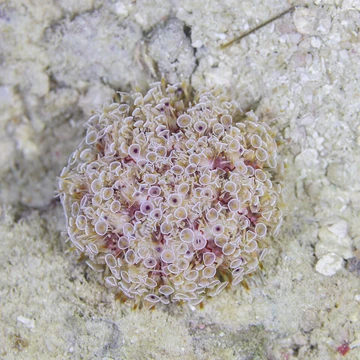
Stomopneustes
The sole living species in its family Stomopneustidae.

Stomopneustes is a genus of sea urchin that contains a single living species, Stomopneustes variolaris, known as the black sea urchin or long-spined sea urchin. It is notable as the only extant member of its family Stomopneustidae, and is found throughout the tropical Indo-Pacific with a patchy distribution.
Quick Facts
- Taxon
- Stomopneustes variolaris
Facts from the source article.
Lore & Background
Stomopneustes variolaris is a rather big and strong regular sea urchin. Its spines are robust and sharp, black with sometimes a blue-greenish tinge depending on the light. A key identifying feature is the five grey sutures on the upper face, which exhibit a distinctive zig-zag pattern. The oral face is clearer, and juveniles are also clearer, ranging from black to pale brown, and often have strikingly asymmetrical spines due to their habit of using them to dig hiding holes in soft rocks.
This species can be confused with Diadematidae sea urchins, which have longer and more slender spines and an anal papilla, or with Echinometra mathaei, which also digs holes but is smaller, with shorter spines and never truly black. Stomopneustes variolaris is found on rock and damaged reefs, most often in shallow waters but never too close to wave action. It is particularly abundant in Sri Lanka.
Reader's Guide
Stomopneustes is significant as the only living genus in its family Stomopneustidae, making it a unique lineage among sea urchins. Its robust, sharp spines and distinctive zig-zag sutures on the upper face allow for reliable field identification, distinguishing it from similar-looking species such as Diadematidae and Echinometra mathaei. The species' habit of using asymmetrical spines to dig hiding holes in soft rocks, especially in juveniles, highlights an adaptive behavior for shelter in shallow reef environments. Its patchy distribution across the tropical Indo-Pacific, from the east African coast to the Philippines, with notable abundance in Sri Lanka, suggests localized ecological preferences for rock and damaged reefs in shallow waters away from wave action. As the sole surviving species of its family, Stomopneustes variolaris represents an evolutionary distinct form within the regular sea urchins, contributing to the biodiversity of Indo-Pacific reef systems.
Did You Know?
- Stomopneustes variolaris is the only living species in its family Stomopneustidae.
- Juveniles often have strikingly asymmetrical spines used for digging hiding holes in soft rocks.
- It can be recognized by five grey sutures on the upper face forming a distinctive zig-zag pattern.
- The species is particularly abundant in Sri Lanka.
More in Sea Urchins, Part 2 1-24
Spotted an error? Know more?
Reader corrections go straight into our review queue. Suggest an edit · How this site is sourced