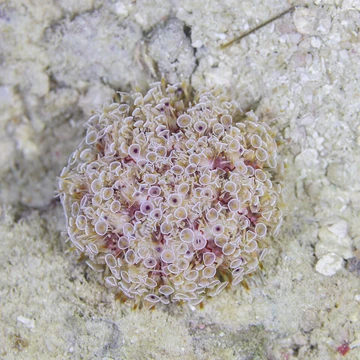
Echinothrix diadema
Long-spined tropical urchin with blue-black sheen.

Echinothrix diadema, commonly known as the diadema urchin or blue-black urchin, is a species of tropical sea urchin in the family Diadematidae. It is notable for its long spines, dark coloration with a blue sheen, and its presence throughout Indo-Pacific coral reefs.
Quick Facts
- Genus
- Echinothrix
- Species
- diadema
Facts from the source article.
Lore & Background
Echinothrix diadema is a long-spined urchin whose internal organs are enclosed in the test, covered by a thin dermis and epidermis. It is generally black or blue-black, with spines that show a blue sheen in light; the spines are closed at the tip, and the anal sac is small and dark. It differs from the similar Echinothrix calamaris in that its spines are not banded (except in juveniles), its anal sac is small and hardly visible, and its spines show a blue sheen rather than a greenish tinge. Another similar species, Diadema setosum, has longer spines and a smaller test, distinguished by an orange ring around the anal sac.
The species is active at night, hiding in crevices, burrows, and under rocks during the day. Females generally choose low-lying locations, presumably so the tiny larvae can have better protection from predators. It hosts commensal species such as the shrimp Stegopontonia commensalis, and Saron marmoratus stays close for protection, along with many fish of the families Apogonidae and Centriscidae.
Reader's Guide
Echinothrix diadema is a significant species in coral reef ecosystems due to its grazing activity, which contributes to echinoid bioerosion. In Fiji, its grazing preferences were found to correlate with the alga Codium geppiorum. The species is widely distributed across the Indo-Pacific, from the Red Sea to Hawaii, inhabiting shallow waters typically between the surface and 10 meters deep, though it can be found down to 70 meters. Its nocturnal behavior and use of crevices and burrows for daytime shelter are characteristic. The urchin also serves as a host for commensal shrimp and provides protection for certain fish species. Its dark coloration with a blue sheen and closed spine tips help distinguish it from related species like Echinothrix calamaris and Diadema setosum.
Did You Know?
- The spines of Echinothrix diadema show a blue sheen in light.
- Females generally choose low-lying locations for presumably better protection of larvae.
More in Sea Urchins, Part 2 1-24
Spotted an error? Know more?
Reader corrections go straight into our review queue. Suggest an edit · How this site is sourced