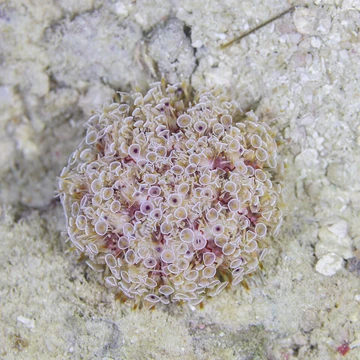
Cidaridae
Basal sea urchin family with stout tests and massive spines.

Cidaridae is a family of sea urchins belonging to the order Cidaroida. These animals have a sturdy skeleton: a thick, hard test with large, perforated tubercles (which are never crenulated) ringed by smaller secondary tubercles, and no primary tubercles in the interambulacral areas. The tubercles support thick, strong, often very long spines that can take unusual forms, such as thorny, fan-shaped, club-like, or resembling Christmas trees. As the most ancient lineage of living sea urchins, most Cidaridae species live in deep abyssal waters, though a few, like *Eucidaris* and *Phyllacanthus*, are common in shallow tropical waters. The family includes numerous genera, divided into subfamilies such as Cidarinae, Goniocidarinae, Stereocidarinae, and Stylocidarinae, along with the tribe Phyllacanthina. An older, now-abandoned genus, *Cidarites*, was once used in the late 1700s and early 1800s to describe various species from both cidarid and other sea urchin families.
Quick Facts
- Taxon
- Cidaridae
Facts from the source article.
Lore & Background
Cidarid sea urchins are distinguished by their stout skeleton: the test is thick and hard, with massive perforated tubercles (never crenulated) surrounded by a crown of secondary tubercles, but no primary tubercles in the interambulacra regions. These tubercles hold massive spines, thick, strong and often very long, showing sometimes odd shapes such as thorny spines, fans, clubs, or Christmas trees. The order Cidaroida is the basalmost of current sea urchins, and most species in this family are abyssal, though a handful remain common in tropical shallow waters, like Eucidaris or Phyllacanthus.
According to the World Register of Marine Species (WoRMS), the family includes four subfamilies: Cidarinae, Goniocidarinae, Stereocidarinae, and Stylocidarinae. A now abandoned genus, Cidarites, was used in the late 18th and early 19th century to describe a number of species of both cidarid and echid sea urchins.
Reader's Guide
The Cidaridae family holds significance as the basalmost lineage of living sea urchins, providing insight into the early evolution of echinoids. Their stout skeleton and massive, often ornamented spines distinguish them from other urchins. The family's ecological range is broad: most species are abyssal, but a few genera such as Eucidaris and Phyllacanthus are common in tropical shallow waters, indicating adaptive diversity. The taxonomic history includes the abandoned genus Cidarites, which was used in the late 18th and early 19th centuries for both cidarid and echid species, reflecting early classification challenges. The World Register of Marine Species lists 28 genera across four subfamilies, with one genus (Adelcidaris) considered a nomen dubium, preserving taxonomic uncertainty. The family's characteristics—such as non-crenulated, perforated tubercles and the absence of primary tubercles in interambulacra—are key diagnostic features that aid in identification and phylogenetic studies.
Did You Know?
- Cidaridae is the basalmost family of extant sea urchins.
- Cidarid spines can take odd shapes such as fans, clubs, or Christmas trees.
More in Sea Urchins, Part 2 1-24
Spotted an error? Know more?
Reader corrections go straight into our review queue. Suggest an edit · How this site is sourced