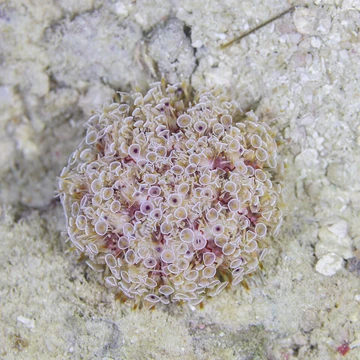
Aporocidaris incerta
Deep-sea Antarctic urchin with a compressed test and dark brown color.

Aporocidaris incerta is a species of sea urchin belonging to the family Ctenocidaridae. It is placed in the genus Aporocidaris and lives in the deep sea around the Antarctic continent. First scientifically described in 1902 by Koehler, this species is notable for its compressed test and its adaptation to extreme deep-sea conditions.
Quick Facts
- Genus
- Aporocidaris
- Species
- incerta
Facts from the source article.
Lore & Background
Aporocidaris incerta was first scientifically described in 1902 by Koehler. It has a compressed test, the height of which is less than half its diameter, with a maximum diameter of 30 mm (1.2 in). The primary spines are as long as the test is wide. When preserved, this species is dark brown.
Ecologically, A. incerta inhabits depths of approximately 300 meters, typically along continental slopes or abyssal plains surrounding Antarctica. The extreme environment in which it lives is marked by low temperatures, high pressure, and minimal light. Like other cidaroid sea urchins, A. incerta is presumed to be a slow moving detritivore, feeding on organic matter and microorganisms that settle from the upper water column.
Reader's Guide
Aporocidaris incerta contributes to benthic ecosystem stability through its feeding behavior as a presumed detritivore. By consuming organic matter and microorganisms that settle from the upper water column, it plays a role in nutrient recycling in the deep-sea environment around Antarctica. The species’ slow metabolic rate reflects adaptations to energy poor conditions, enabling survival where few other echinoderms can thrive. Its compressed test and spine morphology are characteristic features noted in the original description by Koehler in 1902. The species is placed within the family Ctenocidaridae and the genus Aporocidaris, and it is known to live at depths down to about 300 meters (1,000 ft) around the Antarctic continent. The extreme conditions of low temperature, high pressure, and minimal light define its habitat along continental slopes or abyssal plains.
Did You Know?
- Its test is compressed, with a height less than half its diameter, and a maximum diameter of 30 mm (1.2 in).
- This species lives around the Antarctic continent at depths down to about 300 m (1,000 ft).
- When preserved, Aporocidaris incerta is dark brown.
More in Sea Urchins, Part 2 1-24
Spotted an error? Know more?
Reader corrections go straight into our review queue. Suggest an edit · How this site is sourced