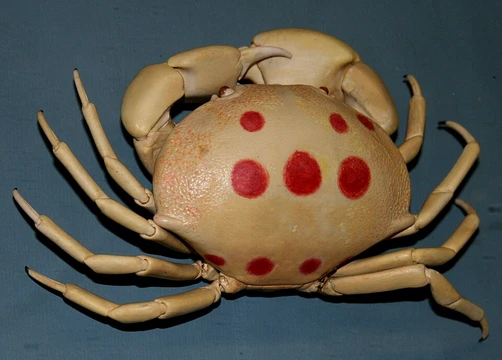
Zosimus aeneus
A reef crab with lethal neurotoxins in its flesh and shell.

The devil crab, also called the toxic reef crab or devil reef crab, is a species found on coral reefs across the Indo-Pacific, from East Africa to Hawaii. It reaches about 60 by 90 millimeters and is easily recognized by its pale background marked with brownish blotches. Both its flesh and shell contain the neurotoxins tetrodotoxin and saxitoxin, making it potentially lethal.
First described by Carl Linnaeus in 1758, this crab was later placed in the genus *Zozymus* by James Dwight Dana in 1852. Mary J. Rathbun replaced that name with *Zosimus* in 1907, and it now serves as the type species for the genus. Its carapace and legs, including the claws, display a striking pattern of red or brown patches on a pale brown or cream background. The carapace is deeply grooved, and the walking legs have prominent crests.
The crab lives on reef flats in the intertidal zone, ranging from South Africa and the Red Sea east to Japan, Australia, and Hawaii. Its toxicity comes from tetrodotoxin, the same compound found in puffer fish, and saxitoxin, which causes paralytic shellfish poisoning. Both toxins interfere with sodium channels in nerve cells and are absorbed through the gastrointestinal tract. Poisoning can be fatal: one man in Timor-Leste died hours after eating the crab, having received a dose equivalent to 1–2 micrograms of saxitoxin per kilogram of body weight. In the Philippines, it is considered the most poisonous crab, with half of intoxication cases proving fatal. Studies found individual specimens contained over 3000 mouse units per gram of saxitoxin, a lethal amount that led to 12 deaths on Negros Island in the 1980s. In February 2021, two children in Cagayan died after eating a devil crab caught by their father. In February 2026, a food vlogger in Palawan allegedly died after eating several of these crabs for a social media post, though her family later clarified she had not made any video about the crab and was unaware it was harmful. Inhabitants of Pacific Islands have reportedly eaten the flesh with the intention of committing suicide.
Quick Facts
- Genus
- Zosimus
- Species
- aeneus
Facts from the source article.
Lore & Background
Zosimus aeneus was first described by Carl Linnaeus in his 1758 10th edition of Systema Naturae. It was later transferred to the genus Zozymus by James Dwight Dana in 1852, and then to Zosimus by Mary J. Rathbun in 1907. It is the type species of the genus Zosimus. The crab reaches a size of 60 by 90 millimeters and is described as a well known brightly coloured and strikingly patterned species, with its carapace and legs marked by red or brown patches on a pale brown or cream background. The carapace is deeply grooved, and the walking legs have prominent crests. It is found across a large part of the Indo-Pacific, from South Africa to the Red Sea, and as far east as Japan, Australia and Hawaii, living on reef flats in the intertidal zone.
Reader's Guide
Both the shell and the meat of Zosimus aeneus contain significant concentrations of neurotoxins including tetrodotoxin and saxitoxin. Tetrodotoxin is the compound responsible for the toxicity of puffer fish, while saxitoxin is the best known of several related neurotoxins that cause paralytic shellfish poisoning. Both are absorbed through the gastrointestinal tract and interfere with sodium channels in the membranes of nerve cells. Poisoning with Z. aeneus can be fatal; one man in Timor-Leste died hours after consuming the crab, having received a dose equivalent to 1–2 μg saxitoxin per kilogram body mass. The flesh of Z. aeneus is reported to be ingested by inhabitants of the Pacific Islands with the intention of committing suicide. Z. aeneus is considered the most poisonous crab in the Philippines, with 50% of intoxication cases being fatal. Studies determined that individual specimens contained in excess of 3000 MU/g of saxitoxin, a lethal amount for humans that resulted in 12 fatalities in Negros Island in the 1980s. In February 2021, two children in Cagayan died after eating Z. aeneus caught by their father. In February 2026, a food vlogger in Palawan allegedly died after feasting on several Z. aeneus for her social media channel; the family soon clarified that she did not create any video content concerning the crab she had eaten on that day, and was unaware that this crab, gathered by others, was harmful.
Frequently Asked Questions
What is Zosimus aeneus?
Zosimus aeneus, commonly known as the devil crab or toxic reef crab, is a small coral-reef species native to the Indo-Pacific. It is instantly recognizable by its pale carapace scattered with brownish blotches.
Where does Zosimus aeneus live?
This crab inhabits reef flats in the intertidal zone across a vast stretch of the Indo-Pacific, ranging from East Africa and the Red Sea all the way to Hawaii, Japan, and Australia.
Why is Zosimus aeneus considered dangerous?
Both its flesh and its shell carry the potent neurotoxins tetrodotoxin and saxitoxin, which can be lethal if ingested. This makes it one of the few reef crabs that is genuinely toxic to handle or eat.
How big does Zosimus aeneus get?
Adults measure roughly 60 by 90 millimeters (about 2.4 by 3.5 inches), making them a compact reef-dweller rather than a large open-water crab.
What is the taxonomic history of Zosimus aeneus?
Carl Linnaeus first described the species in 1758, and it later sat in the genus Zozymus after James Dwight Dana's 1852 revision. Mary J. Rathbun corrected the genus to Zosimus in 1907, and the species now serves as the type species anchoring that genus.
More in Reef Crabs 1-24
Spotted an error? Know more?
Reader corrections go straight into our review queue. Suggest an edit · How this site is sourced