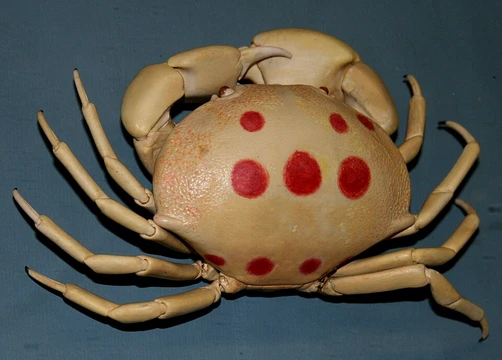
Cycloxanthops novemdentatus
Largest xanthid crab in California, with nine anterolateral teeth.

Cycloxanthops novemdentatus, called the ninetooth pebble crab, is a small crab belonging to the family Xanthidae. Its shell is usually brown or red, though it can also be purple, and often has light or dark markings that persist after molting, but the shell color may shift over time. The common name comes from two sets of nine teeth each along the front edge of the carapace. The carapace can grow up to 3.75 inches wide. Juveniles differ from adults in the width of the third and sixth abdominal segments, the length of marginal abdominal hair, sparse hair on the swimmerets, and, in males, a lock mechanism. Once the carapace reaches about 6.5 mm, males and females become visibly distinct due to differences in abdominal segment size and shape. This crab is the largest member of its family found in California.
It lives in the eastern Pacific Ocean from Monterey, California, to Baja California, and is most common in the southern part of coastal southern California. Its habitat includes rocky intertidal and subtidal areas down to 240 meters deep, with younger crabs typically found higher in the intertidal zone than adults. For food, it has been seen cracking open and eating purple sea urchins, and it also consumes other crab species. When threatened, it may freeze in place, likely to avoid detection.
Quick Facts
- Genus
- Cycloxanthops
- Species
- novemdentatus
Facts from the source article.
Lore & Background
Cycloxanthops novemdentatus is typically brown or red in color, but can also be purple. Individuals often have dark or light markings on their shell that persist after molting, though shell color may change over time. Its common name derives from two sets of nine anterolateral teeth on the front edge of its carapace. The carapace can reach up to 3.75 inches in width.
Immature individuals can be distinguished from adults by the width of the third and sixth abdominal segments, the length of marginal abdominal hair, a sparse layer of hair on the swimmerets, and the presence of a lock mechanism in males. After reaching approximately 6.5 mm in carapace width, sexual dimorphism becomes apparent due to differences in abdominal segment size and shape.
This species lives in rocky intertidal and subtidal habitats to a depth of 240 m, with younger crabs typically found in higher intertidal regions than adults. It is most abundant in the southernmost portions of coastal southern California.
Reader's Guide
Cycloxanthops novemdentatus holds significance as the largest member of the family Xanthidae found in California, with a carapace reaching up to 3.75 inches in width. Its distribution spans the eastern Pacific Ocean from Monterey, CA to Baja California, with greatest abundance in southern coastal California. The species inhabits rocky intertidal and subtidal zones to a depth of 240 m, and younger crabs occupy higher intertidal areas than adults. Ecologically, it has been observed cracking open and feeding upon purple sea urchins, and it also eats other crab species. When threatened, it may freeze in place, presumably to avoid detection. Its common name, ninetooth pebble crab, refers to the two sets of nine anterolateral teeth on the front edge of its carapace. The species exhibits color variation—brown, red, or purple—and may have persistent shell markings. Sexual dimorphism becomes apparent at about 6.5 mm carapace width, and immature individuals can be identified by specific abdominal and hair characteristics.
Frequently Asked Questions
What is Cycloxanthops novemdentatus?
This small crab, commonly called the ninetooth pebble crab, belongs to the family Xanthidae. It is recognized as the largest member of that family along the California coast.
Why is it called the "ninetooth" pebble crab?
The name derives from the two rows of nine teeth each lining the anterior margin of its carapace. These toothed edges are a key identifying feature of the species.
Where does Cycloxanthops novemdentatus live?
Its range spans the eastern Pacific from Monterey, California, southward to Baja California. It occupies rocky intertidal and subtidal environments, descending to depths of about 240 meters.
How large is Cycloxanthops novemdentatus and what color is it?
The carapace can grow to roughly 3.75 inches across. Shell coloration is usually brown or red, occasionally purple, and the crab often displays persistent light or dark markings that survive molting, though the base hue may shift over time.
What makes Cycloxanthops novemdentatus stand out among California crabs?
It is the biggest xanthid crab found in California waters. Its unmistakable nine-toothed front edge and relatively large size for its family make it a notable resident of rocky coastal habitats.
More in Reef Crabs 1-24
Spotted an error? Know more?
Reader corrections go straight into our review queue. Suggest an edit · How this site is sourced