Herpolitha
A monotypic genus of free-living mushroom corals in the Indo-Pacific.

M0tty · CC BY-SA 3.0
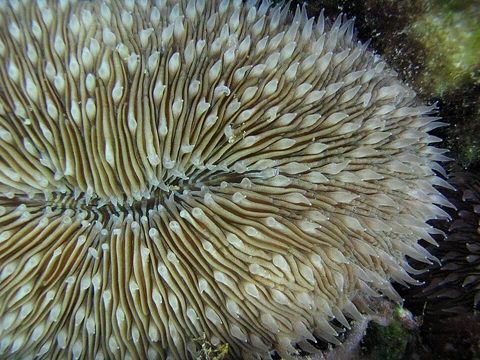
Herpolitha is a monotypic genus of mushroom corals belonging to the family Fungiidae. Its sole species is *Herpolitha limax*, which goes by several common names: tongue coral, slipper coral, mole coral, or striate boomerang coral. This coral is free-living and native to reefs and lagoons across the Indo-Pacific.
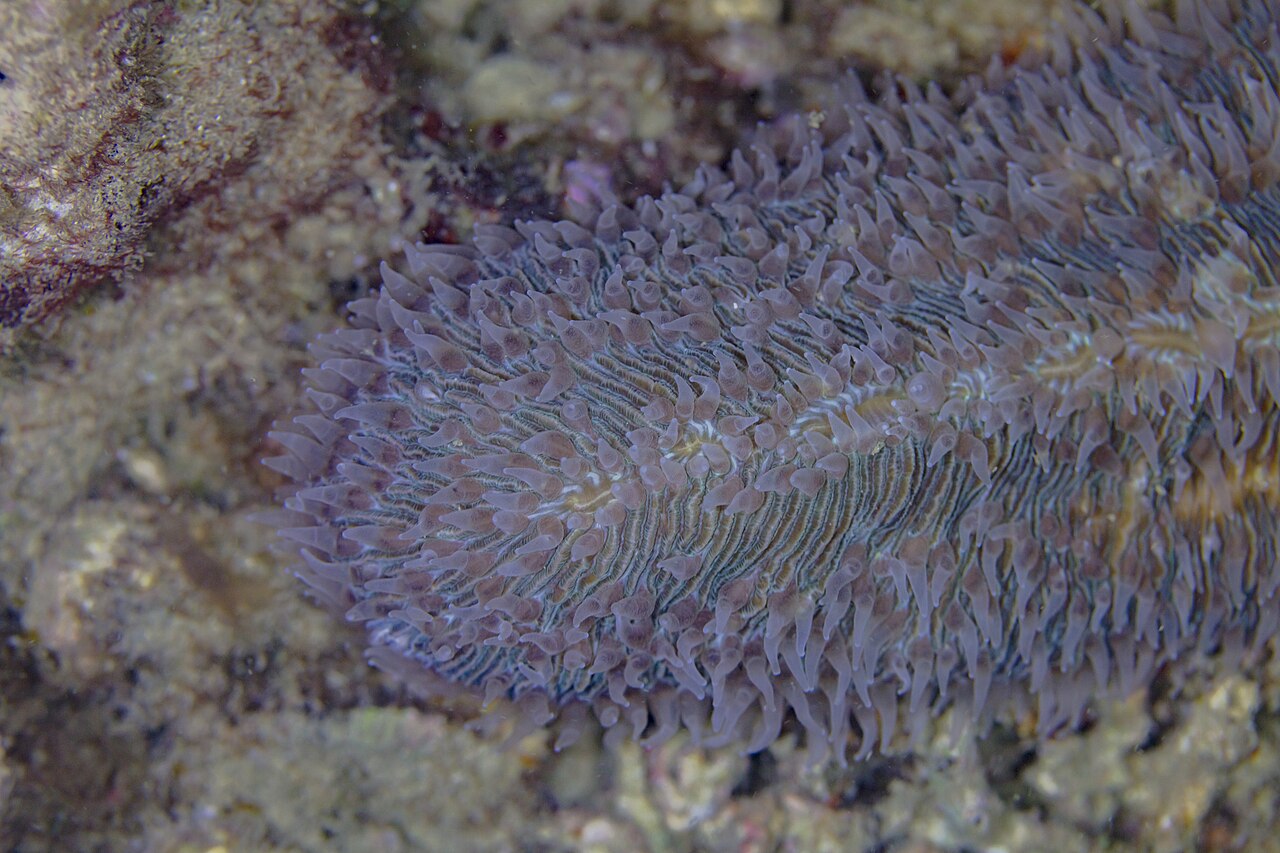
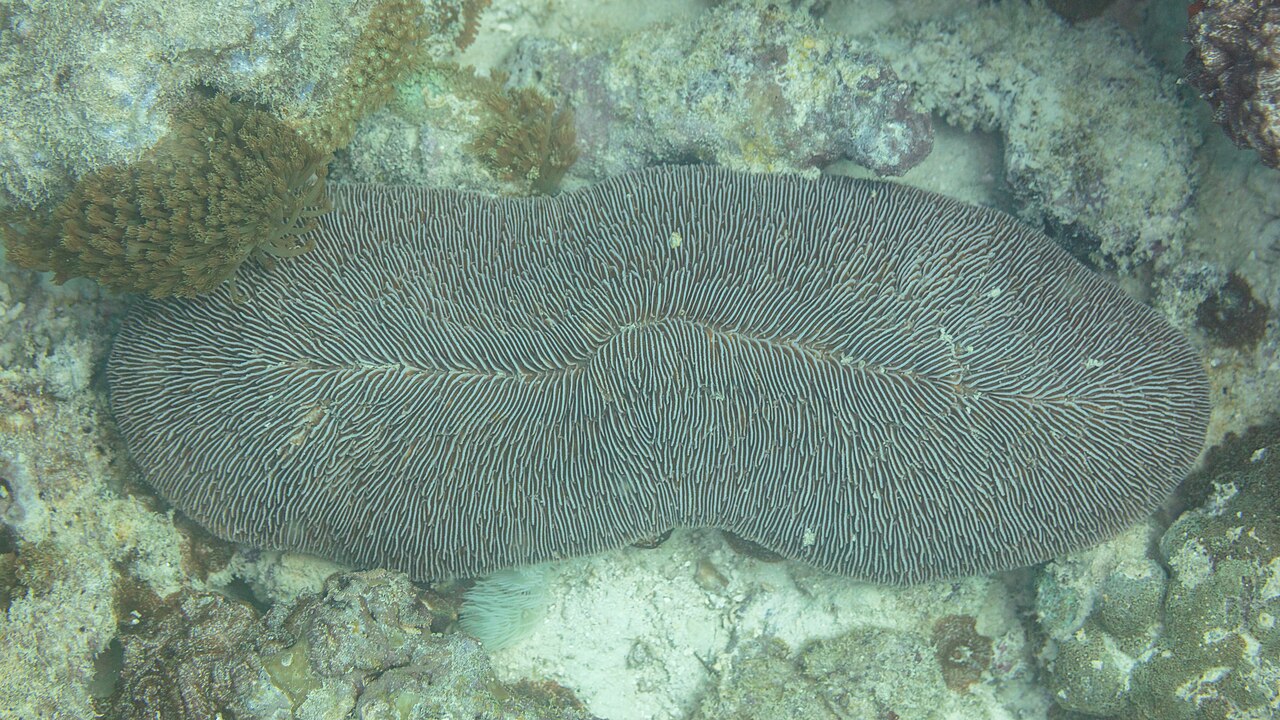
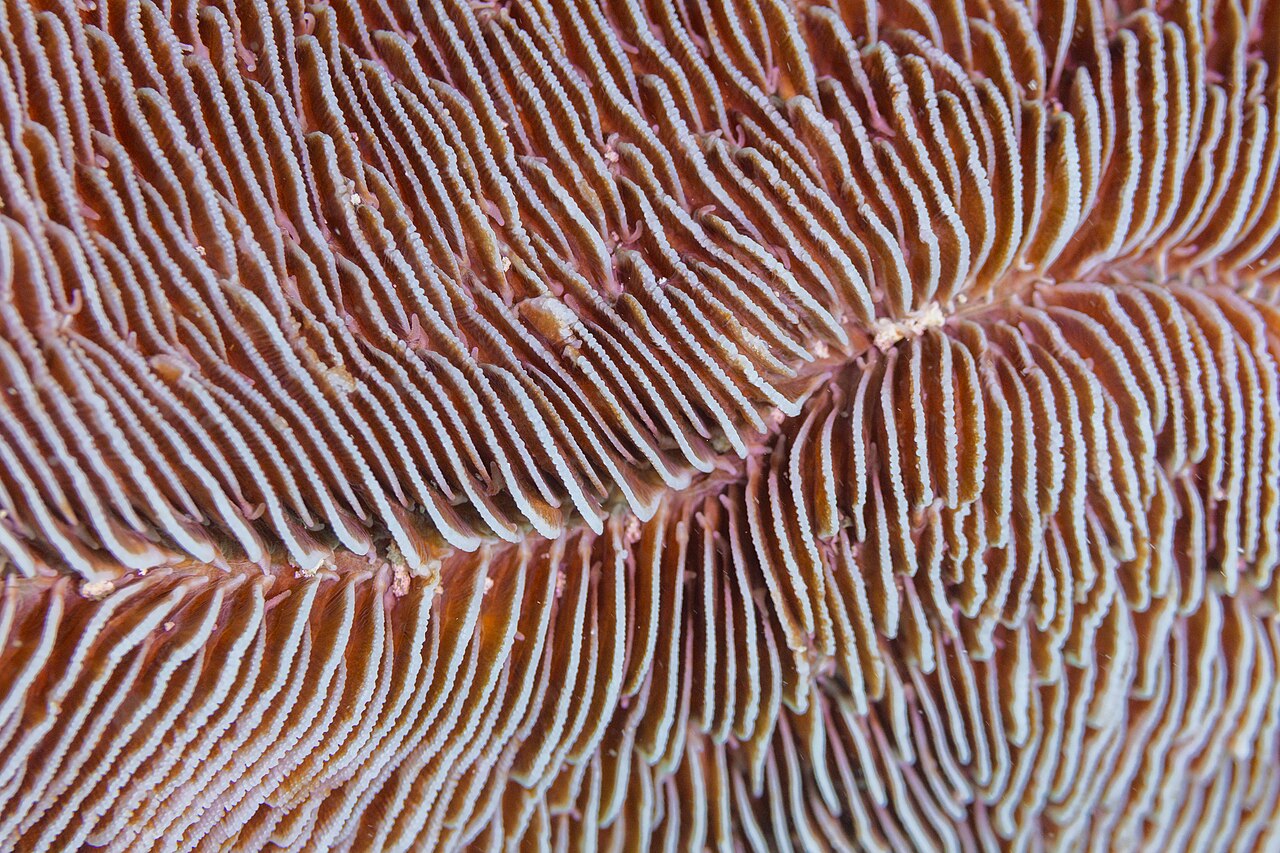
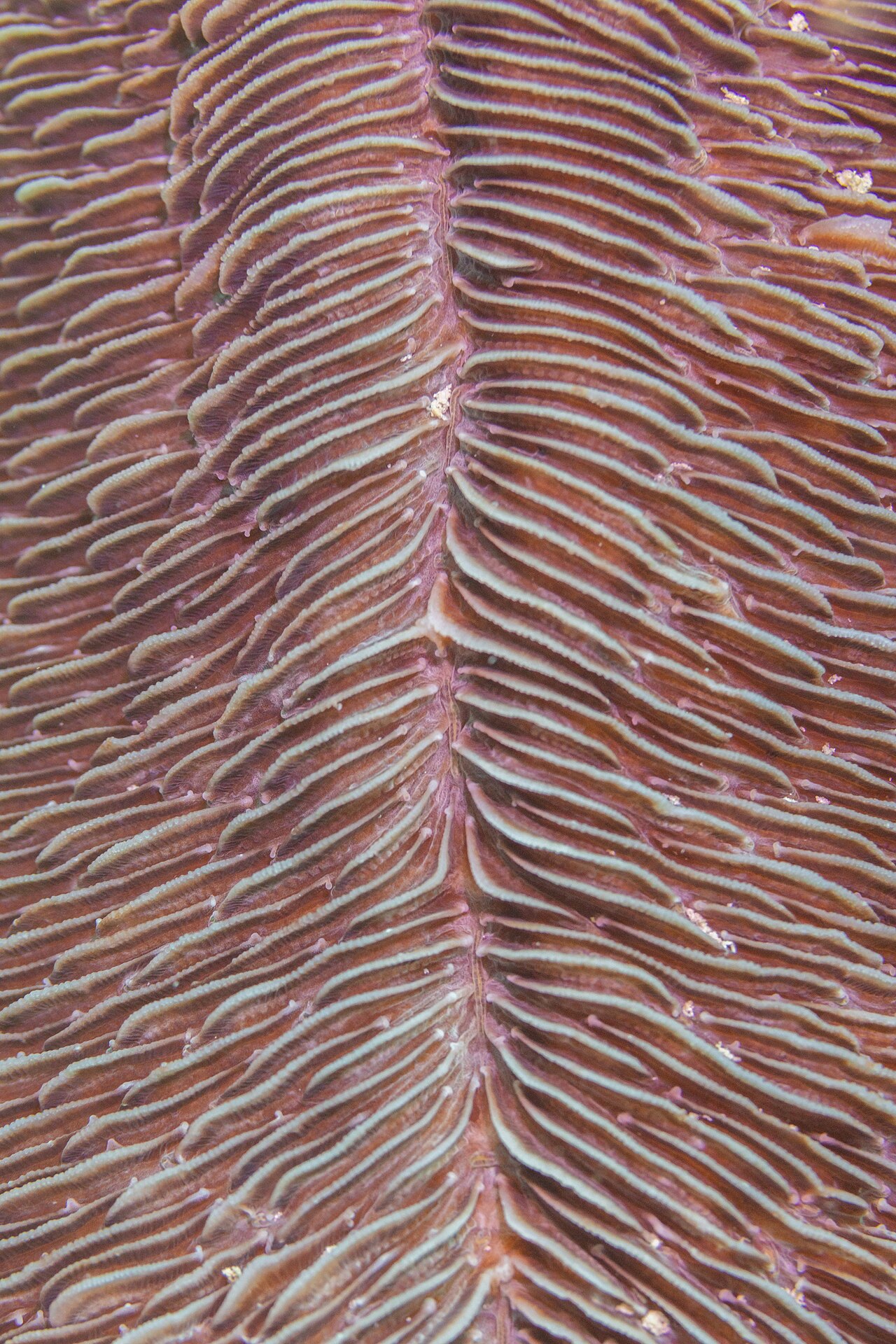
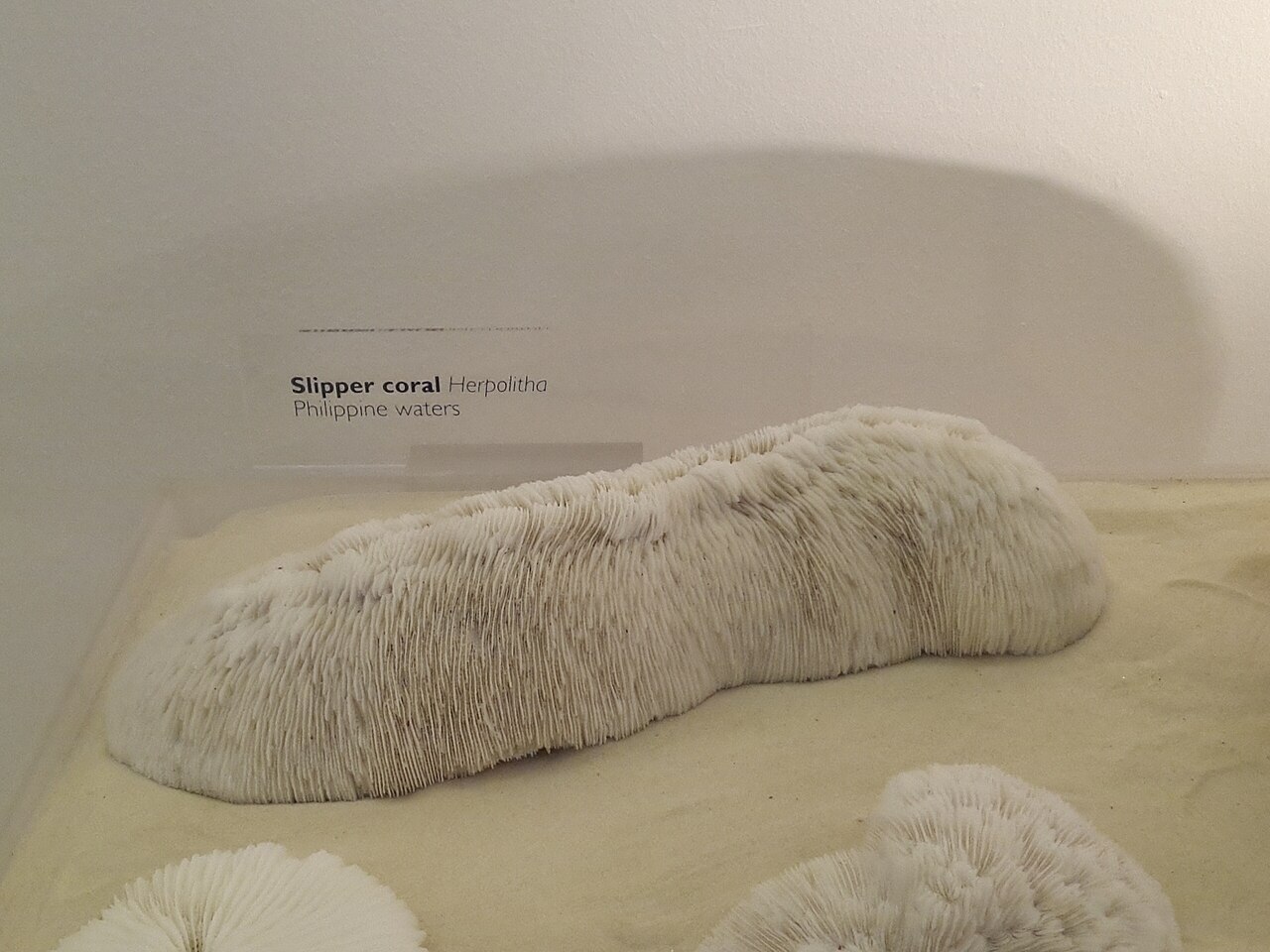
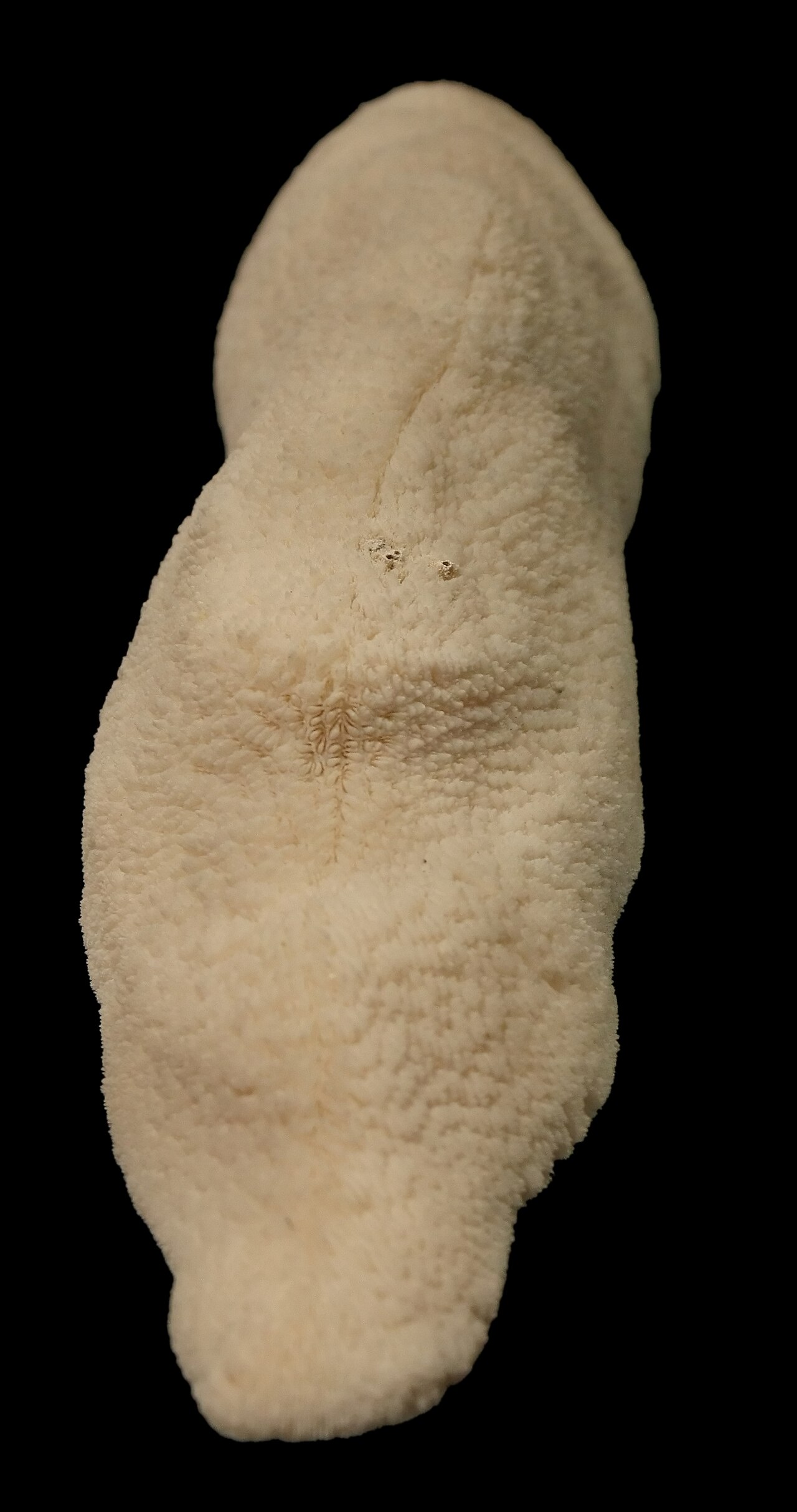
The body of *Herpolitha limax* is elongated with somewhat rounded ends, featuring a single central axial furrow that runs nearly the full length. Within this furrow are many noticeable slit-like mouths, while other, less distinct mouths are scattered irregularly elsewhere. The primary septa are densely toothed with fine spines and do not extend to the colony’s edge. The costae are low, with crowded, blunt teeth. Occasionally, the furrow forks into a “Y,” “T,” or even “X” shape. This coral can reach lengths of 45 cm (18 in) or more, and its color is typically some shade of grey, brown, or greenish-brown.
Its range extends from East Africa and the Red Sea to Australia, Indonesia, Papua New Guinea, and the South Central Pacific. It inhabits reef slopes and lagoons, often near *Fungia* species, down to depths of about 30 metres (98 ft).
As a colonial, free-living, zooxanthellate species, *Herpolitha limax* is vulnerable to bleaching under stressful conditions, turning white after expelling its symbiotic algae. During a period of high water temperature in Thailand in June 2010, bleaching was widespread, affecting 52% of this species along with many other mushroom corals. By the following February, however, the corals appeared to have recovered, with no signs of thermal-induced bleaching and a species composition similar to before the event.
*Herpolitha limax* has a very broad distribution and is common in suitable habitats. Although its population trend is unknown, it is harvested for the reef aquarium trade—over 2,000 pieces were collected in 2005. Corals face threats from climate change, but the International Union for Conservation of Nature has assessed this species as being of “least concern.”
Quick Facts
- Taxon
- Herpolitha limax
Facts from the source article.
Lore & Background
Herpolitha limax has an elongated structure with somewhat rounded ends and a single, central, axial furrow that extends nearly from end to end. In the furrow are many conspicuous slit-like mouths and there are irregularly spaced, less-distinct mouths elsewhere. The primary septa are densely-toothed with fine spines and do not reach the edge of the colony. The costae are low with crowded, obtuse teeth. Sometimes the furrow is forked and forms a 'Y' shape, a 'T' shape, or even an 'X' shape. This coral can grow to a length of 45 cm (18 in) or more and is usually some shade of grey, brown or greenish-brown.
Reader's Guide
Herpolitha limax is a colonial, free-living, zooxanthellate species of coral. Under stressful conditions it is susceptible to bleaching and corals appear white after expelling their symbionts. In a period of high water temperature in Thailand in June 2010, bleaching was common and 52% of the corals of this species were affected, along with many other species of mushroom coral. By the following February, they seemed to have recovered with no trace of thermal-induced bleaching being present, and the species composition being similar to that before the bleaching event. The species has a very wide range and is common in suitable habitats. The population trend is unknown but this coral is harvested for the reef aquarium trade, over 2,000 pieces being collected in 2005. Corals face threats associated with climate change but the International Union for Conservation of Nature has assessed the conservation status of this species as being of 'least concern'.
Did You Know?
- Herpolitha is a monotypic genus, containing only the species Herpolitha limax.
- In June 2010 in Thailand, 52% of Herpolitha limax corals were affected by bleaching.
- Over 2,000 pieces of this coral were collected for the reef aquarium trade in 2005.
Taxonomic Identity & Morphological Ambiguity
Herpolitha occupies a distinctive position within the Fungiidae, a family of Cnidaria that encompasses thirteen extant genera commonly referred to as mushroom or plate corals. While many of its relatives present a straightforward solitary form—genera like Cycloseris and Fungia each house a single polyp within a compact skeleton—Herpolitha resists easy classification. It can be interpreted either as a solitary organism bearing multiple mouths or as a colony of individual polyps, each maintaining its own separate mouth. This morphological ambiguity places it in a transitional zone between the strictly solitary and the strictly colonial ends of the family's spectrum. Polyphyllia, another fungiid, similarly presents a single organism with multiple mouths, suggesting that multi-oral body plans are not uncommon among these corals. Yet Herpolitha's dual interpretability—solitary versus colonial—makes it a particularly interesting subject for understanding how the boundaries of individuality are drawn in cnidarian biology.
Benthic Lifestyle & Nocturnal Activity
Members of the Fungiidae, including Herpolitha, are generally solitary marine animals that inhabit the seafloor and possess the remarkable ability to move across it, a trait known as benthic locomotion. This mobility distinguishes them from many other coral groups that remain permanently anchored. In adulthood, most fungiid species stay fully detached from the substrate, drifting or crawling across rocky and sandy bottoms rather than cementing themselves in place. Their resting appearance can be deeply misleading: these corals frequently look bleached or dead to an untrained observer, their pale skeletons blending into the surrounding environment. Feeding activity, in most genera, is concentrated in the nighttime hours, when a polyp emerges from the center of the skeleton to capture prey. This nocturnal rhythm, combined with their cryptic daytime appearance, means that Herpolitha and its relatives are creatures most people encounter only in stillness, their true biological activity hidden behind a facade of apparent lifelessness.
Reproductive Plasticity Within the Family
Within the broader Fungiidae family to which Herpolitha belongs, certain species display a striking reproductive flexibility: the ability to change sex. Documented in species such as Fungia repanda and Ctenactis echinata, this shift is thought to be triggered by environmental pressures or energetic constraints, allowing the organism to optimize its reproductive output under varying conditions. Researchers have drawn parallels between this phenomenon and similar strategies observed in some dioecious plants, where sex expression adjusts to ecological context. The evolutionary logic is straightforward—by remaining flexible rather than locked into a single reproductive role, these corals improve their overall evolutionary fitness across unpredictable marine environments. While the specific reproductive mechanisms of Herpolitha itself are not detailed in the available literature, its membership in a family where such plasticity is documented places it within a lineage shaped by adaptive reproductive strategies. This capacity for change underscores that fungiid corals are far more ecologically dynamic than their static, stone-like appearance might suggest.
Aquarium Trade & Human Perception
Despite their ecological intrigue, members of the Fungiidae family—including Herpolitha—hold no commercial importance in any industrial or economic sense. Their primary interaction with humans occurs through the aquarium trade, where these corals are collected and marketed under the common name plate corals. This trade represents a modest but persistent channel through which these organisms enter human spaces. The visual deception of fungiid corals plays a significant role in their encounter with collectors: their tendency to appear bleached or dead means that a casual observer might overlook them entirely on a reef, while an aquarist recognizes value in what looks like a lifeless disc. The family's diversity in form—ranging from compact solitary discs to elongated shapes resembling sea cucumbers, or species like Heliofungia actiniformis whose tentacles remain visible during the day and which shelter small fish—adds to the visual appeal that drives their collection. For Herpolitha specifically, its multi-mouthed morphology offers a unique aesthetic that sets it apart from the more familiar single-polyp plate corals in the trade.
Gallery
Frequently Asked Questions
What is Herpolitha?
Herpolitha is a monotypic genus of free-living mushroom coral in the family Fungiidae, containing only a single species, Herpolitha limax. Reef enthusiasts also know it by names like tongue coral, slipper coral, mole coral, or striate boomerang coral.
What does Herpolitha limax look like?
The coral has an elongated body with gently rounded ends and a single prominent axial groove running nearly the full length of its surface. Within that groove sit numerous conspicuous slit-shaped mouths, while a few smaller, less obvious mouths are scattered irregularly across the rest of the body.
Where can I find Herpolitha in the wild?
This free-living coral is native to reef and lagoon habitats throughout the Indo-Pacific region. It is typically encountered at depths reaching down to roughly 30 metres (about 98 feet).
How large does Herpolitha limax get?
Individuals can grow to a maximum length of approximately 45 centimetres (18 inches), giving it a notably elongated profile compared with many other Fungiidae.
What distinguishes Herpolitha from other mushroom corals?
Its elongated, boomerang-like shape combined with a single continuous central furrow packed with slit-like mouths sets it apart from most other free-living Fungiidae. That distinctive groove-and-mouth arrangement, along with its free-living habit, makes it relatively easy to identify in the field.
More in Plate and Mushroom Corals 1-24
Spotted an error? Know more?
Reader corrections go straight into our review queue. Suggest an edit · How this site is sourced