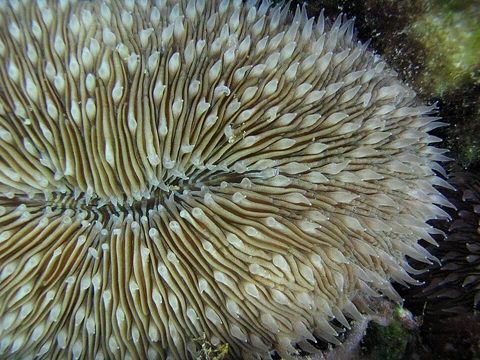
Herpolitha limax
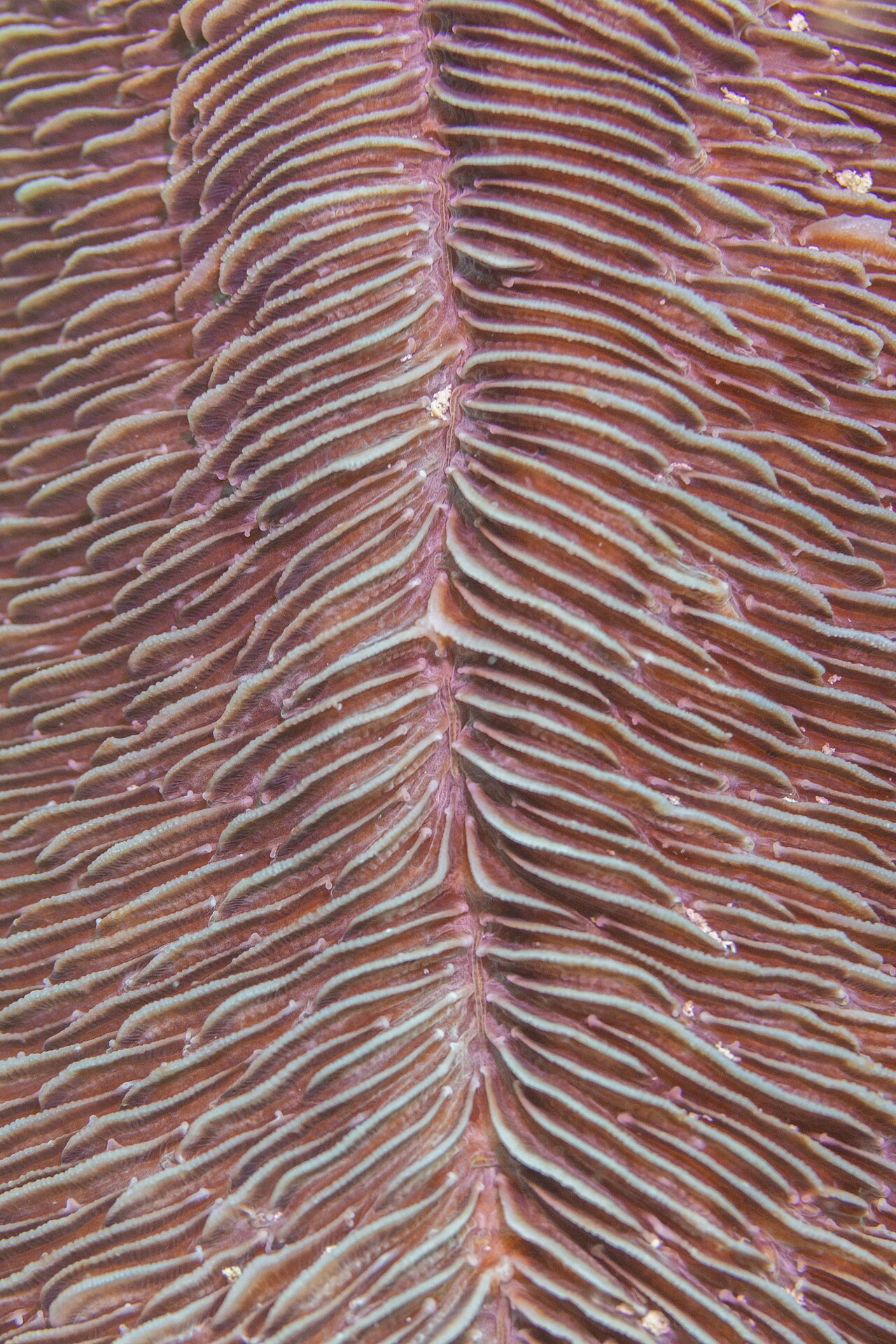
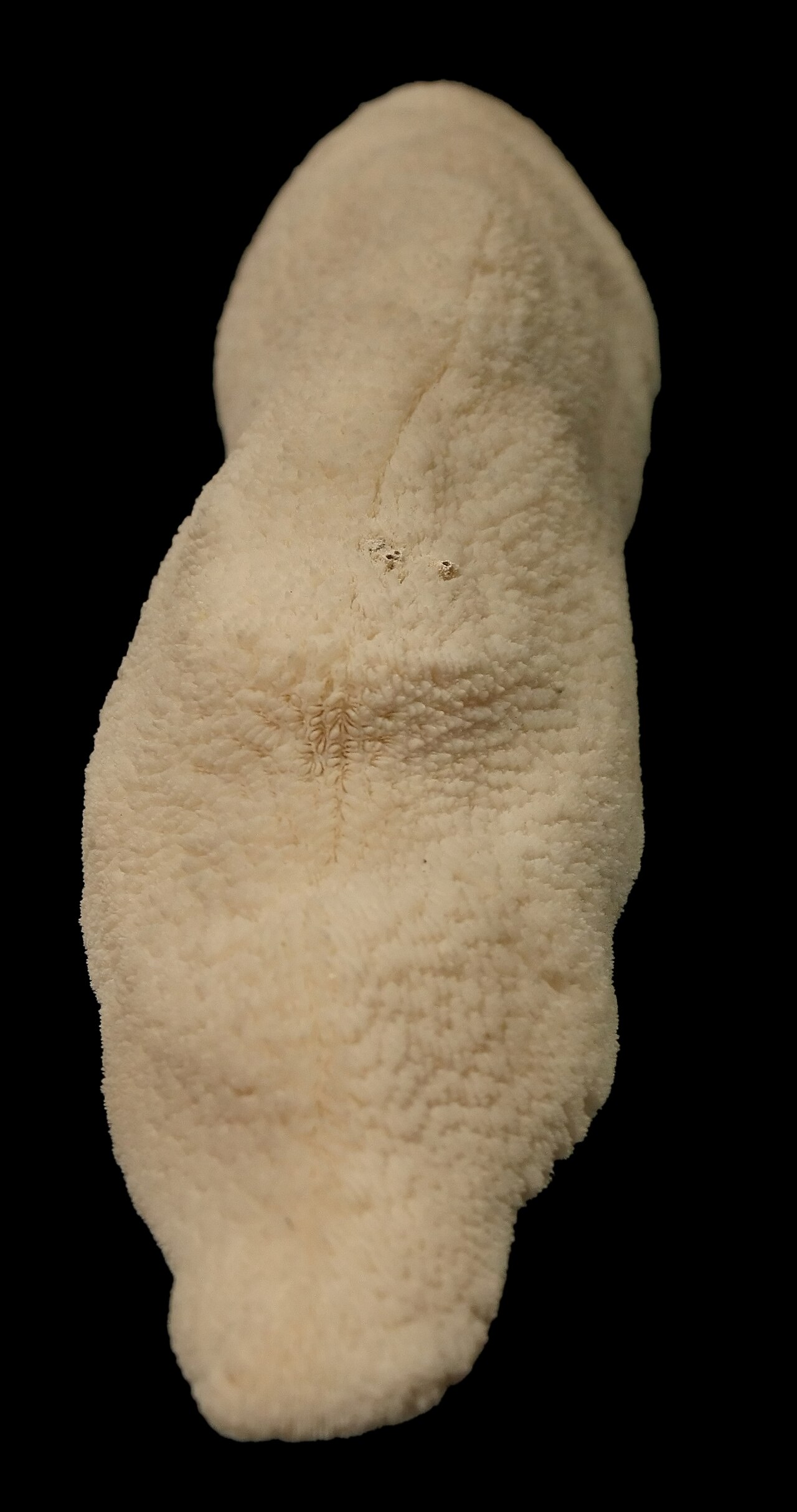
A free-living mushroom coral with a single axial furrow.

Diego Delso · CC BY-SA 4.0
Herpolitha limax is the sole member of the monotypic genus Herpolitha, a species of mushroom coral in the family Fungiidae. It is notable for its elongated, tongue-like shape and is commonly known as the tongue, slipper, mole or striate boomerang coral.
Quick Facts
- Taxon
- Herpolitha limax
Facts from the source article.
Lore & Background
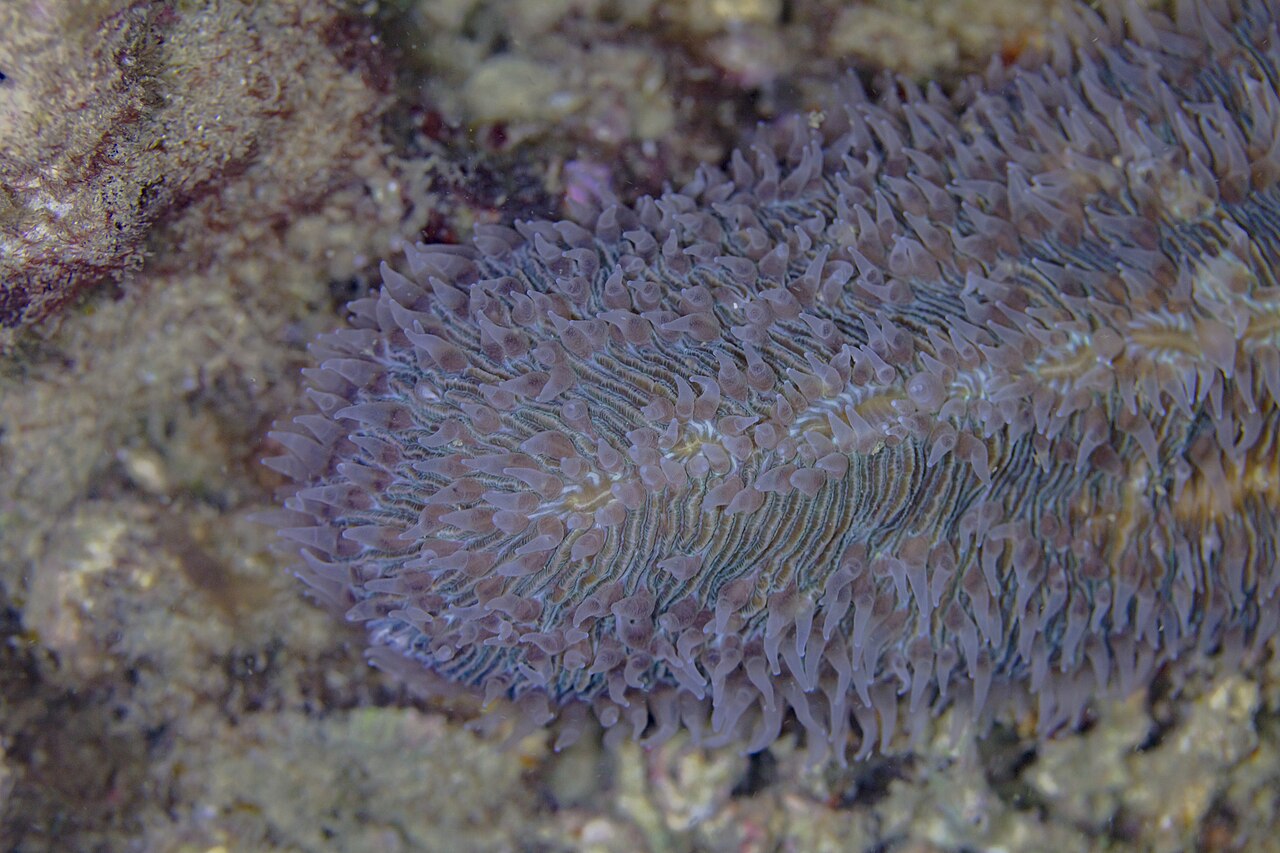
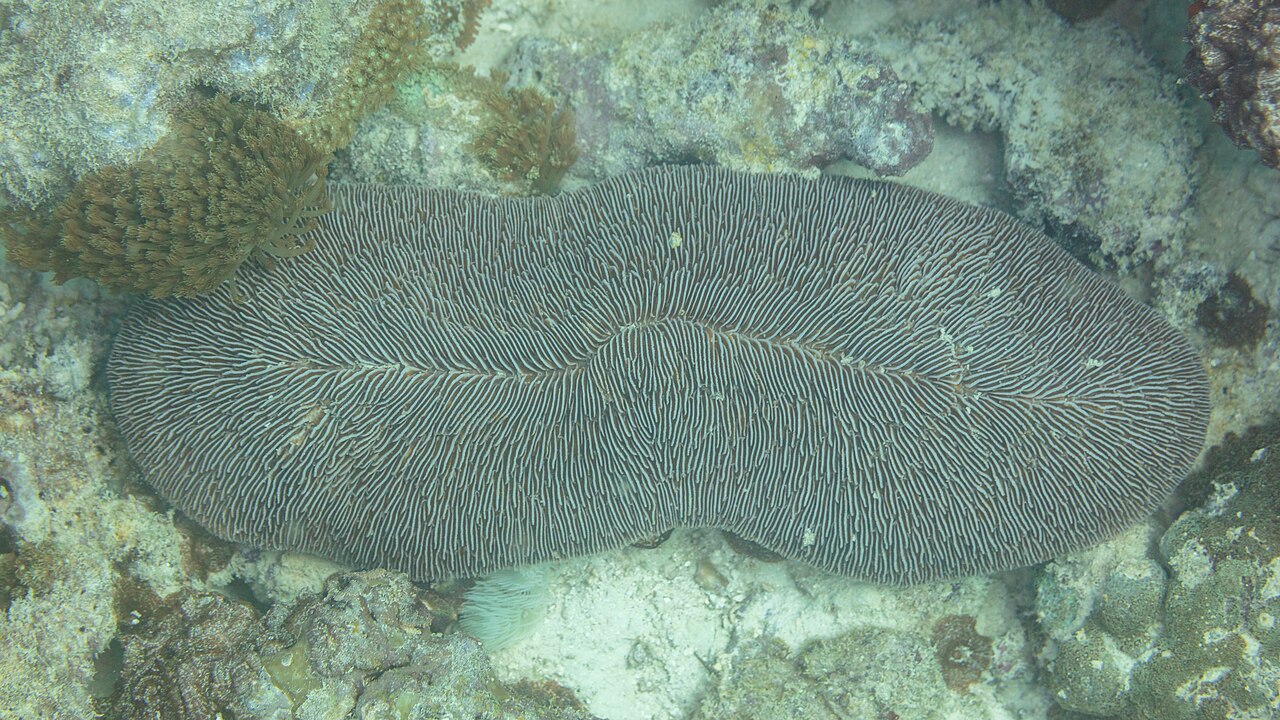
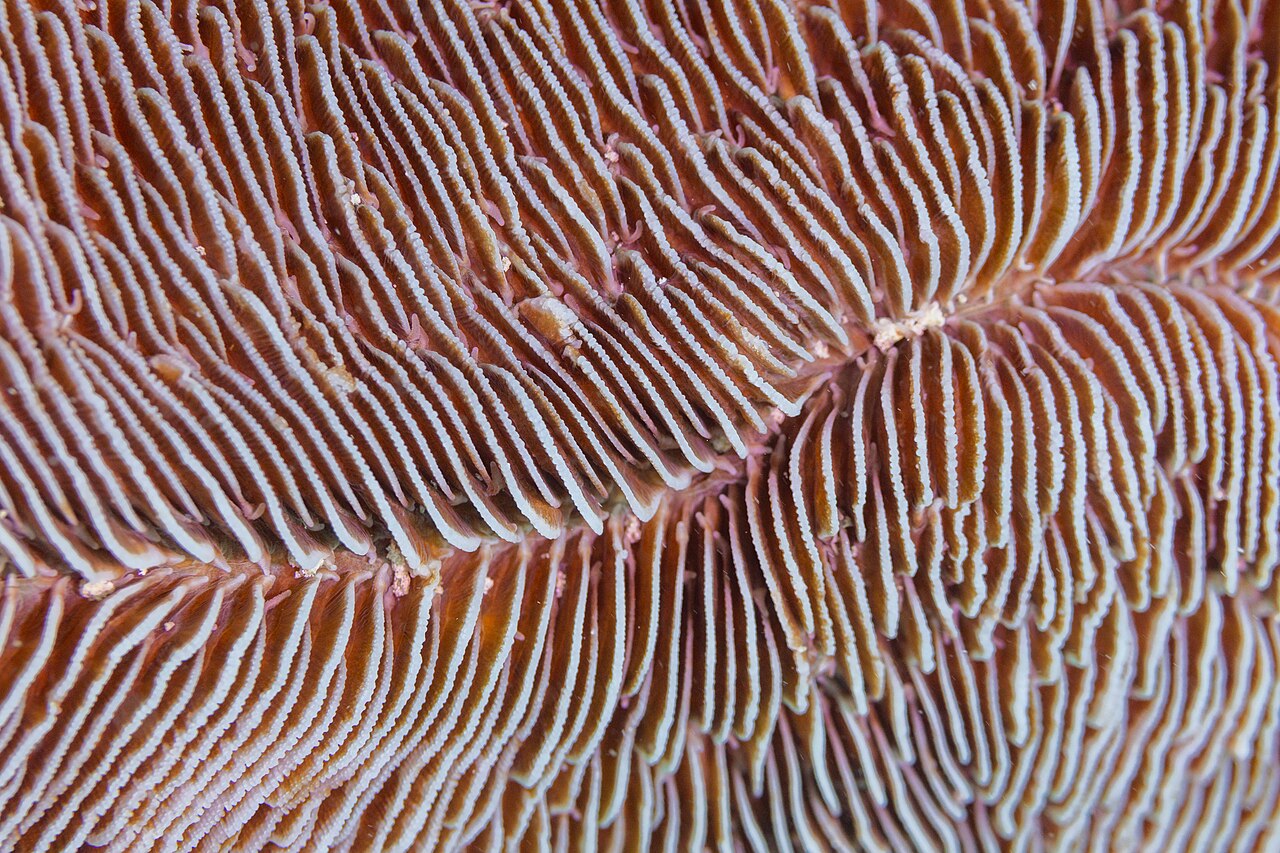
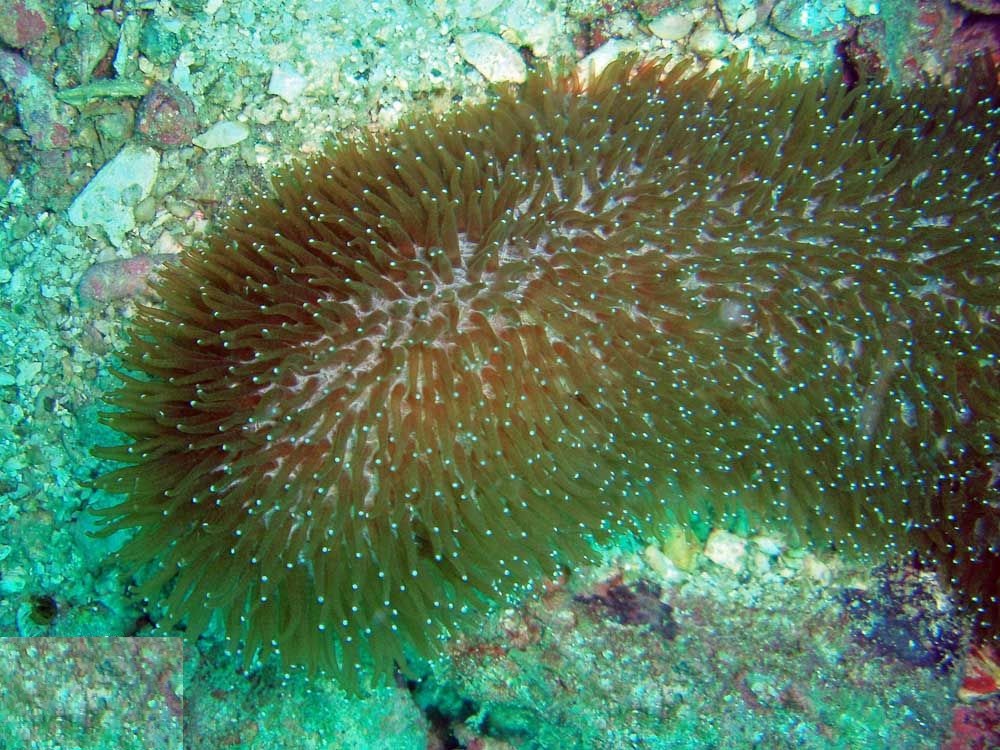
Herpolitha limax has an elongated structure with somewhat rounded ends and a single, central, axial furrow that extends nearly from end to end. In the furrow are many conspicuous slit-like mouths, with irregularly spaced, less-distinct mouths elsewhere. The primary septa are densely-toothed with fine spines and do not reach the edge of the colony, while the costae are low with crowded, obtuse teeth. Sometimes the furrow is forked and forms a 'Y' shape, a 'T' shape, or even an 'X' shape. This coral can grow to a length of 45 cm (18 in) or more and is usually some shade of grey, brown or greenish-brown.
It is native to the Indo-Pacific region, ranging from East Africa and the Red Sea to Australia, Indonesia, Papua New Guinea and the South Central Pacific. It is found on reef slopes and in lagoons, often in close proximity to Fungia spp. at depths down to about 30 metres (98 ft). Under stressful conditions it is susceptible to bleaching; in a period of high water temperature in Thailand in June 2010, bleaching was common and 52% of the corals of this species were affected. By the following February, they seemed to have recovered with no trace of thermal-induced bleaching being present.
Reader's Guide
Herpolitha limax is a colonial, free-living, zooxanthellate species of coral. Its conservation status has been assessed by the International Union for Conservation of Nature as being of 'least concern', due to its very wide range and common occurrence in suitable habitats. The population trend is unknown, but this coral is harvested for the reef aquarium trade, with over 2,000 pieces collected in 2005. Corals face threats associated with climate change, and a bleaching event in Thailand in June 2010 affected 52% of this species, though recovery was observed by the following February with species composition similar to before the event. The species is notable for its distinctive elongated shape and central furrow, which can occasionally fork into Y, T, or X shapes. Its free-living habit and presence in both reef slopes and lagoons contribute to its ecological role in Indo-Pacific ecosystems.
Did You Know?
- Herpolitha limax is the only member of the monotypic genus Herpolitha.
- In a 2010 bleaching event in Thailand, 52% of this species was affected.
- Over 2,000 pieces of this coral were collected for the aquarium trade in 2005.
Taxonomic Identity and the Solitary-Colony Question
Herpolitha limax belongs to the family Fungiidae, a group of Cnidaria that marine biologists commonly call mushroom corals or plate corals. The family encompasses thirteen extant genera, and within it, Herpolitha occupies a particularly puzzling structural position. Unlike clearly solitary genera such as Cycloseris and Fungia, or the single-organism-with-multiple-mouths design of Polyphyllia, Herpolitha sits at an ambiguous boundary. Taxonomists describe it as either a solitary organism bearing multiple mouths or, alternatively, a colony of individual polyps each maintaining its own separate mouth. This dual interpretation means that what a researcher calls one animal might, under a different reading, be a small community of coordinated individuals sharing a common skeleton. The ambiguity is not merely semantic; it affects how scientists count organisms in ecological surveys, how they interpret reproductive strategies, and how they classify the genus within the broader architecture of the Fungiidae. For Herpolitha limax specifically, this taxonomic uncertainty remains a defining feature of its scientific identity.
Lifestyle, Locomotion, and Nocturnal Rhythms
Fungiid corals, including Herpolitha limax, are generally solitary marine animals that possess the remarkable ability to move across the seafloor through benthic locomotion. This mobility distinguishes them from the vast majority of stony corals, which are permanently cemented to rock. In adulthood, most fungiids remain fully detached from the substrate, drifting or sliding along the benthic environment rather than anchoring themselves. Their external appearance can be deeply misleading: to an untrained observer, these corals often look bleached or entirely dead, their skeletal plates resembling weathered debris on the ocean floor. The living tissue is largely concealed during daylight hours. In most genera, a single polyp emerges from the center of the skeleton only after dark to extend its tentacles and capture prey. This nocturnal feeding cycle, combined with the cryptic daytime appearance, means that the true biological activity of a Herpolitha limax specimen is invisible for roughly half of every day. Some fungiids, however, are immobile and colonial, showing that the family encompasses a spectrum of lifestyles rather than a single behavioral model.
Ecological Interactions and Adaptive Strategies
Within their reef habitats, fungiids participate in a web of ecological relationships that extends well beyond simple predation. Several fungiid species serve as shelter for small reef fish, particularly members of the families Gobiidae and Labridae, which take refuge among the coral's structure. The genus Fungia hosts a commensal pipefish, Siokunichthys nigrolineatus, which benefits from proximity to the coral without imposing significant cost. On the predatory side, some fungiids display surprising dietary flexibility: Danafungia scruposa has been observed consuming jellyfish, a behavior that sets it apart from many other coral species. Morphologically, some fungiids grow elongated forms that closely resemble stichopodid sea cucumbers, a case of convergent appearance that likely aids in avoiding predation. Perhaps most striking is the reproductive plasticity observed in species like Fungia repanda and Ctenactis echinata, which can change sex. This shift is thought to respond to environmental pressures or energetic constraints, enhancing the organism's evolutionary fitness in a manner analogous to sex-change phenomena documented in certain dioecious plants.
Human Encounters and the Aquarium Trade
Despite their ecological significance, members of the Fungiidae family hold no commercial importance in fisheries, pharmaceuticals, or other industrial sectors. Their primary intersection with human activity comes through the ornamental aquarium trade, where they are collected and marketed under the trade name plate corals. This commercial channel, while modest in scale, does remove living specimens from their natural benthic environments. The very traits that make fungiids ecologically interesting also make them easy to overlook or misidentify in the wild. Heliofungia actiniformis, sometimes called the anemone coral, is so frequently mistaken for a true sea anemone that casual observers rarely recognize it as a scleractinian coral at all. Other fungiids, with their elongated silhouettes, can be confused with sea cucumbers. The family's tendency to appear bleached or lifeless during daytime hours compounds the problem: a Herpolitha limax resting on the seafloor may be walked over by a diver without anyone realizing they are stepping on a living, mobile cnidarian. This invisibility, paradoxically, may offer a degree of protection from over-collection, even as the aquarium trade continues to create demand for these unusual organisms.
Gallery
Frequently Asked Questions
What is Herpolitha limax?
Herpolitha limax is a free-living mushroom coral that stands alone as the sole species in the genus Herpolitha, within the family Fungiidae. It is distinguished by its elongated, tongue-like body and a single axial furrow running along its surface.
What are the common names for Herpolitha limax?
Reef enthusiasts and divers refer to this coral as the tongue, slipper, mole, or striate boomerang coral. Each nickname highlights its distinctive stretched-out shape, which sets it apart from the rounder forms of other Fungiidae.
How big can Herpolitha limax get?
This coral can reach a maximum length of roughly 45 centimetres, or about 18 inches. That elongated profile is what gives it the 'tongue' and 'slipper' nicknames used by hobbyists.
Where does Herpolitha limax live in the ocean?
The species has been recorded at depths down to approximately 30 metres (around 98 feet). Unlike many reef corals that cluster on hard substrate, it exists as a solitary, free-standing organism on the seafloor.
Is Herpolitha limax threatened or endangered?
The IUCN currently classifies Herpolitha limax as being of least concern, indicating no immediate risk to its populations. Its moderate depth range and solitary lifestyle appear to keep it relatively stable across its known habitat.
More in Plate and Mushroom Corals 1-24
Spotted an error? Know more?
Reader corrections go straight into our review queue. Suggest an edit · How this site is sourced