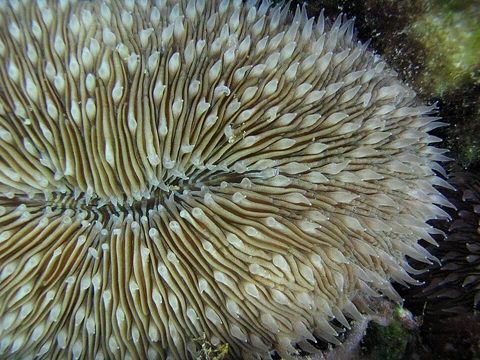
Danafungia scruposa
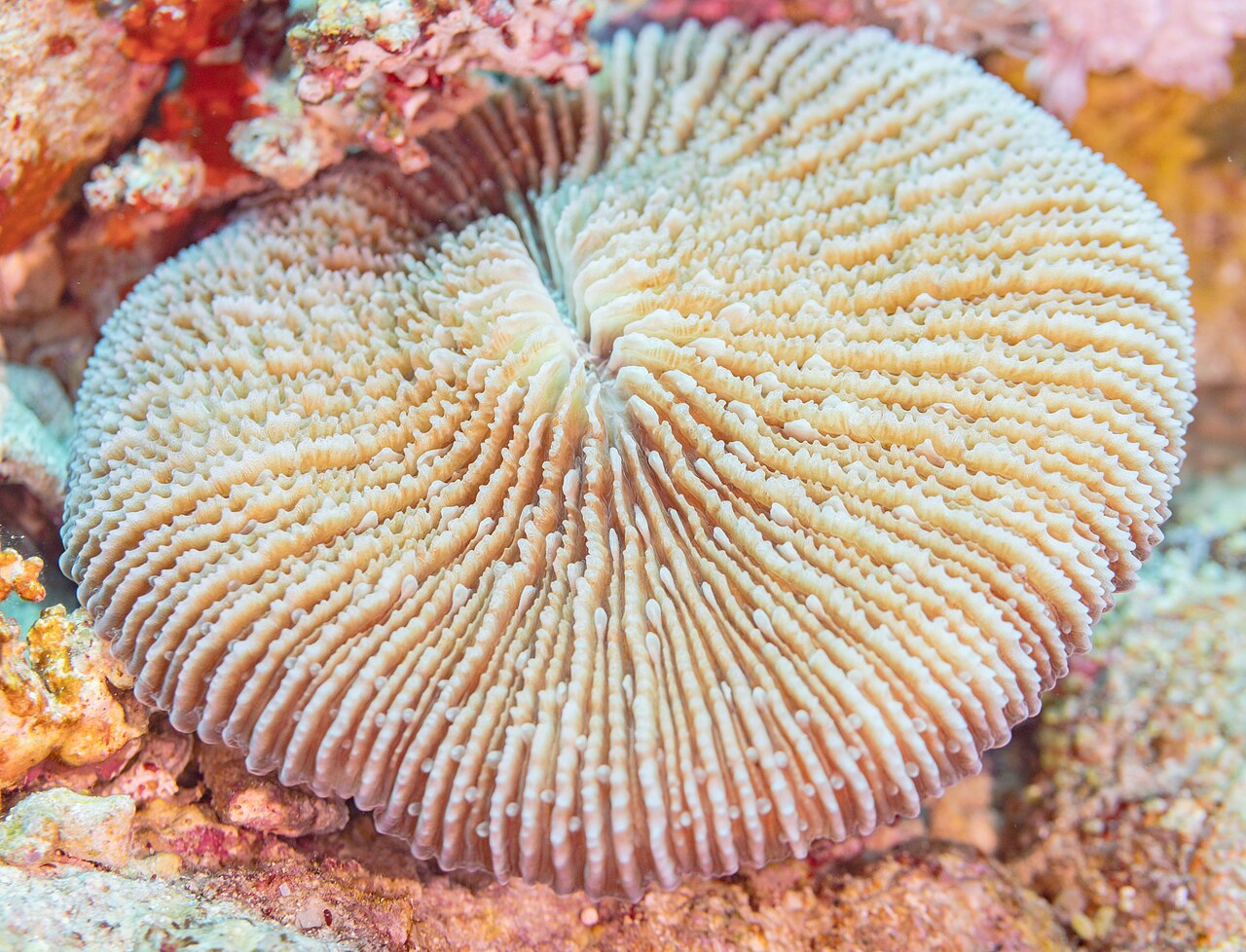
First coral observed eating jellyfish in the wild.

Diego Delso · CC BY-SA 4.0
Danafungia scruposa is a coral species that made headlines as the first one ever seen eating a jellyfish. Originally described by Klunzinger in 1879, it measures about 25 centimeters (10 inches) across and is listed as a least-concern species.
This coral is a single large polyp, oval or circular in shape, that can reach up to 38 centimeters (15 inches) across. It is typically blue or brown, with dense septa and sometimes tentacular lobes. Its usual diet ranges from bacteria to mesozooplankton about 1 millimeter in size. In 2009, during an algal bloom, researchers watched it consume the jellyfish *Aurelia aurita*—a first for any coral in the wild. Exactly how it captures jellyfish is unknown, though it may use its tentacles similarly to how some sea anemones feed on other jellyfish.
Danafungia scruposa lives on reef slopes at depths of 1 to 27 meters (3 to 89 feet). Its range includes the eastern and western Indian Ocean, parts of the central, northwestern, and western central Pacific Ocean, Japan, the East China Sea, the Red Sea, and eastern Australia. No population counts exist, but the species is thought to be common. A 1991 study found that 51% of specimens were bleached. Threats include bleaching, disease, climate change, fishing, predators, and human activities.
Quick Facts
- Taxon
- Danafungia scruposa
Facts from the source article.
Lore & Background
Danafungia scruposa is a coral that normally eats a variety of food from bacteria to mesozooplankton measuring 1 mm in diameter. During an algal bloom in 2009, researchers observed the coral consuming the jellyfish Aurelia aurita, marking the first time such behavior had been seen in the wild. It is not known how the coral captures jellyfish; it may have caught the jellyfish with its tentacles in the same way as some sea anemones feed on other jellyfish species.
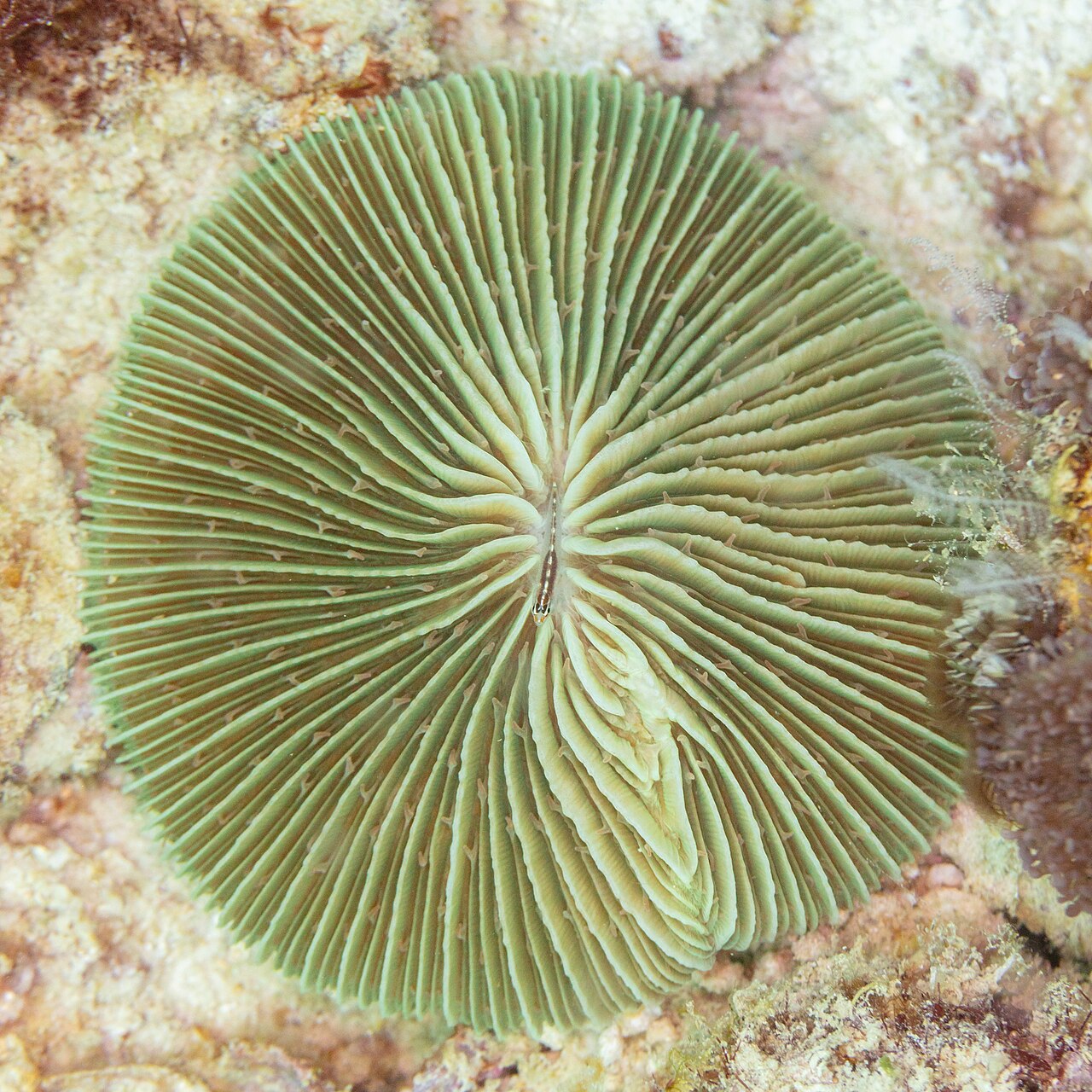
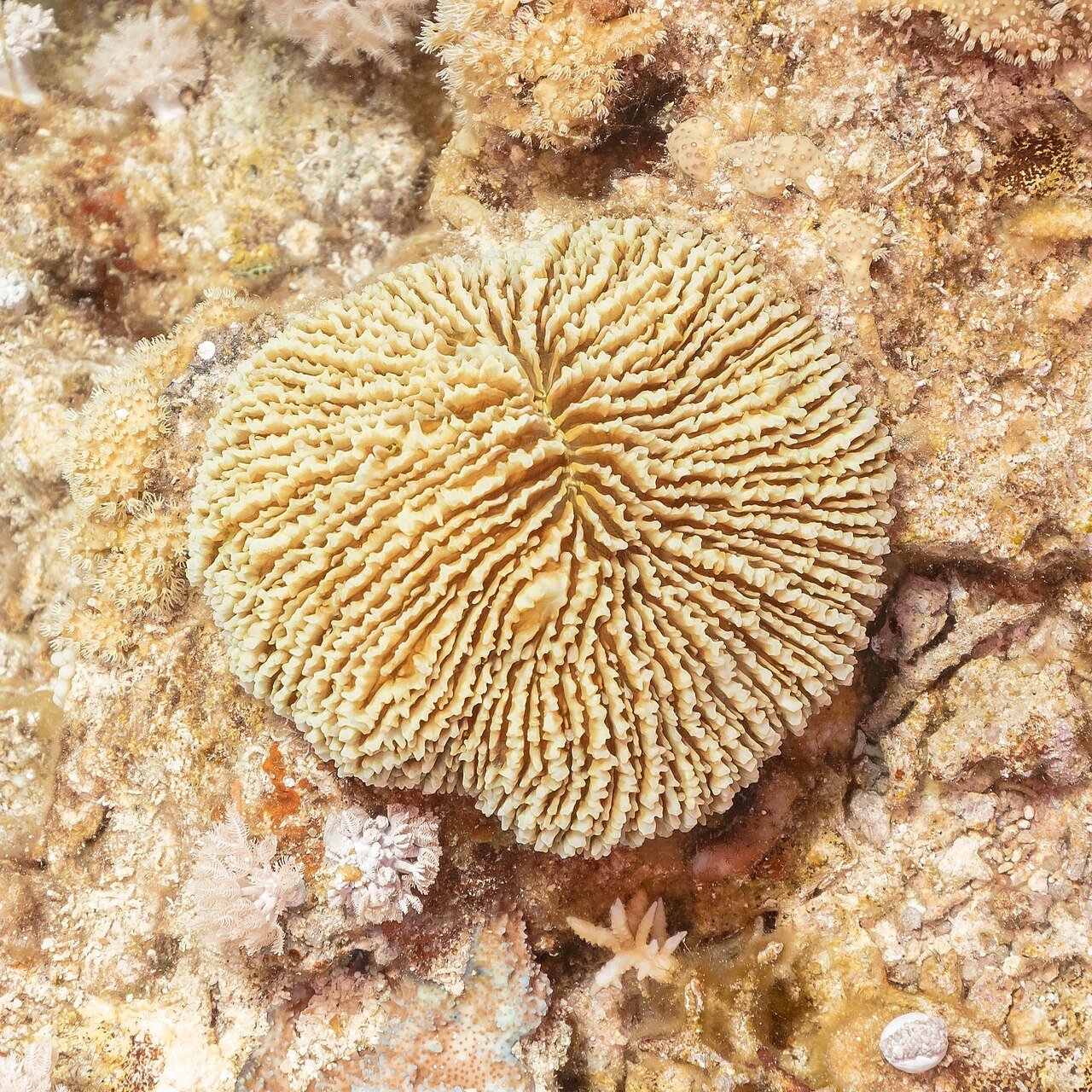
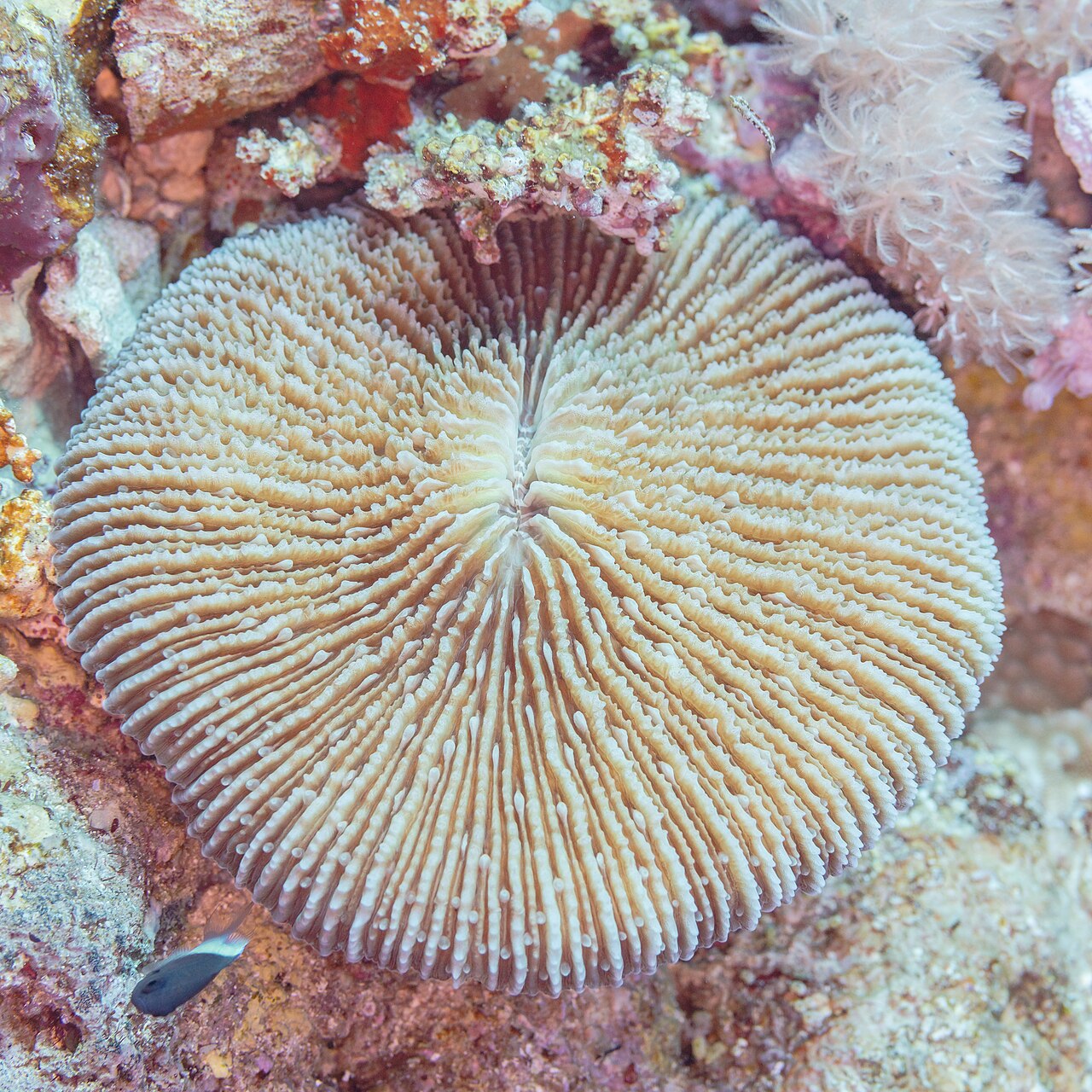
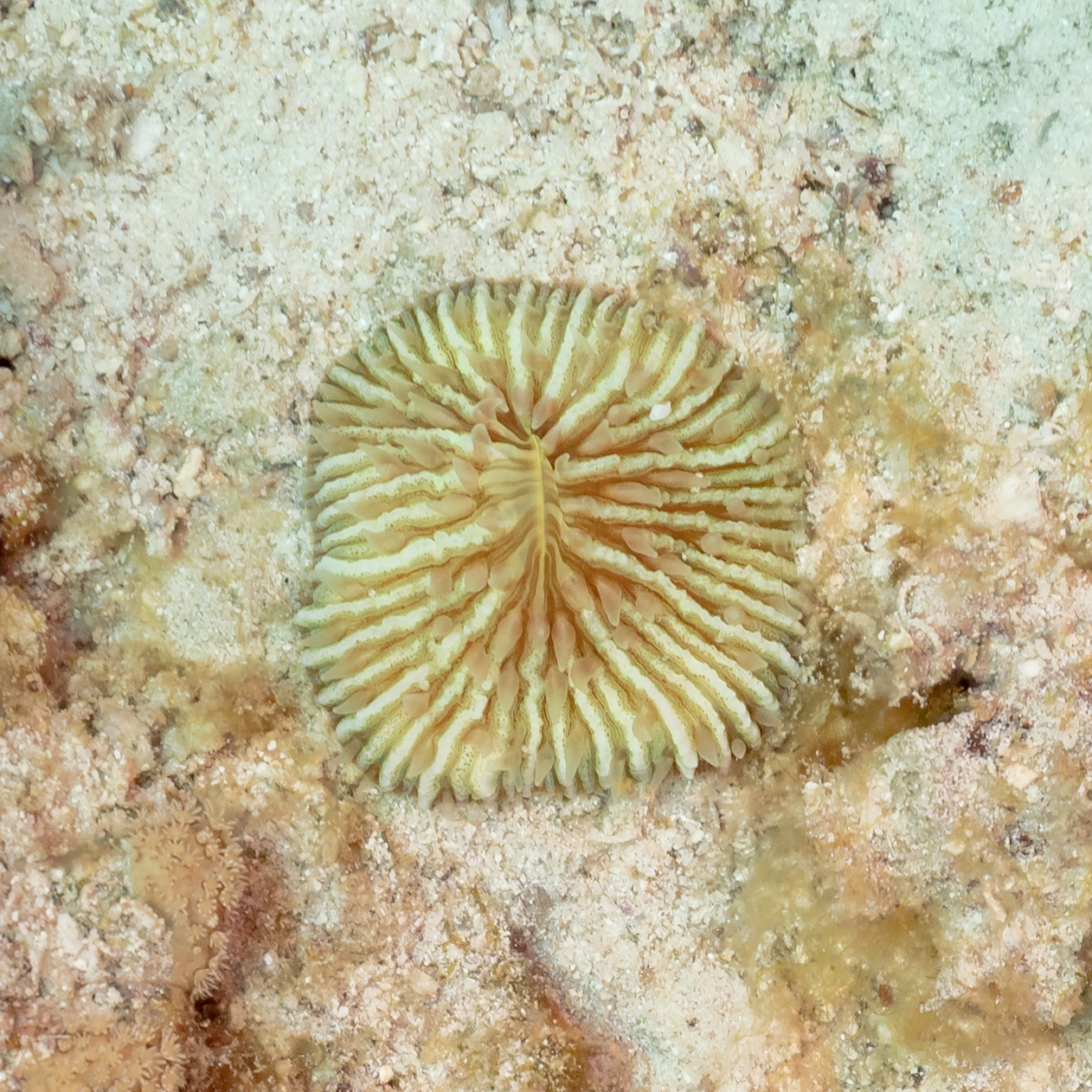
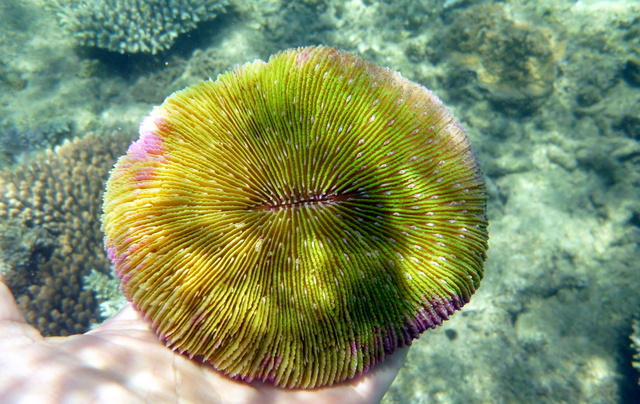
This coral is unusual in that it consists of a single oval or circular polyp up to 38 centimetres (15 in) across. The species may contain tentacular lobes and it has dense septa. It is blue or brown in colour.
D. scruposa is found in the eastern and western Indian Ocean, the eastern central, northwestern and western central Pacific Ocean, Japan, the East China Sea, the Red Sea, and eastern Australia. It is believed to be common and is found on the slopes of reefs. A 1991 study of specimens found that 51% were bleached. It is threatened by bleaching, disease, climate change, fishing, predators, and human activities.
Reader's Guide
Danafungia scruposa holds significance as the first coral species documented to eat jellyfish, a behavior observed during an algal bloom in 2009 when it consumed Aurelia aurita. This discovery expands understanding of coral feeding strategies beyond typical prey such as bacteria and mesozooplankton. The species was originally described by Klunzinger in 1879 as Fungia scruposa and is also known by the synonym Fungia corona. It is classified as a least-concern species by the IUCN, though it faces threats from bleaching, disease, climate change, fishing, predators, and human activities. A 1991 study found that 51% of specimens were bleached. Its distribution spans the Indian and Pacific Oceans, including the Red Sea and eastern Australia, at depths of 1 to 27 metres. The coral's single polyp can reach up to 38 centimetres across, and it may have tentacular lobes with dense septa. The mechanism by which it captures jellyfish remains unknown, but it may resemble the feeding method of some sea anemones.
Did You Know?
- Danafungia scruposa was the first coral observed to eat jellyfish.
- It was described by Klunzinger in 1879.
- It is found at depths between 1 and 27 metres on reef slopes.
Taxonomic Placement Within the Fungiidae
Danafungia scruposa is a member of the family Fungiidae, a group of cnidarians that go by the common names mushroom corals and plate corals. The family is a compact one, comprising thirteen extant genera catalogued in the World Register of Marine Species. What makes this family particularly interesting is the wide morphological spectrum it spans. At one end, genera such as Cycloseris and Fungia are strictly solitary organisms. At the other, Polyphyllia presents a single body bearing multiple mouths, while Ctenactis and Herpolitha occupy an ambiguous middle ground that can be interpreted either as a solitary animal with several mouths or as a colony of individuals each possessing its own. Danafungia scruposa falls within this broader family framework, sharing the cnidarian lineage and the general benthic marine lifestyle that unites all thirteen genera. Its placement among these relatives highlights the evolutionary flexibility that has produced such varied body plans from a common ancestral form, ranging from rigid solitary plates to loosely associated colonial arrangements.
Solitary Form, Locomotion, and Nocturnal Rhythm
Like the majority of its fungal coral relatives, Danafungia scruposa is a solitary marine animal that lives on the seafloor. A defining trait shared across most fungiid genera is the capacity for benthic locomotion, meaning the coral can reposition itself across the substrate rather than remaining permanently fixed. In adulthood, most species in the family stay fully detached from the seafloor, free to shift their location as environmental conditions change. To a casual observer, these corals often look bleached or even dead, their pale skeletal plates easily mistaken for inert debris among sand and rubble. Beneath that apparently lifeless exterior, however, a single polyp typically extends from the center of the skeleton during the night to feed. This cycle of daytime concealment and nighttime emergence is a hallmark of most genera in the family. While a few fungiids are entirely immobile and colonial, Danafungia scruposa aligns with the more common pattern of solitary, mobile, benthic existence that characterizes the majority of the family's members.
Feeding Ecology and the Jellyfish Observation
One of the most distinctive documented behaviors associated with Danafungia scruposa is its observation consuming a jellyfish, a predation event unusual enough to attract mainstream news coverage. This record places the coral in a somewhat unexpected ecological role, as a benthic plate coral actively taking a gelatinous zooplanktonic prey item. In the broader family, feeding is generally a nocturnal affair: the single polyp extends from the center of the skeletal plate after dark to capture food. Beyond diet, some fungiid species such as Fungia repanda and Ctenactis echinata can change their sex, a strategy researchers believe responds to environmental or energetic constraints and serves to improve the organism's evolutionary fitness. A parallel is drawn to similar sex-change phenomena observed in certain dioecious plants. While the jellyfish-feeding record for Danafungia scruposa remains a singular documented observation, it broadens the picture of dietary flexibility possible within this family of plate corals and suggests that their nocturnal polyp extension may be more versatile than previously assumed.
Human Interaction and the Ornamental Trade
Members of the family Fungiidae, including Danafungia scruposa, carry no commercial importance in terms of food, pharmaceuticals, or industrial applications. Their primary point of contact with humans is the ornamental aquarium trade, where fungiid corals are collected and marketed under the trade name plate corals. Because the family lacks any broader economic value, it does not attract the kind of large-scale harvesting pressure or fisheries-management attention that commercially significant reef organisms receive. Ecologically, however, fungiids play a supporting role in reef communities. The species Heliofungia actiniformis, for example, provides shelter to small fish from the families Gobiidae and Labridae, and the genus Fungia hosts a commensal pipefish, Siokunichthys nigrolineatus. Some fungiids are elongated enough to resemble a sea cucumber, while Heliofungia actiniformis can be mistaken for a sea anemone because its tentacles stay visible in daylight. Danafungia scruposa's collection for aquariums remains the most direct link between this solitary coral and human activity, a trade that, while modest, keeps the species in the public eye.
Gallery
Frequently Asked Questions
What is Danafungia scruposa?
It is a solitary plate-and-mushroom coral first formally described by Klunzinger in 1879. The organism appears as a single large oval or circular polyp with dense septa, usually showing up in blue or brown coloration.
Why did Danafungia scruposa make headlines?
In 2009, researchers witnessed this coral consume a jellyfish in the wild during an algal bloom, making it the first coral ever recorded doing so. That single observation turned the species into a notable talking point in marine-biology discussions.
How large does Danafungia scruposa grow?
The polyp typically spans roughly 25 centimetres (about 10 inches) across, though individuals can reach up to 38 centimetres (15 inches) in diameter. It is found at depths ranging from 1 to 27 metres (3 to 89 ft).
What does Danafungia scruposa normally eat?
Under typical conditions its diet consists of bacteria and small mesozooplankton roughly 1 millimetre in size. The 2009 jellyfish capture was an extraordinary outlier rather than a regular part of its feeding repertoire.
What is the conservation status of Danafungia scruposa?
It is currently listed as a least-concern species, indicating no significant threat of population decline in the wild. No special protections beyond general marine-habitat conservation are noted for it.
More in Plate and Mushroom Corals 1-24
Spotted an error? Know more?
Reader corrections go straight into our review queue. Suggest an edit · How this site is sourced