Fungia
Monotypic coral genus reduced from over 30 species.

Diego Delso · CC BY-SA 4.0
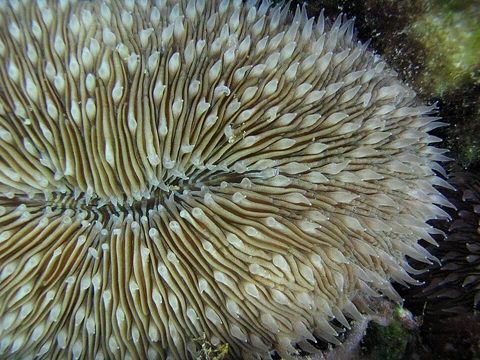
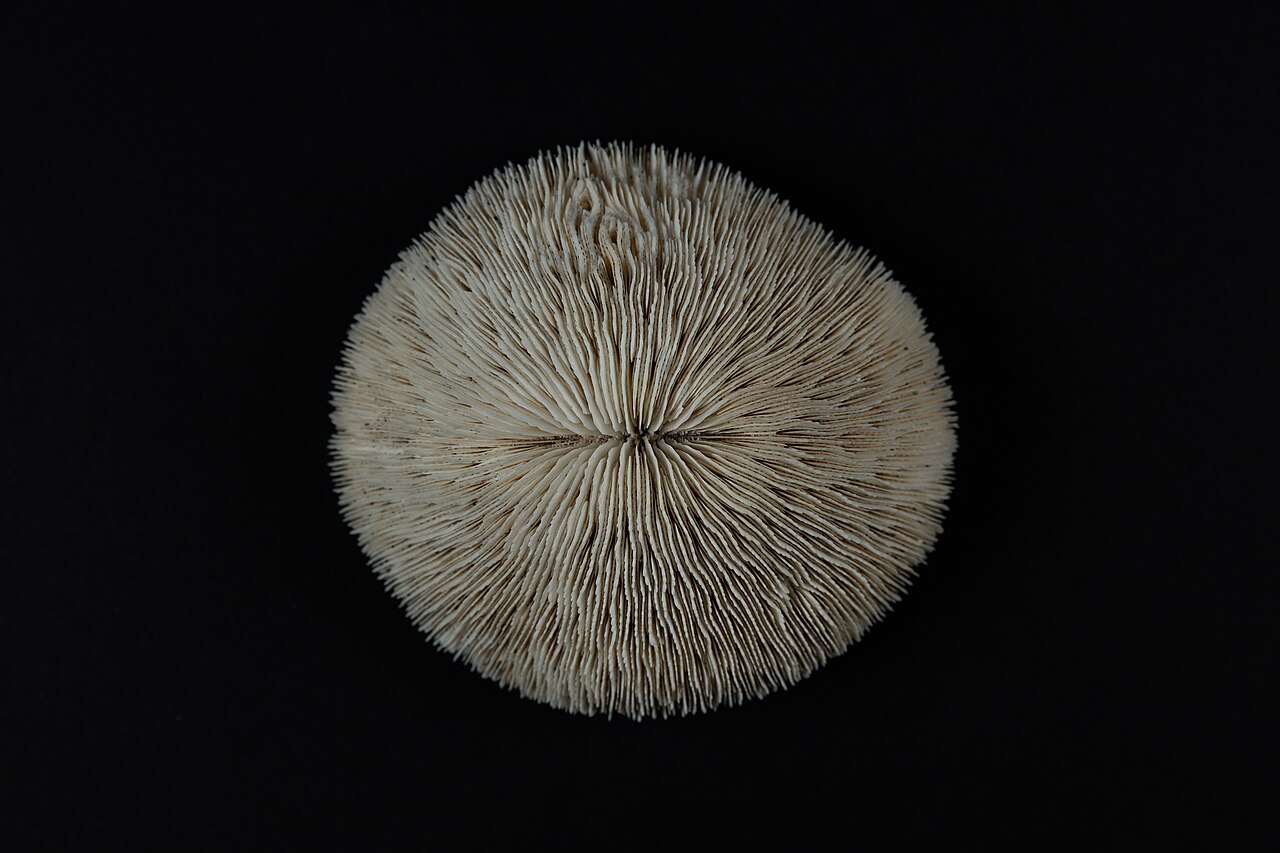
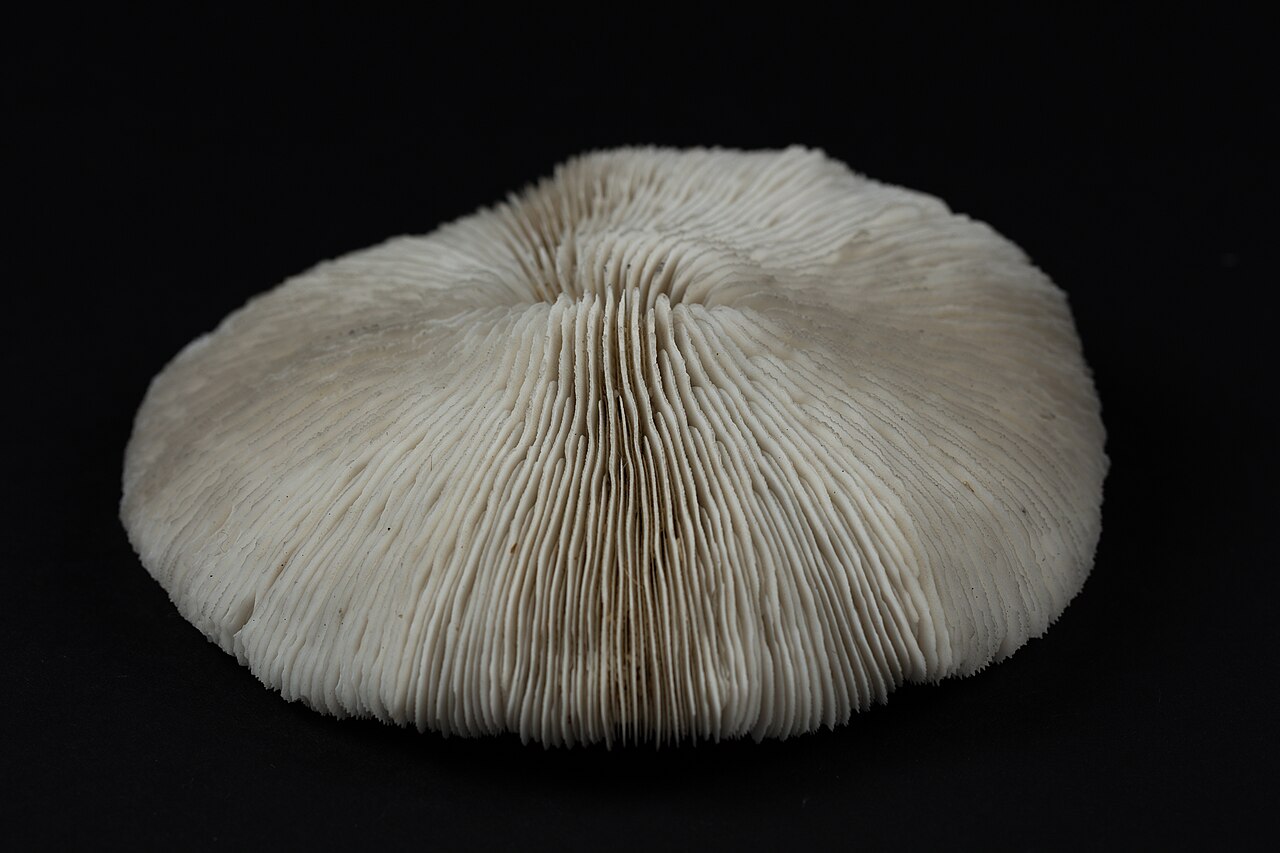
Fungia is a coral genus belonging to the family Fungiidae. Today, it contains just one species, *Fungia fungites*, which lives on Indo-Pacific reefs. Before 2015, over 30 species were grouped under this genus, but newer research has narrowed it down to a single one. These corals are mostly solitary, with some individuals reaching 30 centimeters across. Young ones attach to rock, but larger adults break free and become mobile. They display bright colors such as white, pink, red, purple, blue, and yellow, making them popular in reef aquariums. Their bodies are round or oval discs, with a central mouth—sometimes a slit—ringed by tentacles. The polyp sits inside a hard, cup-like skeleton called a corallite. Inside the corallite wall are vertical plates called septa, which extend outward as costae beneath and around the coral; both are sturdy. *Fungia fungites* can be mistaken for *Cycloseris* corals, but *Cycloseris* are free-living from the start, while *Fungia* leaves a scar from its juvenile attachment. Like other large-polyp stony corals, *Fungia* uses several feeding methods: it captures plankton, filters food particles from the water, and absorbs dissolved organic matter. Its feeding tentacles are usually visible at night. It also reproduces asexually, forming daughter colonies from broken pieces or new polyps, and it can regenerate.
Quick Facts
- Taxon
- Fungia fungites
Facts from the source article.
Lore & Background
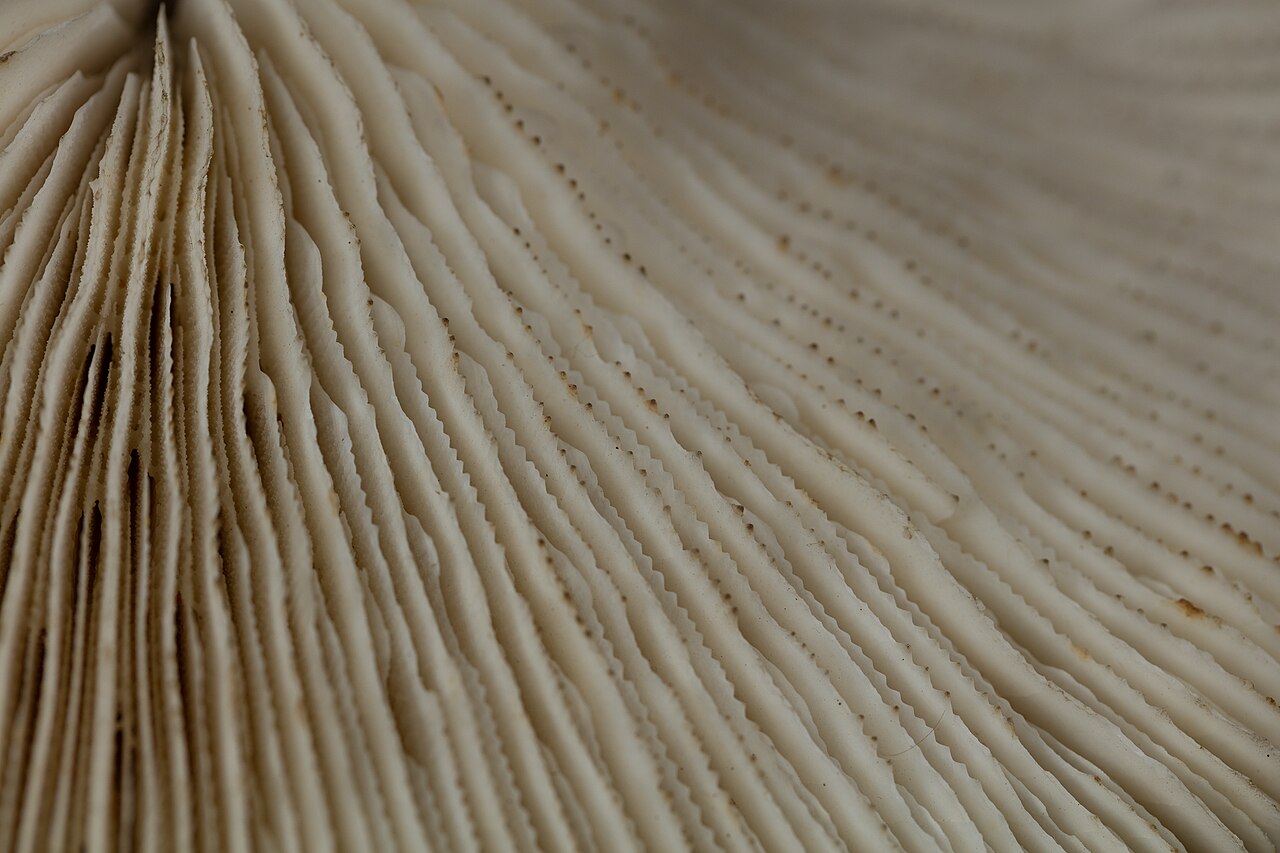
Corals of Fungia fungites are mostly solitary, some attaining 30 centimetres in diameter. The juveniles attach themselves to rock but larger individuals detach themselves and become free living. They are found in various bright colours including white, pink, red, purple, blue and yellow and are popular with keepers of reef aquariums. The discs are either round or oval and the central mouth, which is surrounded by tentacles, may be a slit. The polyp sits in a calcareous cup, the corallite. The septa are vertical skeletal elements inside the corallite wall and the costae join the septae and continue outside the corallite wall and underneath the coral. Both the septae and costae are robust. Fungia fungites may be confused with specimens of the related genus Cycloseris but the latter are always free living, even as juveniles, while the former bear a scar showing where they were attached when young.
Reader's Guide
Fungia corals, like other large polyp stony corals, have developed several feeding strategies. They also capture planktonic organisms, food particles from the water column, and can absorb dissolved organic matter. Feeding tentacles are usually visible at night. Fungia also reproduce asexually. Daughter colonies or polyps may form and they will form offspring from broken pieces. They show regeneration. The genus was historically considered to contain over 30 species, but taxonomic studies reduced it to a single species, Fungia fungites, as of 2015. This revision highlights ongoing refinement in coral systematics. The species is notable for its solitary, free-living adult form and its popularity in reef aquariums due to its bright colors. Its ability to detach from substrate as it grows and its distinct attachment scar help distinguish it from similar free-living genera like Cycloseris.
Did You Know?
- Fungia is monotypic with the single species Fungia fungites.
- Until 2015, the genus Fungia had more than 30 species.
- Juvenile Fungia fungites attach to rock, but larger individuals become free living.
- Fungia fungites can be found in white, pink, red, purple, blue, and yellow.
Morphology & Diversity Across Thirteen Genera
The Fungiidae, a family within the phylum Cnidaria, encompass thirteen living genera that display a remarkable spectrum of body plans. At one end of this spectrum, genera like Cycloseris and Fungia exist as true solitary organisms—each individual a single polyp housed within its own skeletal structure. At the other end, the boundaries between individual and colony blur considerably. Polyphyllia, for instance, is a single organism bearing multiple mouths, while Ctenactis and Herpolitha occupy an ambiguous middle ground: they can be interpreted either as solitary animals with several mouths or as small colonies of individuals, each possessing its own separate mouth. Despite this diversity, most fungiids share a common lifestyle. They are benthic marine animals that, in adulthood, remain entirely detached from the seafloor substrate, retaining the ability to move across it. Their skeletons often give them a bleached or lifeless appearance, yet at night a single polyp typically emerges from the center of the skeleton to feed. A few species, however, are both immobile and colonial, representing yet another variation on this theme.
Sexual Plasticity as an Ecological Strategy
One of the most striking ecological traits documented in the Fungiidae is the capacity for sex change. Species such as Fungia repanda and Ctenactis echinata are known to shift their sexual state over the course of their lives. Researchers posit that this plasticity is triggered by environmental pressures or energetic constraints, allowing the organism to allocate its limited resources toward whichever reproductive strategy yields the greatest evolutionary fitness at a given moment. This kind of adaptive sex reversal is not unique to the animal kingdom; analogous phenomena have been observed in certain dioecious plant species, where individuals may switch between male and female reproductive roles depending on conditions. For a benthic coral that must balance the costs of feeding, locomotion, and reproduction, the ability to shift reproductive investment in response to fluctuating circumstances represents a meaningful survival advantage. It underscores that even organisms loosely attached to the seafloor face complex ecological trade-offs that drive sophisticated physiological responses.
Notable Species & Ecological Interactions
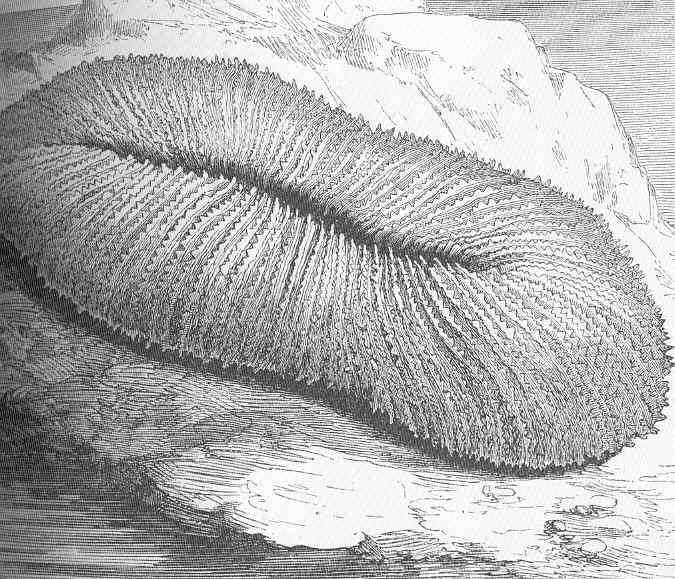
Several fungiid species have drawn particular attention for their unusual appearances and ecological interactions. Heliofungia actiniformis, commonly called the anemone coral, is so easily confused with a true sea anemone that casual observers frequently misidentify it; the key giveaway is that its tentacles remain visibly extended even during daylight hours, unlike most other corals. This species also serves as a microhabitat, providing shelter for small fish belonging to the families Gobiidae and Labridae. The genus Fungia hosts a commensal pipefish, Siokunichthys nigrolineatus, which lives in close association with the coral. Other fungiids push the boundaries of coral morphology even further: some species grow into elongated forms that closely resemble stichopodid sea cucumbers, while Danafungia scruposa has been documented actively consuming jellyfish—a feeding behavior that sets it apart from the typical filter-feeding strategy of most cnidarians. These examples illustrate just how ecologically diverse and morphologically variable the family truly is.
Human Interaction & the Aquarium Trade
Unlike many other coral families, the Fungiidae hold no significant commercial value in industries such as construction, jewelry, or pharmaceuticals. Their primary point of contact with human activity comes through the ornamental aquarium trade, where they are collected and marketed under the common name "plate corals." This trade, while modest in scale compared to the exploitation of reef-building corals, still represents a direct extraction of wild specimens from their marine habitats. The fact that these organisms are sold as living decorative items highlights an interesting tension: to the aquarist, a Fungia or Cycloseris specimen is an attractive addition to a reef tank, while to ecologists, each individual removed from the wild represents a small loss of genetic diversity and a disruption to the local benthic community. Because most fungiids are solitary or only loosely colonial, the removal of even a single specimen can affect a disproportionate share of the local population. Their lack of broader commercial importance means they receive comparatively little attention in conservation policy, despite being ecologically distinctive members of the coral fauna.
Gallery
Frequently Asked Questions
What is Fungia?
Fungia is a genus of solitary plate coral in the family Fungiidae, found on reefs across the Indo-Pacific. It is currently recognized as containing only one species, Fungia fungites, after taxonomic revisions consolidated what was once a much larger group.
How large can Fungia grow?
Mature individuals can reach up to about 30 centimeters (roughly 12 inches) in diameter. Their body forms a flat, round or oval disc shape.
Why do adult Fungia corals move around?
Young Fungia start life anchored to hard substrate, but as they grow larger they detach and become free-living. This mobility lets them reposition themselves on the reef floor.
Why was Fungia reduced to a single species?
Prior to 2015, researchers grouped more than 30 species under the Fungia name. Newer phylogenetic and morphological research showed that most of those belonged to other genera, leaving only Fungia fungites in the group.
Is Fungia popular in the aquarium hobby?
Yes, its vivid coloration—ranging from white and pink to red, purple, blue, and yellow—makes it a sought-after addition to reef tanks. Its relatively simple care needs and striking appearance keep it a fan favorite among hobbyists.
More in Plate and Mushroom Corals 1-24
Spotted an error? Know more?
Reader corrections go straight into our review queue. Suggest an edit · How this site is sourced