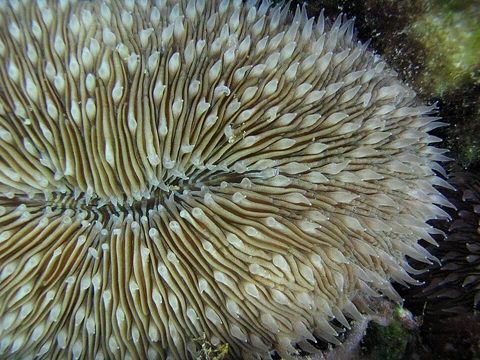
Ctenactis echinata
Free-living solitary disc coral of the Indo-Pacific.

Kerryn Johns · CC BY 4.0
Ctenactis echinata is a solitary, free-living disc coral from the Fungiidae family. It lives across the Indo-Pacific and is common throughout its extensive habitat, leading the International Union for Conservation of Nature to classify it as "least concern."
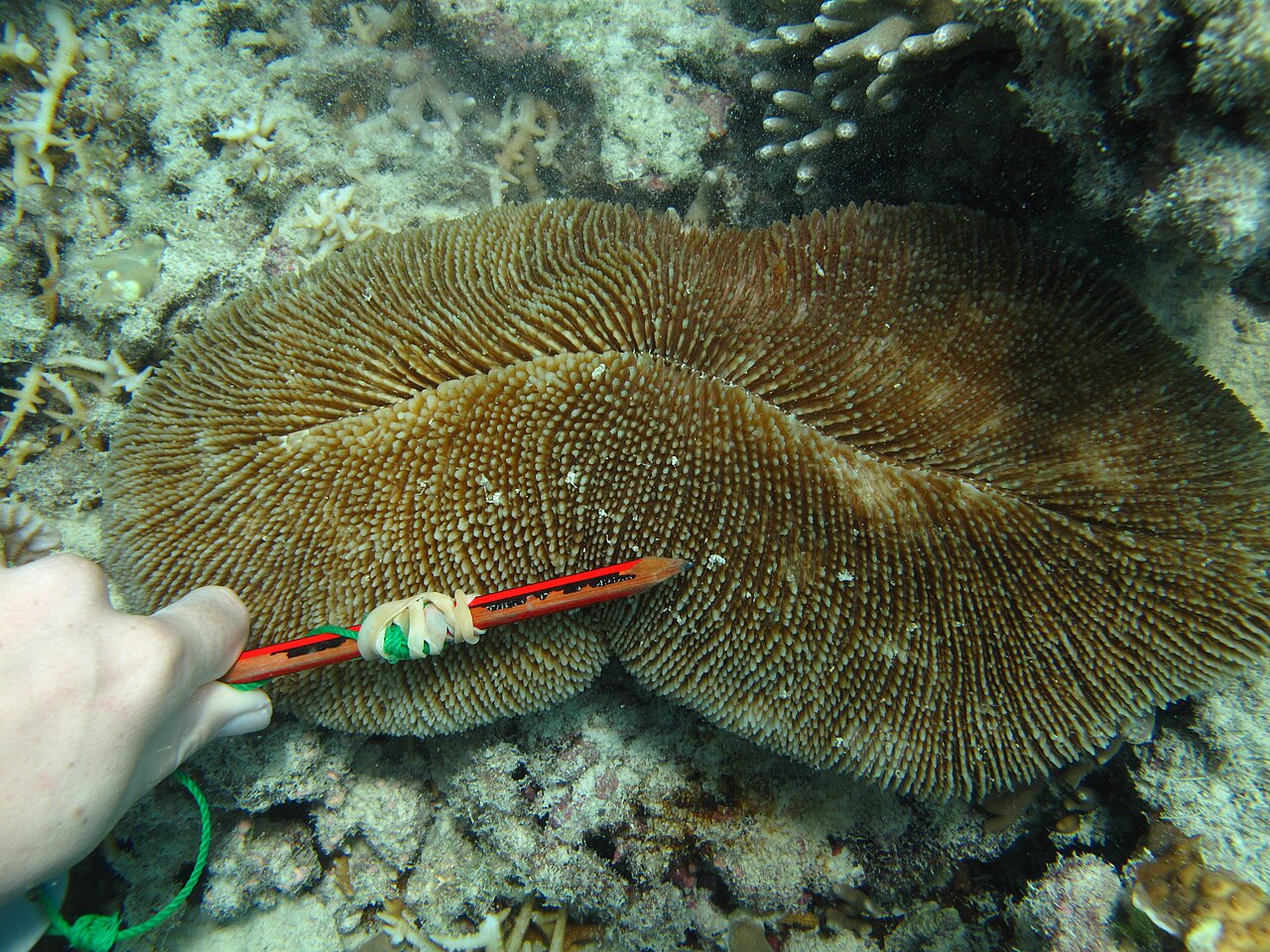
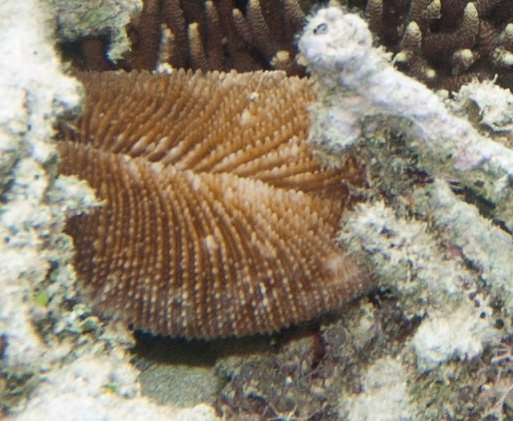
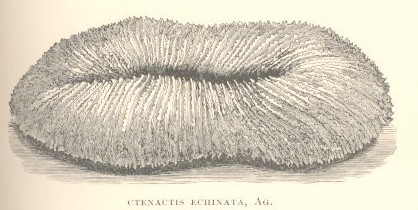
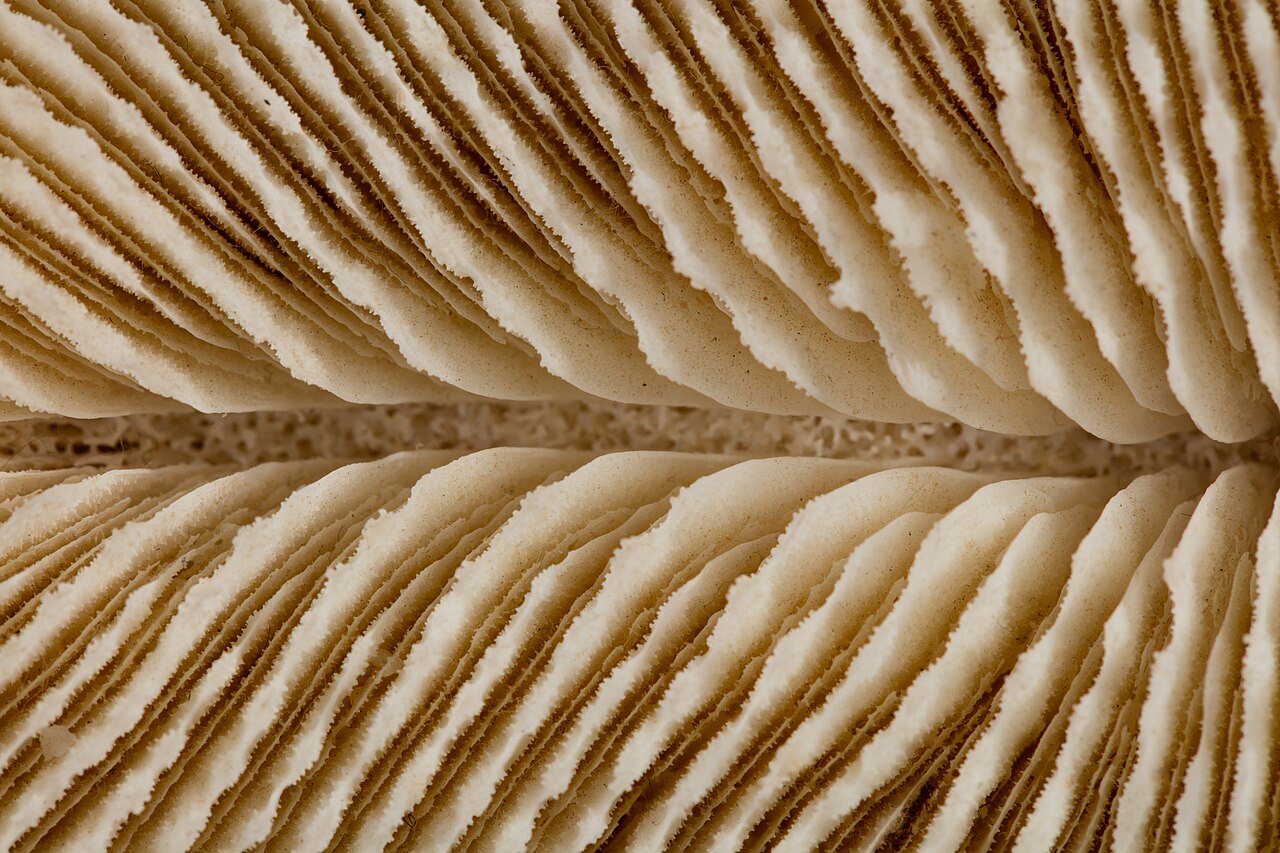
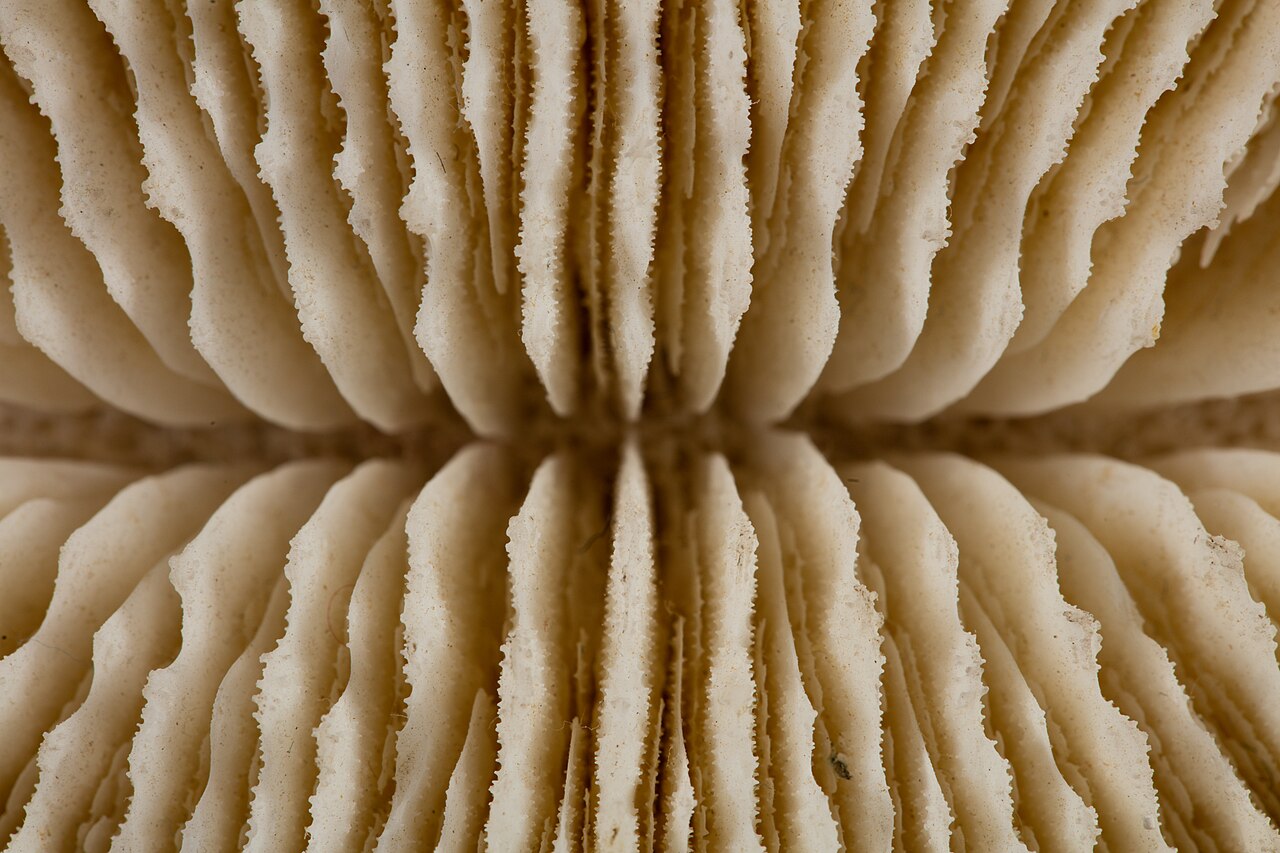
This coral forms an oval disc, typically reaching about 25 centimeters long and 10 centimeters wide. A furrow runs along most of its length, usually holding a single mouth, though sometimes more than one appears. The primary septa are thick and heavily toothed with large triangular teeth, while one to five smaller, lightly toothed secondary septa sit between them. A large individual can have over a thousand septa in total. On the underside, the costae are poorly defined and bear long, branching or cylindrical spines arranged in radial rows. The coral’s color is generally pale brown.
Its range stretches from the Red Sea and Indian Ocean to China, Japan, Indonesia, northern Australia, and various western and central Pacific island groups. It inhabits reef flats, slopes, and lagoons down to depths of 20 meters.
Quick Facts
- Taxon
- Ctenactis echinata
Facts from the source article.
Lore & Background
Ctenactis echinata is a medium to large oval disc coral, growing to a length of about 25 cm and a width of 10 cm. It has an axial furrow extending along most of its length with usually a single mouth opening, but occasionally there may be more than one. The primary septa are thick and heavily toothed with large triangular teeth, while one to five secondary septa are smaller and lightly toothed; a large individual may have more than a thousand septa. The costae, on the underside of the coral, are poorly defined and have long arborescent or cylindrical spines arranged in radial rows. The colour of this coral is usually pale brown.
This species is native to the Indo-Pacific region, with a range extending from the Red Sea and Indian Ocean to China, Japan, Indonesia and northern Australia, as well as various island groups in the western and central Pacific Ocean. It is found on reef flats and slopes and in lagoons to depths of 20 m.
Reader's Guide
Ctenactis echinata is a free-living solitary disc coral in the family Fungiidae, noted for its medium to large oval disc shape and axial furrow. The article describes it as a common species throughout its wide Indo-Pacific range, and the International Union for Conservation of Nature has rated its conservation status as being of 'least concern'. Its significance lies in its abundance and broad distribution across reef flats, slopes, and lagoons from the Red Sea to the central Pacific. The coral's morphology includes thick, heavily toothed primary septa and up to five smaller secondary septa, with a large individual possibly having more than a thousand septa. The underside features poorly defined costae with long arborescent or cylindrical spines in radial rows. Its typical pale brown coloration and solitary, free-living habit distinguish it within the Fungiidae. The article provides no further details on its ecological role or interactions, but its 'least concern' status indicates it is not currently threatened across its range.
Did You Know?
- Ctenactis echinata is a free-living species of solitary disc coral in the family Fungiidae.
- Its conservation status is rated as 'least concern' by the International Union for Conservation of Nature.
Morphology and the Solitary-Colony Ambiguity
Ctenactis echinata belongs to the family Fungiidae, a group of cnidarians commonly referred to as mushroom corals or plate corals. The family encompasses thirteen extant genera, and within it, Ctenactis occupies a particularly interesting morphological position. Unlike clearly colonial corals or unambiguously solitary ones, Ctenactis (along with the related genus Herpolitha) defies a simple classification. It can be interpreted either as a single organism bearing multiple mouths or as a loose colony of individuals, each possessing its own separate mouth. This ambiguity sets it apart from genera like Cycloseris and Fungia, which are straightforwardly solitary, or Polyphyllia, which is a single organism with multiple mouths. Despite this structural complexity, Ctenactis echinata is fundamentally a solitary marine animal. It is capable of benthic locomotion, meaning it can move across the seafloor rather than being permanently anchored. In adulthood, most fungiids, including Ctenactis, remain fully detached from the substrate, free to reposition themselves on the ocean floor.
Sexual Plasticity and Evolutionary Strategy
One of the most remarkable biological traits documented in Ctenactis echinata is its capacity to change sex. This phenomenon, shared with at least one other fungiid species (Fungia repanda), represents a form of reproductive plasticity that allows the organism to shift its sexual role over its lifetime. Researchers posit that this sex change is triggered by environmental pressures or energetic constraints, suggesting that the coral adjusts its reproductive strategy when conditions become unfavorable for its current sexual state. The ultimate benefit appears to be an improvement in the organism's overall evolutionary fitness, ensuring that it can still contribute genetically even when circumstances would otherwise limit its reproductive success. This adaptive flexibility draws a parallel to similar phenomena observed in certain dioecious plant species, where individuals also alter their reproductive expression in response to ecological pressures. For a benthic, largely solitary marine animal, such plasticity represents a significant survival advantage in the variable conditions of the ocean floor.
Nocturnal Feeding and Daytime Concealment
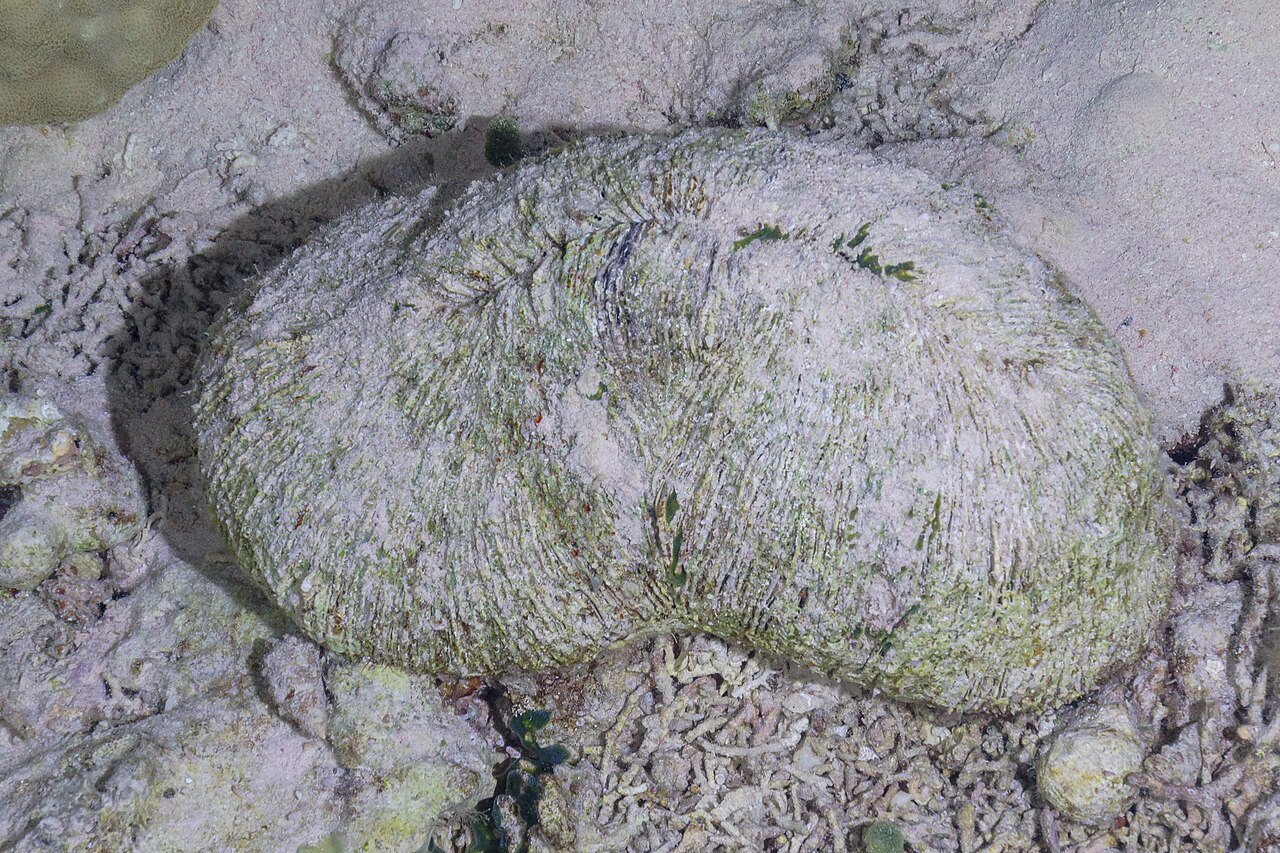
During the daylight hours, Ctenactis echinata presents a deceptively inert appearance. Like many fungiids, it is often mistaken for a bleached or dead coral fragment resting on the seafloor. This daytime stillness is not a sign of mortality but rather a behavioral strategy. In most genera of the family, including Ctenactis, the feeding polyp remains retracted within the skeleton during the day, keeping the organism low-profile and seemingly lifeless. It is only after darkness falls that the animal reveals its true nature: a single polyp emerges from the center of the skeletal structure to extend its tentacles and capture prey. This nocturnal feeding cycle is a defining behavioral trait of the family. The combination of a hard, often pale skeleton and the retracted polyp creates an effective form of concealment against predators and environmental exposure. For a solitary, free-living marine animal that is not permanently attached to the substrate, this daily rhythm of concealment and foraging is central to its survival on the open ocean floor.
Aquarium Trade and Human Relevance
Ctenactis echinata, like all members of the family Fungiidae, is not of any commercial importance. The species is not exploited for industrial, economic, or food-related purposes. Its primary point of contact with human activity comes through the aquarium trade, where fungiids are collected and sold under the common trade name "plate corals," a label that reflects their characteristic flattened, disc-like skeletal form. This ornamental trade is the principal way Ctenactis echinata enters human-managed environments. The family's thirteen extant genera display a notable range of morphologies, from unambiguously solitary organisms to those with ambiguous multi-mouthed structures, giving the group a visual diversity that appeals to collectors. The free-living, benthic existence of these corals, remaining fully detached from the substrate in adulthood, sets them apart from permanently anchored coral forms. Their capacity for locomotion across the seafloor adds another dimension to their appeal, as they are not static decorations but active, mobile animals that happen to bear a hard skeletal plate.
Gallery
Frequently Asked Questions
What is Ctenactis echinata?
It is a solitary, free-living disc coral that belongs to the Fungiidae family. Rather than growing as part of a colonial structure, it exists as a single oval plate resting on the seafloor.
How large does Ctenactis echinata get?
The disc typically measures around 25 centimeters in length and roughly 10 centimeters in width. A longitudinal furrow runs along most of its length and usually contains a single mouth, though occasionally more than one is present.
Where does Ctenactis echinata live?
This species is distributed across the Indo-Pacific and can be found at depths reaching about 20 meters. It is a common sight throughout its broad range rather than being restricted to a single reef system.
What does Ctenactis echinata look like?
It appears as a pale brown oval plate whose primary septa are thick and armed with large triangular teeth. One to five smaller secondary septa, bearing lighter toothwork, may also be visible on the surface.
Is Ctenactis echinata endangered?
No; the IUCN classifies it as "least concern" because it is widespread and abundant across its Indo-Pacific habitat. Its broad distribution and common occurrence keep it well clear of extinction risk.
More in Plate and Mushroom Corals 1-24
Spotted an error? Know more?
Reader corrections go straight into our review queue. Suggest an edit · How this site is sourced