Tsingy de Namoroka National Park
National park in northwestern Madagascar with tsingy walls and long caves.

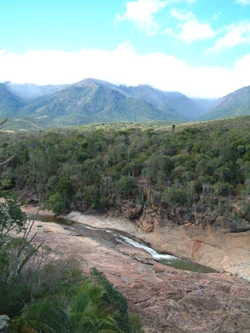
Tsingy de Namoroka National Park, formerly known as Tsingy de Namoroka Strict Nature Reserve, is a national park located in the northwestern part of Madagascar in the Mahajanga Province, specifically the Soalala District. Established as a strict nature reserve in 1927 and becoming a special reserve in 1966, it forms a complex with the neighboring Baie de Baly National Park. The park is noted for its tsingy walls, caves, canyons, and natural swimming pools, and contains the Marosakabe cave system, which is the longest cave in Africa at 113 km.
Quick Facts
- Iucn Category
- II
- Location
- Northwestern Madagascar
- Nearest City
- Soalala, Mahajanga
- Area
- 220.71 km2
- Established
- 1927
- Governing Body
- Madagascar National Parks Association (PNM-ANGAP)
Facts from the source article.
Lore & Background
Namoroka Strict Nature Reserve was established in 1927 and became a special reserve in 1966. It forms a complex with the neighboring Baie de Baly National Park. The park is located about 50 km south of Soalala, with a dry season lasting about seven months and a rainy season lasting five months, resulting in about 115 cm of precipitation per year and an average temperature of 25 °C.
Reader's Guide
Tsingy de Namoroka National Park is significant for its unique karst landscape, including tsingy walls, caves, canyons, and natural swimming pools. The Marosakabe cave system, at 113 km, is the longest cave in Africa. The park's biodiversity is notable: over 81 bird species (31 endemic to Madagascar), over 30 reptile species, five frog species, and 16 mammal species including eight lemurs. These lemurs include Von der Decken's sifaka, red lemur, eastern lesser bamboo lemur, Masoala fork-crowned lemur, gray mouse lemur, Milne-Edwards' sportive lemur, fat-tailed dwarf lemur, and the aye-aye. The park's protected status since 1927 has helped preserve this habitat, though it remains part of a complex with Baie de Baly National Park.
Did You Know?
- The Marosakabe cave system is 113 km long and is the longest cave in Africa.
- The park has over 81 species of birds, 31 of which are endemic to Madagascar.
- Eight lemur species live in the park, including the aye-aye and Von der Decken's sifaka.
- The park was originally established as a strict nature reserve in 1927.
More in National parks of Madagascar 1-24
Spotted an error? Know more?
Reader corrections go straight into our review queue. Suggest an edit · How this site is sourced