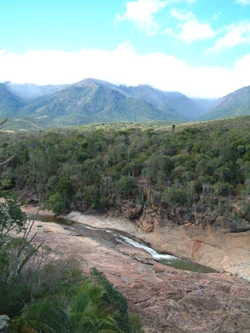
Isalo National Park
A sandstone park with endemic species and deep canyons.

Antony Stanley from Gloucester, UK · CC BY-SA 2.0
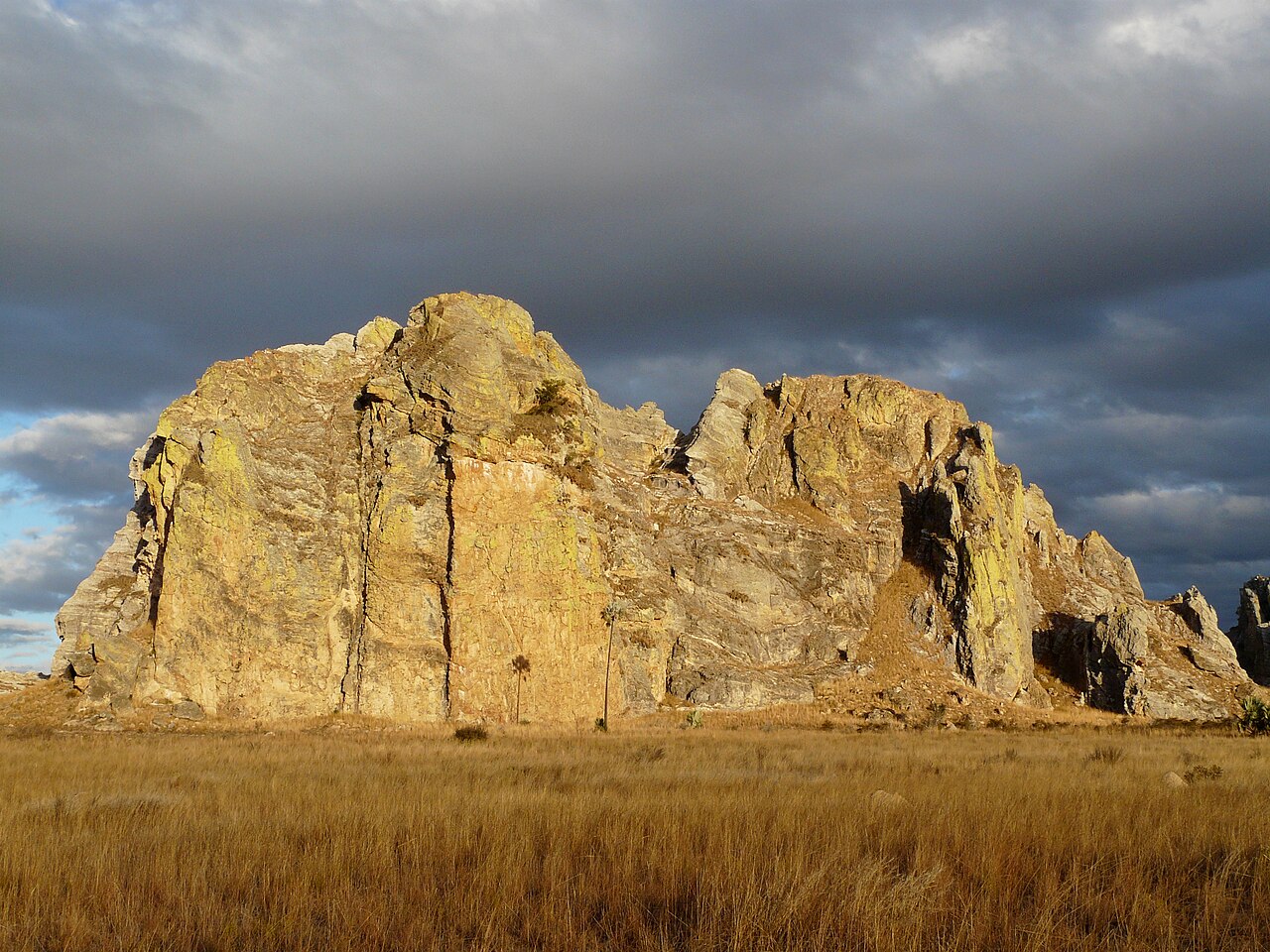
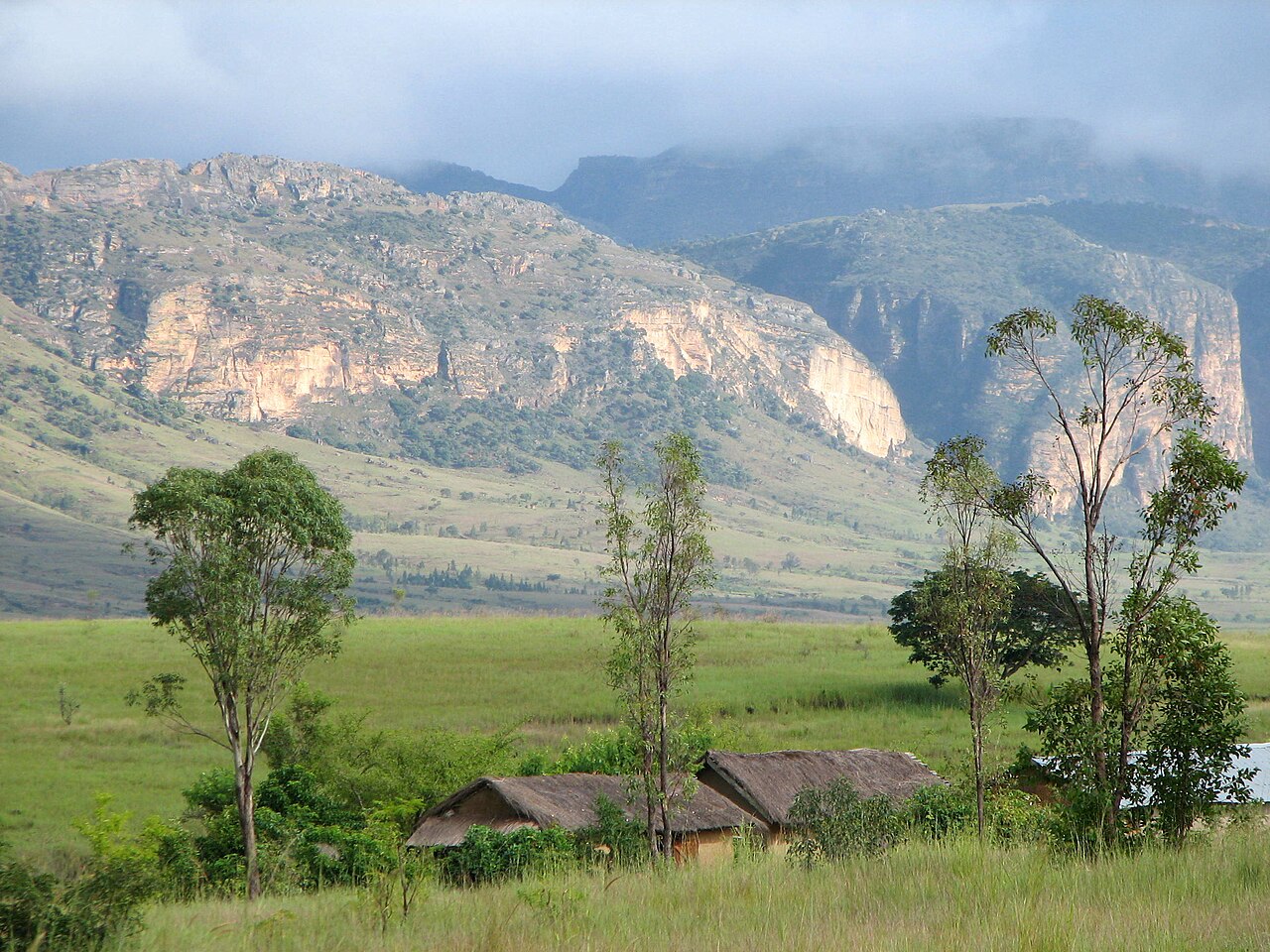
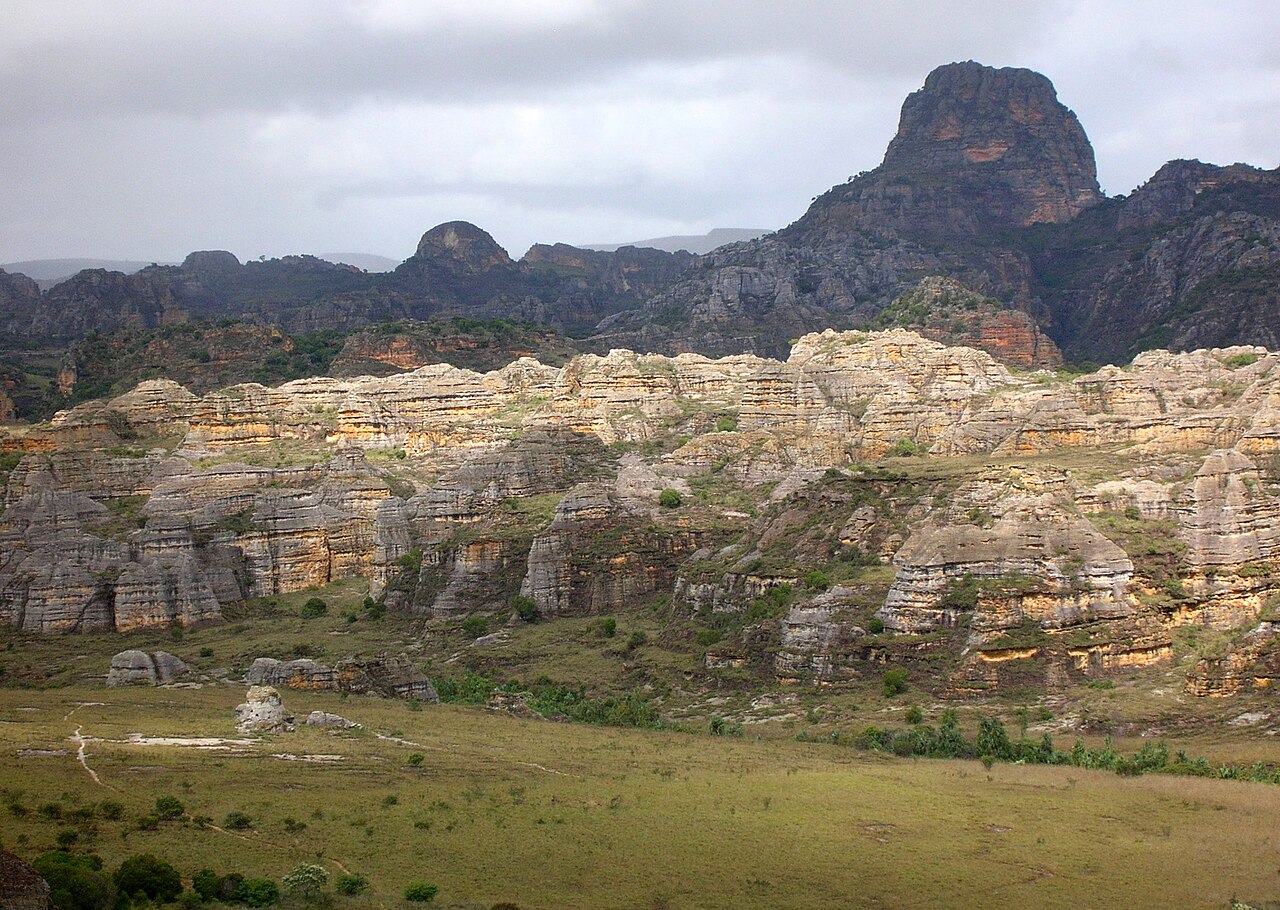
Isalo National Park is a protected area in the Ihorombe Region of Madagascar, near the town of Ranohira. Created in 1962, it is known for its dramatic sandstone landscape shaped by wind and water erosion, featuring deep canyons, plateaus, and rocky outcrops. The park is significant for its high levels of endemism, including plant species found nowhere else, and for its role in preserving tapia woodlands and habitats for numerous endemic animals.
Quick Facts
- Iucn Category
- II
- Location
- Southwestern Madagascar
- Nearest City
- Ranohira, Toliara and Ihosy
- Area
- 815.40 km2
- Established
- 1962
- Visitation Num
- 32,714
- Visitation Year
- 2011
- Governing Body
- Madagascar National Parks Association (PNM-ANGAP)
Facts from the source article.
Lore & Background
Isalo National Park was created in 1962 and has been administered by the Madagascar National Parks authority since 1997. The Bara people, a nomadic cattle-herding group, have traditionally inhabited the area, and burial sites of the Bara and older Sakalava burials are found within the park. The park lies primarily in the dry deciduous forests and succulent woodlands ecoregions, where natural vegetation has been reduced by almost 40%.
The park's geology is dominated by the Isalo Group, a sedimentary formation up to 4,000–5,000 m thick, of Triassic to early Jurassic origin, composed of coarse-grained sandstone deposited by braided streams. Erosion has created deep canyons, sandstone domes, flat-topped mountains, and 'runiform' outcrops. A 2024 archaeological study at a site called Teniky found man-made rock-cut niches, though the specific dating to the 10th–12th centuries CE and Zoroastrian provenance is speculative and not yet widely accepted.
Tourism requires a local guide, and treks range from hours to over a week. Natural swimming pools are popular, and the main threat to the park is illegal wildfires set to expand grasslands for cattle grazing. The park hosts 14 mammal species, over 100 bird species, 24 amphibians, and 47 reptiles, including several endemic species such as the Malagasy rainbow frog and the Benson's rock thrush.
Reader's Guide
Isalo National Park is a critical conservation area in Madagascar, notable for its high endemism and unique geological features. The park protects some of the largest intact tapia woodlands, a restricted woodland type found only in Madagascar's central highlands. It harbors 13 plant species found only in Isalo and another 35 rare species known from 2–5 sites. Entire plant families endemic to Madagascar, such as Sarcolaenaceae, are represented, with two species exclusive to the park. The lichen Isalonactis madagascariensis is known only from its type specimen collected here.
Ecologically, the park spans two threatened ecoregions: the dry deciduous forests (reduced by 40%) and the subhumid forests (Critical/Endangered). Six main habitats are described, including sclerophyllous woodlands, evergreen humid forests, and grasslands maintained by fire. The park's fauna includes endemic amphibians and reptiles, such as four amphibian species and one reptile species found only in the Isalo area. Notable animals include the Madagascar ground boa and Dumeril's boa.
Culturally, the park contains burial sites of the Bara and Sakalava peoples, and the 2024 Teniky discovery suggests possible Zoroastrian influence from the 10th–12th centuries. The park's management by Madagascar National Parks since 1997 aims to balance conservation with tourism, though illegal wildfires remain a significant threat.
Did You Know?
- The park contains the only known location for the lichen Isalonactis madagascariensis.
- Two plant species in the family Sarcolaenaceae, Sarcolaena isaloensis and Schizolaena isaloensis, have been found only in Isalo National Park.
- A 2024 archaeological study at Teniky found rock-cut niches, though their dating and cultural origin remain speculative.
- The park's elevation ranges from 510 to 1,268 m (1,673 to 4,160 ft).
Sculpted by Deep Time
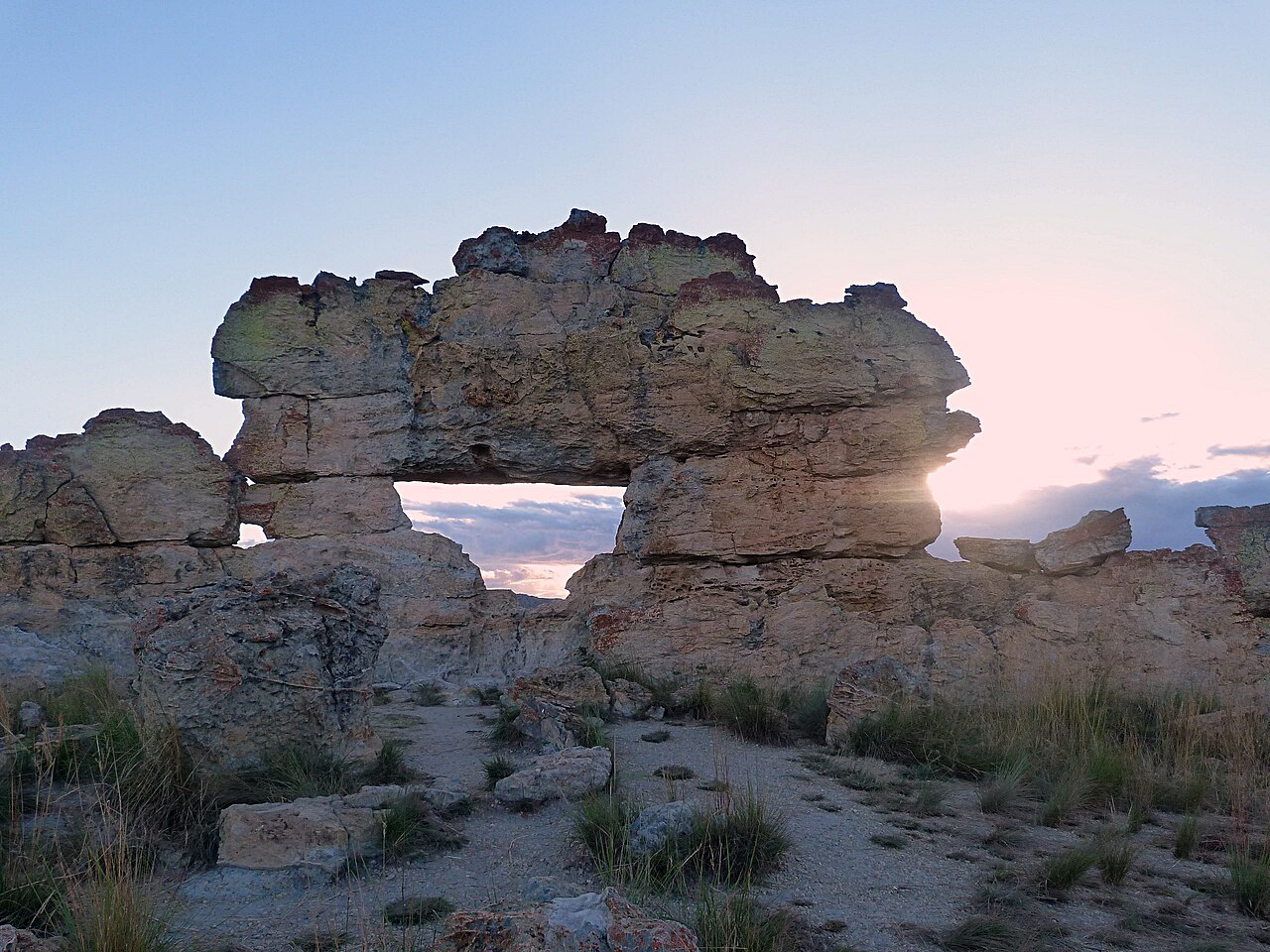
The geological backbone of Isalo National Park is the Isalo Group, a sedimentary formation situated in the southern reaches of the Morondava Basin. Stretching up to six kilometres in thickness, this rock sequence dates to the Triassic and early Jurassic periods. Its coarse-grained sandstone was deposited by ancient braided river systems, and over countless millennia, wind and water have carved the material into a dramatic mosaic of landforms. The result is a terrain of deep canyons reaching two hundred metres, rounded sandstone domes, flat-topped plateaus, and what geologists call "runiform" mountains—steep-sided outcrops dissected into irregular, almost sculptural shapes. The term "runiforme" derives from the French word for "carved," a fitting description for a landscape that looks less like natural erosion and more like the work of a patient chisel. Elevation within the park swings from 510 metres to 1,268 metres, giving visitors a striking sense of vertical range across what is, in essence, a single geological structure.
A Living Herbarium of Endemism
Botanical exploration of the Isalo region traces back to the 1910 collections of Perrier de la Bâthie, but the full scope of the park's plant life has only gradually come into focus. Today, more than four hundred species have been catalogued, and the overwhelming majority—over seventy percent—are endemic to Madagascar, with only ten non-native entries on the list. Thirteen of those species are known exclusively from Isalo, while another thirty-five are rare taxa recorded from just two to five locations worldwide. The woodlands are dominated by tapia (Uapaca bojeri), a tree whose range is confined to Madagascar's central highlands; Isalo shelters some of the largest unbroken stands of this otherwise restricted woodland type. Even more remarkable, the park contains representatives of three entire plant families—Asteropeiaceae, Sarcolaenaceae, and Sphaerosepalaceae—that exist nowhere else on Earth. Within Sarcolaenaceae, two species (Sarcolaena isaloensis and Schizolaena isaloensis) are found only in Isalo. Lichen surveys have likewise uncovered Isalonactis madagascariensis, for which Isalo is the sole known site of the type specimen.
A Hot, Dry World Under Pressure
Isalo sits in the arid western belt of Madagascar, squarely within the western dry deciduous forest bioclimatic zone. The climate is defined by two broad seasons—a cooler, drier stretch and a warmer, wetter one—each lasting five to seven months. Annual temperatures hover between 15 and 32 degrees Celsius, with a mean of 21.8 °C. Rainfall at the nearby town of Ranohira averages 791 millimetres per year, but the distribution is uneven: June sees a mere 2 mm, while January typically brings around 199 mm. The 2018/2019 wet season was an extreme outlier, with 526 mm falling in January alone. Ecologically, the park straddles two ecoregions. The dry deciduous forest type has already lost nearly forty percent of its original vegetation cover. The subhumid forest patches found within Isalo carry a Critical/Endangered designation, as only small, highly fragmented remnants of native habitat persist. The most pressing ongoing threat to both is illegal wildfire, deliberately set to suppress forest growth and expand the grasslands that sustain local cattle herds.
Ancient Inhabitants and Living Heritage
Long before the park was formally established in 1962, the Bara people made their home in this sandstone country. A nomadic community, the Bara sustained themselves through zebu cattle farming, and their presence is still marked by burial sites scattered across the landscape. Even older traces belong to the Sakalava, whose graves predate the Bara occupation. In 2024, an archaeological study at a site called Teniky revealed man-made rock-cut niches dating to the tenth through twelfth centuries CE, with researchers suggesting a possible Zoroastrian origin—a striking hint of far-reaching cultural connections in this remote corner of the island. Today the park is managed by the Madagascar National Parks authority, a role it has held since 1997. Visitors must be accompanied by a local guide, typically arranged in the gateway town of Ranohira, and treks range from a few hours to a full week or more. The park's natural swimming pools draw tourists and offer excellent viewing of the Benson's Rock Thrush, one of over a hundred bird species recorded here alongside fourteen mammals, twenty-four amphibians, and forty-seven reptiles.
Gallery
Frequently Asked Questions
Where is Isalo National Park located?
Isalo sits in the Ihorombe Region of southwestern Madagascar, close to the small town of Ranohira. It occupies the southwestern corner of the Fianarantsoa Province.
When was Isalo National Park established?
The park was officially created in 1962, making it one of the earlier designated protected areas in Madagascar.
What does Isalo National Park's landscape look like?
The terrain is dominated by dramatic sandstone formations sculpted over millennia by wind and water erosion. Visitors encounter deep canyons, broad plateaus, and striking rocky outcrops rising above the surrounding land.
Why is Isalo National Park ecologically important?
The park shelters a remarkable concentration of plant species found nowhere else on Earth, alongside habitats for numerous endemic animals. It also plays a key role in preserving tapia woodlands, a distinctive dry-forest ecosystem.
What are the climate and elevation conditions in Isalo?
Elevation in the park ranges from roughly 510 to 1,268 meters, and the Ranohira area receives about 791 mm of rainfall per year. Average temperatures hover near 21.8 °C, giving the park a warm, semi-arid character.
More in National parks of Madagascar 1-24
Spotted an error? Know more?
Reader corrections go straight into our review queue. Suggest an edit · How this site is sourced