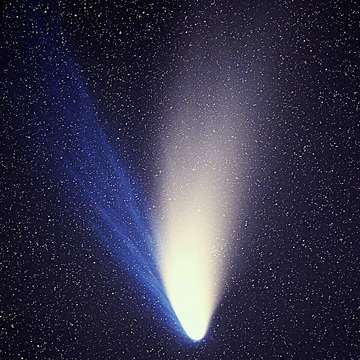
46P/Wirtanen
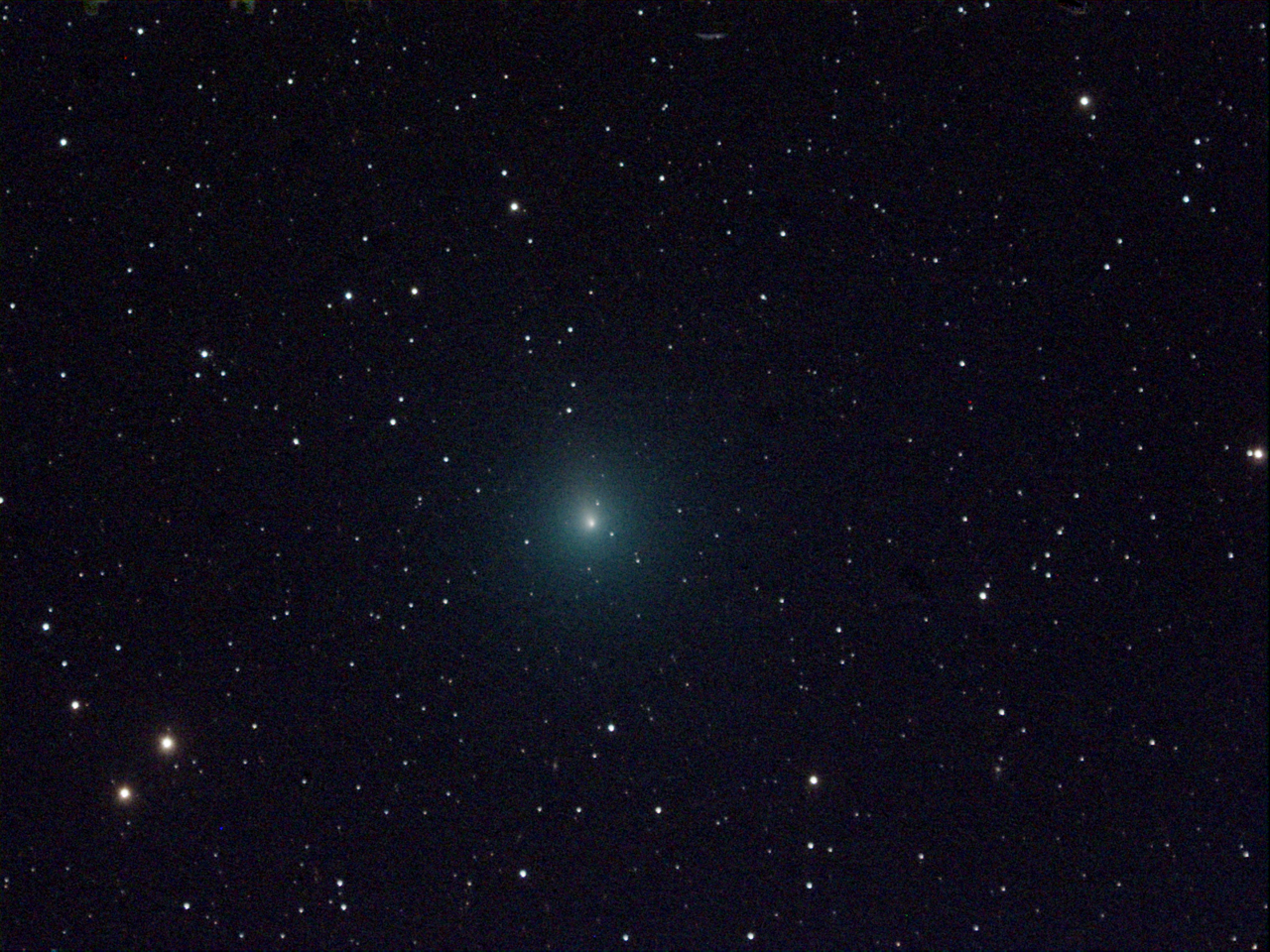
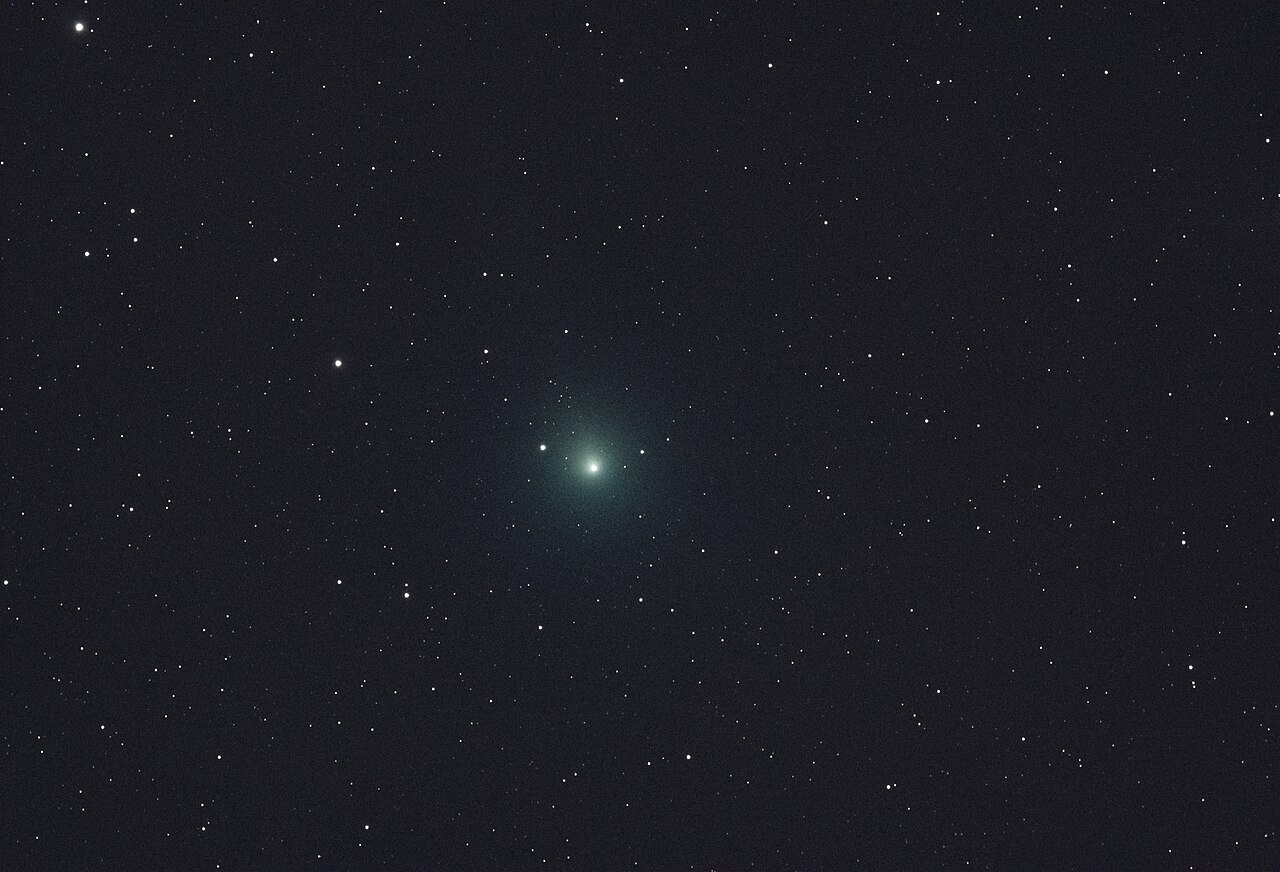
A small Jupiter-family comet with a notable close approach in 2018.

Victor R. Ruiz · CC BY 2.0
46P/Wirtanen is a small comet from the Jupiter family, orbiting the Sun once every 5.4 years. It was originally chosen as the target for the European Space Agency's Rosetta mission, but because the launch window could not be met, Rosetta was redirected to 67P/Churyumov–Gerasimenko. The comet also served as the intended destination for the proposed Comet Hopper mission, which advanced to the final round of NASA's Discovery program. In December 2019, astronomers used the TESS observatory to capture a detailed record of an outburst from the comet.
Discovered photographically on January 17, 1948, by American astronomer Carl A. Wirtanen, the comet was first spotted on a plate exposed two days earlier during a stellar proper motion survey at Lick Observatory. Because only a few initial observations were made, it took over a year to confirm it as a short-period comet.
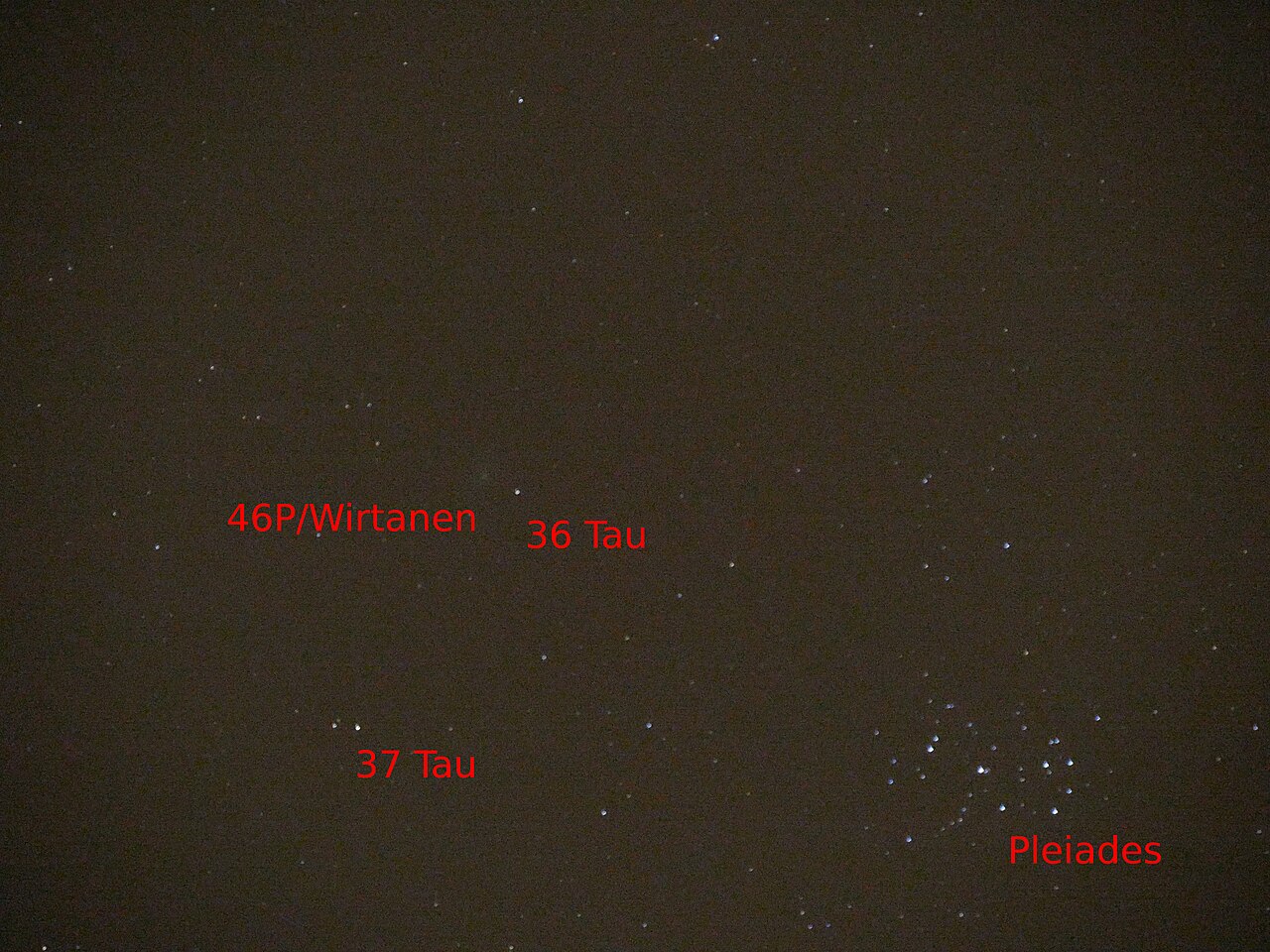
The comet's July 2013 perihelion passage was unfavorable, reaching only magnitude 14.7. From January 23 to September 26, 2013, its elongation from the Sun remained under 20 degrees. On December 16, 2018, 46P/Wirtanen passed just 0.07746 AU (about 11.6 million kilometers) from Earth, making it one of the ten closest comet flybys of the last 70 years. It reached an estimated magnitude of 3.9, the brightest predicted pass and the closest approach for the next two decades. During this apparition, the comet experienced six outbursts, brightening by between −0.2 and −1.6 magnitudes. The 2018 close approach, combined with the comet's brightness, offered a chance to study a potential future spacecraft target in detail, and a worldwide observing campaign was organized.
The Comet Hopper mission, had it been selected, would have pursued multiple science goals over 7.3 years. At roughly 4.5 AU (670 million kilometers), the spacecraft would rendezvous with Wirtanen and map the spatial heterogeneity of surface solids, as well as gas and dust emissions from its coma. Remote mapping would also help determine nucleus structure, geologic processes, and coma mechanisms. After arrival, the spacecraft would land and then hop to other locations, repeating this process as the comet approached the Sun. The final landing would occur at 1.5 AU, allowing the spacecraft to record surface changes as the comet grew more active.
Close approaches to Jupiter in 1972 and 1984 shifted the comet's orbit closer to Earth.
Quick Facts
- Discoverer
- Carl A. Wirtanen
- Discovery Site
- Lick Observatory
- Discovery Date
- 17 January 1948
- Mpc Name
- P/1948 A1, P/1954 R2
- Designations
- 1947 XIII, 1954 XI · 1961 IV, 1967 XIV · 1974 XI, 1986 VI · 1991 XVI · 1948b, 1954j, 1960m · 1967k, 1974i, 1985q · 1991s
- Orbit Ref
- MPC · jpldata
- Epoch
- 13 September 2023 (JD 2460200.5)
- Obs
- 7,527
- Perihelion
- 1.055 AU
- Aphelion
- 5.127 AU
- Semimajor
- 3.091 AU
- Eccentricity
- 0.65867
Facts from the source article.
Lore & Background
46P/Wirtanen was discovered photographically on 17 January 1948 by American astronomer Carl A. Wirtanen. The plate was exposed on January 15 during a stellar proper motion survey for the Lick Observatory. Due to a limited number of initial observations, it took more than a year to recognize this object as a short-period comet. The comet's orbit was moved closer to Earth by close approaches to Jupiter in 1972 and 1984, and as of epoch 2018 it had an Earth–MOID of 0.071 AU (10.6 million km).
On 16 December 2018, the comet passed 0.07746 AU from Earth, marking one of the 10 closest comet flybys of Earth in the last 70 years. It reached an estimated magnitude of 3.9, making this pass the brightest one predicted and the brightest close approach for the next 20 years. The comet experienced six outbursts, with the comet brightening by −0.2 to −1.6 magnitudes. A worldwide observing campaign was organized to capitalize on the favorable circumstances of the 2018 apparition.
The comet was the original destination of the European Space Agency's Rosetta spacecraft mission, but launch delays meant that the comet was no longer easily reachable and another periodic comet, 67P/Churyumov–Gerasimenko, was chosen instead. It was also the target for the proposed Comet Hopper mission, which reached the finalist stage in the NASA Discovery program but was ultimately not selected.
Reader's Guide
46P/Wirtanen holds significance as a well-studied Jupiter-family comet that has been the subject of multiple spacecraft mission proposals. Its original selection as the target for the Rosetta mission, later changed to 67P/Churyumov–Gerasimenko due to launch delays, highlights its early importance in cometary exploration planning. The comet was also the target for the proposed Comet Hopper mission, which reached the finalist stage in the NASA Discovery program, designed to rendezvous with the comet at about 4.5 AU, map its surface and coma, and perform multiple landings and hops as the comet approached the Sun. Although not selected, the mission concept underscored Wirtanen's value as a potential exploration target.
The comet's 2018 close approach, one of the 10 closest comet flybys of Earth in the last 70 years, provided a major observational opportunity. Reaching magnitude 3.9 and experiencing six outbursts, it was studied by a worldwide observing campaign. In December 2019, astronomers reported capturing an outburst of the comet in substantial detail by the TESS observatory. Additionally, the comet is associated with the λ-Sculptorids meteor shower, observed in 2023 with a zenithal hourly rate of 0.65+0.24−0.20, and a possible shower in 2012 from which observers in Australia reported as many as a dozen meteors. The comet was last observed in 2023 and will next come to perihelion in 2029.
Discovery and Early Identification
46P/Wirtanen first revealed itself not through a dramatic naked-eye sighting but through the quiet work of photographic astronomy. On 15 January 1948, a plate was exposed as part of a stellar proper motion survey conducted for Lick Observatory. Two days later, on 17 January, American astronomer Carl A. Wirtanen identified the object on that plate, giving the comet its name. What made the early days of this comet's story particularly tricky was the scarcity of follow-up observations. Because so few initial data points were available, it took more than a full year before the astronomical community could confirm that the wandering object was, in fact, a short-period comet rather than some other type of solar-system body. Today we know 46P/Wirtanen as a small Jupiter-family comet whose current orbital period stands at 5.4 years, placing it firmly in the class of comets whose orbits are periodically sculpted by the gravitational influence of Jupiter.
The 2018 Close Approach
The December 2018 apparition of 46P/Wirtanen stands as one of the most significant close encounters between Earth and a comet in the preceding seven decades. On 16 December 2018, the comet swept past our planet at a distance of just 0.07746 AU, roughly 11.6 million kilometres, placing it among the ten nearest comet flybys recorded in the last seventy years. At its peak, the comet reached an estimated magnitude of 3.9, making it the brightest appearance predicted for the next two decades. The event was not without drama: the nucleus underwent six distinct outbursts during the apparition, each brightening the comet by between 0.2 and 1.6 magnitudes. Recognizing the rarity of such favourable geometry, astronomers worldwide coordinated a large-scale observing campaign to study the comet in detail, treating it as a dress rehearsal for a potential future spacecraft mission. This contrasted sharply with the July 2013 perihelion passage, when the comet remained locked within 20 degrees of the Sun for months and never brighter than magnitude 14.7.
Exploration Proposals
Few comets have been so central to the ambitions of space agencies as 46P/Wirtanen. The European Space Agency's Rosetta spacecraft was originally designed to rendezvous with this very comet, yet a failure to meet the planned launch window rendered the target unreachable, and the mission was redirected to 67P/Churyumov–Gerasimenko instead. In the United States, the proposed Comet Hopper mission carried Wirtanen as its destination and advanced to the finalist stage of NASA's Discovery program, becoming one of only three concepts granted a detailed study before the selection was ultimately awarded to the InSight Mars lander in 2012. Hopper's design called for a 7.3-year mission powered by an Advanced Stirling Radioisotope Generator. The spacecraft would have first met the comet at roughly 4.5 AU, mapping the spatial distribution of surface materials and the structure of gas and dust emissions. It would then descend, land, and hop to successive locations, with the final touchdown planned at 1.5 AU, capturing how the surface transformed as solar heating intensified.
Associated Meteor Showers
Beyond its appearance as a glowing object in the night sky, 46P/Wirtanen leaves a trail of debris that occasionally intersects Earth's orbit, producing modest meteor showers. Close gravitational encounters with Jupiter in 1972 and 1984 nudged the comet's orbit into a configuration that brought its Earth–MOID down to 0.071 AU by the 2018 epoch. In 2023, our planet threaded through a denser segment of the 1974 meteoroid stream than it had in 2007, generating a shower with its radiant in the southern constellation Sculptor. Named the λ-Sculptorids, the event produced a zenithal hourly rate of roughly 0.65, with meteors entering the atmosphere at a comparatively slow 15 km/s. That low speed meant the surviving fragments averaged about 0.5 grams in mass, roughly ten times heavier than particles in most other showers. An earlier, more speculative encounter occurred in December 2012, when Russian forecaster Mikhail Maslov predicted four crossings of the debris stream. Australian observers confirmed a dozen or so meteors from the Pisces radiant on 14 December, far short of the thirty-per-hour maximum once imagined.
Gallery
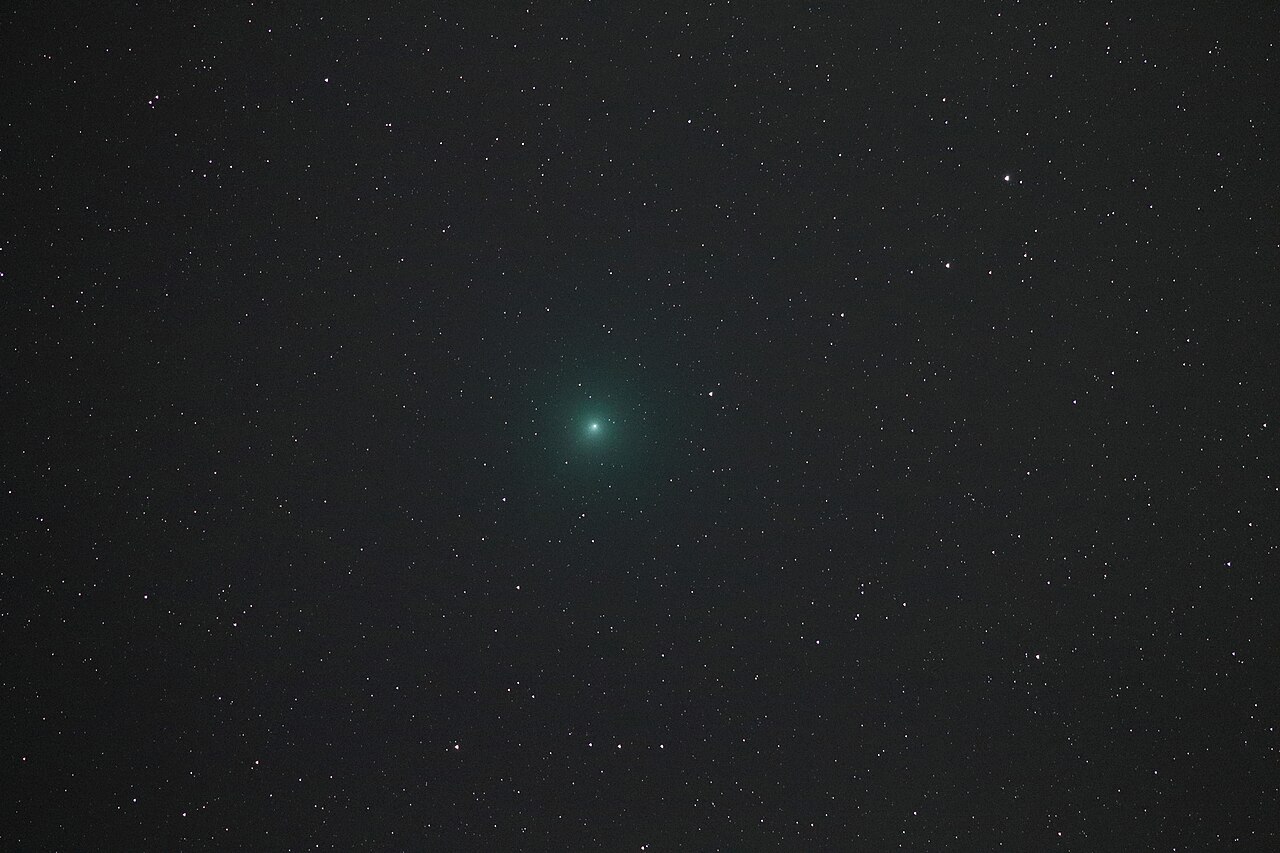
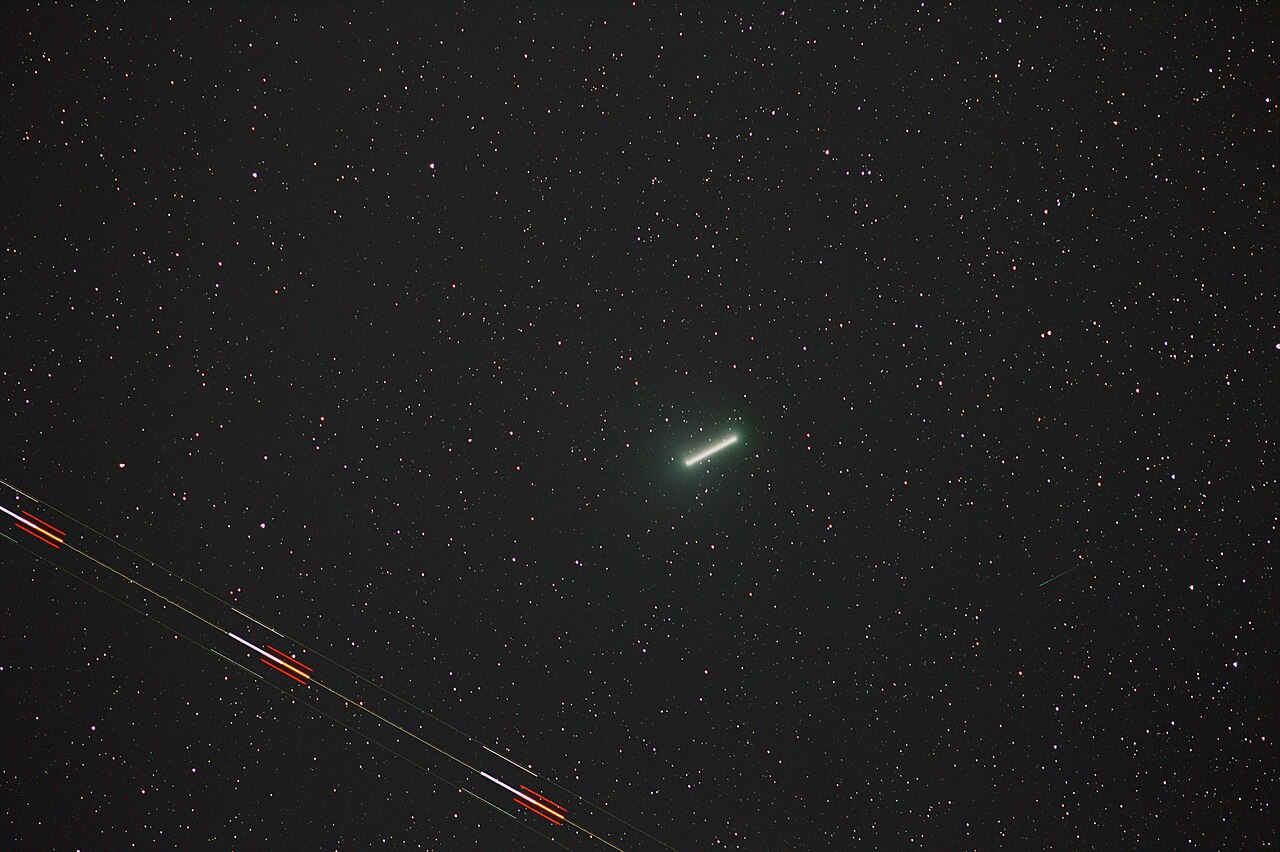
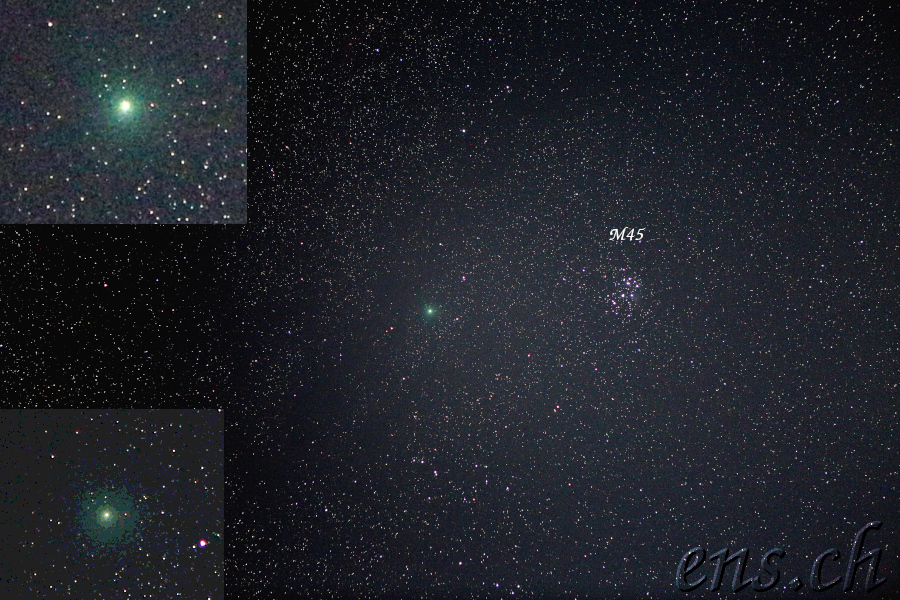
More in Named Comets, Part 6 1-24
Spotted an error? Know more?
Reader corrections go straight into our review queue. Suggest an edit · How this site is sourced