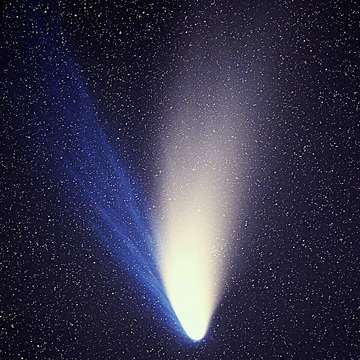
29P/Schwassmann–Wachmann
A large, outburst-prone centaur comet with a 58-day rotation period.

Dimitrios Katevainis · CC BY-SA 4.0
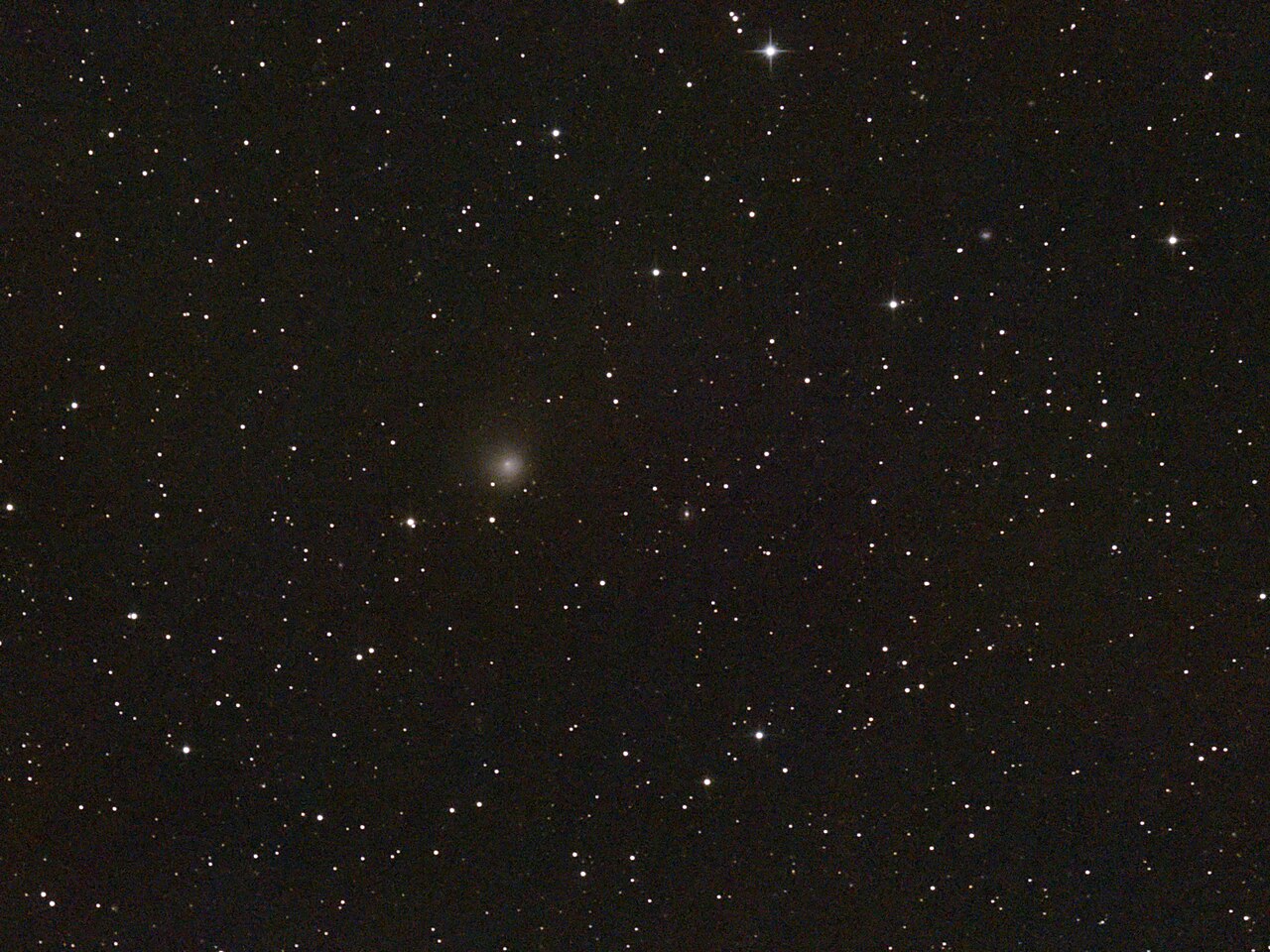
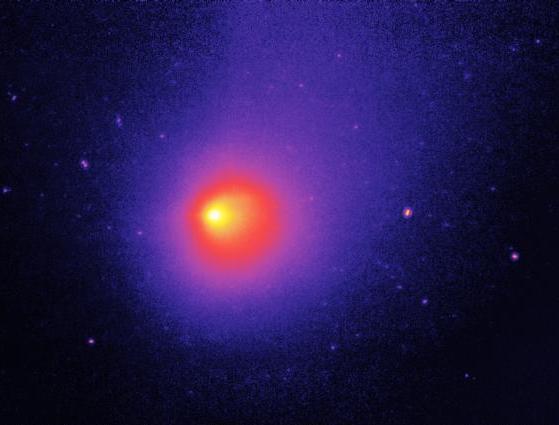
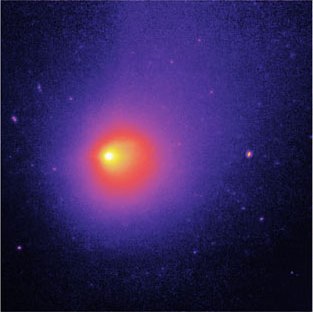
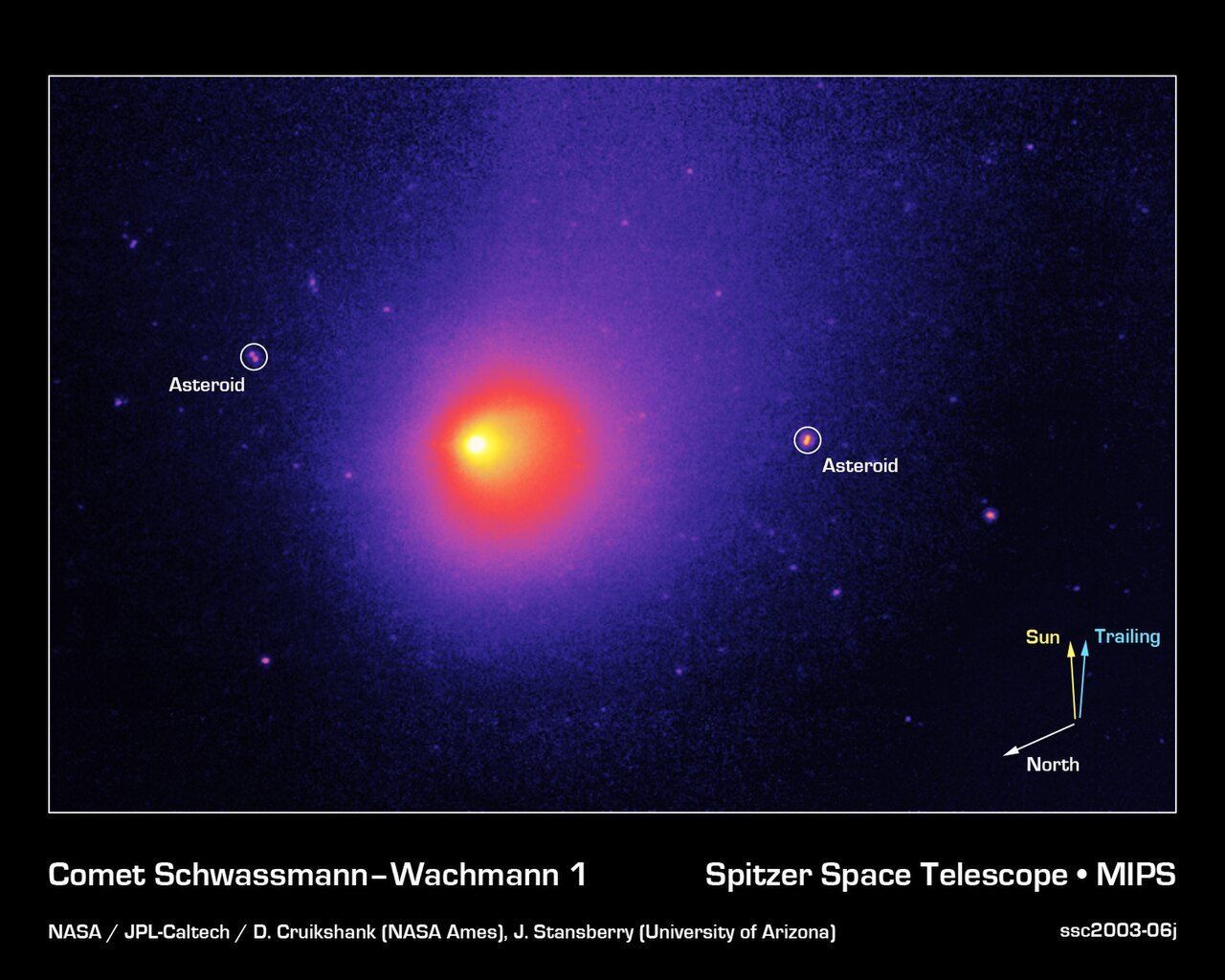
29P/Schwassmann–Wachmann, also known as Schwassmann–Wachmann 1, is a large comet approximately 60 km in diameter that remains observable throughout its entire orbit. It is notable for its frequent and sudden outbursts, during which its brightness can increase by several magnitudes, and for its classification as a centaur, an icy body orbiting between Jupiter and Neptune.
Quick Facts
- Discoverer
- Arnold Schwassmann / Arno Arthur Wachmann
- Discovery Site
- Hamburg Observatory
- Discovery Date
- November 15, 1927
- Mpc Name
- P/1902 E1; P/1927 V1
- Designations
- 1908 IV; 1927 II; 1941 VI; / 1957 IV; 1974 II; 1989 XV
- Orbit Ref
- jpl
- Epoch
- January 1, 2023 (JD 2459945.5)
- Observation Arc
- 13.83 years
- Earliest Precovery Date
- 4 March 1902
- Obs
- 622
- Semimajor
- 6.047 AU
- Perihelion
- 5.777 AU
Facts from the source article.
Lore & Background
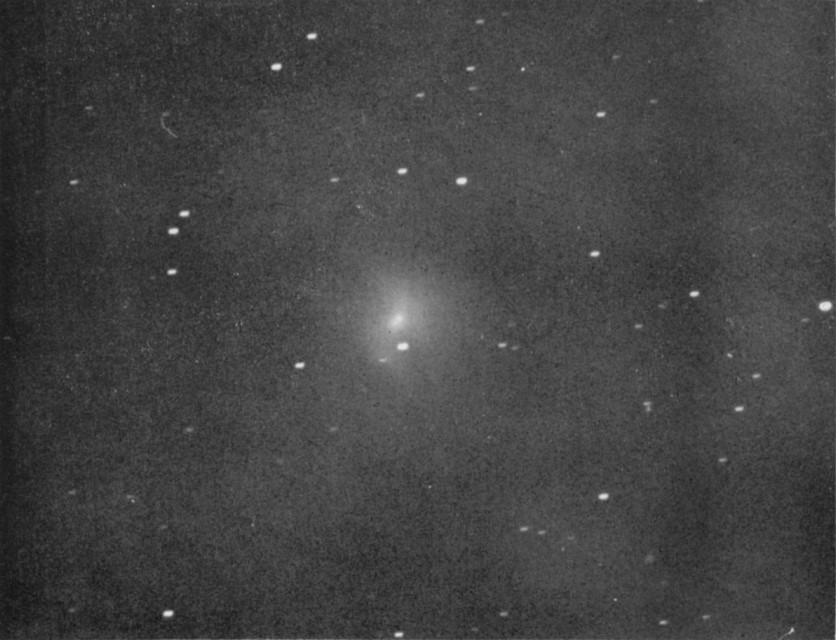
The comet was discovered photographically on November 15, 1927, by Arnold Schwassmann and Arno Arthur Wachmann at the Hamburg Observatory in Bergedorf, Germany, when it was in outburst at about magnitude 13. Precovery images from March 4, 1902, were later found in 1931, showing the comet at 12th magnitude. It reached its most recent perihelion on March 7, 2019, and will come to aphelion on September 30, 2026.
29P/Schwassmann–Wachmann is a member of the centaur class, of which at least 1,000 are known. These are small icy bodies with orbits between Jupiter and Neptune, recently perturbed inward from the Kuiper belt. Frequent perturbations by Jupiter will likely cause the comet to migrate either inward or outward by the year 4000. A number of centaurs appear dynamically and perhaps physically related to 29P; such objects may traverse the comet's coma during outbursts.
The comet's nucleus is estimated to be 60.4±7.4 km in diameter, and as of 2026 it has a rotation period of about 58 days. It spends its entire orbit just beyond Jupiter at 5.8–6.3 AU from the Sun, remaining active with a coma due to its proximity to the snow line.
Reader's Guide
29P/Schwassmann–Wachmann is significant as one of the most active and frequently outbursting comets known, with an average of 7.3 outbursts per year between 2014 and 2026, and about 10 outbursts per year observed in that period. Its outbursts are sudden, rising to maximum brightness in about 2 hours, indicative of a cryovolcanic origin, and are modulated by an underlying 58-day periodicity, suggesting its large nucleus is an extremely slow rotator. The comet's brightness varies from 18th magnitude to 10th magnitude during its brightest outbursts, a more than thousand-fold increase. Notable outbursts in 2025 included eight events occurring as four pairs of twin events, with the December outburst reaching about magnitude 13. In 2026, outbursts occurred on February 9/15 (magnitude 12.6V), April 15 (from magnitude 16 to 13), and May 29. The comet crossed the celestial equator in late 2025 and is headed further into southern skies until April 2029, when it will have a declination of −31. Its legacy lies in providing a natural laboratory for studying cryovolcanism and the dynamics of centaurs, as well as its long-term monitoring by amateur and professional astronomers.
Did You Know?
- The comet was discovered photographically during an outburst at about magnitude 13.
- Precovery images from March 4, 1902, were found in 1931.
- The comet's outbursts rise to maximum brightness in about 2 hours, suggesting a cryovolcanic origin.
- Between 2014 and 2026, 120 outbursts were observed, averaging about 10 per year.
Gallery
More in Named Comets, Part 6 1-24
Spotted an error? Know more?
Reader corrections go straight into our review queue. Suggest an edit · How this site is sourced