Fionn mac Cumhaill
Hero, seer, and leader of the Fianna in Irish myth.

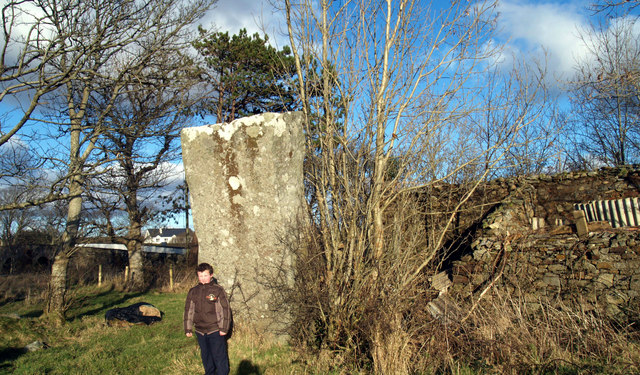
Rossographer · CC BY-SA 2.0
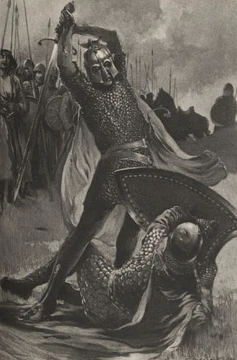
Fionn mac Cumhaill, also known as Finn mac Cumhaill and anglicised as Finn McCool or MacCool, is a central figure in Irish mythology and appears in later Scottish and Manx folklore. He serves as the leader of the Fianna, bands of young, wandering hunter-warriors, and is also a seer and poet. A notable trait is his magic thumb, which grants him great wisdom. He is frequently portrayed hunting with his hounds, Bran and Sceólang, and fighting with his spear and sword. The stories of Fionn and his fiann make up the Fianna Cycle, also called the Fenian Cycle, much of which is told by his son, the poet Oisín. This cycle forms the core of the 12th-century work *Acallam na Senórach* and appears in other ancient Irish texts.
The name Fionn derives from the Old Irish word *finn* or *find*, meaning "white," "bright," "lustrous," "fair," "handsome," "blessed," or "just and true." It is related to the Primitive Irish *VENDO-*, Welsh *gwyn*, Cornish *gwen*, Breton *gwenn*, and the Proto-Celtic adjective *windos*.
Fionn was the posthumous son of Cumhall, the former leader of the Fianna, and Muirne. His father, Cumhall mac Trénmhoir, came from Leinster and belonged to the tribe of Uí Thairsig, one of three tribes descended from the Fir Bolg according to the *Lebor Gabála Érenn*. His mother, Muirne Muincháem, was the daughter of Tadg mac Nuadat and granddaughter of the druid Nuadat, who served High King Cathair Mór. Another source describes her as the granddaughter of Núadu of the Tuatha Dé Danann. Cumhall served King Conn Cétchathach, who was then a regional king at Cenandos (modern Kells, County Meath). Cumhall abducted Muirne after her father refused her hand in marriage. Tadg appealed to High King Conn, who outlawed Cumhall. This led to the Battle of Cnucha, where Cumhall was killed by Goll mac Morna, who then took over leadership of the Fianna.
The Fianna were a band of warriors, often described as a military order, composed mainly of two rival clans: Clan Bascna, to which Fionn and Cumhall belonged, and Clan Morna, to which Goll mac Morna belonged. The Fenians were meant to serve the High King and repel foreign invaders. After Cumhall's death, Goll mac Morna led the Fianna for ten years.
Quick Facts
- Weapon
- Mac an Luinn (sword), Gae Buidhe (spear)
- Attributes
- Thumb of Knowledge, giant stature
- Deity Of
- Hero and leader of the Fianna
- Affiliation
- Fianna of Ireland (Clann Baíscne)
- Other Names
- Finn MacCool, Fionn mac Cumhaill
- Parents
- Cumhall (father) · Muirne (mother)
- Spouse
- Sadhbh
- Children
- Oisín
- Ethnic Group
- Irish
- Texts
- Fenian Cycle
- Norse Equivalent
- Sigurd
Facts from the source article.
Lore & Background
Fionn was the posthumous son of Cumhall, leader of the Fianna, by Muirne. His father was killed by Goll mac Morna at the Battle of Cnucha, after Cumhall abducted Muirne. Fionn was raised in secret by Bodhmall the druid and Liath Luachra in the forest of Sliabh Bladma, learning the arts of war and hunting. As a youth, he served local kings incognito but was forced to leave when recognized as Cumhall's son. He gained the 'Thumb of Knowledge' after burning his thumb while cooking the Salmon of Knowledge for the poet Finn Éces; thereafter, he could gain wisdom by putting his thumb in his mouth. At age ten, he slew Áillen, a fire-breathing man of the Tuatha Dé Danann who had been burning Tara each Samhain, using a special spear called the Birga. After this feat, his heritage was recognized, and he was given command of the Fianna. Fionn's sword was called Mac an Luinn. He married Sadhbh, who had been turned into a deer by a druid; she transformed back upon reaching his land, but was later turned into a deer again and vanished. Their son Oisín was found as a fawn by Fionn's hounds Bran and Sceólang and later became a great poet of the Fianna.
Reader's Guide
Fionn mac Cumhaill is a central figure in the Fianna Cycle, the most important part of the 12th-century Acallam na Senórach and other ancient Irish texts. His stories, often narrated by his son Oisín, have become foundational to Irish mythology and later Scottish and Manx folklore. The cycle explores themes of heroism, wisdom, and the supernatural, with Fionn's magic thumb serving as a unique source of knowledge. His leadership of the Fianna, a band of hunter-warriors, and his conflicts with rival clans like Clan Morna, reflect the social and political structures of early Irish legend. The tale of his acquisition of the Salmon of Knowledge parallels other Celtic and Norse myths, such as Gwion Bach and Sigurðr. Fionn's legacy endures in the many retellings of his adventures, including his love for Sadhbh and the pursuit of Diarmuid and Gráinne, which highlight the blend of romance, tragedy, and magic in his story. His name, meaning 'white' or 'fair,' connects him to a broader Celtic linguistic tradition.
Did You Know?
- His hounds Bran and Sceólang were born of a human enchanted into the form of a hound.
- At age ten, Fionn slew Áillen, a fire-breathing man of the Tuatha Dé Danann who had burned Tara each Samhain for 23 years.
- Fionn's name is cognate with Welsh 'gwyn' and comes from the Proto-Celtic adjective *windos, meaning 'white, bright, fair.'
Origins and the Feud
Fionn mac Cumhaill entered the world as a posthumous child, born to Muirne after her husband Cumhall had already fallen. His father, leader of the Fianna, had won Muirne's hand through abduction after her father Tadg mac Nuadat refused the marriage. The high king Conn Cétchathach outlawed Cumhall, and the resulting Battle of Cnucha saw Cumhall slain by Goll mac Morna, who then seized the Fianna's leadership for a full decade. That act ignited a bitter rivalry between Clan Bascna, Fionn's own lineage, and Clan Morna, Goll's clan. Muirne, already with child, was rejected by her father, who ordered her burned, but Conn intervened and placed her under the protection of Fiacal mac Conchinn. In Fiacal's household she gave birth to a son she named Deimne, a word meaning both "sureness" and a young male deer. The boy would grow into the legendary Fionn, forever shaped by the feud that cost him his father's life.
The Thumb of Knowledge
Young Fionn, still going by his boyhood name Deimne, traveled to the river Boyne to study under the poet Finn Éces, who had spent seven years attempting to catch a particular salmon dwelling in Fec's Pool. The poet was prophesied to eat this fish, after which nothing would remain unknown to him. When Éces finally landed the salmon, he instructed the boy to prepare it. As Deimne cooked the fish, he burned his thumb and instinctively pressed it to his lips. That single gesture transferred the salmon's accumulated wisdom into him. Recognizing the boy's sudden enlightenment, Éces handed over the entire salmon and bestowed upon him the name Fionn. From that moment, whenever Fionn placed his thumb in his mouth while reciting the teinm láida, whatever knowledge he sought would be revealed. The Acallam na Senórach later refers to this gift as the "Tooth of Wisdom." Scholars have drawn parallels between this episode and the Welsh Gwion Bach tasting the Cauldron of Knowledge, as well as Sigurðr Fáfnisbani tasting Fáfnir's heart in Norse tradition.
The Fianna and His Literary Legacy
Fionn rose to lead the Fianna, a roving band of young hunter-warriors organized as a military order devoted to the high king and the defense against foreign invaders. The group drew its members from two rival clans, Clan Bascna and Clan Morna, and Fionn's leadership represented the triumph of his father's lineage over Goll mac Morna's. Beyond his martial role, Fionn was also a seer and a poet, often depicted in the company of his hounds Bran and Sceólang, armed with spear and sword. His adventures, along with those of his warriors, form the Fianna Cycle, also called the Fenian Cycle. Much of this vast body of narrative was transmitted through the voice of his son Oisín, the poet. The cycle became the most important component of the twelfth-century text Acallam na Senórach and also appears across other ancient Irish manuscripts, cementing Fionn's place as the central figure of Irish mythological storytelling.
Etymology and Cross-Cultural Reach
The name Fionn derives from the Old Irish finn or find, a word carrying a rich semantic field: white, bright, lustrous, fair, light-hued, handsome, blessed, and in a moral register, just and true. This adjective traces back to the Proto-Celtic form *windos and appears across the Celtic language family in cognate shapes such as Welsh gwyn, Cornish gwen, and Breton gwenn, while Continental Celtic and Common Brittonic preserve the root *uindo-, a frequent element in personal and place names. Ogam inscriptions record the Primitive Irish form VENDO- in personal names. Over centuries, the hero's name was anglicised into Finn McCool or MacCool, reflecting his migration into Scottish and Manx folklore alongside his native Irish tradition. His tribal roots are anchored in Leinster, specifically the Uí Thairsig, a group the Lebor Gabála Érenn identifies as one of three tribes descended from the Fir Bolg, linking Fionn's lineage to some of the oldest strata of Irish mythological genealogy.
Gallery

Frequently Asked Questions
Who is Fionn mac Cumhaill?
He is the legendary head of the Fianna, a band of young wandering hunter-warriors in Irish mythology, and he also serves as a seer and poet. His adventures form the backbone of the Fianna (or Fenian) Cycle, one of Ireland's great narrative traditions.
What are Fionn mac Cumhaill's powers or signature traits?
His most famous gift is a magic thumb that, when he licks it, floods his mind with profound wisdom and knowledge. Beyond that, he functions as a seer and poet, and much of his story is narrated by his son, the bard Oisín.
What weapons does Fionn mac Cumhaill use in battle?
In the tales he is most commonly shown fighting with a spear and a sword. He is also frequently depicted out in the wild hunting alongside his two hounds, Bran and Sceólang.
Why is Fionn mac Cumhaill important to fans of mythological swordfighters?
He anchors the entire Fianna Cycle and his legend stretches into Scottish and Manx folklore under names like Finn McCool. As a warrior-leader who also possesses deep wisdom, he embodies the archetype of the heroic fighter who pairs martial skill with seer-knowledge.
More in Mythological swordfighters 1-18
Spotted an error? Know more?
Reader corrections go straight into our review queue. Suggest an edit · How this site is sourced