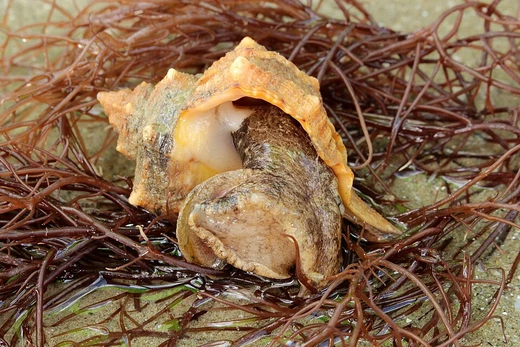
Phyllonotus eversoni
A large murex snail from Cocos Island, described in 1987.

Phyllonotus eversoni is a marine gastropod mollusk belonging to the family Muricidae, the group known as murex or rock snails. These predatory snails are found in tropical and temperate oceans worldwide. Species in the genus *Phyllonotus* typically have robust shells adorned with prominent spines, fronds, or sculptured ridges. This particular species was first formally described in 1987 by malacologists Anthony D'Attilio, Bruce Myers, and David Shasky.
Adult shells of *Phyllonotus eversoni* measure between 100 mm and 155 mm in length, placing it among the larger members of the Muricidae family. The shell is thick and heavily sculpted, featuring a high spire and a broad body whorl. Its surface is ornamented with axial ribs and spiral cords that can develop into spines or frond-like projections—common traits among murex snails that likely offer protection from predators and aid in camouflage among rocky or coral substrates. The aperture is oval to elongated, and in mature individuals the outer lip is often thickened. A moderately long siphonal canal extends from the shell, a typical adaptation that allows the snail to extend its siphon while buried or hidden. Shell color in *Phyllonotus* species ranges from pale cream to tan or brown, sometimes with darker bands or mottling; the interior of the aperture is often lighter. As with many muricids, color and sculpture can vary with environment and growth stage. The shell is composed mainly of calcium carbonate, providing strong defense against predation and environmental stress in coastal habitats.
Like other muricids, *Phyllonotus eversoni* is carnivorous, preying on marine invertebrates such as bivalves, barnacles, and other mollusks. It typically drills a hole through its prey’s shell using a specialized radula and chemical secretions, then consumes the soft tissues. Muricids are also known for producing a secretion from a specialized gland—historically used to make Tyrian purple dye, though that is mainly associated with the genera *Murex* and *Bolinus*. The life cycle of muricid snails generally involves egg capsules deposited on hard surfaces like rocks or coral; after developing inside the capsule, juvenile snails emerge as small benthic predators.
Quick Facts
- Genus
- Phyllonotus
- Species
- eversoni
Facts from the source article.
Lore & Background
Phyllonotus eversoni is a predatory marine gastropod that inhabits tropical and temperate oceans, with recorded distribution from waters surrounding Cocos Island, Costa Rica, in the eastern Pacific Ocean. The species likely occupies rocky or coral-associated marine environments, which provide shelter and access to prey such as barnacles, small mollusks, and other invertebrates. Due to the relative isolation of Cocos Island and limited collecting activity in some regions of the eastern Pacific, the full distribution range of P. eversoni may not yet be completely documented.
Like other members of the genus Phyllonotus, the shell is thick and strongly sculptured, with a high spire and broad body whorl. The exterior surface is ornamented with axial ribs and spiral cords that may develop into spines or frond-like projections, features typical of many murex snails. These projections are thought to help provide protection against predators and may also aid in camouflage among rocky substrates and coral environments. The aperture is oval to elongated, and the outer lip is often thickened in mature individuals. The shell terminates in a moderately long siphonal canal, which allows the animal to extend its siphon while buried or partially concealed in the substrate.
Shell coloration in species of Phyllonotus often varies from pale cream to tan or brown, sometimes with darker banding or mottled patterns. The interior of the aperture may show lighter coloration. As with many muricids, variation in color and sculpture can occur depending on environmental conditions and growth stages. Muricidae species are known for producing strong shell structures composed primarily of calcium carbonate, which provide protection against predation and environmental stress in coastal marine habitats.
Reader's Guide
Phyllonotus eversoni belongs to the family Muricidae, one of the most diverse families of predatory marine gastropods. The family includes many species known for their elaborate shell ornamentation and ecological role as predators in marine ecosystems. The genus Phyllonotus includes several species distributed primarily in tropical and subtropical seas, often distinguished by their strongly sculptured shells and pronounced spines or fronds.
Like other muricid snails, Phyllonotus eversoni is believed to be carnivorous, typically preying on other marine invertebrates including bivalves, barnacles, and other mollusks. They commonly feed by drilling a hole through the shell of their prey using a specialized radula and chemical secretions, allowing them to consume the soft tissues inside. Muricids are also known for producing a secretion from a specialized gland that historically formed the basis of the famous Tyrian purple dye, though this is primarily associated with species in the genera Murex and Bolinus.
The life cycle of muricid snails generally includes egg capsules deposited on hard substrates such as rocks or coral. After development within the capsule, juvenile snails emerge and begin life as small benthic predators. The species was first formally described in 1987 by malacologists Anthony D'Attilio, Bruce Myers, and David Shasky, and its type locality is Cocos Island, Costa Rica, a remote oceanic island approximately 550 km off the Pacific coast of Costa Rica known for its rich marine biodiversity.
Did You Know?
- Adult shells of this species typically range between 100 mm and 155 mm in length, making it relatively large within the Muricidae family.
- Like other muricids, it is believed to feed by drilling holes through the shells of its prey using a specialized radula and chemical secretions.
More in Murex Snails 1-24
Spotted an error? Know more?
Reader corrections go straight into our review queue. Suggest an edit · How this site is sourced