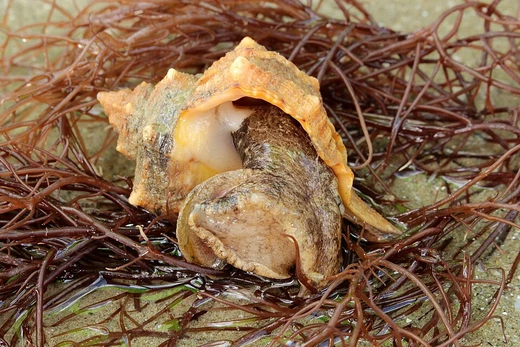
Dog whelk
A predatory rock snail used for ancient purple dye.

Ryan Hodnett · CC BY-SA 4.0
The dog whelk, also known as the Atlantic dogwinkle (Nucella lapillus), is a predatory sea snail in the family Muricidae. It is notable for its use in producing red-purple and violet dyes, similar to the Mediterranean dye-murex species valued in the ancient world.
Quick Facts
- Taxon
- Nucella lapillus
Facts from the source article.
Lore & Background
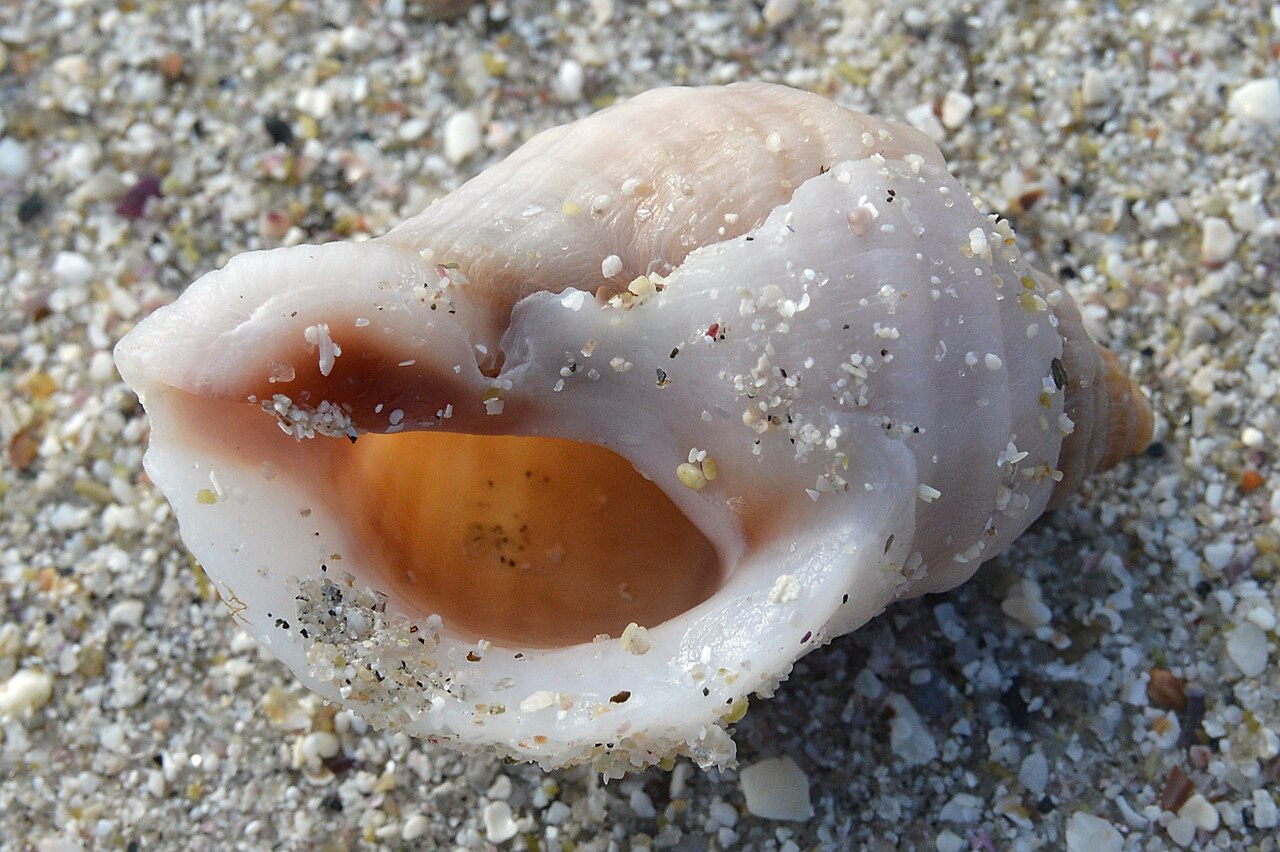
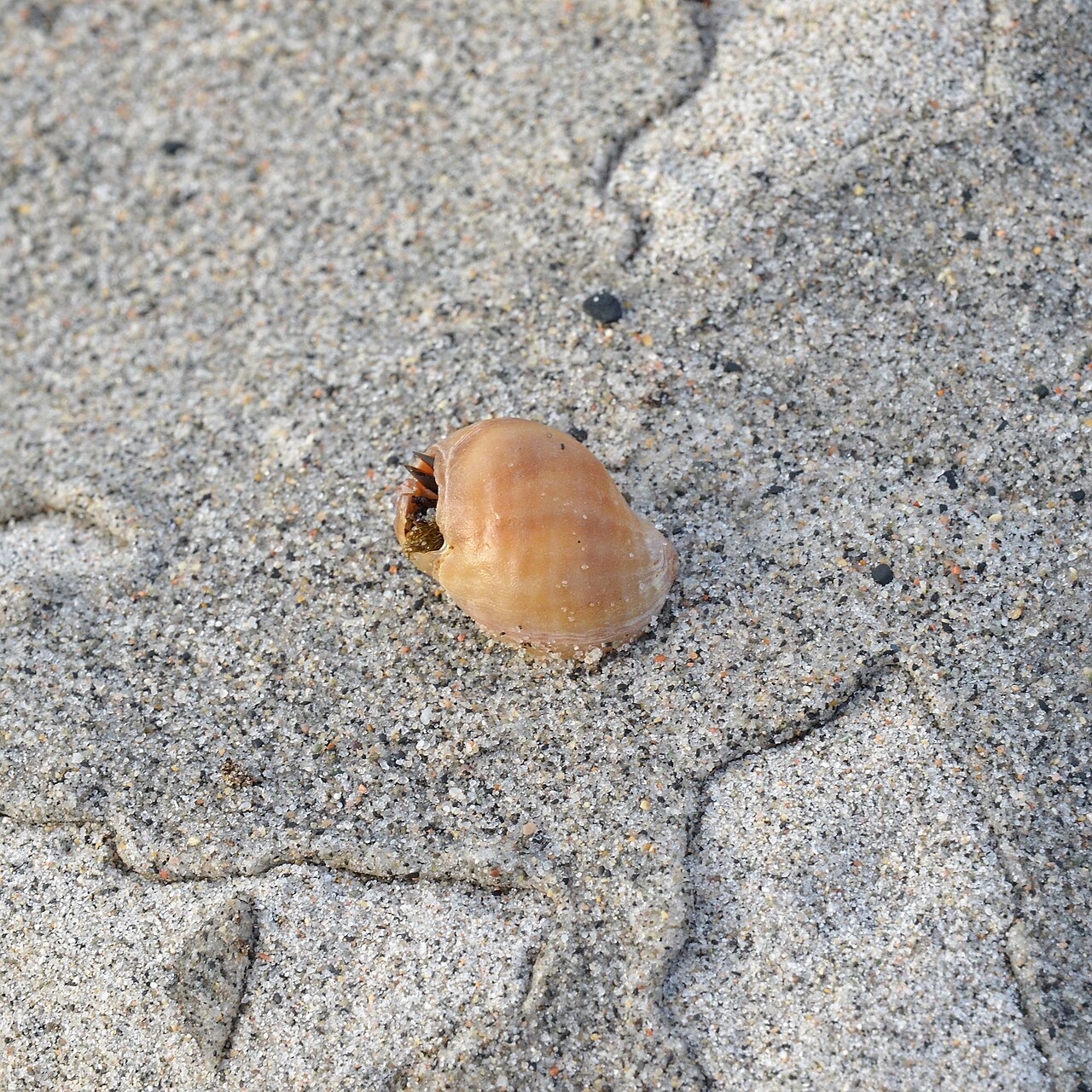
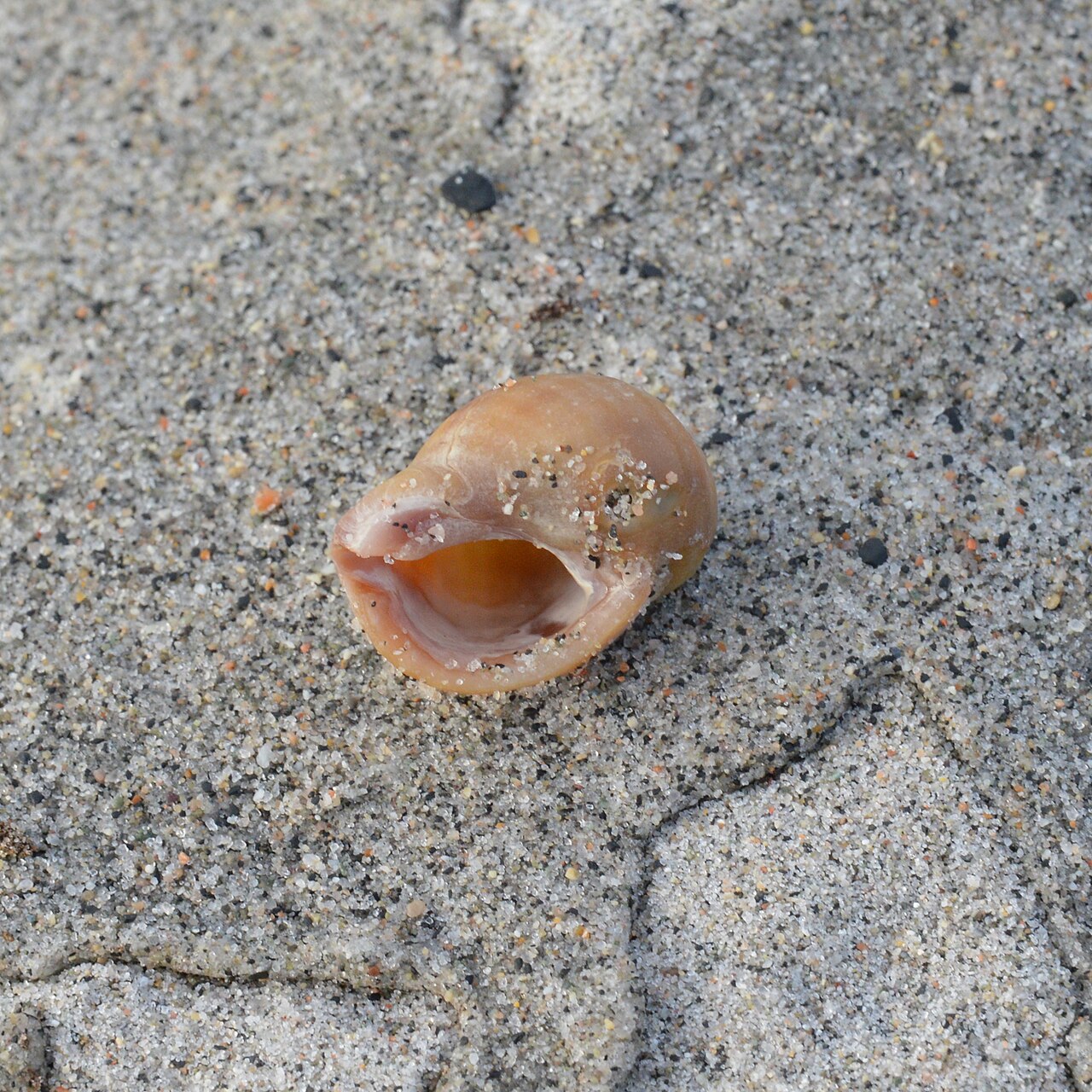
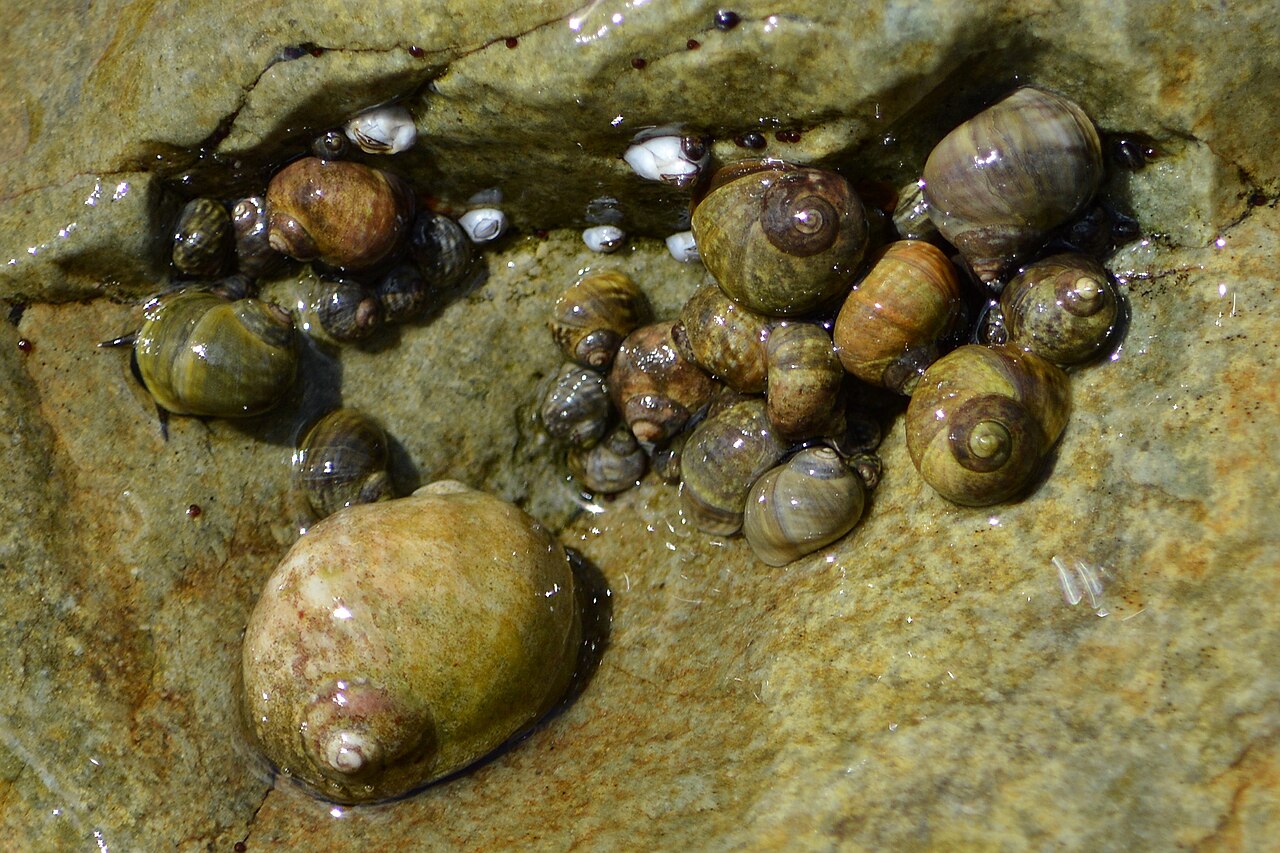
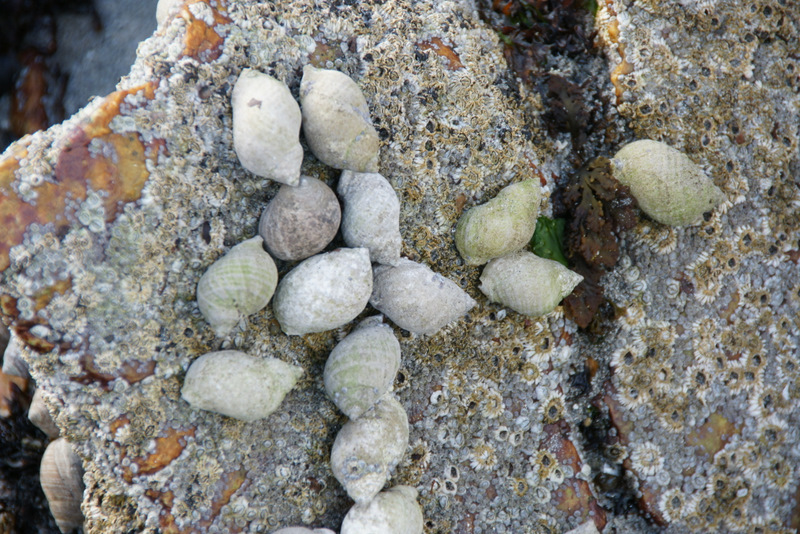
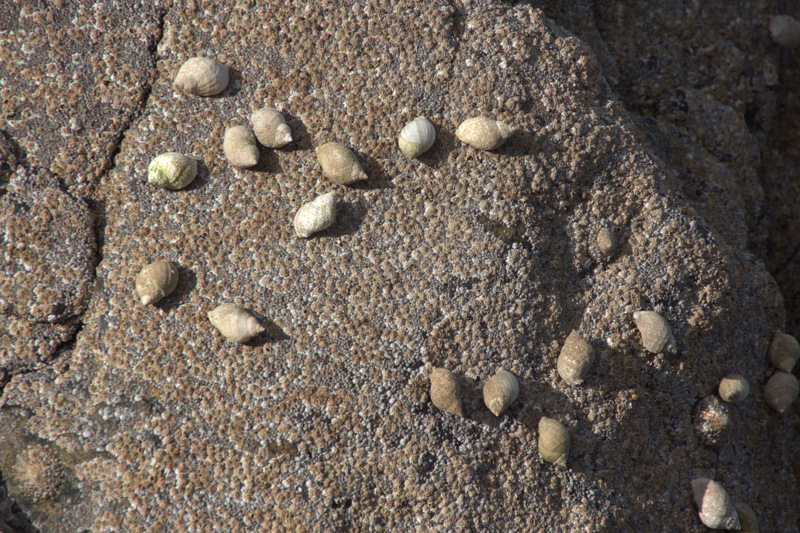
The dog whelk was originally described by Carl Linnaeus in his 1758 10th edition of Systema Naturae as Buccinum lapillus. It is found around the coasts of Europe and the northern west Atlantic coast of North America, preferring rocky shores where it feeds on mussels and acorn barnacles. The shell is small and rounded with a pointed spire, a short siphonal canal, and a deep anal canal; its shape varies with wave exposure, and the body whorl is usually about three-quarters of the total shell length. Shell color is typically whitish grey but can range through orange, yellow, brown, black, or banded combinations, and occasionally green, blue, or pink.
The dog whelk lives on rocky shores and in estuarine conditions, between the 0°C and 20°C isotherms. Its population peaks in the mid-tidal zone, with the upper limit near the mean high water neap tide line and the lower limit near the mean low water neap tide line. It tolerates wave action through shell and foot adaptations and by using sheltered microhabitats. Water loss is managed via an operculum, but the dog whelk can only survive out of water for a limited period; experiments show 50% die at 40°C, and 100% die after seven days emersed at 18°C. It excretes ammonia directly into water, lacking the adaptation to produce uric acid.
Feeding involves a modified radula to bore holes in prey shells, complemented by a shell-softening chemical secreted from the foot. Paralysing chemicals and digestive enzymes are then injected, and the liquefied prey is sucked out. Barnacles may be eaten by pushing plates apart with the proboscis; mussels can take up to a week to digest. Feeding occurs only under conducive conditions, and the gut is kept as full as possible. Mussels defend themselves by tethering dog whelks with byssus threads, leading to starvation. Feeding activity is suppressed on brighter moonlight nights to reduce predation risk, but high-intensity artificial light at night (10 to 50 lx) reverses this pattern.
Reader's Guide
The dog whelk holds significance primarily for its historical use in producing red-purple and violet dyes, akin to the Mediterranean spiny dye-murex, banded dye-murex, and rock-shell that provided the colors prized in the ancient world. The Venerable Bede noted that in Britain, whelks were abundant and yielded a beautiful scarlet dye unfaded by sun or rain, with the color improving as cloth aged. Archaeological evidence includes a 7th-century dyeing workshop on Inishkea North, Co. Mayo, Ireland, with a presumed vat and broken dog-whelk shells. No such early medieval workshop is known from Britain, but a trace of bromine—indicating whelk dye—was found on a page of the late 8th- or early 9th-century Barberini Gospels, used as a background panel for white lettering in the Gospel of John. Efforts to detect whelk dye on Anglo-Saxon textile fragments have yielded negative results for bromine. An Anglo-Saxon account of the accession ceremony of Aldfrith of Northumbria mentions whelk-dyed cloth, though this may echo Roman ceremonies, and another account describes valuable textiles brought to England by Wilfrid of Ripon. The dog whelk's ecological role as a predator on rocky shores and its vulnerability to crabs and birds further underscore its place in coastal ecosystems.
Did You Know?
- Its shell color can occasionally be green, blue, or pink.
- 50% of dog whelks die at 40°C in experiments.
- A 7th-century dyeing workshop using dog whelks was found on Inishkea North, Co. Mayo, Ireland.
Taxonomic Identity and the True Whelk Distinction
The term "dog whelk" in the British Isles points to creatures that, despite sharing a name with the well-known edible sea snails, actually belong to entirely different taxonomic families. Specifically, the name covers Nucella lapillus, a member of the Muricidae family, as well as various Nassarius species from the Nassariidae family. This stands in contrast to the "true whelks" of the Buccinidae family, which are the carnivorous species that drill through the shells of mussels, crustaceans, annelids, and other molluscs to reach their soft tissues, relying on chemoreceptors to track down prey. The dog whelk is itself described as a predatory species, but its evolutionary lineage is not closely related to those Buccinidae members. The common name "whelk" (also spelled welk or even wilk) stretches across so many unrelated genera and families that its meaning shifts dramatically depending on where you are in the world, making the dog whelk a prime example of how a single everyday word can mask a deep taxonomic divide.
An Ancient Dye That Ages into Richness
Among the many ways humans have interacted with sea snails throughout history, the dog whelk holds a particularly striking place in the annals of ancient craft. In antiquity, this predatory species was harvested not for its flesh but for its capacity to produce a rich red dye. What makes this pigment remarkable is its unusual aging property: rather than fading or dulling over time, the color actually deepens and improves as it matures. This characteristic would have made dog whelk dye especially valuable for applications where longevity of color was prized, such as textiles, manuscripts, or decorative arts. The fact that a small coastal gastropod could yield a pigment with such a distinctive temporal quality speaks to the ingenuity of ancient dye-makers, who identified and exploited biochemical properties in marine life long before modern chemistry could explain them. While true whelks of the Buccinidae family are better known as a food source, the dog whelk's legacy in the ancient world is tied to this singular artistic and practical use.
Victorian London's Coastal Snack
Long before the modern seafood restaurant, the dog whelk occupied a humble but beloved niche in the street food culture of Victorian London. Stalls selling these small predatory snails were a familiar sight, typically set up in the immediate vicinity of public houses and theatres, where crowds of workers and playgoers could grab a quick, inexpensive bite between drinks or acts. The snails themselves are nutritionally dense: a standard 100-gram serving of whelk meat delivers roughly 570 kilojoules of energy, 24 grams of protein, a mere 0.34 grams of fat, and 8 grams of carbohydrates, making them a surprisingly lean protein source for a working-class snack. The proximity of these stalls to entertainment venues suggests the dog whelk was as much a social ritual as a meal, a shared, salty, hands-on treat that accompanied the evening's theatre or a pint at the corner pub. Though the practice has largely faded from the London streetscape, it remains a vivid snapshot of how a small marine creature could become woven into the daily rhythm of a great industrial city.
A Name That Travels: Whelks Around the World
The word "whelk" (or its variants welk and wilk) is one of those common names that means something different on nearly every coastline. In Japan, tsubu-gai refers to mid- and large-sized Buccinidae species eaten braised, grilled, or in sushi, though the Neptunea genus carries a gland producing the toxin tetramine. In Korea, the golbaengi—actually the moon snail Neverita didyma—is blended with chili sauce and cold noodles in the beloved side dish golbaengi-muchim, a quintessential accompaniment to alcohol. Australia and New Zealand distinguish Cabestana species as "predatory whelks" and Penion species as "siphon whelks." In Brazil, empty whelk shells feature in jogo de búzios, an Afro-Brazilian divination game practiced by older women of African descent. In the United States, the name covers Busycon and Busycotypus species, while the invasive Rapana venosa is called the Veined rapa whelk despite being a murex. In the West Indies, "wilks" (both singular and plural) names the large top shell Cittarium pica. In Scotland, the word stretches even to the periwinkle. The dog whelk, confined to British and Irish usage, is just one thread in this vast, tangled web of local names.
Gallery
Frequently Asked Questions
Who is Dog whelk?
Dog whelk (Nucella lapillus) is a small predatory sea snail in the muricid family, first formally catalogued by Carl Linnaeus in 1758 under the name Buccinum lapillus. Fans often call it the Atlantic dogwinkle, and it's a staple character of cold rocky coastlines.
What are Dog whelk's powers/role?
As a voracious predator, it dissolves through the shells of mussels, barnacles, and other invertebrates with acid and a rasping radula. It also carries a remarkable chemical legacy: its tissues yield red-purple and violet dyes comparable to those of the famous Mediterranean dye-murex.
Where can you find Dog whelk?
It clings to rocks in the mid-tidal zone along European shores and the northern west Atlantic coast of North America, thriving in waters between 0 °C and 20 °C. Estuarine and open rocky habitats are its preferred stage; sandy beaches are not.
Why is Dog whelk important?
Ecologically it acts as a keystone predator that keeps intertidal invertebrate communities in balance. Historically it is valued as a source of red-purple and violet pigments, often cited as the Atlantic counterpart to the Mediterranean murex species that produced the prized purple dye of antiquity.
More in Murex Snails 1-24
Spotted an error? Know more?
Reader corrections go straight into our review queue. Suggest an edit · How this site is sourced