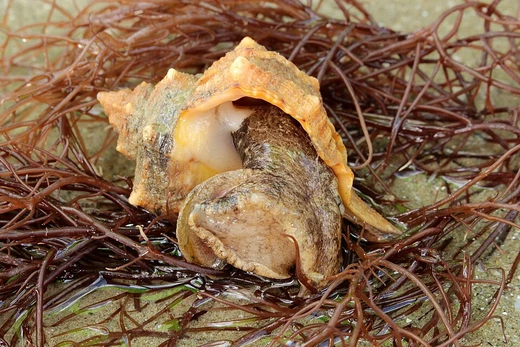
Coralliophila
A polyphyletic genus of coral snails in the murex family.

H. Zell · CC BY-SA 3.0
Coralliophila is a genus of sea snails—marine gastropod mollusks that belong to the subfamily Coralliophilinae, commonly called coral snails, which is part of the family Muricidae (murex snails and rock snails). This genus is likely polyphyletic, meaning it should ideally be limited to species that are most closely related to its type species. Species in the genus *Hirtomurex*, found in the Indo-West Pacific, are not clearly distinct from those in *Coralliophila* sensu lato (in the broad sense) that occur in the Eastern Atlantic.
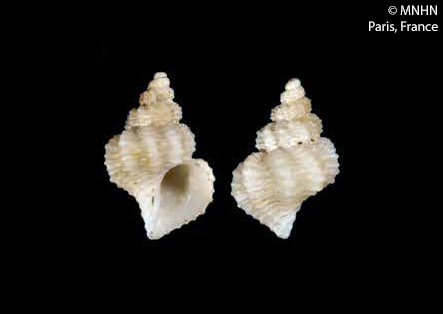
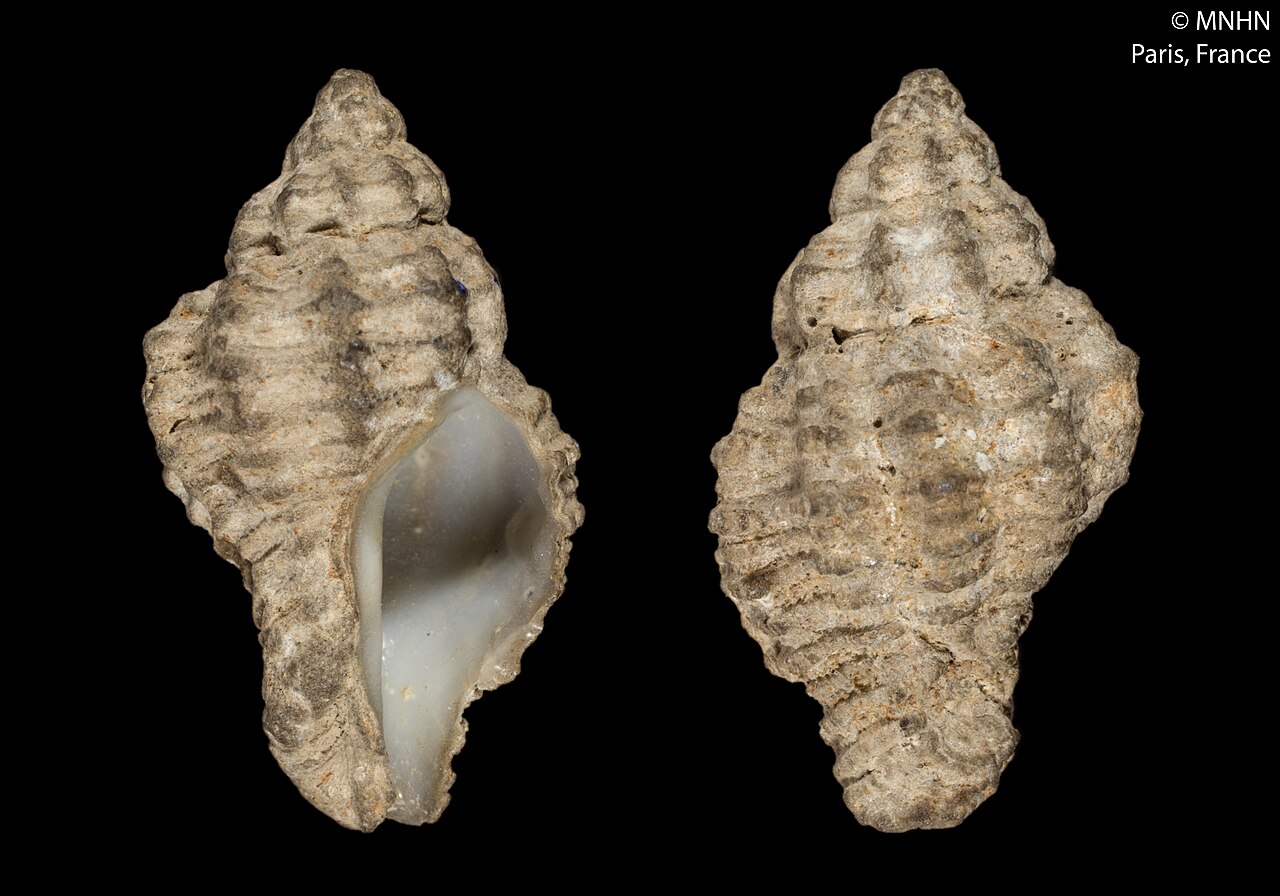
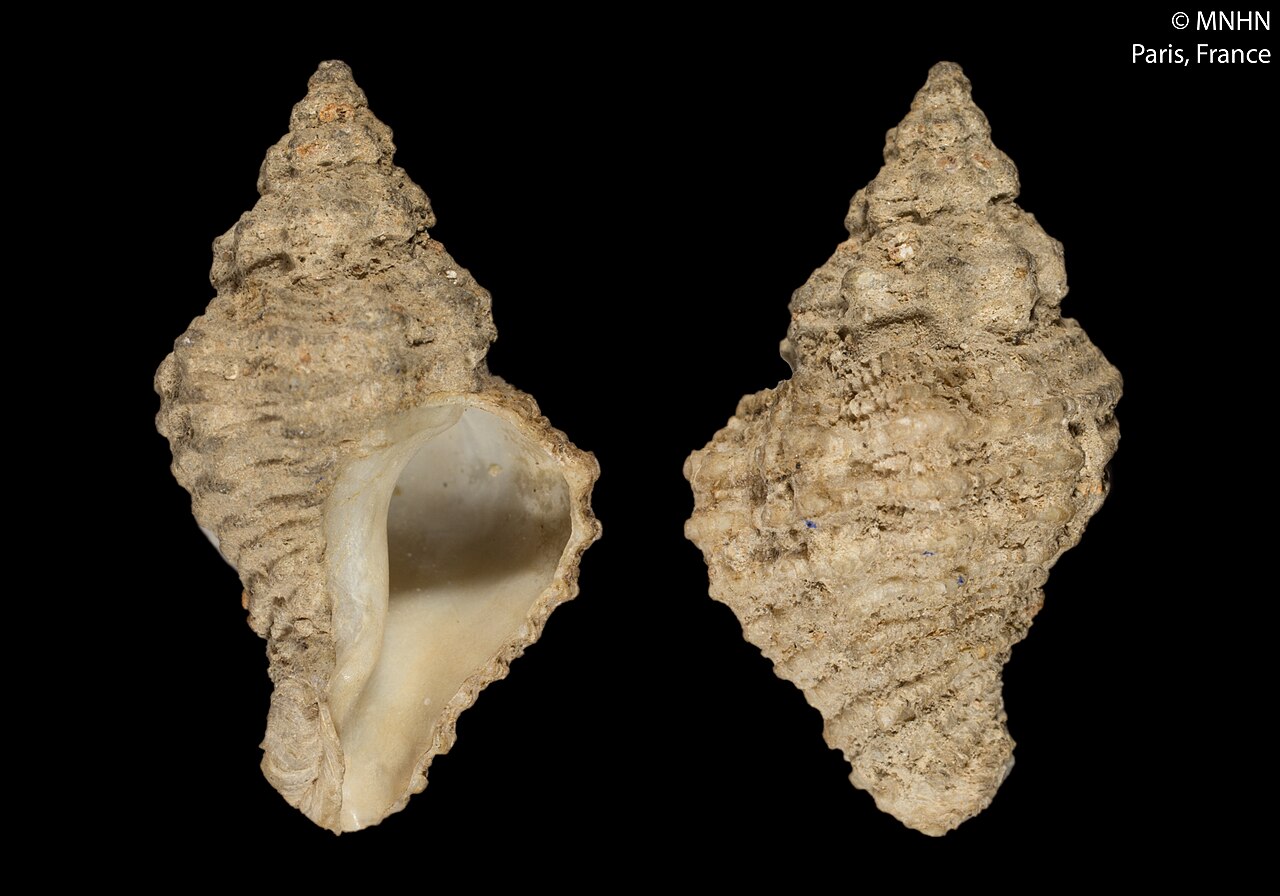
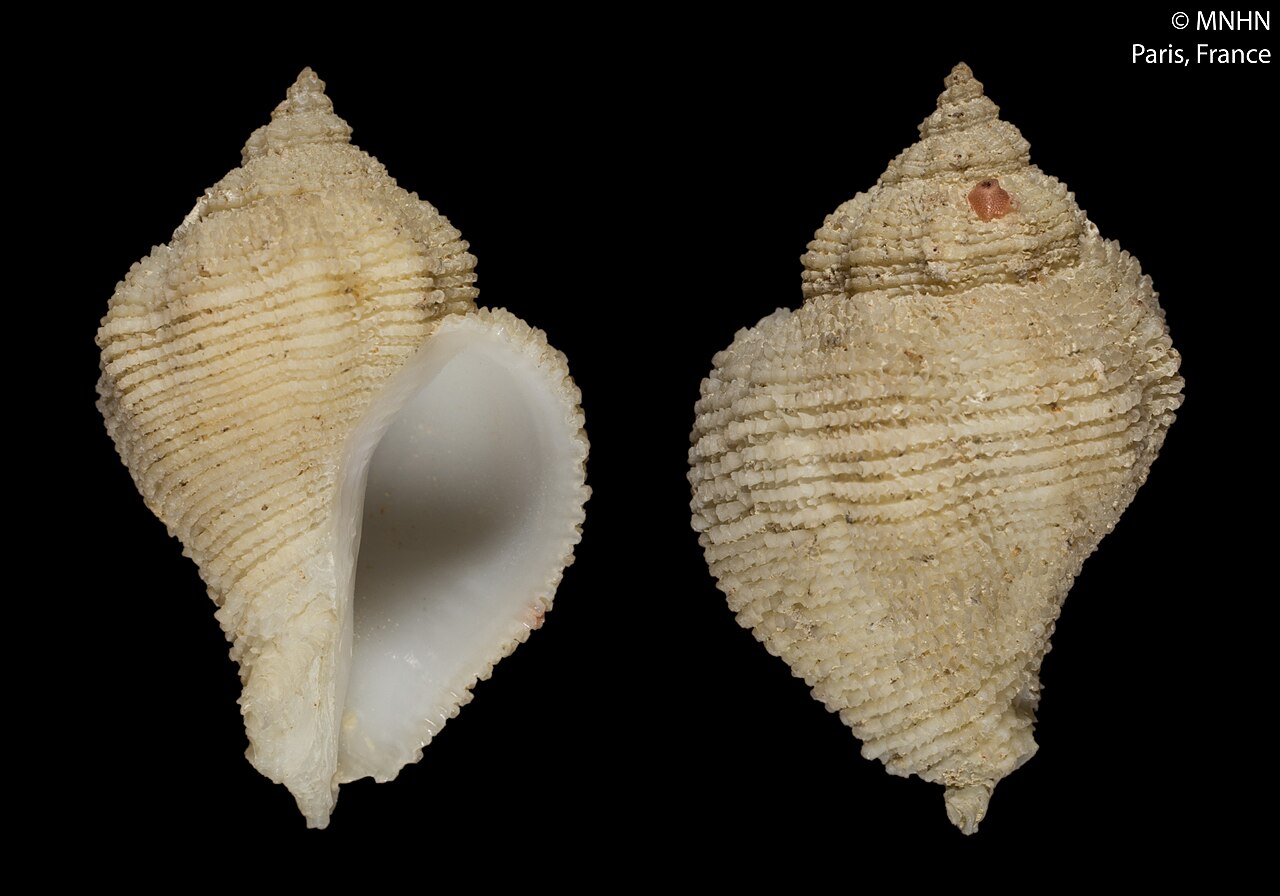
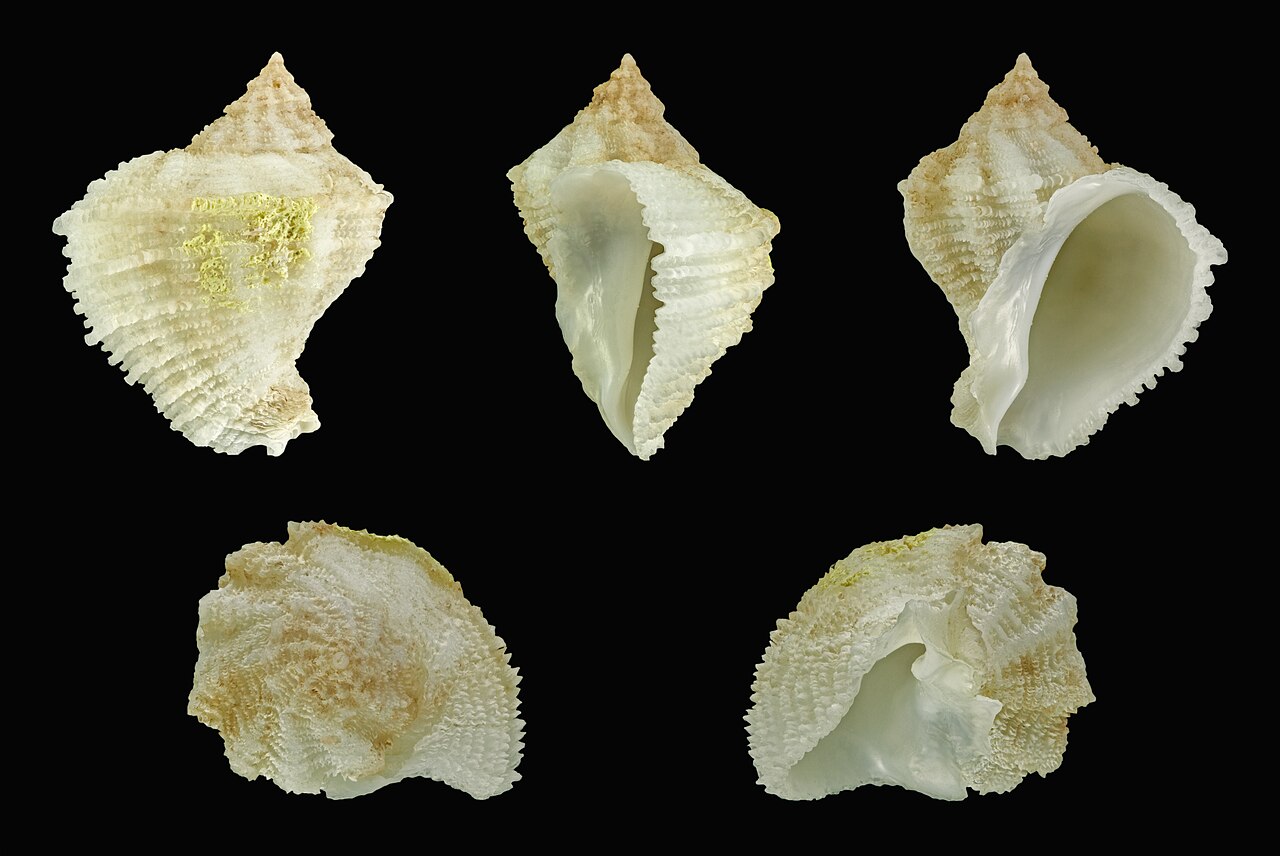
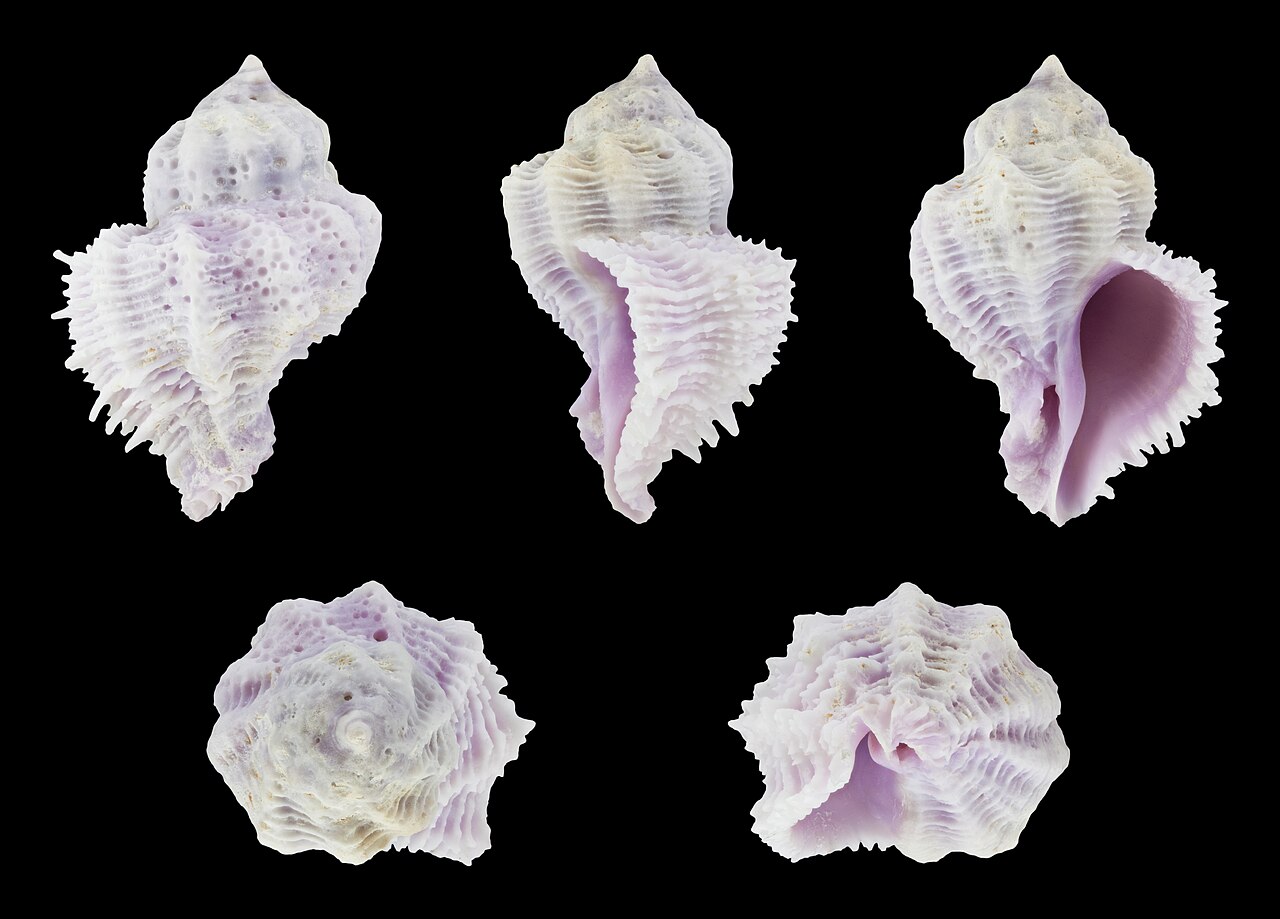
The shell’s outer and inner lips are irregular in shape. They are moderate in size and do not extend into a long process that would close the aperture.
Species currently recognized within *Coralliophila* s.l. include: *Coralliophila aberrans*, *C. abnormis*, *C. adansoni*, *C. aedonia*, *C. africana*, *C. ahuiri*, *C. alboangulata*, *C. alexpoppei*, *C. amirantium*, *C. andamana*, †*C. angsanana*, *C. atlantica*, *C. australis*, *C. basileus*, *C. bathus*, †*C. bayeri*, †*C. bracteata*, *C. brevis*, *C. bulbiformis*, †*C. burdigalensis*, *C. cancellarioidea*, *C. candidissima*, *C. caribaea*, *C. carnosa*, *C. caroleae*, *C. clathrata*, *C. confusa*, *C. costata*, *C. costularis*, *C. cumingii*, *C. curacaoensis*, *C. curta*, *C. elaborata*, *C. elvirae*, *C. erosa*, *C. erythrostoma*, *C. fearnleyi*, *C. fimbriata*, *C. flava*, *C. fontanangioyae*, *C. fragosa*, *C. francoisi*, *C. fritschi*, *C. galea*, *C. giton*, †*C. gracilispira*, †*C. granifera*, *C. guancha*, *C. hayesi*, *C. hotei*, *C. infantula*, *C. inflata*, *C. jarli*, *C. jeffreysi*, *C. juliamoralesae*, *C. kaikonoi*, †*C. kaiparaensis*, *C. kalafuti*, *C. kaofitorum*, *C. knudseni*, *C. latilirata*, *C. leucostoma*, *C. liltvedi*, †*C. lividorupis*, *C. luglii*, *C. macleani*, †*C. macneili*, *C. mallicki*, *C. mandji*, *C. marrati*, *C. meyendorffii*, *C. mira*, *C. mitraeforma*, *C. monodonta*, *C. monterosatoi*, *C. nanhaiensis*, *C. nivea*, *C. nodosa*, *C. norfolk*, *C. nukuhiva*, *C. nux*, *C. orcuttiana*, *C. ovoidea*, *C. panormitana*, *C. parva*, *C. parvula*, *C. patruelis*, *C. persica*, *C. porphyroleuca*, †*C. problematica*, *C. pulchella*, *C. radula*, *C. rashafunensis*, †*C. renatimagnei*, *C. rhomboidea*, *C. richardi*, *C. robillardi*, *C. roseocephala*, *C. rubrococcinea*, †*C. sacyi*, *C. salebrosa*, *C. scala*, *C. scalaris*, *C.
Quick Facts
- Taxon
- Coralliophila
- Type Species
- Murex neritoideus
- Type Species Authority
- Gmelin, 1791
Facts from the source article.
Lore & Background
The genus Coralliophila is most probably polyphyletic, meaning its species may not all share a single common ancestor. It should be restricted to the species most closely related to the type species. Species in the genus Hirtomurex, situated in the Indo-West Pacific, are not clearly distinguishable from the species in the genus Coralliophila sensu lato found in the Eastern Atlantic. The outer and inner lips of the shell are irregular, moderate, and not produced into an extended process closing the aperture. The genus includes a large number of extant and fossil species, with many described from various regions including the Indo-Pacific, Atlantic, and Mediterranean.
Reader's Guide
Coralliophila holds significance as a genus within the coral snail subfamily Coralliophilinae, itself part of the larger murex snail family Muricidae. Its polyphyletic nature highlights ongoing taxonomic challenges in molluscan systematics, particularly the difficulty in distinguishing it from the genus Hirtomurex in the Indo-West Pacific. The genus includes numerous species, both living and fossil, reflecting a long evolutionary history. Many species have been described by various authors over the past two centuries, contributing to a rich but complex taxonomic literature. The shell morphology—irregular lips that do not form an extended closing process—is a key diagnostic feature. The genus's association with corals (as coral snails) underscores its ecological role in marine reef environments. Its legacy lies in its representation of the diversity and taxonomic complexity within the Muricidae, and in the ongoing refinement of its classification.
Did You Know?
- Coralliophila is most probably polyphyletic and should be restricted to species most closely related to the type species.
- Species in the genus Hirtomurex from the Indo-West Pacific are not clearly distinguishable from Coralliophila sensu lato in the Eastern Atlantic.
- The genus includes both extant and fossil species, with fossil taxa such as Coralliophila angsanana and Coralliophila bayeri.
Taxonomic Position and Phylogenetic Uncertainty
Coralliophila occupies a position within the family Muricidae, the broad group encompassing murex snails and rock snails, and more specifically within the subfamily Coralliophilinae, commonly referred to as the coral snails. Despite this seemingly clear placement in the taxonomic hierarchy, the genus itself presents a significant problem for systematists. Current evidence strongly suggests that Coralliophila, as traditionally understood, is polyphyletic—meaning its member species do not all descend from a single common ancestor to the exclusion of others. This finding implies that the genus, in its broad historical usage, lumps together lineages that are not truly related. The recommended course of action is to restrict the name Coralliophila to only those species that are most closely related to the type species, thereby creating a monophyletic group. This taxonomic revision reflects the ongoing effort in malacology to align genus-level names with actual evolutionary relationships rather than superficial morphological similarities that have historically guided classification.
Shell Morphology and Aperture Structure
The physical architecture of Coralliophila shells is defined by a relatively restrained and understated design compared to many of its muricid relatives. Both the outer lip and the inner lip of the aperture are described as irregular in their contour, lacking the smooth, uniform curves that characterize some other snail groups. Importantly, these lips remain moderate in size and development; they are not extended or produced outward into elongated processes that would serve to close or partially seal the aperture. This absence of a pronounced lip extension distinguishes Coralliophila from certain other murex genera where the aperture may be narrowed or partially occluded by such structures. The irregularity of both lips suggests a shell form that is somewhat rough or uneven at the opening, a feature that may relate to the snail's ecological interactions or the specific substrate conditions in which it lives. Together, these morphological traits—irregular, moderate, unextended lips—form a recognizable diagnostic signature for the genus in its restricted sense.
The Synonymy Problem and Wastebasket Taxonomy
The extensive list of species that have been placed in synonymy with other taxa reveals the magnitude of taxonomic confusion that has surrounded Coralliophila over more than two centuries of malacological research. Dozens of names originally assigned to this genus have since been reclassified into entirely different genera, including Babelomurex, Hirtomurex, Mipus, Morula, Attiliosa, and Lataxiena. This pattern indicates that Coralliophila functioned as what taxonomists call a wastebasket genus—a catch-all category into which morphologically similar but evolutionarily distinct species were deposited. The synonymy records span from the early nineteenth century through the 1990s, reflecting repeated attempts by successive generations of shell specialists to sort out which species truly belong together. Some names were corrected for simple typographical errors, while others represented fundamental misidentifications of evolutionary relationships. The sheer volume of these reassignments underscores how difficult it has been to establish stable, meaningful boundaries for this group of marine gastropods.
Biogeographic Overlap with Hirtomurex
A particularly thorny aspect of Coralliophila taxonomy involves its relationship to the genus Hirtomurex, whose species are distributed across the Indo-West Pacific region. Researchers have noted that Hirtomurex species cannot be clearly distinguished from Coralliophila species in the broad sense, which are found in the Eastern Atlantic. This geographic separation—Indo-West Pacific versus Eastern Atlantic—makes the taxonomic overlap all the more puzzling, as one might expect distinct biogeographic regions to harbor clearly separable lineages. The inability to draw a sharp morphological or structural boundary between the two genera suggests either that they represent closely related lineages that have diverged without developing obvious diagnostic differences, or that the traditional genus-level characters used to separate them are simply insufficient. This ambiguity complicates any effort to restrict Coralliophila to a monophyletic core, as determining which species belong to which genus becomes a matter of interpretation rather than clear-cut identification.
Gallery
Frequently Asked Questions
What is Coralliophila?
Coralliophila is a genus of marine gastropod mollusks—essentially sea snails—classified within the subfamily Coralliophilinae, a group commonly called coral snails, under the broader murex family Muricidae.
Where do Coralliophila species live?
Members of this genus are found across the Indo-West Pacific as well as the Eastern Atlantic, though taxonomists note that the Indo-West Pacific species (sometimes placed in the related genus Hirtomurex) are not clearly separable from their Eastern Atlantic counterparts.
Is Coralliophila a stable, well-defined group?
Not really—current evidence suggests the genus is most likely polyphyletic, meaning it lumps together lineages that are not all each other's closest relatives, and ideally should be narrowed down to only the species most closely tied to its type species.
What does a Coralliophila shell look like?
The shell is characterized by irregularly shaped outer and inner lips, giving it a somewhat asymmetrical, rugged appearance typical of many murex-family snails.
Why do murex fans care about Coralliophila?
It sits at the heart of an ongoing taxonomic debate: because its boundaries overlap with Hirtomurex and its polyphyletic status remains unresolved, it serves as a key case study for how the coral-snail subfamily Coralliophilinae should ultimately be reorganized.
More in Murex Snails 1-24
Spotted an error? Know more?
Reader corrections go straight into our review queue. Suggest an edit · How this site is sourced