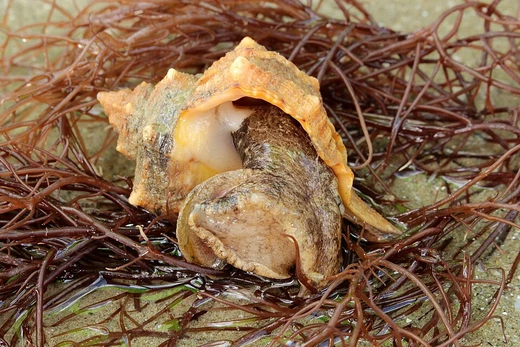
Ocinebrina
A genus of marine snails in the murex family, with many fossil species.

Lamarck, 1822 · CC0
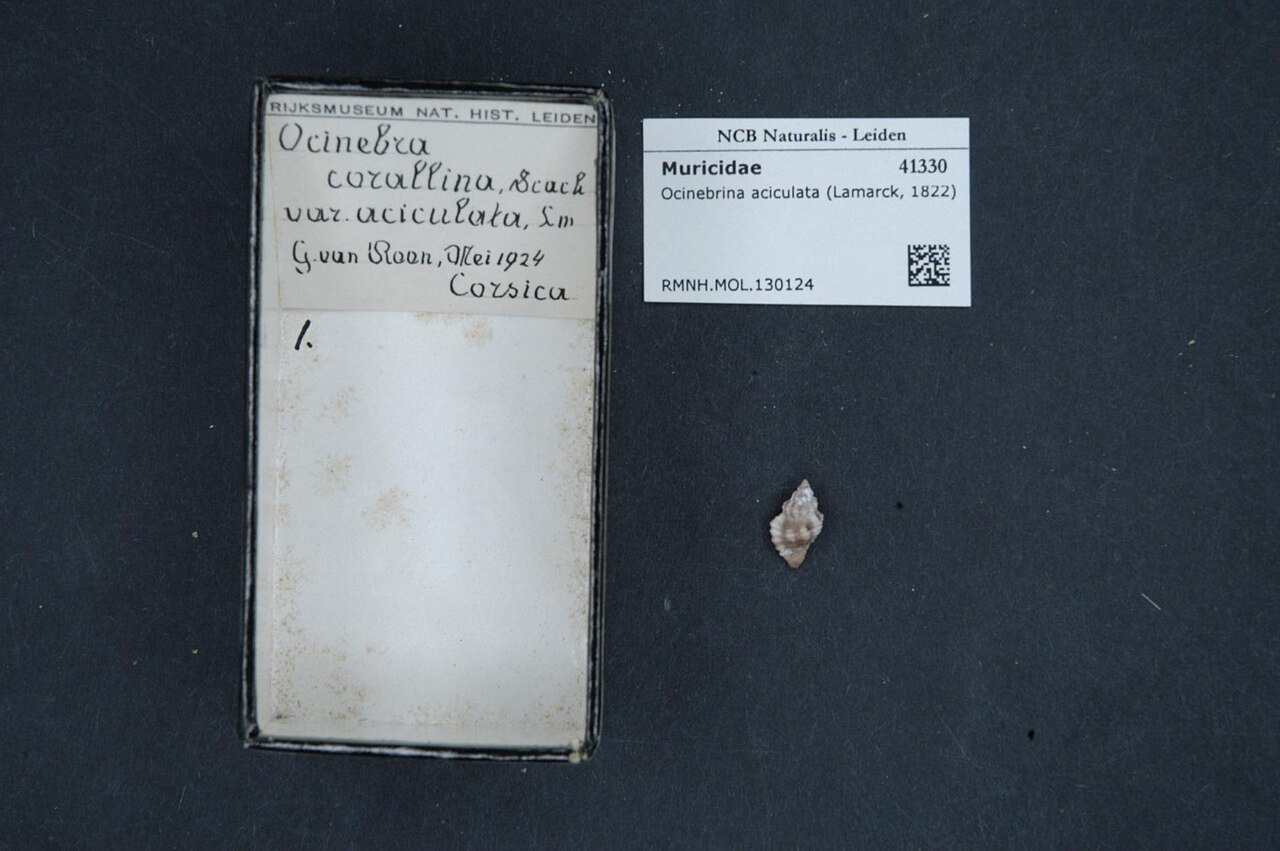
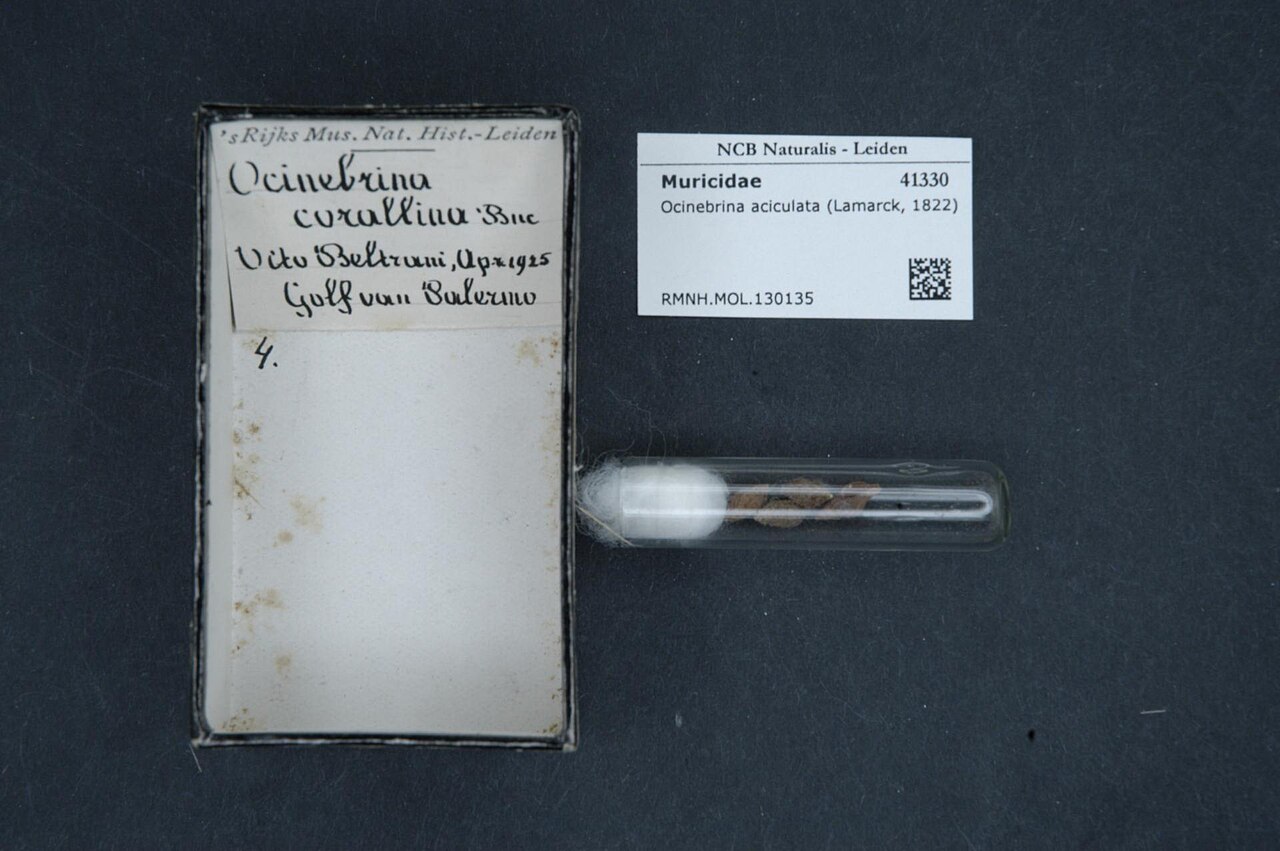
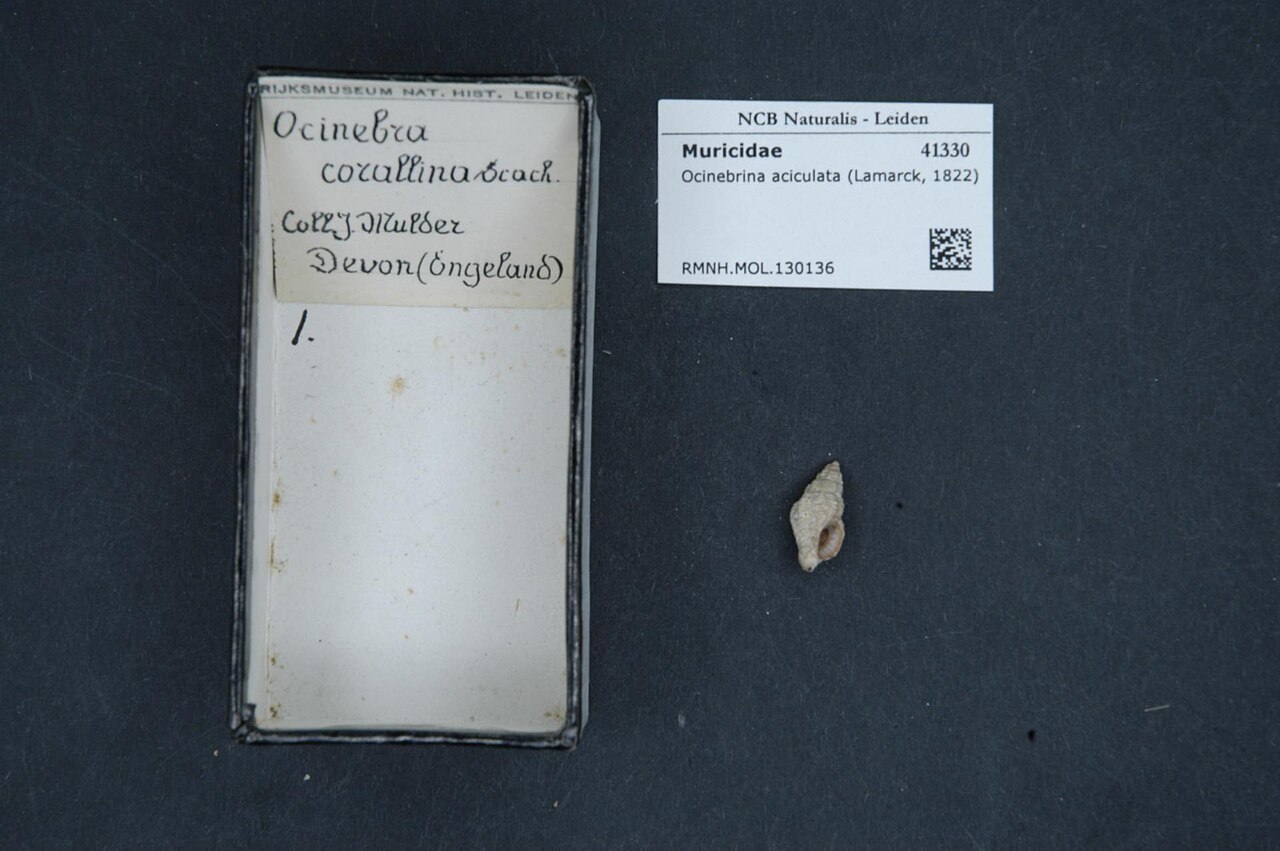
Ocinebrina is a genus of marine gastropod mollusks, commonly known as sea snails. These animals belong to the subfamily Ocenebrinae within the family Muricidae, a group often referred to as murex snails or rock snails. The genus contains both living species and those known only from fossils. Its classification has changed considerably over time, resulting in a long list of synonyms and reclassified species.
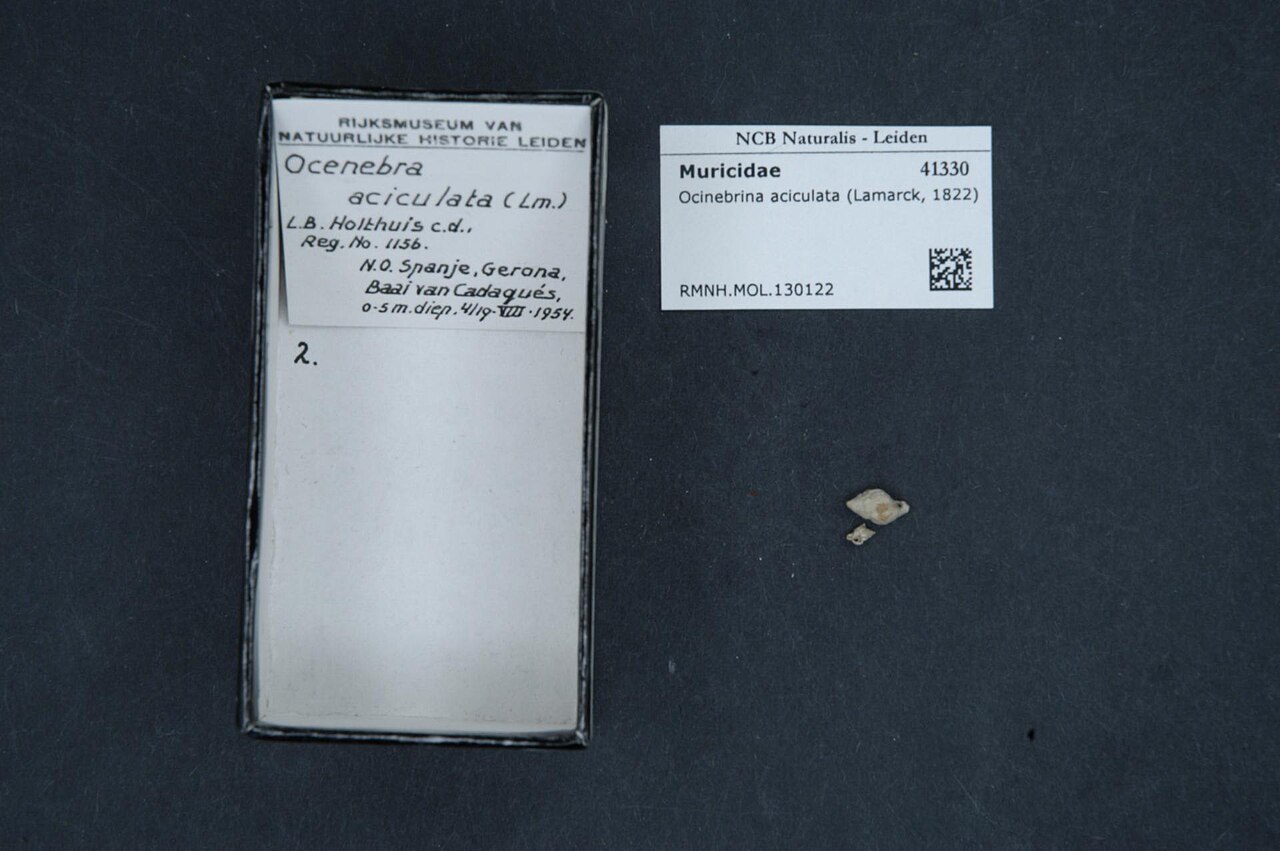
The recognized species of Ocinebrina include: Ocinebrina aciculata, Ocinebrina aegeensis, †Ocinebrina ariesiensis, †Ocinebrina bertai, †Ocinebrina bicaudata, †Ocinebrina carvalhoi, †Ocinebrina coelata, †Ocinebrina concerpta, †Ocinebrina confluens, Ocinebrina corallina, Ocinebrina corallinoides, †Ocinebrina crassilabiata, †Ocinebrina dertonensis, †Ocinebrina houarti, †Ocinebrina imbricata, †Ocinebrina kojumdgievae, †Ocinebrina landaui, †Ocinebrina lauriatrageae, †Ocinebrina perparva, †Ocinebrina polonica, †Ocinebrina recognita, Ocinebrina reinai, †Ocinebrina renieri, †Ocinebrina scalaris, and †Ocinebrina sublavata. Many other names once placed in Ocinebrina have since been moved to other genera, such as Ocenebra, Paciocinebrina, Muricopsis, or Favartia, or have been recognized as misspellings or unavailable names under ICZN rules.
Quick Facts
- Taxon
- Ocinebrina
- Type Species
- Murex corallinus / Scacchi, 1836
Facts from the source article.
Lore & Background
The genus Ocinebrina was established by Jousseaume in 1880. It belongs to the subfamily Ocenebrinae within the family Muricidae, commonly known as murex snails or rock snails. The genus contains both living and fossil species, with many fossil forms described from European deposits. Taxonomic revisions have led to numerous species being moved to other genera, particularly Ocenebra and Paciocinebrina, based on morphological and molecular studies. The Ocinebrina aciculata species complex has been a focus of revisionary work in the northeastern Atlantic Ocean and Mediterranean Sea, revealing cryptic lineages. Similarly, the Ocinebrina edwardsii complex has been studied using molecular data, uncovering hidden diversity. Many names originally placed in Ocinebrina have been synonymized or reassigned, reflecting ongoing refinement of the genus boundaries.
Reader's Guide
Ocinebrina holds significance as a genus within the ecologically important family Muricidae, which includes many predatory snails that drill into bivalves and other mollusks. The genus has been central to taxonomic studies of small mussel drills in the northeastern Atlantic and Mediterranean, where species complexes such as Ocinebrina aciculata and Ocinebrina edwardsii have been revised using both morphological and molecular approaches. These revisions have clarified species boundaries and revealed cryptic lineages, contributing to a better understanding of marine biodiversity in these regions. The extensive fossil record of Ocinebrina, with over 20 described fossil species from European strata, provides insights into the evolutionary history and paleobiogeography of the group. The many synonyms and reclassifications within the genus highlight the challenges of gastropod taxonomy and the importance of integrative systematic methods. The genus also serves as a case study in the application of ICZN rules, as several names have been deemed unavailable due to non-binomial publication or other nomenclatural issues.
Did You Know?
- Ocinebrina is a genus of sea snails in the subfamily Ocenebrinae of the family Muricidae.
- The genus includes both extant species and over 20 fossil species.
- Many species originally placed in Ocinebrina have been moved to the genera Ocenebra or Paciocinebrina.
- The Ocinebrina aciculata species complex has been revised using molecular data, revealing cryptic lineages.
Taxonomic Identity and the Long Shadow of Murex
Ocinebrina is a genus of marine gastropod molluscs belonging to the family Muricidae, the group commonly known as murexes or rock snails. Its taxonomic story is inseparable from that of the far older and more famous genus Murex, one of the earliest classical seashell names still recognized by modern science. During the nineteenth century, prominent malacologists such as Kiener, Reeve, Küster and Kobelt, and Sowerby lumped virtually every spiny or sculptured muricoid form under the single heading of Murex. It was Lamarck and his contemporaries who first narrowed the definition, restricting it to the subfamilies Muricinae and Ocenebrinae. Over time, species that had carried the Murex label were reassigned to more precise genera. Ocinebrina aciculata, originally described by Lamarck in 1822, and Ocinebrina edwardsii, named by Payraudeau in 1826, are examples of species now placed in Ocinebrina but long listed under Murex. This history of consolidation and subsequent splitting is the principal reason the Murex name carries so many synonyms in the taxonomic record.
Biology and the Architecture of the Shell
Members of the Muricidae family, within which Ocinebrina sits, are medium to large predatory sea snails found in tropical waters. They are carnivorous marine gastropods, meaning they actively hunt other organisms rather than filter-feeding or grazing. The shells of this family are among the most visually striking in the molluscan world. Many species display elongate, highly sculptured exteriors adorned with prominent spines or frond-like projections, giving them an almost architectural quality. The inner surfaces of these ornate shells are frequently vividly coloured, a contrast only revealed when the shell is opened or broken. The combination of external spikiness and internal iridescence made these snails objects of fascination for naturalists from antiquity onward. Aristotle himself described such mollusks in his History of Animals, using the Greek term porphyra. The name murex, from which the family's common name derives, traces back to the Latin mūrex, likely connected to the Greek myax meaning sea mussel, and possibly even to the Greek word for mouse, reflecting an ancient observer's perception that certain mollusk shapes resembled the small rodent.
Distribution, Habitat, and Deep Time
The Muricidae family, including Ocinebrina, is predominantly an Indo-Pacific group. Research by Ponder and Vokes in 1988 confirmed that the closely related genus Murex is solely an Indo-Pacific taxon, and species from the western Atlantic that were once assigned to it have since been moved to the genus Haustellum. In terms of living habitat, most species in this family occupy the intertidal zone or the shallow subtidal waters just below it, sheltering among rocks and coral formations where their spiny, sculptured shells provide effective camouflage. The fossil record tells a much older story. Murex fossils, representing the broader lineage, span from the Cretaceous period all the way to the Quaternary, covering a range of roughly 125 million years. Fossils of species within this group have been recovered from sites across the globe, and approximately twenty-five extinct species have been identified. This deep temporal and geographic spread underscores that the predatory, shell-building lifestyle we associate with tropical rock snails today has a remarkably long evolutionary history stretching back to the age of the dinosaurs.
The Purple Dye Legacy
Perhaps no group of sea snails has left a deeper mark on human civilization than the murex family. The ancient Phoenicians developed a costly and extraordinarily labour-intensive process for extracting Tyrian purple, also called royal purple, and the related dye known as tekhelet, from the mucus of the hypobranchial gland of two species long referred to as murex: Murex brandaris and Murex trunculus, now classified as Bolinus brandaris and Hexaplex trunculus. The resulting colour is a rare animal-produced organobromine compound, generated by a specific bromide peroxidase enzyme acting on dissolved bromide in seawater. This dye was reserved for the most prestigious garments: royal robes, ceremonial and ritual clothing, and textiles denoting high social rank. It is hypothesized that the same pigment featured prominently in the ancient Temple in Jerusalem, adorning the vestments of the High Priest. Some Jewish communities continue to use it today in the ritual fringes called tzitzit on four-cornered garments. While scholarly consensus on the exact Biblical source of the blue dye remains unresolved, the latest archaeological research on regional dyes points strongly to Hexaplex trunculus as the source of the ancient tekhelet.
Gallery
Frequently Asked Questions
Who is Ocinebrina?
Ocinebrina is a genus of marine sea snails that sits within the subfamily Ocenebrinae of the murex family (Muricidae). It encompasses both living species and a large number of fossil-only forms, making it one of the more historically deep lineages among rock snails.
What is Ocinebrina's role in the murex family?
As a member of Muricidae, Ocinebrina shares the spiny, sculpted shell architecture that defines the group, but it occupies the Ocenebrinae subfamily, which tends toward smaller, more streamlined body plans than the giant murexes. Its five recognized living species—such as O. aciculata and O. corallina—serve as typical intertidal and shallow-subtidal grazers in their respective coastal habitats.
Why is Ocinebrina important to malacologists?
Its classification has been revised repeatedly over the years, producing a long trail of synonyms and reassignments that make it a useful case study in how murex taxonomy evolves. The deep fossil record also gives paleontologists a long time-series for tracking shell morphology and biogeographic shifts in the Muricidae.
Which species are currently recognized under Ocinebrina?
The living representatives are O. aciculata, O. aegeensis, O. corallina, O. corallinoides, and O. reinai. Beyond those, over twenty fossil species are formally assigned to the genus, spanning multiple geological periods and regions.
More in Murex Snails 1-24
Spotted an error? Know more?
Reader corrections go straight into our review queue. Suggest an edit · How this site is sourced