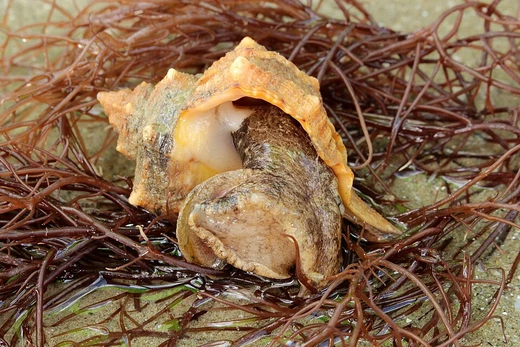
Babelomurex
A genus of marine gastropod molluscs in the murex snail family.

MarcusStigwan · CC BY-SA 4.0
Babelomurex is a genus of sea snails, specifically marine gastropod molluscs. They belong to the subfamily Coralliophilinae within the family Muricidae, which includes murex snails and rock snails. The genus contains a large number of species, most of which were first described during the 20th and 21st centuries. Its taxonomic history is complicated, with several species having been reclassified as synonyms and some names misapplied over time.
Quick Facts
- Taxon
- Babelomurex
- Type Species
- Fusus babelis
- Type Species Authority
- Requien, 1848
Facts from the source article.
Lore & Background
The genus Babelomurex was established within the subfamily Coralliophilinae of Muricidae. Its species are distributed across various marine regions, with many described from the Indo-Pacific and Atlantic. The taxonomy has been refined through the work of malacologists such as Oliverio, Kosuge, and Garrigues, among others, who have described numerous new species in recent decades. Several species have been placed into synonymy, including Babelomurex spinosus (Hirase, 1908) which is considered a synonym of Babelomurex jeanneae D'Attilio & B. W. Myers, 1984, and Babelomurex multispinosus Shikama, 1966, synonymized with Babelomurex spinosus. The species Babelomurex basilium is listed as taxon inquirendum, indicating uncertainty about its status. The genus also includes fossil species, such as Babelomurex brugnonei and Babelomurex dellabellai.
Reader's Guide
The genus Babelomurex holds significance in malacology as a diverse group within the Coralliophilinae, reflecting ongoing taxonomic refinement. Many species have been described in the late 20th and early 21st centuries, highlighting continued discovery and revision. The synonymies, such as the complex involving Babelomurex spinosus and Babelomurex jeanneae, illustrate the challenges of morphological identification and the importance of systematic review. The inclusion of fossil species like Babelomurex brugnonei and Babelomurex kissimeensis extends the genus's temporal range. The work of researchers like Oliverio, Kosuge, and Garrigues has been central to documenting this diversity. The genus's legacy is tied to its role in understanding the evolutionary history and biogeography of murex snails, with species found from the Atlantic to the Pacific. The presence of taxa inquirenda and misapplications underscores the dynamic nature of its classification.
Did You Know?
- Babelomurex is a genus in the subfamily Coralliophilinae of the family Muricidae.
- Babelomurex spinosus (Hirase, 1908) is a synonym of Babelomurex jeanneae.
- Fossil species such as Babelomurex brugnonei are included in the genus.
Taxonomy & Nomenclature
Babelomurex cariniferus, commonly known as Babel's latiaxis, is a marine gastropod mollusc belonging to the family Muricidae, a group widely recognized as murex snails or rock snails. The species name cariniferus sits within the genus Babelomurex, a taxonomic placement that reflects its close relationship to other similarly sculptured muricids. Notably, this snail has also been catalogued under the junior synonym Latiaxis babelis, a name that persists in certain conservation databases. This dual nomenclature creates an interesting taxonomic thread: while modern malacology places the species firmly in Babelomurex, older or parallel classifications still reference the Latiaxis lineage. The species is quite similar in overall appearance to Babelomurex benoiti, yet it distinguishes itself through greater variability in both feature and sculpture, as well as a different count of spiniform scales along the whorl keels. The broader muricid family context, along with related valid species such as Babelomurex tectumsinensis, underscores the complexity of classifying these heavily ornamented sea snails.
Distribution & Conservation Listing
Babelomurex cariniferus occupies a broad stretch of the eastern Atlantic and western Mediterranean, with records spanning from the Mediterranean Sea itself all the way to the west coast of Africa, including the Canary Islands, Cape Verde, and Angola. This wide distribution paints a picture of a species comfortable across a range of subtropical and temperate marine environments. However, the species' conservation status is complicated by a nomenclatural entanglement. Under the junior synonym Latiaxis babelis, the snail appears on the IUCN Red List, where it is described as being thought to be endemic to Malta. This creates a significant discrepancy: the broader biogeographic evidence suggests a much wider range, yet the Red List entry, tied to the older name, narrows the perceived distribution to a single island nation. The species is described as uncommon in the infralittoral zone, and its presence across multiple African coastal regions—documented in malacological faunal surveys of Cape Verde and Angola—further challenges the notion of strict Maltese endemism. Resolving this taxonomic and distributional confusion remains important for accurate conservation assessment.
Shell Morphology & Sculpture
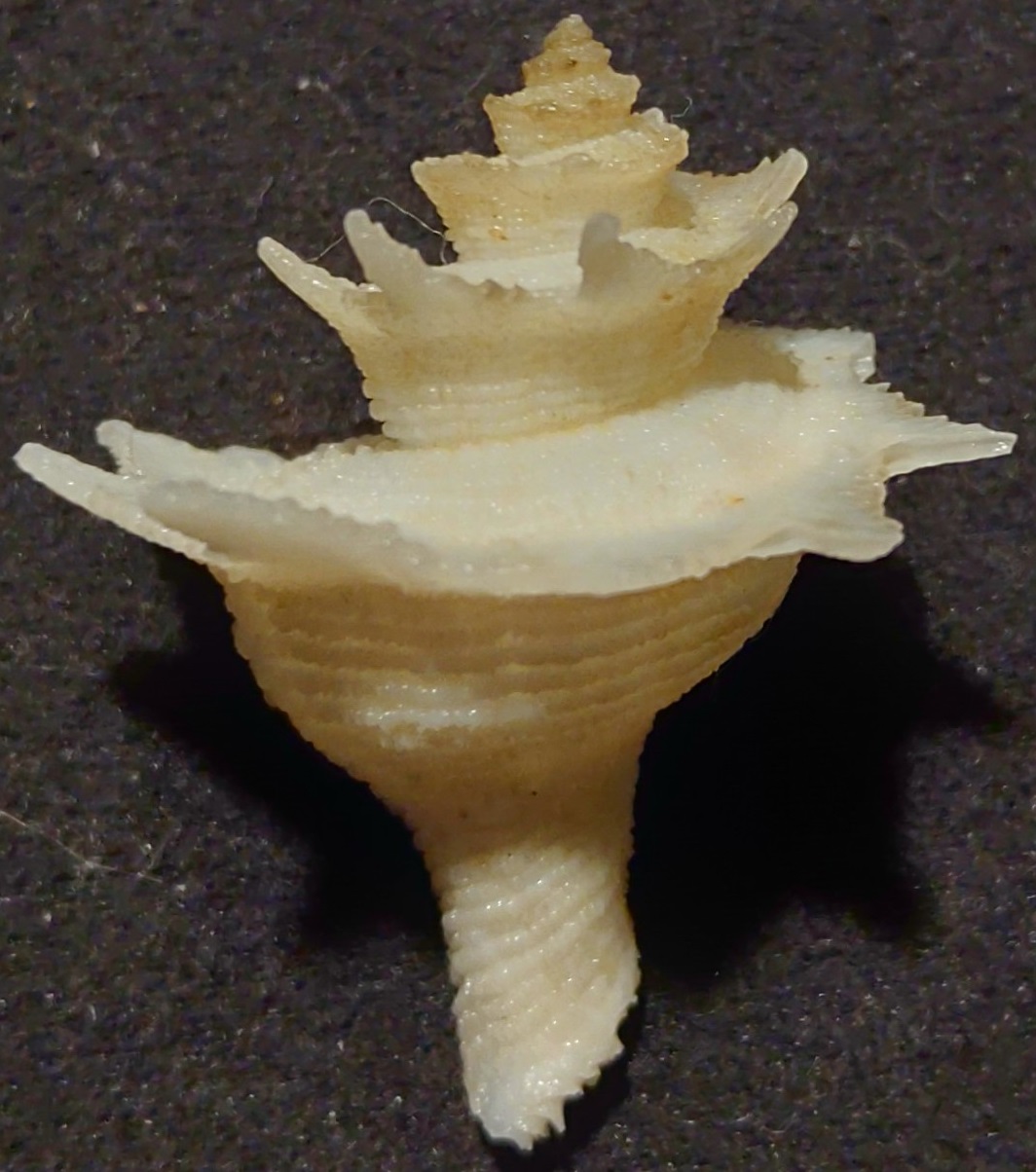
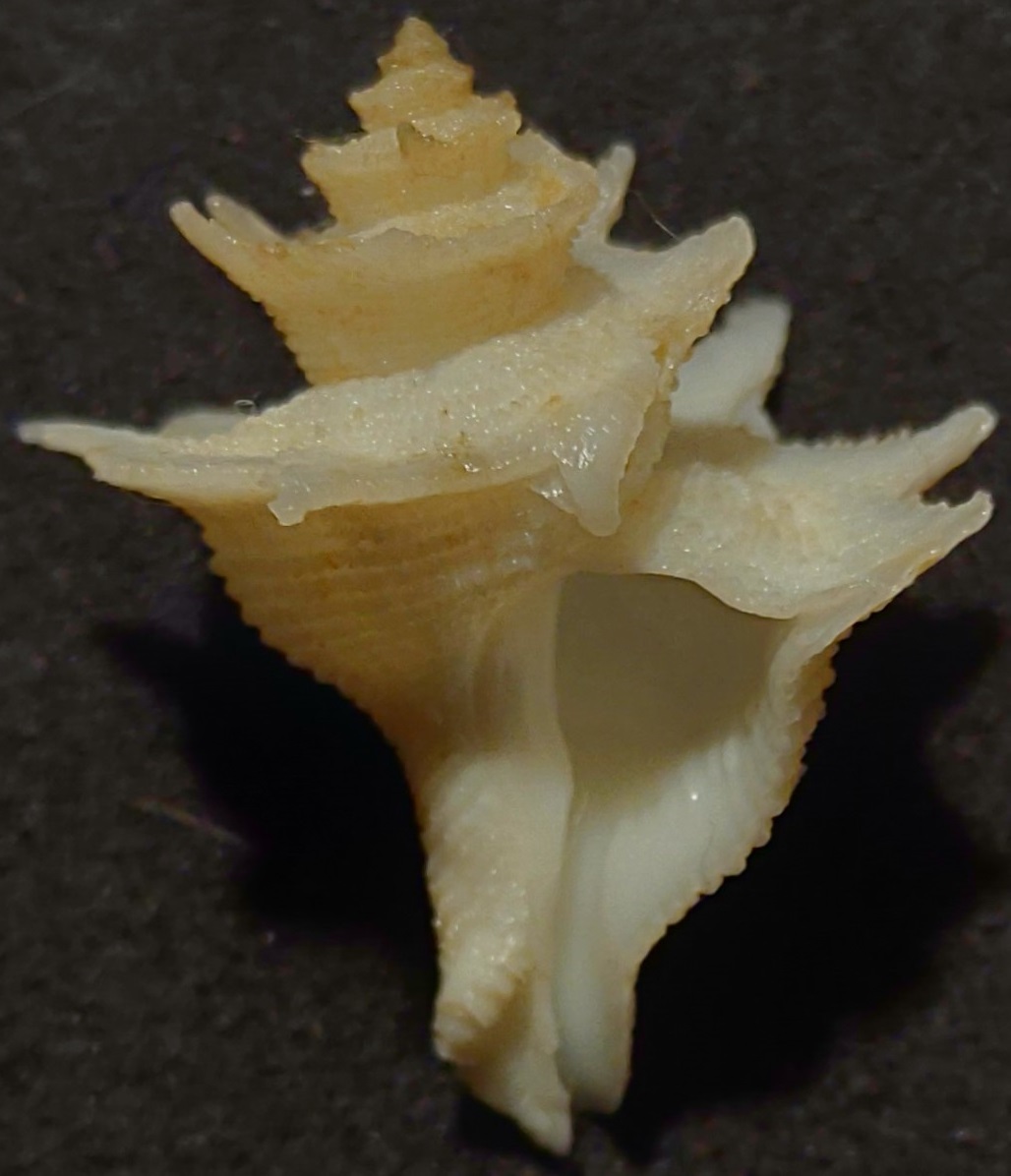
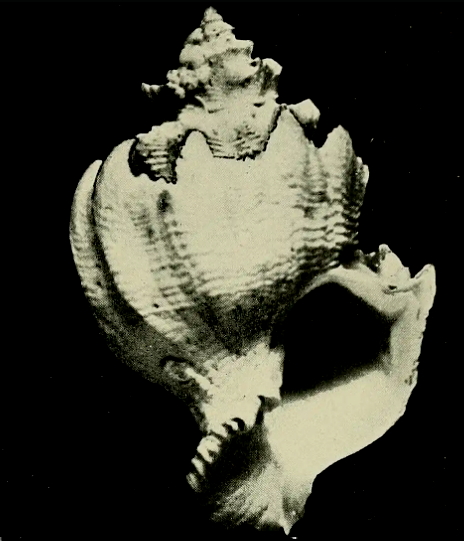
The shell of Babelomurex cariniferus is a striking example of muricid ornamentation. Specimens range from 20 to 45 millimetres in length, roughly three-quarters to nearly two inches, and the shell surface can appear either whitish or dark greyish. One of the most notable characteristics is the considerable variability in shape among individuals, making no two shells quite alike. The spire is composed of numerous flattened whorls, and the axial ribs are described as very thorny, giving the shell a rugged, almost spiky texture. Along the keels of the whorls, several spiniform scales are present—small spine-like projections that add to the shell's elaborate architecture. A corneous operculum, a hard horny plate used to seal the shell aperture, is also a feature of this species. When compared to the closely related Babelomurex benoiti, B. cariniferus stands out for its greater variability in both feature and sculpture, and the two species can be distinguished by the differing number of spiniform scales. This morphological diversity within a single species makes identification in the field a nuanced task for malacologists.
Habitat & Feeding Ecology
Babelomurex cariniferus is a specialist inhabitant of coral reef environments, where it lives among corals and sponges in the infralittoral zone. Its depth range is remarkably broad for a reef-associated snail: individuals can be encountered from just a few metres below the surface down to depths exceeding 1000 metres, suggesting an ability to tolerate a wide range of light and pressure conditions. Ecologically, the species is a strict specialist feeder. It consumes exclusively the polyps found within colonies of scleractinian stony corals, meaning its survival is tightly coupled to the health and presence of these particular coral groups. This narrow dietary niche sets it apart from many other muricids, which may be more generalist in their feeding. The combination of a coral-reef habitat, a deep depth range, and an obligate dependence on scleractinian polyps makes Babelomurex cariniferus a species whose population dynamics are intimately linked to the condition of stony coral ecosystems. Any threat to these coral colonies would directly impact the snail's food supply and, by extension, its long-term persistence in a given locality.
Gallery
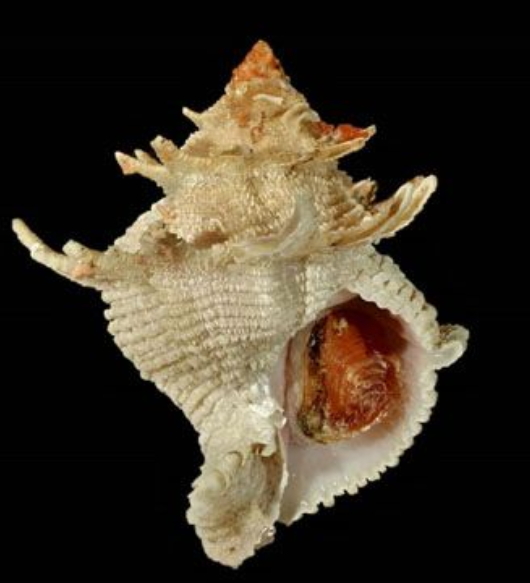
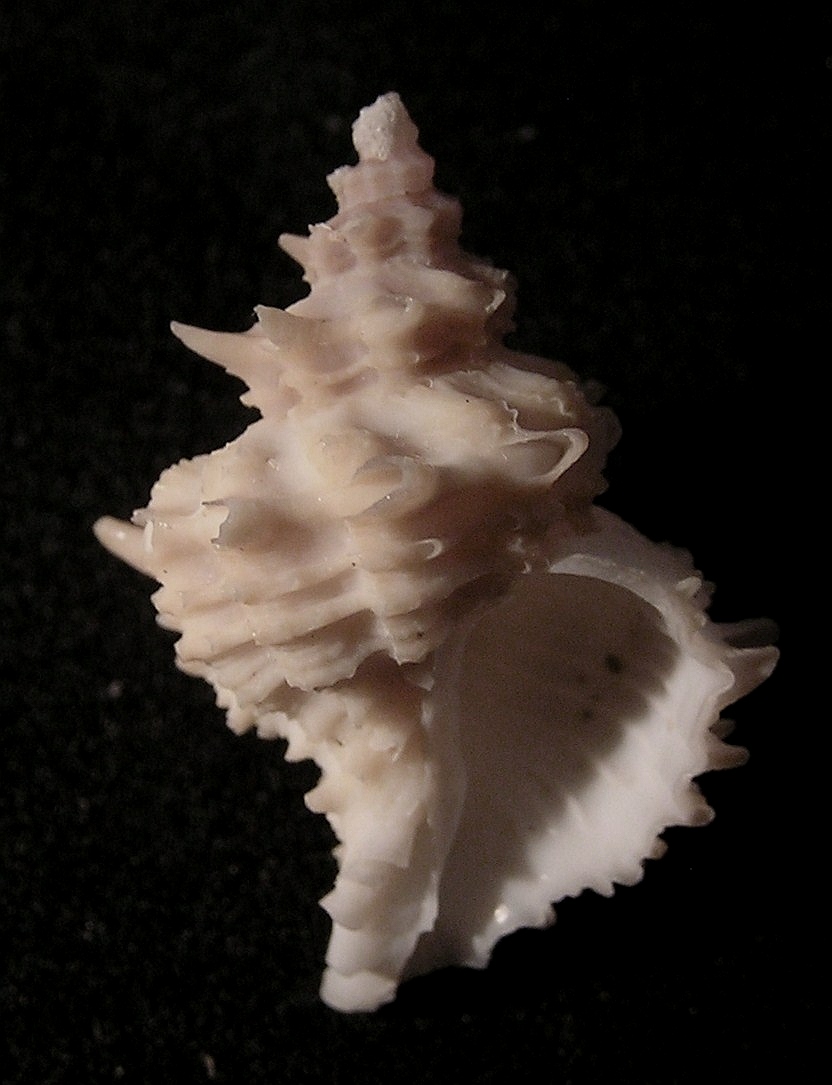
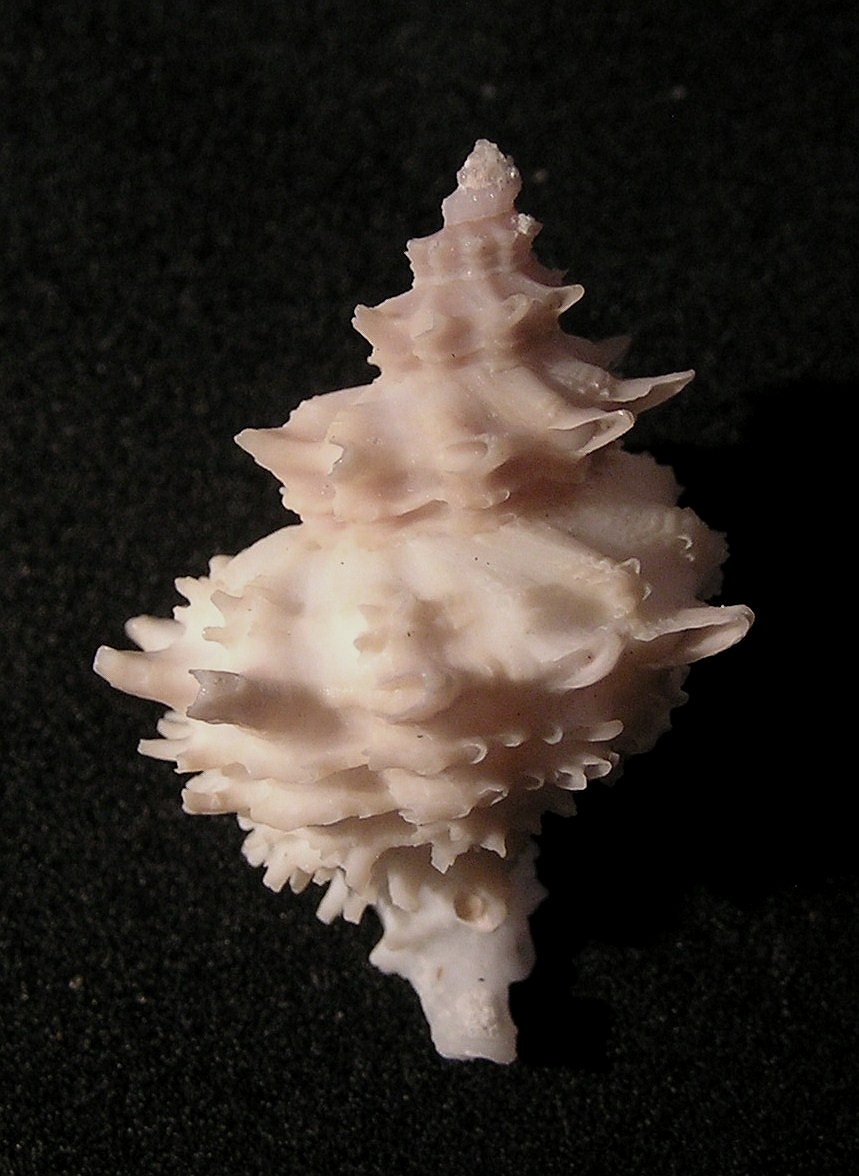
Frequently Asked Questions
What is Babelomurex?
Babelomurex is a genus of marine gastropod molluscs that falls under the murex snail family Muricidae. It sits within the subfamily Coralliophilinae, grouping it with other coral-associated murex and rock snail relatives.
How many species does Babelomurex contain?
The genus currently lists over 80 recognized species, making it one of the larger genera within Muricidae. The vast majority of these were first formally described during the 20th and 21st centuries.
What is the earliest described Babelomurex species?
The oldest named species in the genus is Babelomurex scalariformis, originally described by Lamarck back in 1822. Every other species in the genus was added to the list after that initial identification.
Where does Babelomurex fit in the murex snail classification?
Babelomurex is placed in the family Muricidae, which encompasses all murex snails and rock snails. More specifically, it belongs to the subfamily Coralliophilinae, a branch of Muricidae associated with coral reef habitats.
Why is Babelomurex's taxonomic history considered complicated?
Over the years, several species originally placed in Babelomurex were later reclassified as synonyms of other species, and some scientific names were misapplied during the process. This ongoing reshuffling means the genus's species list has shifted considerably since its early descriptions.
More in Murex Snails 1-24
Spotted an error? Know more?
Reader corrections go straight into our review queue. Suggest an edit · How this site is sourced