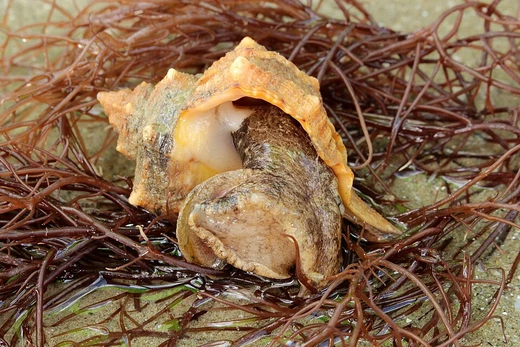
Muricanthus nigritus
A black-and-white murex snail of the Gulf of California.

Muricanthus nigritus, a marine gastropod mollusc in the family Muricidae, goes by several common names: Northern Radix, Black-and-White Murex, Black Murex, and most often the black murex shell. This sea snail is found in the Gulf of California (Sea of Cortez) and along the coast of western Mexico. It lives in intertidal and subtidal zones on sand and gravel bottoms, at depths reaching 60 meters.
The shell of Muricanthus nigritus ranges from 75 to 200 millimeters in length. Its large, black-and-white exterior features black or dark brown stripes, with short spikes around the body whorl and spire. The aperture is a porcelaneous white. This species closely resembles Hexaplex radix, but the two differ in shell length, width, and the balance of black versus white coloring. Muricanthus nigritus shells are more oblong and carry more black spines. These snails primarily feed on clams.
Quick Facts
- Taxon
- Muricanthus nigritus
Facts from the source article.
Lore & Background
The shell of Muricanthus nigritus reaches a length of 75 to 200 mm. It is black and white with black or dark brown stripes, and the surface bears short spikes around the body whorl and spire. The aperture is porcelaneous white. This species is quite similar to Hexaplex radix; the shells of the two species mainly differ in length, width, and the proportion of black versus white. Shells of H. nigritus are more oblong and show more spines in black. These sea snails feed primarily on clams.
Reader's Guide
Muricanthus nigritus is a notable member of the murex family, recognized for its striking black-and-white coloration and spiny shell. Its distribution is confined to the Gulf of California and Western Mexico, where it inhabits intertidal and subtidal waters on sand and gravel substrates down to 60 meters. The species is often compared to Hexaplex radix, with distinguishing features including a more oblong shape and a greater number of black spines. Its diet consists primarily of clams, placing it within the predatory ecology of rocky and sandy marine environments. The shell, reaching up to 200 mm in length, is a common subject in malacological collections and is displayed in museums such as the Museo Civico di Storia Naturale di Milano. The species has been documented in multiple taxonomic works, including reviews of the genus Muricanthus and studies of fossil and Recent Muricidae.
Did You Know?
- Shells of Muricanthus nigritus can reach a length of 75 to 200 mm.
- The species is commonly known as the black murex shell.
More in Murex Snails 1-24
Spotted an error? Know more?
Reader corrections go straight into our review queue. Suggest an edit · How this site is sourced