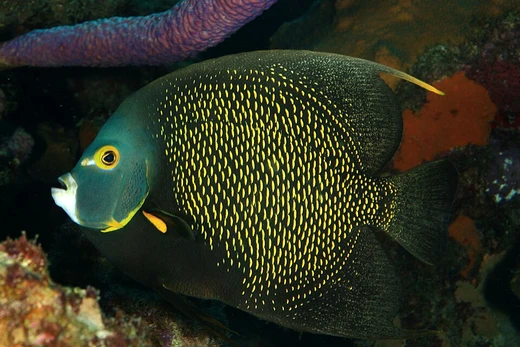
Genicanthus
A genus of marine angelfish with distinctive tailfins.

Rickard Zerpe · CC BY 2.0
Genicanthus is a genus of marine angelfishes in the family Pomacanthidae, commonly known as swallowtail or lyretail angelfish due to the distinctive shape of their tailfins. They are notable among angelfish for being a good choice for beginner aquarists, as they do not grow as large as some other species, and for being generally reef safe.
Quick Facts
- Taxon
- Genicanthus
- Type Species
- Holacanthus lamarck
- Type Species Authority
- Lacepède, 1802
Facts from the source article.
Lore & Background
The name Genicanthus means 'thorn cheek', referring to the spines on the rear margin of the operculum, a feature common to all angelfish. Members of this genus possess a small mouth relative to their size, which is well adapted for feeding on plankton in the water column. As planktivores, they generally will not nip corals and sessile invertebrates.
Reader's Guide
In the aquarium hobby, Genicanthus species are considered a good choice for beginners compared to other angelfish because they do not get nearly as large. A unique attribute is that swallowtail angels will tolerate each other and can be kept in pairs or as a single male with a harem, though it is typically best to add them to a tank at the same time. If added one by one, the angel added first may become aggressively territorial towards new additions. Unlike most other members of the Pomacanthidae, Genicanthus species are sexually dimorphic, meaning males and females are easily distinguishable. Also unlike others in the family, they are generally considered reef safe.
Did You Know?
- Genicanthus are commonly called swallowtail or lyretail angelfish due to their tailfin shape.
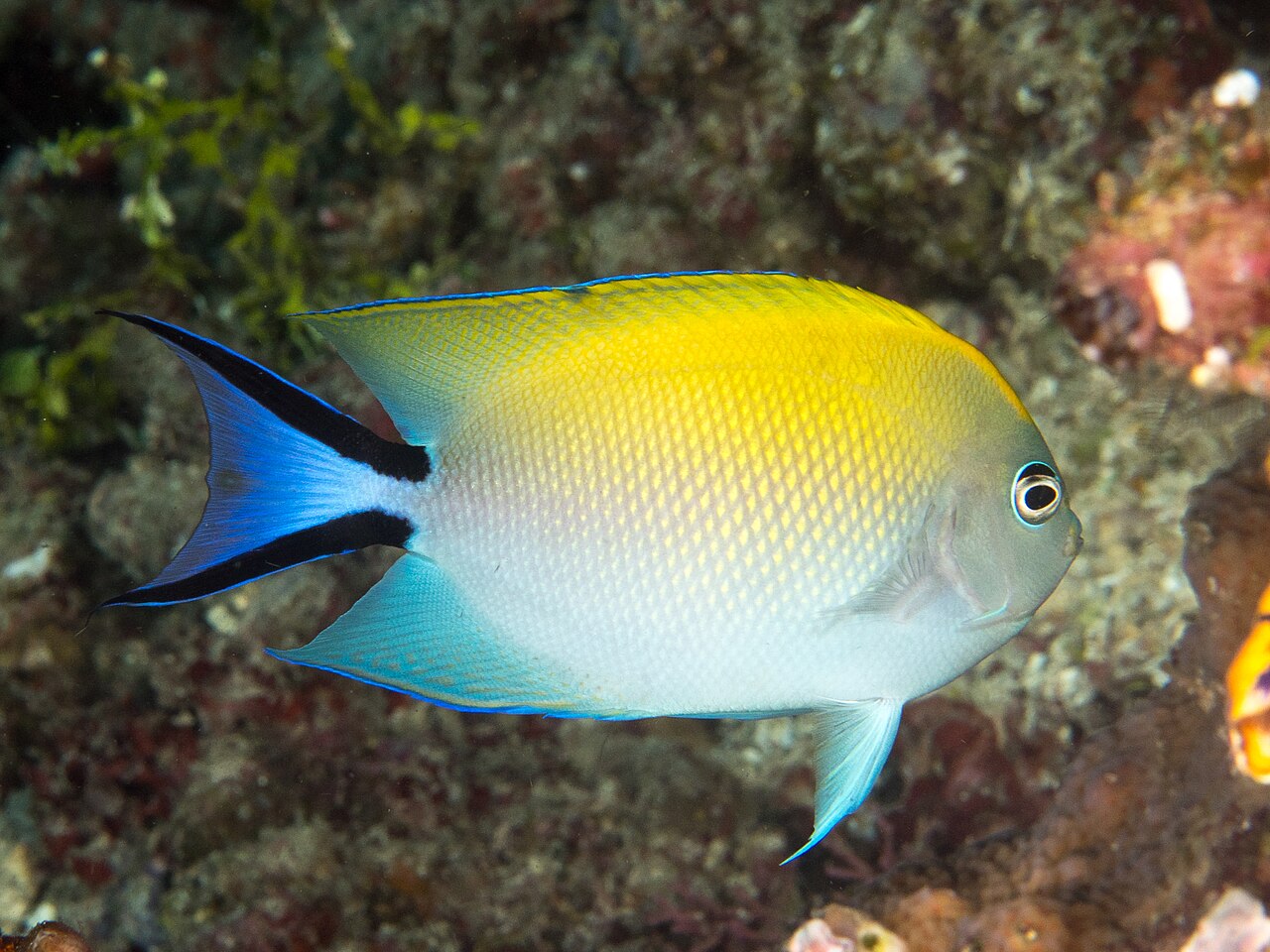
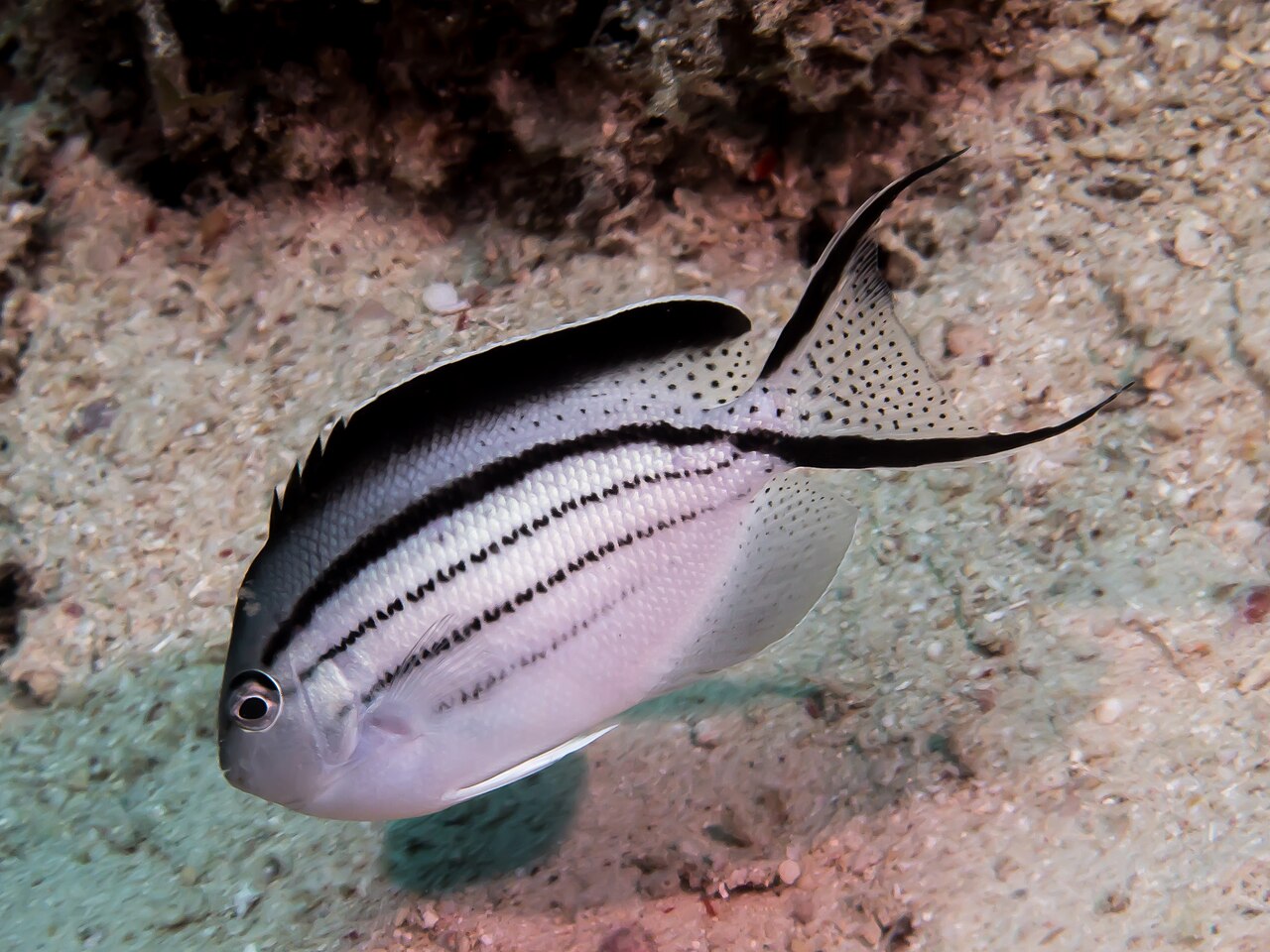
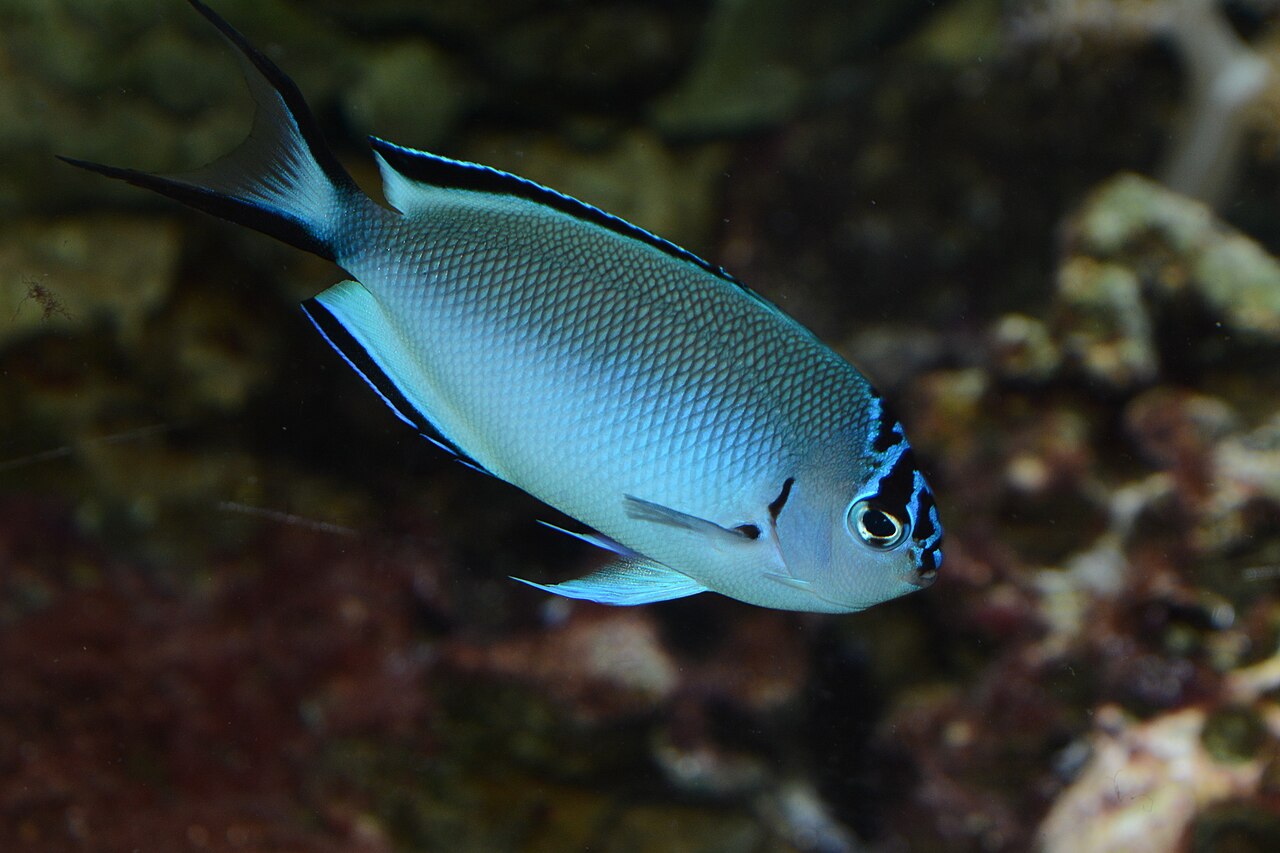
- They are sexually dimorphic, with easily distinguishable males and females.
- Unlike most other Pomacanthidae, Genicanthus are generally considered reef safe.
Taxonomy & Physical Distinctiveness
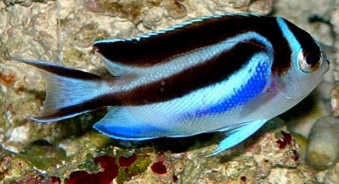
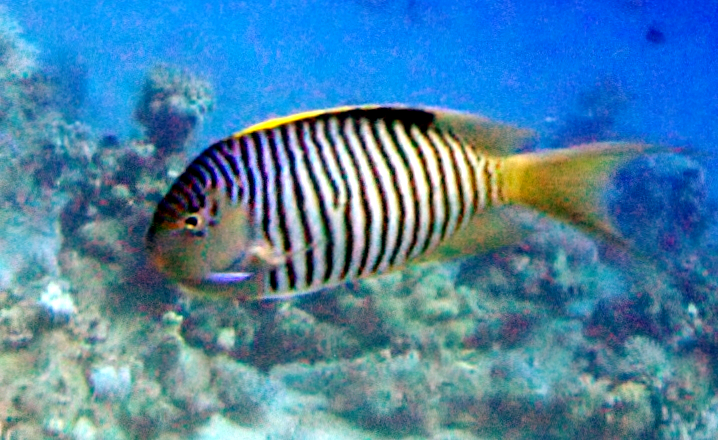
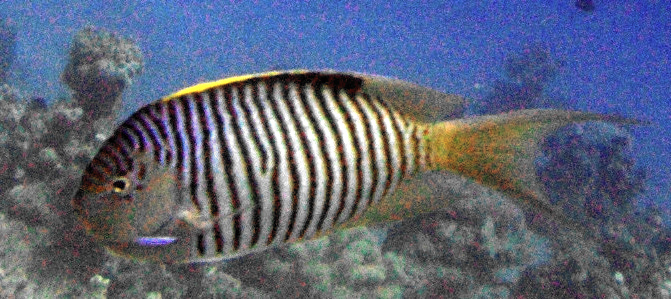
Genicanthus belongs to the family Pomacanthidae, the marine angelfishes, and is instantly recognizable by the shape of its caudal fin. The common names swallowtail and lyretail angelfish both point to this distinctive tail morphology, which sets the genus apart from its relatives. One of the most notable biological traits within Genicanthus is sexual dimorphism: unlike most other pomacanthids, males and females can be told apart at a glance by their appearance. Additionally, members of this genus possess a relatively small mouth in proportion to their body size, a feature that is closely tied to their feeding strategy. The operculum, the bony flap covering the gill cavity, bears spines along its rear margin, a characteristic shared across all angelfish species. Together, these physical traits—the elongated tail, the dimorphic coloration, the compact mouth, and the spiny operculum—give Genicanthus a clearly defined identity within the broader angelfish family.
Aquarium Keeping & Social Dynamics
For hobbyists entering the world of marine aquaria, Genicanthus offers a welcoming entry point among the angelfishes. Compared to many other pomacanthid species, swallowtail and lyretail angels remain relatively small, making them manageable in home tanks and less demanding in terms of space. Their social structure is another standout feature: they can be kept in pairs or in a group consisting of one male and several females, a configuration that mirrors their natural harem tendencies. However, timing matters. Introducing all individuals simultaneously is strongly recommended, because a fish added first to a tank may develop aggressive territorial behavior toward any later arrivals. This makes Genicanthus a genus where careful planning at the point of acquisition can mean the difference between a harmonious display and a stressful, conflict-prone setup. For beginners who want the visual drama of an angelfish without the intimidation of larger, more aggressive relatives, this genus strikes a practical balance.
Feeding Ecology & Reef Compatibility
The small mouth of Genicanthus is not merely a cosmetic trait; it is a functional adaptation for a specific dietary niche. These angelfishes are planktivores, meaning they feed on tiny organisms suspended in the water column. Their compact mouth is well suited to capturing these drifting food particles, a strategy that distinguishes them from many other pomacanthids that may browse on coral polyps or sessile invertebrates. This feeding ecology has a direct and important consequence for reef ecosystems and, by extension, for reef aquariums. Because Genicanthus species rely on plankton rather than on fixed organisms, they generally do not nip at corals or sessile invertebrates. This makes them broadly considered reef-safe, a designation that sets them apart from the majority of their angelfish relatives, many of which are known to damage reef structures. For aquarists maintaining a living reef, this dietary specialization is what makes Genicanthus a compatible and low-risk addition to a diverse community tank.
Etymology & Naming
The scientific name Genicanthus carries a vivid anatomical reference. It translates to thorn cheek, a nod to the spines that line the rear margin of the operculum, the bony flap that shields the gill cavity. This spiny opercular feature is, in fact, a hallmark of all angelfish, so the genus name highlights a trait that is both shared and structurally distinctive. The common names tell a different visual story. Swallowtail and lyretail both describe the shape of the caudal fin, which extends into elongated lobes reminiscent of a swallow's forked tail or a lyre's curved arms. These two naming traditions—one rooted in a subtle skeletal detail, the other in a dramatic silhouette—complement each other and together paint a fuller picture of the fish. The duality of the names also reflects how Genicanthus can be appreciated: by the careful observer who notices the small spines on the gill cover, and by the casual viewer who is first drawn to the flowing, elegant tail.
Gallery
Frequently Asked Questions
What is Genicanthus?
Genicanthus is a genus of marine angelfish in the family Pomacanthidae, instantly recognizable by the elongated, forked shape of their tailfins. That distinctive tail is what earns them their popular common names: swallowtail and lyretail angelfish.
What do Genicanthus eat in the wild?
Species in this genus are planktivores, so they feed on tiny drifting organisms suspended in the water column rather than scraping algae or picking at coral tissue.
Are Genicanthus reef safe?
Yes—Genicanthus species are generally regarded as reef compatible, meaning they coexist peacefully with live corals and other invertebrates in a mixed reef setup.
How can you tell a male Genicanthus from a female?
The genus shows clear sexual dimorphism, so males and females differ noticeably in coloration and body markings, making sex identification fairly straightforward once you know what to look for.
Why are Genicanthus often recommended for beginner aquarists?
Unlike many other angelfish that can outgrow a home tank quickly, Genicanthus species stay relatively small, which makes them much easier to keep in standard-sized aquariums without the fish outgrowing their space.
More in Marine Angelfish 1-24
Spotted an error? Know more?
Reader corrections go straight into our review queue. Suggest an edit · How this site is sourced