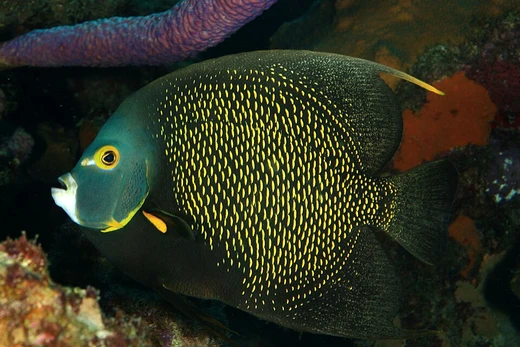
Pomacanthidae
Brightly colored reef fish with preopercle spines and protogynous hermaphroditism.

NasserHalaweh · CC BY-SA 4.0
Marine angelfish belong to the family Pomacanthidae and are a type of perciform fish. They inhabit shallow reefs across the tropical Atlantic, Indian, and mostly western Pacific Oceans. The family comprises seven genera and roughly 86 species. These fish should not be mistaken for freshwater angelfish, which are cichlids native to the Amazon Basin. Their vivid colors and deep, flattened bodies make them stand out on the reef.
The family name Pomacanthidae comes from Greek words meaning "cover" and "thorn," referring to the strong spines on the gill covers that set them apart from similar-looking butterflyfish. Many species have elongated, streamer-like extensions on their soft dorsal and anal fins. They have small mouths, large pectoral fins, and tails that range from rounded to crescent-shaped. The largest species, the gray angelfish (*Pomacanthus arcuatus*), can reach 60 cm (24 in) in length, while members of the genus *Centropyge* stay under 15 cm (5.9 in). Most other species grow to between 20 and 30 cm (7.9 to 11.8 in). Smaller angelfish are popular in home aquariums, while larger ones are sometimes caught for food—though ciguatera poisoning has been linked to eating them.
Angelfish are hardy and adaptable, tolerating changes in pH and water hardness that would stress other fish. They tend to live long and are easy to care for. Initially expensive in the aquarium trade, they have become more affordable as their popularity grew. The queen angelfish, which reaches 45 cm (18 in), has neon blue and yellow scales with iridescent purple and orange markings, yet it is surprisingly shy and hides well. Juveniles of some species look different from adults; for instance, young blue angelfish are electric blue with black and white stripes, but adults turn grayish with yellow and blue fins and dark spots.
Behaviorally, larger species are bold and may approach divers. While most adapt easily to captivity, some are specialized feeders and harder to keep. Diets vary by genus: *Genicanthus* species eat zooplankton, *Centropyge* prefer filamentous algae, and others feed on sessile benthic invertebrates like sponges, tunicates, bryozoans, and hydroids. On Caribbean reefs, angelfish primarily eat sponges, which helps prevent faster-growing sponge species from overtaking corals.
Quick Facts
- Taxon
- Pomacanthidae
Facts from the source article.
Lore & Background
Marine angelfish most closely resemble butterflyfish, but are distinguished by strong preopercle spines (part of the gill covers). This feature explains the family name Pomacanthidae, from Greek 'poma' meaning 'cover' and 'akantha' meaning 'thorn'. Many species have streamer-like extensions of the soft dorsal and anal fins, small mouths, relatively large pectoral fins, and rounded to lunate tail fins. The largest species, the gray angelfish, may reach 60 cm; members of the genus Centropyge do not exceed 15 cm. The smaller species are popular amongst aquarists, while larger species are occasionally sought as food fish, though ciguatera poisoning has been reported from eating them. Angelfish vary in color and are very hardy fish, adapting easily to pH and hardness changes in aquariums. The queen angelfish grows to 45 cm and, despite neon blue and yellow scales, is not conspicuous and hides well. As juveniles, some species differ in color from adults; for example, the Blue Angelfish is vibrant electric blue with black and white stripes as a juvenile, turning grayish with yellow and blue fins and dark spots as an adult.
Reader's Guide
Marine angelfish are notable for their bright colors and deep, laterally compressed bodies, making them conspicuous reef residents. They are distinguished from butterflyfish by strong preopercle spines. The family contains seven genera and about 86 species, found in tropical Atlantic, Indian, and mostly western Pacific Oceans. Larger species are bold and approach divers, while most adapt easily to captive life, though some are specialist feeders. Feeding habits vary by genus: Genicanthus feeds on zooplankton, Centropyge on filamentous algae, and others on sessile benthic invertebrates such as sponges, tunicates, bryozoans, and hydroids. On Caribbean coral reefs, angelfish primarily eat sponges, playing an important role in preventing overgrowth of reef-building corals. Most restrict themselves to shallows above 50 m, though Centropyge abei inhabits depths of 150 m. They are diurnal, hiding in reef crevices at night. Some species are solitary and form territorial mated pairs; others form harems with a single dominant male. All marine angelfish are protogynous hermaphrodites: if the dominant male is removed, a female turns into a functional male. They are pelagic spawners, releasing buoyant eggs into the plankton.
Did You Know?
- Marine angelfish are protogynous hermaphrodites; if the dominant male of a harem is removed, a female will turn into a functional male.
- The gray angelfish (Pomacanthus arcuatus) is the largest species, reaching up to 60 cm in length.
- Ciguatera poisoning has been reported as a result of eating marine angelfish.
The Thorn Behind the Name: Anatomy and Identity
Marine angelfish are among the most visually striking inhabitants of tropical reefs, their deep, laterally compressed bodies draped in vivid coloration that makes them impossible to miss. They share a superficial resemblance with butterflyfishes, but a critical anatomical detail sets them apart: robust spines embedded in the preopercle, the bony plate of the gill cover. It is precisely this feature that gives the family its scientific name, Pomacanthidae, drawn from the Greek words for "cover" and "thorn." Beyond this diagnostic trait, the family displays a remarkable range of body plans. Streamer-like extensions of the soft dorsal and anal fins grace many species, while small mouths, broad pectoral fins, and rounded-to-crescent-shaped tails complete the silhouette. Size varies enormously: the gray angelfish stretches to sixty centimeters, whereas Centropyge species cap out at just fifteen. Most species fall between twenty and thirty centimeters. Coloration is not static either; the Blue Angelfish, for instance, shifts from electric blue with bold black-and-white striping in youth to a subdued grayish adult bearing yellow and blue fins dotted with dark spots.
Reef Guardians and Specialized Feeders
On Caribbean coral reefs, marine angelfish play a quietly vital ecological role. Their primary diet there consists of sponges, and by preferentially consuming faster-growing sponge species, they help prevent those organisms from smothering the reef-building corals beneath them. Feeding strategies are tightly linked to genus identity. Genicanthus species are zooplankton feeders, while Centropyge members favor filamentous algae. Other species target sessile benthic invertebrates, with sponges, tunicates, bryozoans, and hydroids forming dietary staples. This specialization means that keeping a marine angelfish in captivity can be straightforward for some species but genuinely challenging for specialist feeders. In the wild, most species confine themselves to shallow reef zones, rarely descending past fifty meters, though the recently described Centropyge abei has been recorded at one hundred and fifty meters. They are diurnal, retreating into reef crevices each night. Larger species display a bold, almost fearless curiosity, approaching scuba divers with little apparent caution.
Harems, Hermaphrodites, and the Drama of Maturity
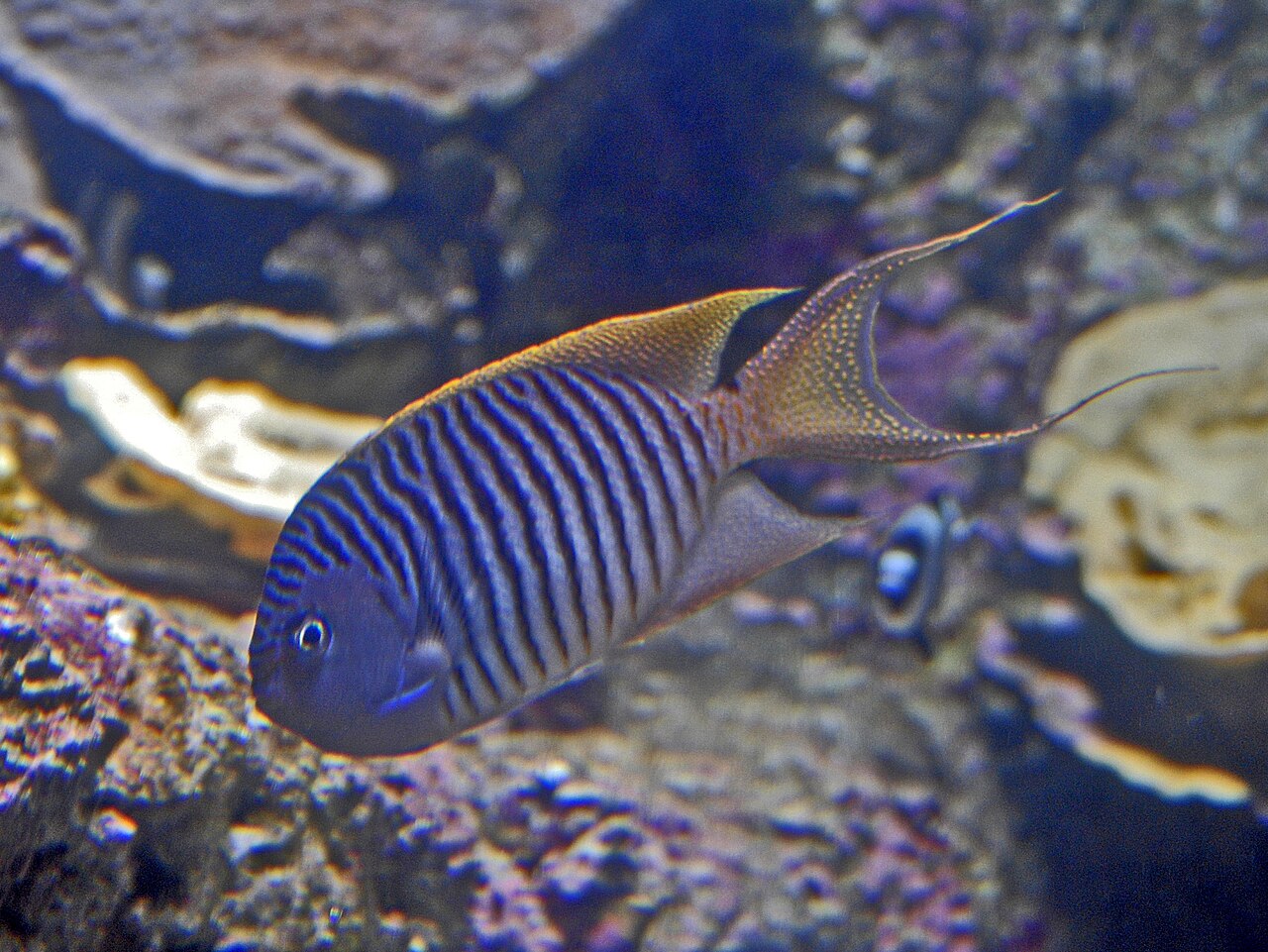
The social and reproductive biology of marine angelfish is among the most dramatic in the reef fish world. Every species in the family is a protogynous hermaphrodite, meaning individuals are born female and can transition into functional males. In harem-structured groups, a single dominant male presides over several females; should that male be removed, a female will assume the male role. This sex change is often accompanied by a striking color transformation. Young male ornate angelfish, Genicanthus bellus, wear broad black bands that make them virtually indistinguishable from females, but as they mature, brilliant orange bands blaze across their flanks and back. Color shifts of this kind are thought to signal social rank and are not exclusive to males. Reproduction follows a pelagic pattern: pairs release clouds of tiny, buoyant eggs into the open water, where they drift with currents until hatching. A large proportion of these eggs are consumed by planktonic feeders before they can develop. In aquarium settings, a breeding pair will typically spawn within their community but will aggressively harass tankmates, making a spacious dedicated tank the recommended setup.
From Rarety to Mainstream and the Dangers of the Table
When marine angelfish first entered the aquarium trade, their extraordinary coloration and hardy nature made them prized and expensive curiosities. Over time, as they became more widely available and their ease of care became well known, prices dropped and they became accessible to hobbyists at every level. Their tolerance of fluctuating pH and water hardness, combined with their long lifespans, makes them forgiving residents of the home aquarium, though smaller species like Centropyge are the most commonly kept. A critical distinction must be drawn between these marine species and the freshwater angelfish of the Amazon Basin, which are tropical cichlids and belong to an entirely different family. In the wild, the largest marine angelfish are occasionally harvested as a food fish, but this practice carries a serious risk: ciguatera poisoning has been documented in people who have consumed them. The family itself spans roughly eighty-six to eighty-eight species in seven or eight genera, distributed across shallow reefs in the tropical Atlantic, Indian, and predominantly western Pacific Oceans, with some Centropyge species restricted to single islands or small island groups.
Gallery
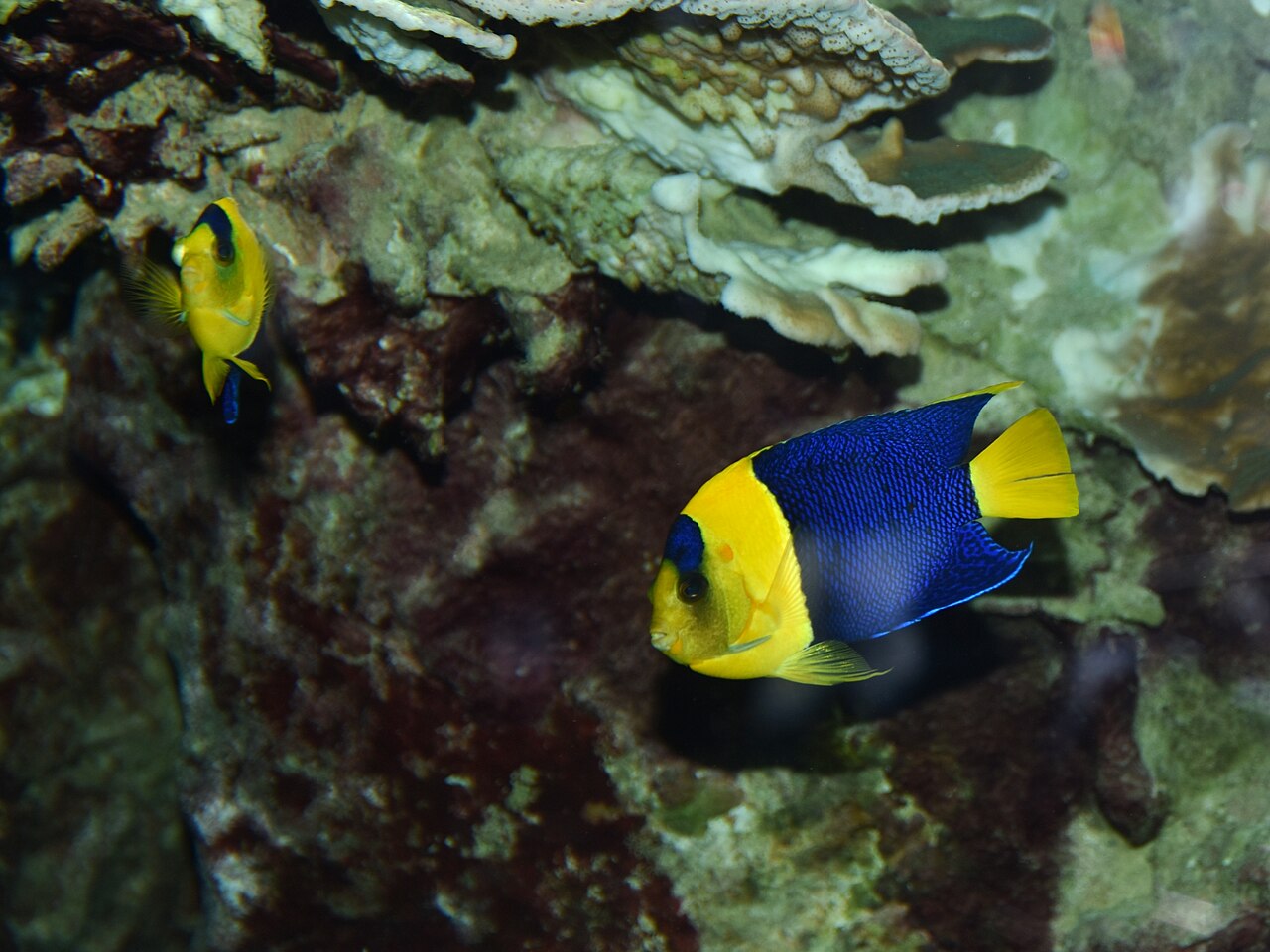
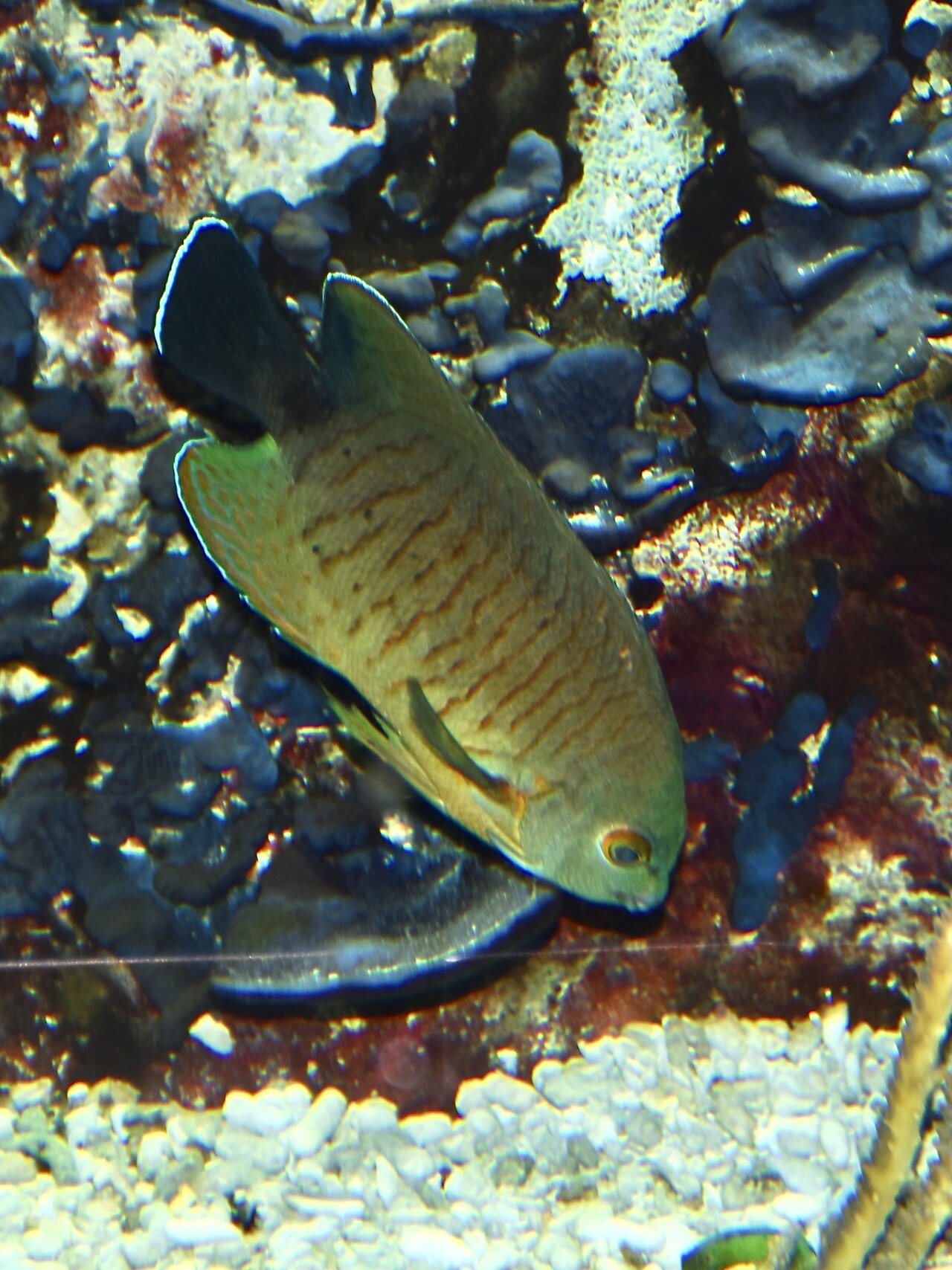
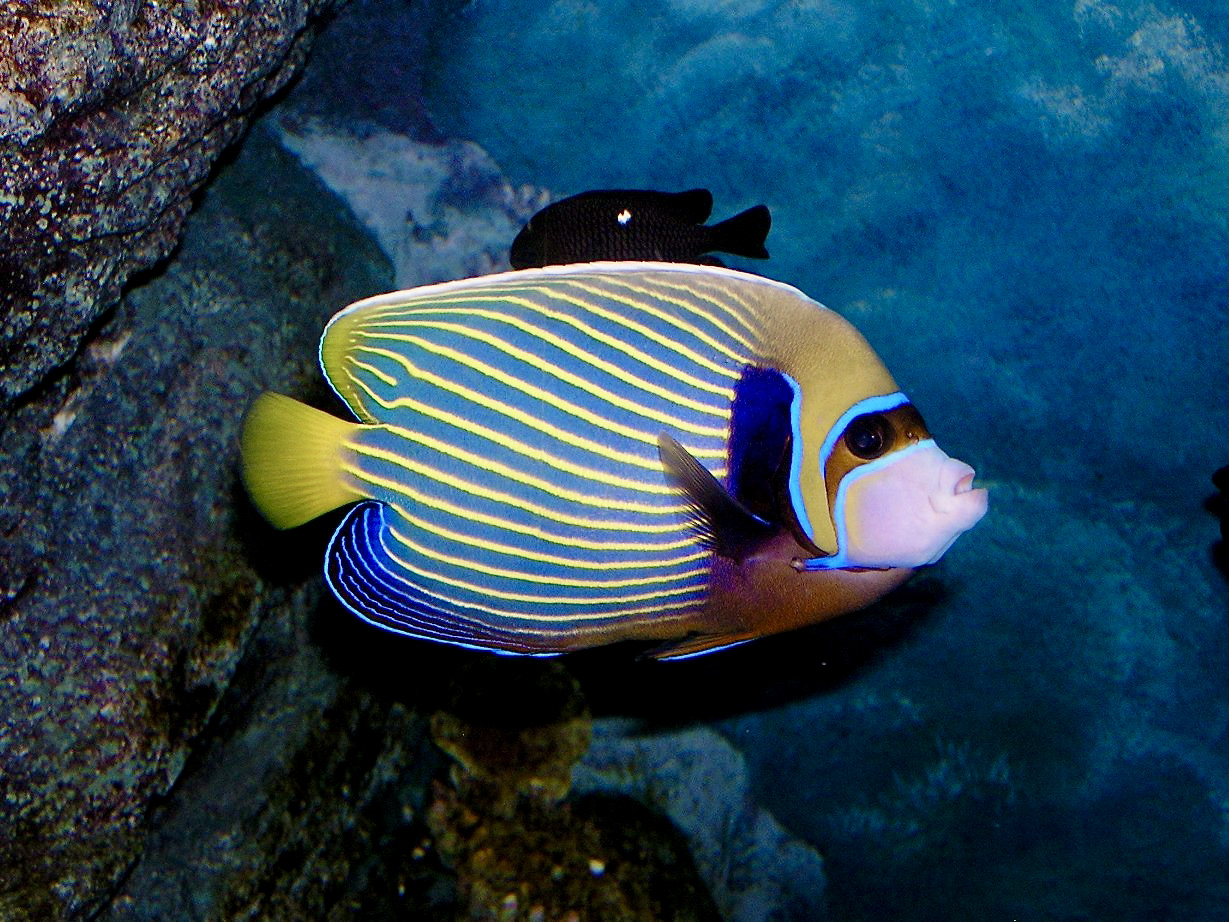
Frequently Asked Questions
What exactly is Pomacanthidae?
Pomacanthidae is the taxonomic family that groups all marine angelfish together. These are perciform (or, in some classifications, acanthuriform) fish known for their striking reef presence. The name itself derives from Greek roots meaning 'cover' and 'thorn,' a nod to the prominent spines on their gill plates.
How do you tell a marine angelfish apart from a freshwater angelfish?
Marine angelfish (Pomacanthidae) live on coral reefs and carry sharp preopercular spines, while freshwater angelfish are cichlids from the Amazon Basin with no such spines. Despite the shared common name, the two groups are not closely related at all.
Where in the world can I find Pomacanthidae in the wild?
They are found on shallow coral reefs throughout the tropical Atlantic, the Indian Ocean, and the majority of the western Pacific. You will not typically see them in deep-water or temperate habitats.
How many species and genera are in the family?
Most current references list seven genera encompassing roughly 86 species, though a few taxonomies split the group into eight genera with about 88 species. The exact count shifts as genetic studies continue to refine the family tree.
What is protogynous hermaphroditism, and why does it matter for angelfish?
Many Pomacanthidae species begin life as females and can later transition to males, a process called protogynous sex change. This means a single individual you observe on a reef may switch roles over its lifetime, which complicates breeding and social-structure studies.
More in Marine Angelfish 1-24
Spotted an error? Know more?
Reader corrections go straight into our review queue. Suggest an edit · How this site is sourced