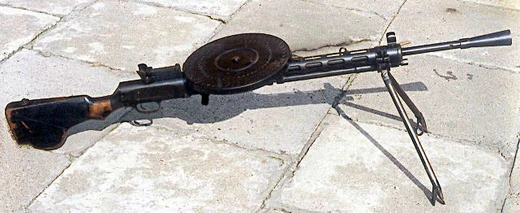
Vz. 52 machine gun
Czechoslovak light machine gun with interchangeable belt and magazine feed.

The vz. 52 (7,62mm lehký kulomet vzor 52) is a Czechoslovak light machine gun created after World War II for the country's armed forces. Initially designated the ZB 501, it was the work of designer Václav Holek. The weapon operates via gas pressure and uses a tilting bolt that locks into the top of the receiver, with its overall mechanism derived from the earlier ZB-26 light machine gun. It features a built-in bipod and barrels that can be swapped, and its feed system accepts either metallic belts or box magazines without any need for adjustment. This compact, lightweight lever-type feed mechanism was based on the ZB-53 and later appeared in the UK vz. 59, PK, and Negev machine guns. The vz. 52 originally fired the Czech 7.62×45mm vz. 52 cartridge, but in the mid-1950s Jaroslav Myslík converted it to use the standard 7.62×39mm Warsaw Pact round, resulting in the vz. 52/57 model. Both versions were phased out of Czech service between 1963 and 1964, replaced by the Universal Machine Gun Model 1959, also known as the Uk vz. 59.
Quick Facts
- Origin
- Czechoslovakia
- Is Ranged
- yes
- Service
- 1952–1964
- Designer
- Václav Holek
- Design Date
- 1950s
- Manufacturer
- Zbrojovka Brno
- Number
- 8.000
- Variants
- vz. 52/57
- Weight
- 8.0 kg
- Length
- 1045 mm
- Part Length
- 583 mm
- Cartridge
- 7.62×45mm (vz. 52), 7.62×39mm (vz. 52/57)
Facts from the source article.
Lore & Background
The vz. 52 was designed by Václav Holek and originally designated ZB 501. Its action is gas-operated with a tilting bolt that locks into the roof of the receiver, and the overall mechanism is based on the Czech ZB-26 light machine gun. It features an integral bipod and interchangeable barrels. The feed system is a compact and light lever-type design based on the ZB-53, later copied in the UK vz. 59, PK, and Negev.
The vz. 52 initially used the Czech 7.62×45mm vz. 52 cartridge. In the mid-1950s, Jaroslav Myslík converted the design to the standard 7.62×39mm Warsaw Pact round, and the converted model was named the vz. 52/57. Both models were replaced in Czech service in 1963–64 by the Universal Machine Gun Model 1959, also known as the Uk vz. 59.
Reader's Guide
The vz. 52 represents a transitional design in post-war Czechoslovak small arms, bridging the nation's pre-war ZB machine gun lineage with the emerging Warsaw Pact standardization. Its most distinctive feature is the lever-type feed system derived from the ZB-53, which allowed the gun to accept either metallic belts or box magazines without any modification—a capability that influenced later machine guns such as the UK vz. 59, the PK, and the Negev. The conversion from the 7.62×45mm vz. 52 cartridge to the 7.62×39mm Warsaw Pact round in the mid-1950s reflects the broader shift toward Soviet-bloc ammunition standards. Although the vz. 52 and vz. 52/57 were replaced in Czechoslovak service by the Uk vz. 59 in the early 1960s, the design's feed mechanism remained influential. The weapon saw use only by the Czechoslovak Armed Forces and was not widely exported, limiting its legacy to its technical innovations rather than widespread combat service.
Did You Know?
- The vz. 52 was originally called the ZB 501.
- The vz. 52 could take metallic belts or box magazines interchangeably without any modifications.
- The converted model using the 7.62×39mm round was named the vz. 52/57.
More in Machine Guns, Part 2 1-24
Spotted an error? Know more?
Reader corrections go straight into our review queue. Suggest an edit · How this site is sourced