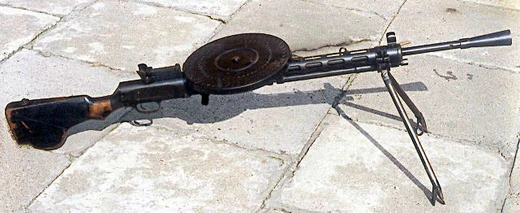
Type 87 assault rifle
Chinese test-bed assault rifle for 5.8×42mm ammunition.

The Type 87 is a Chinese assault rifle that is selective-fire and gas-operated. It was created as a testing platform for the new 5.8×42mm DBP87 cartridge, which later became the standard ammunition for the QBZ-95, QBZ-03, and QBZ-191 rifles. The rifle is similar to the Type 81 but features plastic furniture and an L-shaped folding stock. It can fire DQJ03, DQP-1, and DQD-1 rifle grenades and is issued with the Type 87 bayonet, the first knife bayonet used by the PLA.
The Type 87 was developed from the Type 81 after the PLA’s earlier attempts to replace the Type 56 assault rifle and carbine—including the failed Type 63—and following the 1979 Sino-Vietnamese War, which pushed the need for a modern service rifle. The Type 87 design was finalized in 1987.
Variants include the Type 87A, a prototype facelift from late 1987 to 1989 under "Project 8910" for the 1989 National Day parade. It has a two-piece polymer handguard with better ventilation, polymer magazines, and a polymer pistol grip. Limited production began in spring 1989, but it never entered full-scale production, though it has been used by PLA special forces. Another variant is the Type 87 LMG, a prototype light machine gun also called the QJB87. The QBZ-03 is a redesigned and modernized version of the Type 87.
Although the Type 87 never went into full-scale production and was soon replaced, it remains in limited service with the PLA.
- Type
- Selective-fire, gas-operated assault rifle
- Country of origin
- China
- Design finalized
- 1987
- Caliber
- 5.8×42mm DBP87
- Feed system
- Magazine
- Variants
- Type 87A, Type 87 LMG (QJB87), QBZ-03
Lore & Background
The Type 87 emerged from the Chinese People's Liberation Army's attempt to replace the Type 56 assault rifle and Type 56 carbine, following the failed adoption of the Type 63. The 1979 Sino-Vietnamese War accelerated the PLA's need for a modernized service rifle, leading to the Type 81. The Type 81 was then redesigned into the Type 87 as a development platform for the next generation of PLA small arms, finalized in 1987.
Design-wise, the Type 87 is similar to the Type 81 but features plastic furniture and an L-shaped folding stock. It served as a test-bed for the 5.8×42mm DBP87 ammunition, later used by the QBZ-95, QBZ-03, and QBZ-191 as standard issue. The rifle could be equipped with DQJ03, DQP-1, and DQD-1 rifle grenades, and was issued with the Type 87 bayonet, the first knife bayonet in PLA service.
Variants include the Type 87A, a prototype facelift designed from late 1987 to 1989 for the 1989 National Day parade under 'Project 8910', featuring a two-piece polymer handguard, polymer magazines, and polymer pistol grip. Limited production began in spring 1989, but it never went into full-scale production, though it has been in service with PLA special forces. Another variant is the Type 87 LMG (QJB87), a prototype light machine gun. The QBZ-03 is a redesigned and modernized Type 87 rifle.
Reader's Guide
The Type 87 holds significance as a transitional development platform that bridged the PLA's older Type 81 design to the next generation of small arms. Although it never entered full-scale production, it served as the test-bed for the 5.8×42mm DBP87 ammunition, which later became the standard rifle round for the QBZ-95, QBZ-03, and QBZ-191. This ammunition adoption marked a shift in PLA small arms caliber. The Type 87 also introduced the Type 87 bayonet, the first knife bayonet in PLA service, and its variants, such as the Type 87A, saw limited use with PLA special forces despite not being mass-produced. The Type 87's legacy is thus tied to its role in developing the ammunition and design concepts that would define subsequent PLA service rifles, even as the Type 87 itself remained in limited service and was soon replaced.
Did You Know?
- The Type 87 bayonet was the first knife bayonet in PLA service.
- The Type 87A variant was designed for the 1989 National Day parade under 'Project 8910'.
- The Type 87 never went into full-scale production but remains in PLA service in limited numbers.
More in Machine Guns, Part 2 1-24
Spotted an error? Know more?
Reader corrections go straight into our review queue. Suggest an edit · How this site is sourced