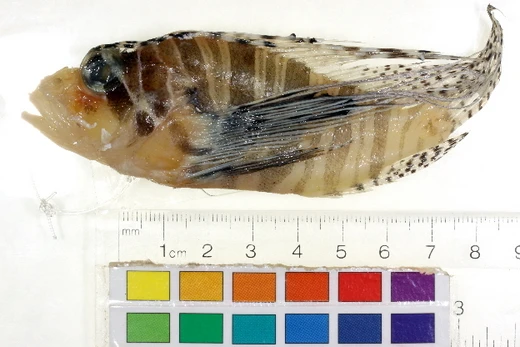
Dendrochirus
A genus of turkeyfishes native to the Indian and Pacific Oceans.

Dendrochirus is a genus of marine ray-finned fish in the scorpionfish family, Scorpaenidae. Commonly called turkeyfishes or pygmy lionfishes, they are native to the Indian and Pacific Oceans and are popular in home aquariums.
The genus was first described in 1839 by English naturalist William Swainson, who also named the genera *Brachirus* and *Brachyrus* in the same work. In 1876, Pieter Bleeker revised the group and settled on *Dendrochirus* as the valid name. In 1882, Joseph Swain designated *Pterois zebra*—described by Georges Cuvier from Mauritius in 1829—as the type species of *Brachyrus*, which he considered a synonym of *Pterois*. Some authorities split the genus into two subgenera: the subgenus *Dendrochirus* includes all species except *D. biocellatus*, which is placed in the monotypic subgenus *Nemapterois* (created by Henry Weed Fowler in 1938). This genus is closely related to *Pterois*, and it has been suggested they should be merged into a single genus. In 2023, *Dendrochirus* was found to be non-monophyletic, leading to several species being moved to the genera *Neochirus* and *Nemapterois*.
The name *Dendrochirus* combines *dendro* (meaning "tree") and *cheirus* ("hand"), reflecting that the genus was originally considered a subgenus of *Pterois* with branched pectoral-fin rays.
Eight species are currently recognized. These lionfishes typically have 13 spines and 9 or 10 soft rays in the dorsal fin, and 3 spines and 5 or 6 soft rays in the anal fin. The spines on the parietal bone are not high, and the lower jaw lacks ridges, spines, or scales. The pectoral fins have 17 to 19 fin rays, with the middle rays branched. Sizes range from a standard length of 4.5 cm (1.8 in) in the Ogasawara dwarf-lionfish (*D. koyo*) to 25 cm (9.8 in) in the zebra turkeyfish (*D. zebra*).
These fishes inhabit the Indo-Pacific region, from the Red Sea and western Indian Ocean to Hawaii and Johnston Atoll. They are usually found near hard substrates like coral rocks and rubble. They are popular in the aquarium trade.
- Described by
- William Swainson in 1839
- Type species
- Pterois zebra (designated by Joseph Swain in 1882)
- Number of species
- 8
- Dorsal fin spines
- 13
- Dorsal fin soft rays
- 9 or 10
- Anal fin spines
- 3
- Anal fin soft rays
- 5 or 6
- Pectoral fin rays
- 17 to 19
- Size range
- Standard length 4.5 cm (D. koyo) to 25 cm (D. zebra)
Lore & Background
Dendrochirus was described as a genus in 1839 by the English naturalist William Swainson. Swainson also named the genera Brachirus and Brachyrus in the same work but in later pages. In 1876 Pieter Bleeker revised the genus and chose Dendrochirus as the name for the genus. In 1882 Joseph Swain designated Pterois zebra, described by Georges Cuvier from Mauritius in 1829, as the type species of Brachyrus which he considered to be a synonym of Pterois. Some authorities divide the genus into two subgenera: the subgenus Dendrochirus containing all species except D. biocellatus, which is in the monotypic subgenus Nemapterois created by Henry Weed Fowler in 1938. This genus and the genus Pterois are closely related and it has been suggested that they form a single genus, Pterois. In 2023, Dendrochirus was found to be non-monophyletic, so several species were moved to the genera Neochirus and Nemapterois.
Dendrochirus lionfishes are characterised by typically having 13 spines and 9 or 10 soft rays in the dorsal fin and 3 spines and 5 or 6 soft rays in the anal fin. The spines on the parietal bone are not high and the lower jaw has no ridges, spines or scales. There are between 17 and 19 fin rays in the pectoral fins and the middle fin rays are branched. These fishes vary in length from a standard length of 4.5 cm in the Ogasawara dwarf-lionfish (D. koyo) to 25 cm in the zebra turkeyfish (D. zebra). They are found in the Indo-Pacific from the Red Sea and the western Indian Ocean to Hawaii and Johnston Atoll, and tend to be associated with hard substrates such as coral rocks and rubble.
Reader's Guide
Dendrochirus lionfishes are notable as popular species in the aquarium hobby, a status reflected in their common names turkeyfishes or pygmy lionfishes. Their taxonomy has been subject to revision and dispute: the genus was originally described by William Swainson in 1839, but later authors such as Pieter Bleeker and Joseph Swain contributed to its classification. The relationship with the genus Pterois is close enough that some authorities have suggested merging the two into a single genus, Pterois. In 2023, molecular work found Dendrochirus to be non-monophyletic, leading to the transfer of several species to the genera Neochirus and Nemapterois. The genus is also divided by some into two subgenera, with D. biocellatus placed in the monotypic subgenus Nemapterois. These fishes are distributed across the Indo-Pacific, from the Red Sea and western Indian Ocean to Hawaii and Johnston Atoll, inhabiting hard substrates like coral rocks and rubble. Their physical characteristics include a specific fin-ray count and branched pectoral fin rays, with sizes ranging from 4.5 cm to 25 cm standard length. The genus name Dendrochirus is a compound of dendro, meaning 'tree', and cheirus, meaning 'hand', originally considered a subgenus of Pterois with branched rays in the pectoral fin.
Did You Know?
- The genus name is a compound of dendro (tree) and cheirus (hand), referring to branched pectoral fin rays.
- In 2023, Dendrochirus was found to be non-monophyletic, and several species were moved to Neochirus and Nemapterois.
- These fishes range in size from 4.5 cm (D. koyo) to 25 cm (D. zebra) standard length.
Striking Coloration and Fin Architecture
The zebra turkeyfish presents one of the most visually arresting profiles in the Indo-Pacific reef ecosystem. Its body is marked by bold vertical stripes running through a palette of orange, white, and black, a pattern that gives the species its common name. When the fish settles onto the seabed, it deploys its large pectoral fins—banded and fan-shaped—outward on either side, creating a dramatic spread that frames the body. The anterior dorsal fin is armed with thirteen tall, quill-like spines, while the second dorsal fin carries ten or eleven soft rays. The anal fin mirrors this structure with three spines and roughly ten soft rays. Both the second dorsal, the anal, and the rounded tail fin display transverse black-and-white banding that echoes the body's vertical striping. Despite this elaborate display, the species remains modest in size, reaching a maximum total length of approximately twenty-five centimeters, or ten inches. As a member of the scorpionfish family Scorpaenidae, its body plan reflects the ambush-predator architecture shared across the group.
Range and Reef Habitat
The zebra turkeyfish occupies a broad swath of tropical marine territory stretching across the Indo-West Pacific. Its native range extends from the Red Sea eastward through Indonesian waters and as far as the eastern coast of Australia. Within this expanse, the species is a strictly benthic creature, spending its life on or near the seafloor in inshore waters that reach depths of roughly eighty meters, or about two hundred and sixty-two feet. It shows a clear preference for structured substrates—coral rubble, pebble beds, and rocky outcrops—across a variety of reef settings including shallow reef flats, the steeper outer reef slopes, and sheltered lagoon environments. Caves and overhangs also serve as favored resting sites, and the fish has been noted to occur in small aggregations rather than always in strict isolation. This habitat versatility, combined with its wide geographic spread, makes the zebra turkeyfish one of the more cosmopolitan members of the scorpionfish family in the region.
Venomous Defense and Ambush Lifestyle
Beneath the zebra turkeyfish's ornamental appearance lies a genuinely dangerous defense mechanism. Thirteen venomous spines line its anterior dorsal fin, held together by a translucent, film-like membrane that connects them into a rigid, quill-like array. These spines are not merely ornamental; they serve as the fish's primary means of self-defense against predators and threats. The species is characterized as slow-moving and generally peaceful in temperament, yet it must be treated with caution due to the potency of its venom. In its daily routine, the zebra turkeyfish favors concealment, often resting in shaded microhabitats beneath rocks or fragments of coral where light is minimal. A remarkable biological trait shared across all lionfish species is mutual immunity to one another's venom, meaning that encounters between individuals of the same or related species do not result in envenomation. This interspecific tolerance likely reduces the cost of the gregarious interactions documented in the field.
Cooperative Hunting and Social Signaling
Early descriptions characterized the zebra lionfish as a solitary ambush predator, but more recent observations—both in natural reef settings and controlled laboratory environments—have revealed a more socially complex picture. The fish now appears to live and hunt in small groups of two or three individuals. During cooperative forays, group members work together to corral prey into a confined space, using their venomous dorsal spines and dramatically flaring pectoral fins to form a physical barrier. Individuals take turns delivering strikes at the trapped prey, and on occasion they expel directed jets of water to flush or disorient their targets. Similar group-hunting tactics and water-jet behavior have been documented in the invasive red lionfish of the Caribbean. Researchers have noted that the signaling cues coordinating turns in striking and fin-flaring appear consistent across zebra, red, and spotfin lionfish, suggesting that cooperative signaling and gregarious hunting may be a shared trait of the lionfish family rather than an isolated behavior. The zebra turkeyfish's diet consists of small crustaceans and fish, while it itself faces predation pressure from larger groupers.
Frequently Asked Questions
What is Dendrochirus?
Dendrochirus is a small genus of scorpionfishes that hobbyists often call turkeyfishes or pygmy lionfishes. These ray-finned marine species are found across the Indian and Pacific Oceans and are a popular choice for home reef aquariums.
Who originally described the genus Dendrochirus?
English naturalist William Swainson first laid out the group back in 1839, though the name itself was confirmed as the valid one when Pieter Bleeker revised the taxonomy in 1876.
How many species belong to Dendrochirus?
The genus currently encompasses eight recognized species, all sharing the characteristic turkeyfish body plan and native to warm Indo-Pacific waters.
What is the type species of Dendrochirus?
Joseph Swain designated Pterois zebra as the type species in 1882; that particular fish had been originally described by Georges Cuvier based on a specimen from Mauritius in 1829.
What do Dendrochirus fins look like?
Members of this genus carry thirteen dorsal-fin spines backed by nine or ten soft rays, along with three anal-fin spines, giving them the spiky silhouette that makes them resemble miniature lionfishes.
More in Lionfish and Scorpionfish 1-24
Spotted an error? Know more?
Reader corrections go straight into our review queue. Suggest an edit · How this site is sourced