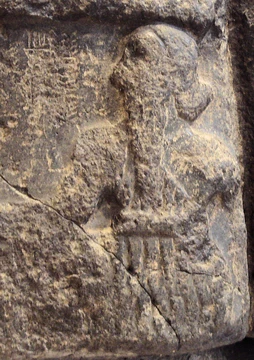
Tiglath-Pileser III
Neo-Assyrian emperor who doubled Assyrian territory and reformed its empire.

Tiglath-Pileser III (Neo-Assyrian Akkadian: Tukultī-apil-Ešarra, meaning 'my trust belongs to the son of Ešarra'), sometimes called Pulu or Pul, was the Neo-Assyrian emperor from 745 BC to his death in 727. He ended a period of Assyrian stagnation, introduced numerous political and military reforms, and doubled the lands under Assyrian control. Because of the massive expansion and centralization of Assyrian territory and the establishment of a standing army, some researchers consider his reign to mark the actual transition of Assyria into an empire.
Quick Facts
- Spouse
- Iaba
- Succession
- King of the Neo-Assyrian Empire
- Death Date
- 727 BC (aged 68)
- Birth Date
- 795 BC (?)
- Issue
- Shalmaneser V / Sargon II (?) / Sin-ahu-usur (?)
- Dynasty
- Adaside dynasty
- Father
- Adad-nirari III or Ashur-nirari V
- Successor
- Shalmaneser V
- Predecessor
- Ashur-nirari V
- Reign
- 745–727 BC
- Title
- King of Assyria · King of Babylon · King of Sumer and Akkad · King of the Four Corners of the World · King of the Universe
Facts from the source article.
Lore & Background
The circumstances of Tiglath-Pileser's rise to the throne are not clear. Ancient Assyrian sources give conflicting accounts concerning his lineage, and there are records of a revolt around the time of his accession. Many historians have concluded that he was a usurper who seized the throne from his predecessor Ashur-nirari V, who was either his brother or his father. Other historians postulate that the evidence could just as easily be interpreted as him inheriting the throne through legitimate means, and the debate remains unresolved. The Assyrian King List states that his father was Ashur-nirari V, while Tiglath-Pileser in his own inscriptions claimed to be the son of Adad-nirari III, making him Ashur-nirari's brother.
Reader's Guide
Tiglath-Pileser III increased royal power and authority by curbing the influence of prominent officials and generals. After securing minor victories in 744 and 743, he defeated the Urartian king Sarduri II in battle near Arpad in 743, a significant victory since Urartu had briefly equaled Assyria in power. He then turned to the Levant, conquering most of it over several years, defeating and annexing or subjugating previously influential kingdoms, notably ending the kingdom of Aram-Damascus. His activities in the Levant were recorded in the Hebrew Bible. In 729, he conquered Babylonia, becoming the first king to rule as sovereign of both Assyria and Babylonia. The reforms and methods of control introduced under his reign laid the groundwork for policies enacted not only by later Assyrian kings but also by later empires for millennia after his death.
Did You Know?
- Tiglath-Pileser's name derives from the Hebrew version of the original Akkadian Tukultī-apil-Ešarra, meaning 'my trust belongs to the son of Ešarra'.
- He defeated the Urartian king Sarduri II in battle near Arpad in 743, a victory that was significant because Sarduri had defeated Tiglath-Pileser's predecessor Ashur-nirari eleven years earlier.
- The Assyrian King List states Tiglath-Pileser was the son of Ashur-nirari V, but his own inscriptions claim he was the son of Adad-nirari III.
- He conquered Babylonia in 729 and ruled as its king, though earlier Assyrian kings like Tukulti-Ninurta I had also ruled both Assyria and Babylonia.
More in Kings of the Universe 1-24
Spotted an error? Know more?
Reader corrections go straight into our review queue. Suggest an edit · How this site is sourced