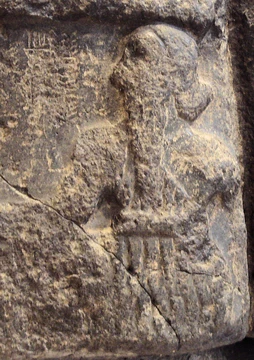
Ashur-uballit I
First king of the Middle Assyrian Empire, defeated Mitanni and intervened in Babylonia.

Ashur-uballit I (Aššur-uballiṭ I) was king of Assyria, reigning between c. 1363 and c. 1328 BC, and is recognized as the first king of the Middle Assyrian Empire. His defeat of the Mitanni king Shuttarna II (or Tushratta) marked Assyria's full ascendancy over the Hurri-Mitanni civilizations and the beginning of its emergence as a powerful empire.
Quick Facts
- Title
- King of Assyria · King of the Universe
- Reign
- 1363–1328 BC / 1353-1318 BC
- Predecessor
- Eriba-Adad I
- Successor
- Enlil-nirari
- Succession
- King of the Middle Assyrian Empire
- Issue
- Enlil-nirari / Muballitat-Sherua
Facts from the source article.
Lore & Background
Later, following the death of the Kassite king Burnaburiash II, disorder in Babylonia led Ashur-uballit to invade and establish Kurigalzu II on the Babylonian throne. Burnaburiash had married Ashur-uballit's daughter Muballitat-Sherua, and they had at least one son, Prince Kara-hardash. After Kara-hardash succeeded his father, a revolt broke out, and Kara-hardash was killed. Ashur-uballit then invaded Babylon again and placed Kurigalzu II on the throne, but Kurigalzu later invaded Assyria. Ashur-uballit stopped the Babylonian army at Sugagu, then counterattacked, appropriating Babylonian territory and forcing a treaty in Assyria's favor.
Reader's Guide
Ashur-uballit I is significant as the founder of the Middle Assyrian Empire, marking a turning point in Assyrian history from a region under intermittent foreign influence to an independent and expansionist power. His defeat of Mitanni and subsequent annexation of its territories established Assyria as a dominant force in Mesopotamia, the northeast Levant, and southeast Anatolia. His interventions in Babylonia, including placing Kurigalzu II on the throne, initiated a long series of Assyrian involvements in Babylonian affairs. The Amarna letters he sent to Egypt demonstrate his efforts to engage with other great powers, though this provoked tensions with Babylon. His legacy includes the short-lived reign of his grandson Kara-hardash and the eventual rebellion of Kurigalzu II, which Ashur-uballit suppressed, securing Assyrian territorial gains and a favorable treaty. This period laid the groundwork for Assyria's later imperial expansion.
Did You Know?
- Ashur-uballit I was the first king of the Middle Assyrian Empire.
- He defeated the Mitanni king Shuttarna II (or Tushratta), marking Assyria's full ascendancy over the Hurri-Mitanni civilizations.
- His daughter Muballitat-Sherua married the Kassite king Burnaburiash II of Babylonia.
- Two of the Amarna letters were sent by Ashur-uballit I.
The Defeat of Mitanni and the Birth of an Empire
Ashur-uballit I reigned from approximately 1363 to 1328 BC, a span that would set the trajectory of Assyrian power for generations to come. His father, Eriba-Adad I, had already shattered roughly fifty years of intermittent Hurrian-Mitanni dominance over Assyria, but it was Ashur-uballit who delivered the decisive blow. His defeat of the Mitanni king Shuttarna III represented far more than a single military victory; it marked the complete subjugation of the Hurri-Mitanni civilizations, much of whose territory was absorbed into the Assyrian domain. This conquest transformed Assyria from a regional player into the first true empire of the Middle Assyrian period. By the time of his diplomatic outreach, Assyrian influence stretched across Mesopotamia, the northeast Levant, and into southeast Anatolia. The king who had inherited a kingdom freed from foreign overlordship left behind a state that projected power across the ancient Near East, setting the template for Assyrian imperial ambition that would endure for centuries.
Babylonian Ambitions and the Puppet Throne
The death of the Kassite king Burnaburiash II threw Babylonia into political chaos, and Ashur-uballit I saw in that turmoil an opportunity to extend Assyrian authority southward. He marched into Babylonia and installed Kurigalzu II on the throne, an act that inaugurated a long pattern of Assyrian interference in Babylonian governance. The dynastic connections between the two courts were intimate: Ashur-uballit's daughter, Muballitat-Sherua, had been married to Burnaburiash himself, and the couple had produced at least one son, Prince Kara-hardash. Some sources suggest they may also have been the parents, or even the grandparents, of Kurigalzu II, blurring the line between family obligation and political calculation. By placing a figure with possible blood ties to the Assyrian royal house on the Babylonian seat, Ashur-uballit wove a web of kinship and control that made Babylonian independence increasingly difficult to sustain. This intervention was not a one-off; it was the opening move in what would become a recurring cycle of Assyrian meddling in Babylonian affairs.
Diplomatic Reach and the Amarna Correspondence
Once Assyrian dominance was secure across Mesopotamia, the northeast Levant, and southeast Anatolia, Ashur-uballit I turned his attention outward, initiating diplomatic contact with other great powers of the ancient world. His correspondence with the Egyptian pharaoh survives in two of the famous Amarna letters, catalogued as EA 15 and EA 16, offering a rare window into his voice and priorities. These overtures did not go unnoticed by his Babylonian neighbour. Burnaburiash II, stung by what he perceived as a challenge to his own sphere of influence, wrote an indignant letter to the Pharaoh complaining that Assyrian envoys had arrived in Egypt without his authorization. He demanded they be sent back empty-handed and threatened that any further uninvited negotiations would be treated as a breach of loyalty. The episode reveals a complex triangular diplomacy in which Assyria, Babylonia, and Egypt each jockeyed for prestige, and in which a single king's letter could provoke a cascade of diplomatic friction across the region.
The Kurigalzu Crisis and a King's Final Stand
The final chapter of Ashur-uballit I's reign was defined by a bitter confrontation with the very puppet he had placed on the Babylonian throne. After his son Prince Kara-hardash succeeded him in Assyria, a revolt erupted in Babylonia that exposed deep resentment toward Assyrian rule. Ashur-uballit, refusing to accept the overthrow of his grandson, invaded Babylon in his defence. Tragically, Kara-hardash was killed in the uprising, and the Assyrians responded by seating Kurigalzu II on the Babylonian throne. But Kurigalzu proved no more loyal than the man he replaced; he soon turned his armies northward against Assyria itself. Ashur-uballit met the Babylonian force at Sugagu, a location not far south of the Assyrian capital Assur, and halted their advance. He then launched a counteroffensive into Babylonia, seizing territory in central Mesopotamia that had previously belonged to Babylon, and compelled Kurigalzu to accept a treaty dictated on Assyrian terms. The episode cemented Assyria's supremacy and demonstrated the personal resolve of a king who would not tolerate the betrayal of his own creation.
Frequently Asked Questions
Who is Ashur-uballit I?
Ashur-uballit I was an Assyrian monarch who ruled from roughly 1363 to 1328 BC. He is traditionally recognized as the first sovereign of the Middle Assyrian Empire and the son of Eriba-Adad I.
What are Ashur-uballit I's powers and role?
As king, his authority centered on military command and diplomatic leverage across the Near East. He projected that power most dramatically by crushing the Mitanni ruler Shuttarna II and by meddling directly in Babylonian succession politics.
Why is Ashur-uballit I important to the canon?
He is the pivotal figure who shattered Mitanni's long hegemony over the Hurri-Mitanni world and repositioned Assyria as the region's preeminent empire. Without his victories, the political landscape of fourteenth-century BC Mesopotamia would have followed an entirely different arc.
Who are Ashur-uballit I's known family members?
His father was Eriba-Adad I, the predecessor who set the stage for his rise. His daughter, Muballitat-Sherua, is the most prominently named member of his immediate royal line.
More in Kings of the Universe 1-24
Spotted an error? Know more?
Reader corrections go straight into our review queue. Suggest an edit · How this site is sourced