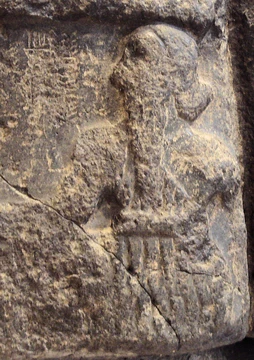
Antiochus I Soter
Seleucid king who overcame instability and was last King of the Universe.

Antiochus I Soter (c. 324/3 – 2 June 261 BC) was a Greco-Sogdian Seleucid king who ruled the Seleucid Empire from 281 BC until his death. He succeeded his father Seleucus I Nicator during a period of instability, which he largely overcame, and is the last known ruler to be attributed the ancient Mesopotamian title King of the Universe.
Quick Facts
- Title
- Basileus · King of the Universe
- Succession
- Basileus of the Seleucid Empire
- Reign
- September 281 – 2 June 261 BC
- Predecessor
- Seleucus I Nicator
- Successor
- Antiochus II Theos
- Spouse
- Stratonice
- Issue
- Seleucus / Laodice / Apama II / Stratonice II / Antiochus II Theos
- House
- Seleucid dynasty
- House Type
- Dynasty
- Mother
- Apama
- Birth Date
- c. 324 BC
- Birth Place
- Babylon, Macedon
Facts from the source article.
Lore & Background
Antiochus I was the son of Seleucus I Nicator and Apama, daughter of Spitamenes. In 294 BC, Antiochus married his stepmother Stratonice, daughter of Demetrius Poliorcetes, after his elderly father reportedly discovered Antiochus was lovesick. Stratonice bore five children, including Antiochus II Theos, who succeeded him.
After his father's assassination in 281 BC, Antiochus faced a revolt in Syria and made peace with Ptolemy Ceraunus, abandoning Macedonia and Thrace. He could not reduce Bithynia or the Persian dynasty in Cappadocia. In 278 BC, Gauls invaded Anatolia; Antiochus defeated them in 275 BC using Indian war elephants, earning the title Soter ("saviour"). The First Syrian War with Ptolemaic Egypt over Coele-Syria followed but did not change borders significantly.
Antiochus laid the foundation for the Ezida Temple in Borsippa in 268 BC. His eldest son Seleucus, viceroy in the east, was executed for rebellion in 268/267 BC. Around 262 BC, Antiochus tried to break Pergamum's power but was defeated near Sardis and died soon after. The founding of the Greek city of Ai-Khanoum in northern Afghanistan is now more commonly attributed to Seleucus I or an earlier founder, not Antiochus I.
Reader's Guide
Antiochus I Soter's significance lies in his consolidation of the Seleucid Empire after its founder's death and his role as the last ruler to claim the ancient Mesopotamian title King of the Universe. His victory over the Gauls in 275 BC, using Indian war elephants, not only secured his epithet but also demonstrated the empire's military reach. His foundation of Ai-Khanoum at the doorstep of the Indian subcontinent reflects Seleucid expansion into Central Asia. Antiochus maintained diplomatic relations with the Mauryan emperor Bindusara, exchanging ambassadors, and is likely the Greek king mentioned in Ashoka's Edicts as a recipient of Buddhist proselytism and medical aid. His reign saw the First Syrian War, which left the territorial status quo largely unchanged, and internal strife, including the execution of his eldest son for rebellion. His legacy includes the continuation of the Seleucid dynasty through his son Antiochus II Theos and the cultural and political ties with India and the Hellenistic world.
Did You Know?
- He married his stepmother Stratonice after his father discovered he was lovesick.
- The founding of Ai-Khanoum is now more commonly attributed to his father Seleucus I or an earlier founder, not Antiochus I.
Succession and the Burden of Empire
Antiochus I inherited the Seleucid throne in 281 BC following the assassination of his father, Seleucus I Nicator, and immediately faced the daunting challenge of keeping a vast and fractious realm intact. A revolt erupted in Syria almost at once, forcing the young king to negotiate a peace with Ptolemy Ceraunus—the very man who had killed his father. The cost of that settlement was steep: Macedonia and Thrace were effectively ceded. In Anatolia, Antiochus proved unable to subdue either Bithynia or the Persian dynasty governing the Kingdom of Cappadocia, leaving significant portions of his inherited territory beyond his direct control. Despite these setbacks, he managed to stabilize the core of the empire over two decades of rule. His reign also carried a unique symbolic weight: he remains the last known sovereign to be credited with the ancient Mesopotamian honorific King of the Universe, a title that echoed the imperial ambitions of the Achaemenid kings his dynasty claimed to have succeeded. His mother Apama, a Sogdian princess originally given in marriage by Alexander the Great, anchored the Seleucid claim to both Macedonian and Persian legitimacy.
The Gallic Invasions and the Birth of a Title
In 278 BC, waves of Gallic warriors surged into Anatolia, threatening the heartland of the Seleucid realm. Antiochus met this existential threat head-on and, in 275 BC, delivered a decisive victory over the invaders by deploying Indian war elephants, a tactical choice that proved devastating against the Gallic formations. This triumph is traditionally credited as the origin of his epithet Soter, the Greek word for saviour, a title that would follow him through all subsequent historical references. The same year, however, brought another military engagement: the First Syrian War erupted over the contested territory of Coele-Syria, a region that had remained under Ptolemaic control since the 301 BC partition. Although the conflict did not redraw the fundamental borders between the two Hellenistic kingdoms, frontier strongholds such as Damascus and the coastal districts of Asia Minor shifted hands. The dual pressures of a barbarian invasion from the north and a dynastic rivalry from the south defined the middle years of Antiochus's reign, testing his ability to project Seleucid authority across a geographically sprawling and politically fragmented empire.
Diplomacy with the Maurya World
Antiochus I cultivated a notably cordial relationship with Bindusara, the Mauryan emperor ruling India, a bond that reflected the Seleucid dynasty's deep geographic reach into Central and South Asia. His ambassador at the Mauryan court was Deimachos of Plateia, a Greek envoy whose presence attests to sustained diplomatic channels between the two powers. The third-century Greek writer Athenaeus, drawing on the historian Hegesander, preserved a charming anecdote: Bindusara requested sweet wine, dried figs, and a sophist. Antiochus agreed to send the wine and figs but declined the sophist, citing Greek law as forbidding the sale of such a figure. The Indian emperor Ashoka's rock edicts also reference a Greek king, most likely Antiochus himself, named among the recipients of Buddhist proselytism extending six hundred yojanas from the Mauryan core. Ashoka further claims to have arranged for the cultivation of medicinal herbs and the digging of wells in the territories of this Greek ruler and his neighbors, suggesting a degree of cultural and administrative influence that stretched well beyond the traditional Hellenic sphere.
Family, Tragedy, and Cultural Afterlife
Antiochus's personal life was marked by both scandal and dynastic tragedy. In 294 BC he married his stepmother Stratonice, daughter of Demetrius Poliorcetes, a union that ancient sources attribute to his elderly father's intervention after the young prince fell dangerously ill with lovesickness. The marriage produced five children, including the future king Antiochus II Theos. Yet the family was not spared internal conflict: his eldest son Seleucus, who had governed the eastern provinces as viceroy from roughly 275 to 268 BC, was executed by his father on charges of rebellion. Antiochus's own reign ended in military defeat near Sardis around 262 BC, when he attempted to crush the rising power of Pergamum by force; he died on 2 June 261 BC, succeeded by his second son. His story has endured in Western art, most famously in Jacques-Louis David's Neoclassical painting of the Antiochus-Stratonice episode. In Mesopotamian memory he appears in the Ruin of Esagila Chronicle, where a crown prince, likely Antiochus, stumbled on temple rubble and ordered the final destruction of the ruined Esagila, while also laying the foundation for the Ezida Temple at Borsippa in 268 BC.
Frequently Asked Questions
Who is Antiochus I Soter?
Antiochus I Soter was a Greco-Sogdian Seleucid monarch who reigned over the empire from 281 BC until his death in 261 BC. He assumed the throne from his father Seleucus I Nicator during a turbulent period and spent his rule consolidating and stabilizing the realm.
What is Antiochus I Soter's role as King of the Universe?
He holds the distinction of being the final ruler in history to carry the ancient Mesopotamian title King of the Universe. This made him the last sovereign to claim universal dominion under that specific honorific.
Why is Antiochus I Soter important to fans of kings of the universe?
He is the last known sovereign to be attributed the title King of the Universe, making him the natural endpoint of that lineage. His ability to quell the instability inherited from his father also cemented his legacy as a stabilizing force for the empire.
What is Antiochus I Soter most known for?
He is celebrated for defeating the Gauls with the aid of Indian war elephants and for bringing order to a fractured empire after his father's death. He is also often credited as the possible founder of the city of Ai-Khanoum.
More in Kings of the Universe 1-24
Spotted an error? Know more?
Reader corrections go straight into our review queue. Suggest an edit · How this site is sourced