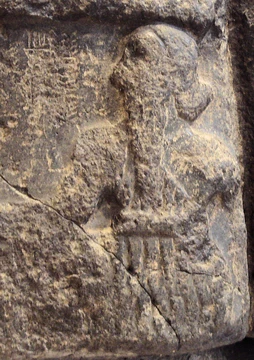
Aššur-etil-ilāni
Obscure Neo-Assyrian king with a brief, poorly documented reign.

Aššur-etil-ilāni, also spelled Ashur-etel-ilani and Ashuretillilani, was a king of the Neo-Assyrian Empire who reigned from 631 BC to 627 BC. His name means 'Ashur is the lord of the gods' in Neo-Assyrian Akkadian. He is an obscure figure with a brief reign from which few inscriptions survive, making concrete information about his life and rule difficult to deduce.
Quick Facts
- Title
- King of Assyria · King of the Universe
- Predecessor
- Ashurbanipal
- Successor
- Sîn-šar-iškun
- Mother
- Libbāli-šarrat
- Spouse
- Ana-Tašmētum-taklāk (?)
- Succession
- King of the Neo-Assyrian Empire
- Dynasty
- Sargonid dynasty
Facts from the source article.
Lore & Background
Aššur-etil-ilāni ascended the throne after the death of his father Ashurbanipal in 631 BC. A land grant to his general Sîn-šumu-līšir suggests Ashurbanipal died a natural death. His rise was met with opposition, including an attempted usurpation by officials Nabu-riḫtu-uṣur and Sîn-šar-ibni, which appears to have been crushed quickly. Fire damage at Nineveh from that time may indicate some violence in the capital.
His inscriptions are known from major Babylonian cities such as Babylon, Dilbat, Sippar, and Nippur, suggesting he exercised control in the southern provinces similar to his father. However, no records exist of him undertaking a military campaign or a hunt, activities previous Assyrian kings frequently performed. His palace at Kalhu is poorly preserved, and interpretations of its layout and decoration remain uncertain.
It is possible that some vassals, perceiving him as weak, broke free from Assyrian control, though claims that Josiah of Judah extended his territory to the coast and captured Ashdod around 628 BC lack direct evidence linking them specifically to Aššur-etil-ilāni's reign. Aššur-etil-ilāni was succeeded by his brother Sîn-šar-iškun under uncertain, though not necessarily violent, circumstances.
Reader's Guide
Aššur-etil-ilāni's significance lies primarily in the transition period of the Neo-Assyrian Empire's decline. His brief reign is poorly documented, leaving historians with limited evidence to assess his character or policies. The lack of military campaigns or royal hunts—activities emblematic of earlier Assyrian kings—suggests he may have been a weak ruler, which could have encouraged vassal states like Judah to assert independence. His control over Babylonia appears to have been maintained, as his inscriptions are found in major cities there, but the overall fragility of the empire during his rule is evident. The attempted usurpation early in his reign and the subsequent succession by his brother under unclear circumstances highlight the internal instability that plagued the empire in its final years. Aššur-etil-ilāni's reign, though obscure, marks a critical juncture between the powerful rule of Ashurbanipal and the empire's eventual collapse under his successors.
Did You Know?
- No records exist of Aššur-etil-ilāni ever undertaking a military campaign or going on a hunt.
- The palace at Kalhu is poorly preserved, making its original layout and decoration unclear.
- The exact circumstances of his death and the rise of his brother Sîn-šar-iškun are unknown, but there is no evidence of a coup.
A King Shrouded in Silence
The Neo-Assyrian Empire, at its height, left behind a vast corpus of royal inscriptions, palace reliefs, and administrative records. Aššur-etil-ilāni, who ruled from 631 to 627 BC, stands as a striking exception to this pattern. His name, meaning "Ashur is the lord of the gods," appears on only a handful of surviving texts, and no annals, campaign records, or hunting narratives have been attributed to him. The annals of his father Ashurbanipal, the principal source for that earlier reign, stop at 636 BC, leaving a gap that stretches across the final years of Ashurbanipal's rule and the entirety of Aššur-etil-ilāni's four-year tenure. Scholars have had to piece together his chronology from indirect evidence, including a Nippur contract dated to 631 BC and a later inscription at Harran composed by the mother of Nabonidus. The result is a ruler known more by what is absent from the record than by what is present, making him one of the most enigmatic figures in Assyrian royal history.
Crisis at the Threshold of Power
Aššur-etil-ilāni's accession in 631 BC, following what most scholars accept as the natural death of Ashurbanipal, was far from a peaceful transition. A land grant he issued to his general Sîn-šumu-līšir, a man who had served the royal household since boyhood, reveals that an Assyrian official named Nabu-riḫtu-uṣur, acting in concert with a colleague called Sîn-šar-ibni, attempted to seize the throne for himself. Sîn-šumu-līšir apparently played a key role in quelling the plot, and the conspiracy appears to have been suppressed swiftly. Yet excavations at Nineveh from the period surrounding Ashurbanipal's death have uncovered traces of fire damage in the capital, hinting that the attempted usurpation may have sparked genuine violence and disorder within the city walls. The fact that a land grant was necessary to reward the loyal general suggests the threat was serious enough to warrant a tangible reward, even if the broader political order was restored without lasting disruption.
The Question of Strength
The most debated aspect of Aššur-etil-ilāni's rule is whether he proved a capable sovereign or a figurehead whose passivity emboldened restive vassals. No campaign records or hunting narratives survive under his name, activities that had been hallmarks of Assyrian kingship for generations. His palace at Kalhu, a former imperial capital, was notably small, with rooms that fell well below the dimensions expected of an Assyrian royal residence, and it lacked the grand reliefs and statues that predecessors used to project military might. Yet his inscriptions appear across the major Babylonian cities—Babylon, Dilbat, Sippar, and Nippur—indicating he maintained direct political and military authority in the south, working through a vassal king named Kandalanu while retaining real power himself. Whether this control was as firm as his father's is impossible to say. Around 628 BC, the Judahite king Josiah expanded his territory to the coast, capturing Ashdod and resettling his own people there, an act that may reflect a vassal testing the limits of Assyrian oversight during what appeared to be a period of diminished royal assertiveness.
Dynastic Lineage and an Uncertain End
Aššur-etil-ilāni occupied a precise position within the Sargonid dynasty: son of Ashurbanipal, grandson of Esarhaddon, and brother of Sîn-šar-iškun. Ashurbanipal had designated a crown prince as early as 660 BC, and the two early sons he fathered were almost certainly Aššur-etil-ilāni and Sîn-šar-iškun. A phrase in one of the younger king's inscriptions—"my father did not rear me"—has led some to assume he was very young at his accession, yet the same wording appears in a prayer by Ashurbanipal himself, and Aššur-etil-ilāni is known to have fathered male children during his own reign, making a very young age unlikely. His royal titles, preserved on temple bricks at Kalhu, invoke the full triad of "King of the Universe, King of Assyria" for himself, his father, and his grandfather, anchoring his legitimacy in unbroken dynastic succession. The circumstances of his death and the transfer of power to Sîn-šar-iškun remain unclear. A long-standing assumption that the brothers fought over the throne lacks any documentary support, and no evidence points to a violent deposition.
Frequently Asked Questions
Who is Aššur-etil-ilāni?
He was a Neo-Assyrian monarch of the Sargonid dynasty who held the throne from 631 BC to 627 BC. He is the son of Ashurbanipal and the brother of his successor Sîn-šar-iškun.
What does Aššur-etil-ilāni's name mean?
In Neo-Assyrian Akkadian, his name translates to 'Ashur is the lord of the gods.' You will also encounter the variant spellings Ashur-etel-ilani and Ashuretillilani across different references.
How long did Aššur-etil-ilāni reign and what is known about his rule?
His tenure lasted roughly four years, from 631 BC until 627 BC. Because so few inscriptions survive from that window, historians can reconstruct very little about his policies, military activity, or court life.
Who came before and after Aššur-etil-ilāni on the Assyrian throne?
He took the throne directly after his father Ashurbanipal and was succeeded by his own brother Sîn-šar-iškun. Both transitions stayed within the Sargonid royal line.
Why do scholars describe Aššur-etil-ilāni as a weak or obscure ruler?
The near-total absence of surviving texts from his years in power leaves almost no evidence of significant achievements or decisive action. That documentary silence has led many researchers to speculate he may have been a comparatively ineffective king.
More in Kings of the Universe 1-24
Spotted an error? Know more?
Reader corrections go straight into our review queue. Suggest an edit · How this site is sourced