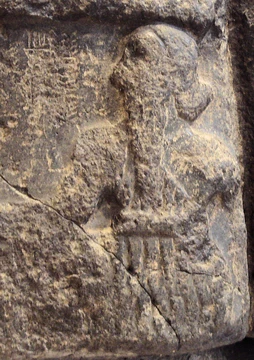
Adad-nirari II
First king of the Neo-Assyrian Empire, renewed Assyrian expansion.

Adad-nīrārī II (sometimes written Adad-nērārī, translating to "Adad, the storm god, is my help") ruled Assyria from 911 to 891 BCE. He is recognized as the first monarch of the Neo-Assyrian Empire, initiating a major phase of territorial expansion that had not been seen since the Middle Assyrian period, which began under Ashur-uballit I in 1365 BCE and ended with the death of Ashur-bel-kala in 1056 BCE.
His father, Ashur-dan II, was his predecessor, and Adad-nīrārī II took the throne after a minor dynastic conflict. This transition likely prompted revolts among Assyria’s nominal vassals in parts of Anatolia, the Levant, and Iran. He responded by firmly bringing these areas under control, notably defeating and deporting troublesome Arameans after a battle at the confluence of the Khabur and Euphrates rivers in 910 BCE. Following campaigns against Neo-Hittite and Hurrian groups in eastern Anatolia, he twice attacked and defeated Shamash-mudammiq of Babylonia in 901 BCE and 900 BCE, annexing territory north of the Diyala River along with the towns of Hīt and Zanqu in central Mesopotamia. Later in his reign, he gained additional territory from Babylonia under King Nabu-shuma-ukin I. He also campaigned westward, subduing the Aramean cities of Kadmuh and Nisibin and their lands. Beyond collecting vast amounts of treasure, he secured the Khabur River region. His rule marked a return of prosperity to the Middle East, aided by the expansion of Phoenician and Aramaean trade routes that connected Anatolia, Egypt under the Libyan 22nd Dynasty, Mesopotamia, and the Mediterranean.
Adad-nīrārī II’s son, Tukulti-Ninurta II, succeeded him and continued to expand Assyrian territory and fight its enemies. Because complete eponym lists survive from Adad-nīrārī II’s reign through to the middle of Ashurbanipal’s rule in the 7th century BCE, the first year of his reign—911 BCE—is likely the earliest event in ancient Near Eastern history that can be dated to an exact year. However, the Assyrian King List is generally considered reliable for several centuries before his reign, and scholars agree on a consistent set of dates back to Ashur-resh-ishi I in the late 12th century BCE.
Quick Facts
- Title
- King of Assyria · King of the Four Corners of the World · King of the Universe
- Reign
- 21 regnal years / 911–891 BCE
- Predecessor
- Ashur-dan II (Middle Assyrian Empire)
- Successor
- Tukulti-Ninurta II
- Father
- Ashur-dan II
- Spouse
- Babylonian princess, daughter of Nabu-shuma-ukin I
- Birth Date
- 10th century BCE
- Death Date
- 891 BCE
- Succession
- King of the Neo-Assyrian Empire
Facts from the source article.
Lore & Background
His reign was a period of returning prosperity to the Middle East, following expansion of Phoenician and Aramaean trade routes linking Anatolia, Egypt under the Libyan 22nd Dynasty, Mesopotamia, and the Mediterranean. His son Tukulti-Ninurta II continued to successfully expand Assyrian territory and wage war against Assyria's enemies.
Reader's Guide
Adad-nīrārī II is significant as the first king of the Neo-Assyrian Empire, marking the beginning of a renewed period of major Assyrian expansion after the decline of the Middle Assyrian Empire. His campaigns reasserted Assyrian control over vassal regions and defeated Babylonia, annexing strategic territories. The prosperity of his reign, linked to expanding trade routes, helped set the stage for later Assyrian dominance. Additionally, because full eponym lists exist from his reign down to the middle of Ashurbanipal's reign in the 7th century BCE, year one of his reign in 911 BCE is perhaps the first event in ancient Near Eastern history that can be dated to an exact year, though the Assyrian King List is considered accurate for several centuries before him. His legacy includes the consolidation of Assyrian power and the foundation for the Neo-Assyrian Empire's later conquests.
Did You Know?
- Adad-nīrārī II's name means 'Adad (the storm god) is my help'.
- He reigned from 911 BCE to 891 BCE.
- He was the first King of Assyria in the Neo-Assyrian Empire.
Accession & the Neo-Assyrian Dawn
Adad-nirari II, whose name translates as "Adad is my help," ascended the Assyrian throne in 911 BCE after succeeding his father Ashur-dan II. His accession was not entirely smooth; a minor dynastic struggle preceded his taking of the crown, and the very act of a new king assuming power likely emboldened Assyria's nominal vassals across Anatolia, the Levant, and Iran to question their obligations. What made his reign historically pivotal was that he became the first sovereign of what scholars now call the Neo-Assyrian Empire. Before him, Assyria's era of major territorial expansion had been dormant since the Middle Assyrian period, which had stretched from Ashur-uballit I in 1365 BCE until the death of Ashur-bel-kala in 1053 BCE. That gap of roughly 140 years of relative quiet made Adad-nirari II's reign the spark that reignited imperial ambition and set the stage for the Assyria that would later dominate the ancient Near East.
Campaigns of Conquest
Within his first year on the throne, Adad-nirari II moved decisively to transform nominal vassalage into firm control. In 910 BCE he clashed with troublesome Aramean groups at the confluence of the Khabur and Euphrates rivers, defeating them and deporting their populations to secure the region. He then turned his attention eastward into Anatolia, subduing Neo-Hittite and Hurrian communities that had grown restive. His most ambitious military efforts were directed southward against Babylonia: he attacked and defeated King Shamash-mudammiq on two separate occasions, annexing a substantial stretch of territory north of the Diyala River along with the towns of Hīt and Zanqu in mid-Mesopotamia. Later in his reign he pressed further gains against the Babylonian ruler Nabu-shuma-ukin I. To the west, he subjugated the Aramean cities of Kadmuh and Nisibin together with their surrounding territories. These campaigns brought back vast quantities of treasure and firmly established Assyrian dominance over the Khabur river corridor, consolidating a realm that stretched from Anatolia to the heart of Mesopotamia.
Trade Revival & Economic Prosperity
Beyond the battlefield, Adad-nirari II's reign marked a remarkable economic turning point for the broader Middle East. The expansion of Phoenician and Aramaean trade routes during his twenty-year rule wove together regions that had been economically fragmented: Anatolia in the north, Egypt under the Libyan 22nd Dynasty to the southwest, the Mesopotamian heartland, and the wider Mediterranean world. The vast amounts of treasure he collected through his military campaigns—plunder from Aramean, Neo-Hittite, Hurrian, and Babylonian territories—further enriched the Assyrian economy and likely stimulated commercial activity along these corridors. The subjugation of key nodes such as Kadmuh, Nisibin, Hīt, and Zanqu gave Assyria direct control over critical junctions where goods and peoples moved between these civilizations. In effect, the political unification he achieved through conquest created the stable conditions under which long-distance trade could flourish again, returning a measure of prosperity to a region that had endured centuries of disruption following the collapse of Middle Assyrian hegemony.
Chronological Legacy & Dynastic Continuity
Adad-nirari II occupies a singular place in ancient Near Eastern historiography. Because complete eponym lists survive from the very first year of his reign in 911 BCE all the way through to the middle of Ashurbanipal's rule in the seventh century BCE, his accession is arguably the earliest event in the region's history that can be pinned to a precise calendar year. While the Assyrian King List is generally regarded as reliable for several centuries before his time, and scholars broadly agree on a consistent set of dates reaching back to Ashur-resh-ishi I in the late twelfth century BCE, it is Adad-nirari II's reign that anchors the continuous, year-by-year chronology of the Neo-Assyrian period. His legacy also extended through his son Tukulti-Ninurta II, who inherited the throne and continued the pattern of territorial expansion and warfare against Assyria's rivals. In this way, Adad-nirari II did not merely found a new imperial era; he established the chronological and dynastic framework within which all subsequent Neo-Assyrian history would be recorded and understood.
Frequently Asked Questions
Who is Adad-nirari II?
Adad-nirari II was the Assyrian king who ruled from 911 to 891 BCE and is recognized as the founding monarch of the Neo-Assyrian Empire. His name translates roughly to 'Adad, the storm god, is my help.'
What role did Adad-nirari II play in Assyrian history?
He launched a new era of territorial expansion that Assyria had not seen since the Middle Assyrian period collapsed in 1056 BCE. Over his twenty-year reign he brought Aramean, Neo-Hittite, and Hurrian peoples under Assyrian control and also waged campaigns against Babylonia.
How did Adad-nirari II come to the throne?
He succeeded his father Ashur-dan II after a minor dynastic dispute, and the change in leadership triggered uprisings among Assyria's nominal vassal states. He quelled those revolts and reasserted central authority early in his rule.
Why is Adad-nirari II considered important?
He is the king who reopened the chapter of Assyrian imperial growth after nearly two centuries of decline, effectively founding the Neo-Assyrian Empire. His conquests and administrative consolidation set the stage for the later great emperors of the ancient Near East.
Who succeeded Adad-nirari II?
His son Tukulti-Ninurta II inherited the Assyrian throne following Adad-nirari II's death in 891 BCE, continuing the Neo-Assyrian royal line.
More in Kings of the Universe 1-24
Spotted an error? Know more?
Reader corrections go straight into our review queue. Suggest an edit · How this site is sourced