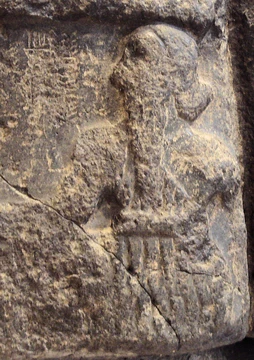
Dugdammî
Cimmerian king who sacked Sardis and challenged Assyrian hegemony.

Dugdammî (also spelled Tugdammî in Neo-Assyrian Akkadian, and known to the Greeks as Lygdamis or Dygdamis) was a king of the Cimmerians who ruled in the mid-seventh century BCE.
His name, recorded in Akkadian as Dugdammî or Tugdammî and in Greek as Lugdamis or Dugdamis, likely comes from a Cimmerian dialect of the Old Iranian Scythian language. The Scythologist Sergey Tokhtas’ev proposed the original form was *Dugdamiya, derived from *dugda, meaning "milk." The Iranologist Ľubomír Novák noted that the shift from /d/ to /l/ in the Greek forms matches phonetic changes seen in Scythian languages, where the Iranic sound /d/ became Proto-Scythian /δ/ (ð) and later Scythian /l/.
During the eighth and seventh centuries BCE, nomadic movements from the Eurasian steppe pushed the Scythians into Southwest Asia. According to Herodotus, this began when the Massagetae or Issedones moved west, forcing the Scythians across the Araxes into the Caspian Steppe, where they displaced the Cimmerians. Under this pressure, the Cimmerians migrated south through the Klukhor, Alagir, and Darial passes in the Greater Caucasus into Western Asia, where they remained active for much of the seventh century.
Around 680 BCE, the Cimmerians split into two groups: the larger part moved west into Anatolia, while a smaller group stayed near the kingdom of Mannai and later entered Media. Dugdammî was born shortly before this, sometime before 680 BCE, while the Cimmerians still lived near the northern border of the Neo-Assyrian Empire. He likely succeeded the previous western Cimmerian king, Teušpā, who was killed in 679 BCE near Ḫubušna in Cappadocia fighting the Assyrian king Esarhaddon.
Around 675 BCE, Dugdammî allied with the Urartian king Rusa II and campaigned westward against Muški (Phrygia), Ḫate (the Neo-Hittite state of Melid), and Ḫaliṭu (either the Alizōnes or the Khaldoi). This invasion did not destroy Phrygia—that kingdom had already fallen around 695–690 BCE, with its king Midas committing suicide—but the Cimmerians did partially subdue the Phrygians; an Assyrian oracular text from the late 670s mentions them as allies against the Assyrian province of Meliddu. A 673 BCE document records Rusa II recruiting many Cimmerian mercenaries, and Cimmerian allies likely joined his expedition in 672 BCE.
Quick Facts
- Succession
- King of the Cimmerians
- Reign
- 679-640 BCE
- Issue
- Sandakšatru
- Death Date
- 640 BCE
- Religion
- Scythian religion (?)
- Predecessor
- Teušpā
- Dynasty
- Dugdammî's dynasty
Facts from the source article.
Lore & Background
Dugdammî was born shortly before 680 BCE, when the Cimmerians were still living near the northern border of the Neo-Assyrian Empire. He appears to have succeeded the previous king of the western Cimmerian horde, Teušpā, who was killed in battle near Ḫubušna in Cappadocia against the Assyrian king Esarhaddon in 679 BCE. Around 675 BCE, the Cimmerians under Dugdammî, in alliance with the Urartian king Rusa II, carried out a military campaign to the west against Muški (Phrygia), Ḫate (the Neo-Hittite state of Melid), and Ḫaliṭu. The kingdom of Phrygia had already been destroyed around 695–690 BCE, with its king Midas committing suicide, so this campaign did not cause that event; instead, the Cimmerians partially subdued the Phrygians and fought alongside Urartu against Assyrian interests.
At yet unknown dates, the Cimmerians imposed their rule on Cappadocia, invaded Bithynia, Paphlagonia and the Troad, and took the recently founded Greek colony of Sinope, whose initial settlement was destroyed and whose
Reader's Guide
Dugdammî's significance lies in his role as a Cimmerian king who, for a time, challenged the Neo-Assyrian Empire's dominance in the ancient Near East. His destruction of Phrygia and the sack of Sardis, the Lydian capital, marked major geopolitical shifts, and his invasions of Ionian and Aeolian Greek cities disrupted early Greek colonization. Assyrian divinatory records, by calling him šar-kiššati ('King of the Universe'), acknowledged him as a rival to the Assyrian king, a title normally reserved for the Assyrian monarch. His legacy extended beyond his death: the name Lygdamis was adopted by Carians, including the satrap Lygdamis I of Halicarnassus and the tyrant Lygdamis II of Halicarnassus, and spread among the ancient Greeks, borne by the tyrant Lygdamis of Naxos and an Olympic champion from Syracuse. His failure to maintain his alliance with Assyria and his subsequent death from illness, followed by his son Sandakšatru's unsuccessful attacks, marked the decline of Cimmerian power in the region.
Did You Know?
- Dugdammî's name in Akkadian is 𒁹𒌇𒁮𒈨𒄿, and in Greek it appears as Lygdamis and Dygdamis.
- He destroyed the Artemision of Ephesus during his invasion of the Greek city-states.
- Assyrian divinatory texts called him šar-kiššati ('King of the Universe'), a title normally held by the Assyrian king.
- His name was later adopted by Carians and Greeks, including the tyrant Lygdamis of Naxos.
Origins and the Cimmerian Migration
In the eighth and seventh centuries BCE, a sweeping displacement of steppe nomads reshaped the political landscape of Southwest Asia. According to Herodotus, the westward push of the Massagetae or Issedones drove the Scythians across the Araxes into the Caspian Steppe, where they in turn displaced the Cimmerians. Under this relentless pressure, the Cimmerians pushed southward through the Klukhor, Alagir, and Darial passes of the Greater Caucasus, eventually settling in Western Asia where they remained a significant military force throughout most of the seventh century. Around 680 BCE the Cimmerian horde fractured: the majority migrated westward into Anatolia, while a smaller contingent lingered near the kingdom of Mannai before moving into Media. Dugdammî was born in this transitional period, before 680 BCE, while his people still camped along the northern frontier of the Neo-Assyrian Empire. He rose to lead the western Cimmerian group after the death of his predecessor Teušpā, who fell in battle near Ḫubušna in Cappadocia against the Assyrian king Esarhaddon in 679 BCE.
The Fall of Phrygia and the Urartian Alliance
Around 675 BCE, Dugdammî forged a military alliance with Rusa II, the king of Urartu, and together they launched a devastating western campaign against three targets: Muški, the kingdom of Phrygia; Ḫate, the Neo-Hittite state of Melid; and Ḫaliṭu, identified either with the Alizōnes or the Khaldoi. The most catastrophic result was the invasion and destruction of Phrygia itself, whose king Midas took his own life in the aftermath. The Cimmerians appear to have partially subjugated the Phrygian population in the wake of this conquest. An Assyrian oracular text from the later 670s BCE references the Cimmerians and the Phrygians, possibly now under Cimmerian control, as joint opponents of the Assyrians in the newly conquered province of Meliddu. The Urartian-Cimmerian partnership deepened further: a 673 BCE document records Rusa II recruiting a large contingent of Cimmerian mercenaries, and Cimmerian allies likely took part in a Urartian expedition in 672 BCE. Between 671 and 669 BCE, Cimmerian forces serving Rusa II repeatedly raided the Assyrian border province of Šubria.
Rivalry with Assyria and the Title of King of the Universe
Dugdammî's Cimmerians expanded their dominion across Anatolia, imposing rule over Cappadocia and raiding Bithynia, Paphlagonia, and the Troad. They seized the Greek colony of Sinope, killing its founder Habrōn, and destroyed Cyzicus, both requiring later re-founding. When the Cimmerians threatened Lydia, King Gyges sought Assyrian protection in 667 BCE, yet he repelled them in 665 BCE on his own, sending captured warriors as tribute to Ashurbanipal. Assyrian records note the Cimmerians had already established sedentary settlements in Anatolia. By 657 BCE, however, the balance had shifted. Assyrian divinatory texts record a bad omen for the Westland, possibly reflecting a Cimmerian incursion into Lydia or a conquest of Assyrian western territories. Most remarkably, these records addressed Dugdammî as šar-kiššati, King of the Universe, a title in the Mesopotamian framework reserved for a single supreme ruler, normally the Assyrian king. The diviners assured Esarhaddon that the kiššūtu, or world hegemony, would be recovered, but the very fact that a Cimmerian leader was invoked with this title signals that Dugdammî had achieved parity with the era's dominant monarch. This recognition persisted through the 650s and early 640s, and it drove Gyges to sever ties with Assyria, as he could no longer rely on their backing.
The Final Campaigns and the Sack of Sardis
In 644 BCE, Dugdammî launched what would be his most consequential campaign: a third invasion of Lydia. This time the Cimmerians broke through Lydian defenses, captured the capital Sardis, and sacked it. King Gyges, who had survived two earlier Cimmerian incursions, perished during this final assault. Following the fall of Sardis, Lygdamis, his Greek name, led his forces further along the western Anatolian coast, invading the Greek city-states of Ionia and Aeolis. The violence was so severe that the inhabitants of the Batinētis region fled to the islands of the Aegean Sea. Later Greek sources, including Callimachus and Hesychius of Alexandria, preserve the memory that Lygdamis destroyed the Artemision of Ephesus during these coastal raids. After this sweeping campaign through Lydia and the Asiatic Greek cities, the Cimmerians under Dugdammî moved eastward into Cilicia around 640 BCE, marking the final recorded phase of his reign. The cumulative effect of his campaigns, from the destruction of Phrygia to the sack of Sardis, left a lasting imprint on the political geography of western Anatolia and the Greek colonial world.
Frequently Asked Questions
Who is Dugdammî?
Dugdammî was a Cimmerian king who ruled in the mid-seventh century BCE, born before 680 BCE and dying in 640 BCE. He appears in Neo-Assyrian Akkadian records as Dugdammî or Tugdammî, while Greek sources know him as Lygdamis or Dygdamis.
What were Dugdammî's major military campaigns?
Dugdammî commanded Cimmerian forces in sweeping campaigns across Anatolia, culminating in the sack of the Lydian capital Sardis. His incursions also pressed directly against the western borders of the Neo-Assyrian Empire, challenging its regional dominance.
Why is Dugdammî important in ancient Near Eastern history?
Dugdammî matters because his Cimmerian war machine disrupted both Lydian and Assyrian political structures in the mid-seventh century BCE. By sacking Sardis and threatening Assyrian hegemony, he stands as one of the most consequential nomadic military leaders of that era.
What is the linguistic origin of Dugdammî's name?
The name most likely traces back to a Cimmerian dialect of Old Iranian Scythian, with the Scythologist Sergey Tokhtas'ev reconstructing an original form *Dugdamiya built on the root *dugda, meaning 'milk.' The Iranologist Ľubomír Novák noted that the /d/-to-/l/ shift seen in the Greek renderings mirrors phonetic patterns documented in Scythian languages.
More in Kings of the Universe 1-24
Spotted an error? Know more?
Reader corrections go straight into our review queue. Suggest an edit · How this site is sourced