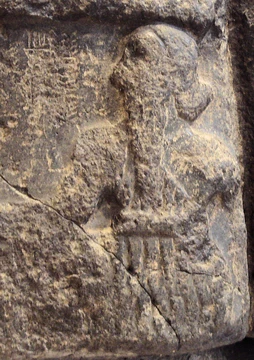
Burna-Buriash II
Kassite king of Babylon known for Amarna letters and diplomatic strife.

Burna-Buriaš II was a Kassite king of Karduniaš (Babylon) during the Late Bronze Age, reigning approximately from 1359 to 1333 BC. He is recorded as the 19th king to ascend the Kassite throne, succeeding Kadašman-Enlil I, who was likely his father. His reign is notable for extensive diplomatic correspondence preserved in the Amarna letters, which reveal his interactions with Egyptian pharaohs, as well as his involvement in international relations with Elam, Hittites, and Assyria.
Quick Facts
- Title
- King of Babylon
- Reign
- 27 regnal years / 1359–1333 BC
- Predecessor
- Kadašman-Enlil I
- Successor
- Kara-ḫardaš / Nazi-Bugaš(usurper) / Kurigalzu II
- Spouse
- Muballitat-Sherua
- Royal House
- Kassite
- Issue
- Kara-ḫardaš / Kurigalzu II?
Facts from the source article.
Lore & Background
Burna-Buriaš II conducted diplomatic correspondence with Egyptian pharaohs Amenhotep III, Akhenaten, and Tutankhamen, preserved in nine Amarna letters (EA 6–14). He insisted on being treated as an equal, referring to the pharaoh as 'brother,' and exchanged gifts such as horses, lapis-lazuli, and gold. However, relations soured over underweight gold, delayed messengers, and insufficient bridal carriages for his daughter's wedding to Amenhotep III. He also complained that Egyptian vassals in Canaan robbed and murdered his merchants, naming Šum-Adda and Šutatna as perpetrators.
Reader's Guide
Burna-Buriaš II's significance lies in his extensive diplomatic correspondence, which provides a rare window into Late Bronze Age international relations. His letters to Egyptian pharaohs reveal the complexities of gift exchange, status negotiation, and conflict resolution among great powers. The Amarna letters document his insistence on parity, complaints about trade disruptions, and attempts to maintain influence over Canaanite vassals. His interactions with Assyria foreshadow the shift in power as Assyria emerged from Mitanni's shadow. The proverb attributed to him, 'the time of checking the books is the shepherds' ordeal,' reflects a concern with accountability. His building projects in Larsa and Nippur demonstrate Kassite patronage of traditional Babylonian cults. The disputed succession after his death, involving Assyrian intervention, highlights the fragility of Kassite rule and the growing role of Assyria in Babylonian affairs. His legacy is preserved primarily through the Amarna archive and later references in Neo-Babylonian texts.
Did You Know?
- He complained to Akhenaten that gold sent was underweight and that his messenger was detained for two years.
- His daughter married Amenhotep III, and the bridal gift inventory filled 4 columns and 307 lines on tablet EA 13.
- After his death, his son Kara-ḫardaš was murdered in a rebellion, leading Assyrian king Aššur-uballiṭ I to install Kurigalzu II as king.
Reign and Position in the Kassite Dynasty
Burna-Buriash II ascended the Kassite throne as its nineteenth ruler, succeeding Kadašman-Enlil I, who was most likely his father. His reign, spanning roughly twenty-seven years from approximately 1359 to 1333 BC, placed him squarely in the Late Bronze Age at the height of Babylonian (Karduniaš) power. His name, rendered in cuneiform as Bur-na- or Bur-ra-Bu-ri-ia-aš, carries a distinctly Kassite linguistic meaning: servant or protégé of the Lord of the lands. This title reflects a worldview in which kingship was framed as a form of divine stewardship rather than mere political dominion. Though his personal name evokes humility before a supreme lord, the scope of his surviving diplomatic correspondence reveals a monarch who insisted on being treated as an absolute equal by the great powers of his era. His twenty-seven-year tenure allowed him to project Kassite influence across a vast network of vassals, trading partners, and rival courts, stretching from the Egyptian Nile to the Hittite heartland and the Elamite plateau.
The Egyptian Correspondence and Its Fractures
Nine tablets from the Amarna archive, designated EA 6 through EA 14, preserve Burna-Buriash's direct voice in exchanges with the Egyptian pharaohs—likely Amenhotep III, Akhenaten, and Tutankhamen. The early tone is warm and fraternal; he repeatedly calls the pharaoh brother and recalls ancestral pacts in which both courts exchanged greeting-gifts and refused no request. He sent horses, lapis-lazuli, and precious stones, expecting ivory, ebony, and gold in return. On one occasion he dispatched a lapis-lazuli necklace to congratulate Akhenaten on the birth of his daughter Meritaten. Yet the relationship curdled. He raged that the gold received was underweight, that his messenger had been detained for two years, and that the pharaoh had failed to send condolences during his illness. When his daughter's wedding procession was limited to five carriages, he lodged a formal grievance; the bridal inventory alone filled four columns and 307 lines of cuneiform on EA 13. In EA 8 he demanded vengeance against named Canaanite merchants who had robbed and killed his traders, and he invoked his ancestor Kurgalzu to remind Egypt of its ancient obligations to the region.
A Web of Royal Marriages
Burna-Buriash's foreign policy was woven through a complex web of royal marriages binding Babylon to its neighbors. With Elam, a Neo-Babylonian literary copy now in Berlin's Vorderasiatisches Museum records that Pahir-Iššan married the sister of Kurigalzu I, Humban-Numena married his daughter, and their son Untash-Napirisha was betrothed to Burna-Buriash's own daughter—possibly Napir-asu, whose headless statue survives in the Louvre. With the Hittites, Suppiluliuma I took a third of Burna-Buriash's daughters as his final wife, known by the traditional title Tawananna. This union may explain his neutrality during the Mitanni succession crisis, during which he refused asylum to the fleeing Shattiwaza, who found a more receptive audience in Hatti. The marriage's aftermath was turbulent: his stepson Mursili II, in two preserved prayers, condemned the Tawananna as scheming and murderous, accusing her of plotting against his own wife and foisting foreign customs on the Hittite court before she was ultimately exiled. Meanwhile, Kassite administrative reach extended as far as Dilmun, where a local official complained to the governor of Nippur about Aḫlamû tribesmen stealing his dates and speaking words of hostility.
Legacy and the Voice That Survived
The most striking echo of Burna-Buriash beyond his own lifetime is a proverb attributed to him in a letter from his agent Mar-Issar to the much later Assyrian king Esarhaddon: the time of checking the books is the shepherds' ordeal. This single phrase, preserved in an administrative context centuries after his death, testifies to how his name had calcified into a byword for bureaucratic scrutiny. His physical legacy is equally fragmentary yet poignant: the headless statue of what may be his daughter Napir-asu stands in the Louvre, a silent testament to the Elamite marriage alliances that anchored his dynasty's eastern flank. The Amarna tablets, meanwhile, give us something rarer than any statue—a king's unfiltered voice, petulant and proud, bargaining over carriages and gold, feigning ignorance of the four-month caravan distance between Babylon and Egypt to probe his counterpart's resolve. In EA 12, a princess, possibly Nefertiti, responds to him in a register of playful, forthright repartee, suggesting that beneath the diplomatic formalities lay a genuine, if competitive, personal rapport. No Egyptian reply to his grievances survives, leaving his voice as the sole surviving perspective on a rivalry that shaped the Late Bronze Age.
More in Kings of the Universe 1-24
Spotted an error? Know more?
Reader corrections go straight into our review queue. Suggest an edit · How this site is sourced