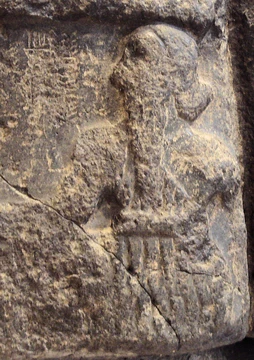
Rimush
Second Akkadian king who crushed revolts and campaigned in Elam.

Rimush (or Rimuš, 𒌷𒈬𒍑 Ri-mu-uš; died c. 2270 BC) was the second king of the Akkadian Empire, succeeding his father Sargon of Akkad. His short reign was marked by extensive military campaigns to consolidate the empire, including the reconquest of rebellious Sumerian cities and victories over Elam and Marhashi. He is known for meticulous records of his conquests and for dedicating votive offerings to various deities.
Quick Facts
- Title
- King of Kish · King of Sumer · King of the Universe
- Death Date
- c. 2270 BC
- Reign
- c. 2279 – c. 2270 BC
- Father
- Sargon
- Mother
- Tashlultum
- Successor
- Manishtushu
- Dynasty
- Dynasty of Akkad
- Succession
- King of Akkad
Facts from the source article.
Lore & Background
Despite military activity, economic activity continued during his reign. Rimush paid proper attention to deities and temples, dedicating votive offerings found in Ur, Sippar, Khafajah, and Brak. After conquering Elam, he dedicated 30 mana of gold, 3,600 mana of copper, and 360 slaves to Enlil, chief deity of Nippur. He also commissioned a statue of himself made of meteoric iron for Enlil, an unprecedented act. A Victory Stele attributed to Rimush (though disputed) depicts the defeat of Umma and records the distribution of large plots of land to Akkadian nobility. The city Dur-Rimuš (Fortress of Rimush) was located near Tell Ishchali and Khafajah and was a cult center of the storm god Adad.
Reader's Guide
Rimush's significance lies in his role as the second ruler of the Akkadian Empire, tasked with preserving the vast conquests of his father Sargon. His inscriptions provide some of the earliest detailed accounts of military campaigns, including precise numbers of killed and captured, and the destruction of city walls. These records illustrate the brutal methods used to suppress revolts and maintain control over the diverse city-states of Sumer. His campaigns against Elam and Marhashi extended Akkadian influence into Iran, though the region would later be governed by Akkadian officials under his successor. The fact that Naram-Sin later deified Sargon and Manishtushu but not Rimush may reflect a less favorable view of his reign. The disputed Victory Stele and the statue of meteoric iron highlight both the artistic and religious dimensions of his rule. His assassination by courtiers, recorded in a divination text, underscores the instability that could plague even the most powerful early empires. The city named after him, Dur-Rimuš, indicates his lasting mark on the landscape.
Did You Know?
- Rimush was said to have been assassinated by his courtiers, though the account from the first-millennium BC extispicy compendium Bārûtu is considered legendary rather than historical fact.
- He dedicated a statue of himself made of meteoric iron to the god Enlil, an unprecedented act.
- His sister Enheduana is considered the earliest known named author in world history.
More in Kings of the Universe 1-24
Spotted an error? Know more?
Reader corrections go straight into our review queue. Suggest an edit · How this site is sourced