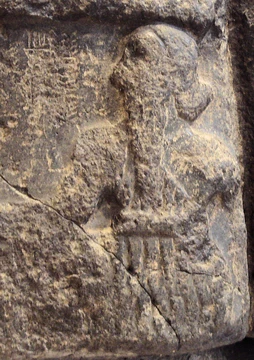
Ninurta-nadin-shumi
Babylonian king who clashed with Assyria and fathered Nabû-kudurrῑ-uṣur I.

Ninurta-nādin-šumi (c. 1127–1122 BC) was the third king of the Second Dynasty of Isin and the Fourth Dynasty of Babylon, reigning for seven years. He is known for his conflict with the contemporary Assyrian king Aššur-reš-iši and for being the father of the celebrated king Nabû-kudurrῑ-uṣur I.
Quick Facts
- Title
- King of Babylon
- Predecessor
- Itti-Marduk-balāṭu
- Successor
- Nabû-kudurrῑ-uṣur I
- Royal House
- 2nd Dynasty of Isin
Facts from the source article.
Lore & Background
Ninurta-nādin-šumi's relationship with his immediate predecessor, Itti-Marduk-balāṭu, is uncertain. Two brief identical inscriptions on Lorestān bronze daggers give him the grandiose titulary 'king of the world, king of Babylon, king of Sumer and Akkad,' which was slavishly imitated by his successors. A kudurru has been tentatively dated to this period.
A fragmentary epic describes his conflict with the Assyrian king Aššur-reš-iši over the disputed upper Diyala border region and the city of Arbela. The text suggests the Babylonians withdrew ('fled') the city on the approach of Assyrian forces, but it is probably significant that his forces penetrated so far north into the Assyrian heartland. He may be the author of a condescending letter to Aššur-reš-iši, preserved in two pieces, in which he chastises the Assyrian king for failing to keep an appointment in the border town of Zaqqa and threatens to reinstate the king's predecessor, Ninurta-tukulti-Ashur, who had supposedly been welcomed in exile in Babylon.
Reader's Guide
Ninurta-nādin-šumi is significant primarily as the father of Nabû-kudurrῑ-uṣur I, a celebrated king, and as a ruler whose descendants continued to reign for three more generations until Marduk-šāpik-zēri. His use of the grandiose titulary 'king of the world, king of Babylon, king of Sumer and Akkad' on bronze daggers set a precedent slavishly imitated by his successors. His conflict with the Assyrian king Aššur-reš-iši, though poorly preserved in fragmentary texts, highlights the ongoing border disputes between Babylon and Assyria, particularly over the upper Diyala region and Arbela. The possible letter to Aššur-reš-iši, with its threats and references to pretenders, suggests a complex political relationship, though the roles of the individuals mentioned remain uncertain. His reign, though short, thus marks a transitional period in Babylonian-Assyrian relations and the consolidation of royal titulary.
Did You Know?
- His titulary on Lorestān bronze daggers was slavishly imitated by his successors.
- A fragmentary epic describes his forces penetrating far north into the Assyrian heartland.
- He may have written a condescending letter to the Assyrian king Aššur-reš-iši.
More in Kings of the Universe 1-24
Spotted an error? Know more?
Reader corrections go straight into our review queue. Suggest an edit · How this site is sourced