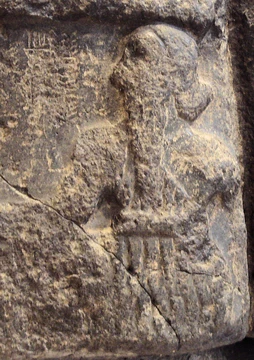
Nebuchadnezzar I
Babylonian king who defeated Elam and recovered Marduk's statue.

Nebuchadnezzar I (reigned c. 1121–1100 BC) was the fourth king of the Second Dynasty of Isin and the Fourth Dynasty of Babylon, ruling for 22 years according to the Babylonian King List C. He is the most prominent monarch of this dynasty, best known for his victory over Elam and for recovering the cultic statue of Marduk.
He is not related to the later king Nebuchadnezzar II, who appears in the Bible; this earlier Nebuchadnezzar does not appear in biblical texts. He succeeded his father, Ninurta-nādin-šumi, and was followed by his son Enlil-nādin-apli, then his brother Marduk-nādin-aḫḫē, and finally his nephew Marduk-šāpik-zēri—the only known members of this family to reign during the dynasty. A chronicle mistakenly identifies him as the brother of Širikti-šuqamuna, likely confusing him with Ninurta-kudurrῑ-uṣur I.
The Enmeduranki legend is a separate Sumero-Akkadian composition about antediluvian wisdom, and it does not describe Marduk granting wisdom to Nebuchadnezzar I or claim he belonged to a line of kingship stretching back before the flood as an offspring of Enmeduranki. The text that begins with a lament—describing how conditions worsened, good departed, evil became routine, the gods abandoned the land, the people turned to crime, guardians of peace fled to heaven, evil demons filled the land, and the wicked Elamite attacked—is a different composition, not the Enmeduranki legend.
The duration and number of Nebuchadnezzar’s campaigns against Elam are unknown, but the war was likely prolonged. One later tradition says an invasion of Elam failed when plague struck his army, and he barely escaped a stampede home. A kudurru from his reign records a successful raid (šiḫṭu) conducted during the hottest summer month, Dumuzi. Accompanied by the Kassite chieftain Šitti-Marduk, who struck the decisive blow, Nebuchadnezzar launched a surprise attack from Dēr. The heat was so intense that axes burned like fire, road surfaces scorched like flame, wells were dry, and even the strongest men and horses weakened. He routed the Elamite king Ḫulteludiš-Inšušinak on the banks of the river Ulaya, with dust from the battle darkening the sky. No contemporary or later source mentions a sack of Susa, but another kudurru states he recovered the statues of Marduk (called Bēl) and the goddess Il-āliya during this or another campaign.
Quick Facts
- Succession
- King of Babylon
- Predecessor
- Ninurta-nādin-šumi
- Successor
- Enlil-nādin-apli
- Royal House
- 2nd Dynasty of Isin
Facts from the source article.
Lore & Background
He also conducted military campaigns against Assyria under Aššur-rēša-iši I, violating an entente cordiale. The first campaign ended with him burning his siege engines and fleeing; the second resulted in an Assyrian victory, with the capture of his field marshal Karaštu. He is titled conqueror of the Amorite lands and despoiler of the Kassites in a kudurru. His domestic building activities included the Ekituš-ḫegal-tila temple of Adad in Babylon and work on the temple of Enlil in Nippur.
Reader's Guide
Nebuchadnezzar I's significance lies in his decisive victory over Elam, which ended Elamite power and allowed the return of the statue of Marduk to Babylon. This event became a defining moment for Babylonian identity, akin to the siege of Troy for the ancient Greeks, and was celebrated in hymns and literary works such as the Marduk prophecy. His reign may have seen the elevation of Marduk to the head of the pantheon, possibly inspiring the composition of the Enûma Eliš, though this is disputed. The recovery of the cultic idol reinforced the legitimacy of his dynasty and established a narrative of divine favor that resonated in later Babylonian literature. His conflicts with Assyria, though less successful, show the ongoing rivalry between the two powers. The kudurrus and economic texts from his reign provide rare contemporary records of land grants and administrative practices. His association with the sage Šaggil-kīnam-ubbib links him to the authorship of the Babylonian Theodicy, highlighting a period of literary and theological development.
Did You Know?
- He is unrelated to the later Nebuchadnezzar II and does not appear in the Bible.
- His war with Elam was commemorated in a kudurru that describes a surprise attack during the hottest summer month, Dumuzi.
- The Enmeduranki legend claims he was an 'offspring of Enmeduranki, king of Sippar' and endowed with perfect wisdom by Marduk.
- A seventh-century astrological report alludes to observations made during his reign and their relationship to his devastation of Elam.
More in Kings of the Universe 1-24
Spotted an error? Know more?
Reader corrections go straight into our review queue. Suggest an edit · How this site is sourced