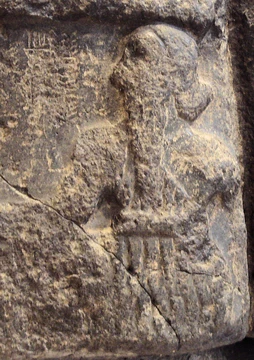
Nazi-Maruttash
Kassite king of Babylon who reached the dynasty's peak.

Nazi-Maruttaš was a Kassite king of Babylon who reigned from approximately 1307 to 1282 BC. He was the 24th ruler of the Kassite dynasty, the son and successor of Kurigalzu II, and styled himself 'King of the World' (šar kiššati). His reign is considered the peak of the Kassite Dynasty, marked by successful military campaigns, cultural achievements, and extensive building works.
Quick Facts
- Title
- King of Babylon
- Reign
- 26 regnal yrs / c. 1307–1282 BC
- Predecessor
- Kurigalzu II
- Successor
- Kadašman-Turgu
- Royal House
- Kassite
Facts from the source article.
Lore & Background
Nazi-Maruttaš faced a growing threat from Assyria under Arik-den-ili and Adad-Nīrāri I. He employed a strategy of flank attacks supported by eastern hillmen like the Gutians, avoiding full frontal assault. Under Arik-den-ili he seems to have had the upper hand, but Adad-Nīrāri later claimed a complete victory at the battle of Kār-Ištar of Ugarsallu, plundering the Babylonian camp and adjusting the boundary southward. There is also evidence of a successful attack on Elam, as texts mention Nazi-Maruttaš in sections concerning Elamite prisoners of war, and a historical letter details his campaign in Mat Namri, a Hurrian region, possibly conquering twelve cities.
Reader's Guide
Nazi-Maruttaš's reign is significant as the high point of Kassite power in Babylon. His military campaigns, though ultimately checked by Assyria, demonstrated the dynasty's strength. Culturally, his era produced a standard hemerology (almanac of auspicious days) compiled from seven ancient cities, and the literary work Ludlul bēl nēmeqi is thought to have been composed during his reign. His building projects included a shrine to Gula at Dūr-Kurigalzu, work at Nippur and Uruk, and revival of cities like Larsa, Ur, Adab, and Isin. Nearly 400 economic texts from his reign survive, detailing trade and administration. His legacy is preserved in kudurru boundary stones, cylinder seals, and later Assyrian epics that recall his conflicts.
Did You Know?
- Nazi-Maruttaš was the 24th king of the Kassite dynasty and reigned for twenty-six years.
- He fought a battle with Adad-Nīrāri I at Kār-Ištar of Ugarsallu, which the Assyrians claimed as a complete victory.
- A hemerology (almanac) was compiled during his reign, based on originals from seven cities including Sippar, Nippur, and Babylon.
More in Kings of the Universe 1-24
Spotted an error? Know more?
Reader corrections go straight into our review queue. Suggest an edit · How this site is sourced