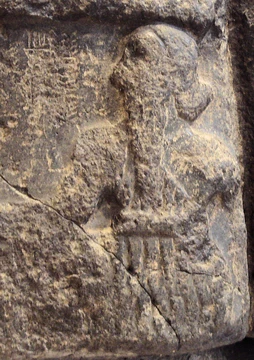
Nabopolassar
Founder of the Neo-Babylonian Empire who overthrew Assyrian rule.

Nabopolassar (Akkadian: Nabû-apla-uṣur, meaning "Nabu, protect the son") founded the Neo-Babylonian Empire and ruled as its first king from 626 BC until his death in 605 BC. He began his rebellion against the Neo-Assyrian Empire—which had controlled Babylonia for over a century—simply to win back Babylonian independence. But the uprising escalated, leading to the total collapse of Assyria and the rise of a new Babylonian empire in its place.
His origins are uncertain. He might have been Chaldean, and may have belonged to a powerful political family in the southern city of Uruk. Nabopolassar launched his revolt against the Assyrian king Sinsharishkun at a time when Babylonia was already unstable. The fighting swung back and forth for nearly ten years, but Nabopolassar eventually drove the Assyrians out of Babylonia for good. His early campaigns after that focused on securing the border to prevent an Assyrian counterattack. But when the Median Empire under Cyaxares joined his side, the war’s goals and possibilities changed.
In 614 BC, the Medes sacked the city of Assur, Assyria’s religious and ceremonial heart. Two years later, in 612 BC, the Medes and Babylonians attacked Nineveh, the Assyrian capital. Like Assur, Nineveh was brutally sacked: its people—including children—were slaughtered, and the entire city was burned. Sinsharishkun probably died defending it. Other Assyrian cities, such as Nimrud, suffered the same fate. The Medes were so brutal—even looting temples—that their violence shocked the Babylonians. Contemporary Babylonian chronicles, though hostile to Assyria, recorded the sackings with sorrow and regret. Nabopolassar’s own attitude toward Assyria is unclear: in some inscriptions he blames the destruction on divine will, while in others he openly boasts of it.
Egypt’s Pharaoh Necho II immediately challenged the Neo-Babylonian claim to succeed Assyria. He fought for several years to restore his Assyrian allies, but was defeated at the Battle of Carchemish in 605 BC. Nabopolassar died that same year, and his son Nebuchadnezzar II succeeded him. As the empire’s founder, Nabopolassar was long remembered by the Babylonians, even after the empire fell less than a century later.
Quick Facts
- Title
- King of Babylon · King of Sumer and Akkad · King of the Universe
- Dynasty
- Chaldean dynasty
- Coronation
- 23 November 626 BC
- Predecessor
- Sinsharishkun · (Neo-Assyrian Empire)
- Successor
- Nebuchadnezzar II
- Father
- Nebuchadnezzar (?)
- Birth Place
- Uruk (?)
- Death Place
- Babylon
- Issue
- Nebuchadnezzar II / Nabu-shum-lishir / Nabu-zer-ushabshi
Facts from the source article.
Lore & Background
Nabopolassar's origins are unclear. In his own inscriptions, he refers to himself as a "son of a nobody," a striking descriptor not known from any other Mesopotamian king. He may have been of Chaldean origin and possibly connected to a powerful political family in the southern city of Uruk. Some evidence suggests he was the son of Kudurru, a pro-Assyrian governor of Uruk, whose body was desecrated after his sons' anti-Assyrian activities. Nabopolassar revolted against the Neo-Assyrian king Sinsharishkun at an opportune moment when Babylonia was already plagued by political instability. After nearly ten years of fighting, he managed to decisively push the Assyrians out of Babylonia.
Subsequent campaigns were intended to hinder the possibility of an Assyrian campaign directed at Babylonia, but the intervention of the eastern Median Empire under Cyaxares shifted the goals of the war. In 614 BC, the Medes brutally sacked the city of Assur, the religious and ceremonial heart of Assyria, and in 612 BC the Medes and Babylonians assaulted Nineveh, Assyria's capital. Nineveh was brutally sacked, with its inhabitants, including children, slaughtered en masse and the entire city burned to the ground. Sinsharishkun probably died in its defense. Other Assyrian cities, such as Nimrud, were also assaulted and sacked. The brutality of the Medes shocked the Babylonians; contemporary Babylonian chronicles lament the sackings with sorrow and remorse. Nabopolassar's own attitude towards Assyria is unclear; in some inscriptions he ascribes his victory to divine intervention, while in others he openly boasts of the destruction.
Reader's Guide
Nabopolassar's significance lies in his role as the founder of the Neo-Babylonian Empire, which succeeded the Neo-Assyrian Empire as the dominant power in the Near East. His revolt, initially aimed at securing Babylonian independence, escalated with Median help into the complete destruction of Assyria. The Neo-Babylonian Empire's claim to succeed Assyria was immediately challenged by Egypt under Pharaoh Necho II, who fought for several years until defeated at the Battle of Carchemish in 605 BC. Upon his death that same year, Nabopolassar was succeeded by his son Nebuchadnezzar II. As founder, Nabopolassar was long remembered by the Babylonians after his death, even beyond the fall of his empire less than a century later. In the Hellenistic period, several centuries later, Babylonian authors cast him as a champion ordered by Marduk, Babylon's chief deity, to avenge their homeland, and as a symbol against the domination of foreign empires over Babylon. His legacy is thus both as a historical empire-builder and as a legendary figure of resistance.
Did You Know?
- Nabopolassar referred to himself as a 'son of a nobody' in his inscriptions, a phrase not known from any other Mesopotamian king.
- The Medes' brutality in sacking Assyrian cities, including religious temples, shocked the Babylonians, who lamented the destruction in their chronicles.
- Nabopolassar's son and successor, Nebuchadnezzar II, served as high priest of the Eanna temple in Uruk before becoming king.
- In the Hellenistic period, Babylonian authors remembered Nabopolassar as a champion ordered by the god Marduk to avenge Babylonia.
More in Kings of the Universe 1-24
Spotted an error? Know more?
Reader corrections go straight into our review queue. Suggest an edit · How this site is sourced