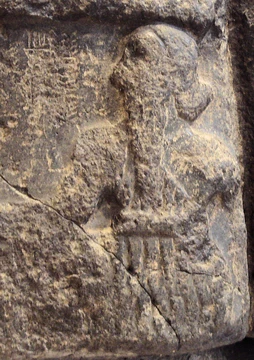
Mar-biti-apla-usur
Sole king of Babylon's short-lived Elamite Dynasty.

Mār-bīti-apla-uṣur was a king of Babylon and the sole ruler of the short-lived seventh or Elamite Dynasty, reigning from approximately 980 to 975 BC. His name, meaning 'O Marbīti, protect the heir,' refers to the deity Marbīti, who was associated with Dēr and had a sanctuary in Borsippa. He is known primarily from contemporary inscriptions on bronze arrowheads from Lorestān and from entries in the Dynastic Chronicle and Eclectic Chronicle.
Quick Facts
- Title
- King of Babylon
- Reign
- 980–975 BC
- Predecessor
- Širikti-šuqamuna / Bīt-Bazi Dynasty
- Successor
- Nabû-mukin-apli / Dynasty of E
- Royal House
- Elamite Dynasty
Facts from the source article.
Lore & Background
The circumstances surrounding the fall of the previous Bazi dynasty and Mār-bīti-apla-uṣur's ascendancy are unknown. His name was wholly Akkadian, and the Dynastic Chronicle describes him as a remote descendant of Elam (šà.bal.bal ˹libir NIM.˺MA.KI, Akkadian: liplippi Elamti Labīru). No known rulers of Elam bore Akkadian titles, but his reign coincides with a blank period in Elamite political history. His rule endured for six years, and he was buried in the palace of Sargon or 'a legitimate king,' depending on the interpretation of ina É-GAL LUGAL(-)GI.NA qé.bir, suggesting an interment suitable for a rightful king.
Reader's Guide
Mār-bīti-apla-uṣur's significance lies in his role as the sole king of Babylon's Elamite Dynasty, a short-lived period that remains poorly understood. His reign, from about 980 to 975 BC, falls within a blank period in Elamite political history, and no other Elamite rulers are known to have used Akkadian titles. The four bronze arrowheads from Lorestān inscribed with his name and the title šar kiššati ('king of the world') are key artifacts, linking him to the region of Lorestān and providing material evidence of his rule. The Eclectic Chronicle records an event in his fourth year, possibly concerning the suspension of the Akitu festival due to Aramean incursions, though the text is not preserved. His burial in the palace of Sargon or 'a legitimate king' underscores the ambiguity surrounding his legacy, as the interpretation of the phrase remains uncertain. Overall, Mār-bīti-apla-uṣur represents a fragmentary but important figure in the complex history of Babylonian dynastic succession.
Did You Know?
- His name means 'O Marbīti, protect the heir' in Akkadian.
- He was described as a remote descendant of Elam in the Dynastic Chronicle.
More in Kings of the Universe 1-24
Spotted an error? Know more?
Reader corrections go straight into our review queue. Suggest an edit · How this site is sourced