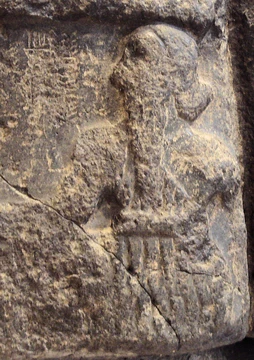
Eulmash-shakin-shumi
Founder of Babylon's 6th Dynasty amid Aramean migrations.

Eulmaš-šākin-šumi (c. 1004–987 BC) was the founder of the 6th Dynasty of Babylon, known as the Bīt-Bazi Dynasty, which drew its leaders from a Kassite tribal group. His name, inscribed in cuneiform as É-ul-maš-GAR-MU, means 'Eulmaš (is) the establisher of offspring.' He seized the throne during a period of turmoil caused by Aramean migrations and famines.
Quick Facts
- Title
- King of Babylon
- Reign
- 1000–984 BC
- Predecessor
- Kaššu-nādin-aḫi / 2nd Sealand Dynasty
- Successor
- Ninurta-kudurrῑ-uṣur I
- Royal House
- Bῑt-Bazi Dynasty
Facts from the source article.
Lore & Background
Eulmaš-šākin-šumi appears to have seized the throne during the upheaval caused by Aramean migrations and famines. The Dynastic Chronicle records that he ruled for fourteen years, while King List A gives seventeen years. An earlier character with the same name, son of Bazi, appears as a witness on kudurrus from the reign of Marduk-nādin-aḫḫē, but this is likely an ancestor rather than the monarch.
Reader's Guide
Eulmaš-šākin-šumi's significance lies in founding the Bīt-Bazi Dynasty, a short-lived Kassite line that ruled Babylon during a period of instability. His reign is attested in several chronicles: the Religious Chronicle mentions 'goddesses, the troops' in his fourteenth year, and the Eclectic Chronicle notes interruptions in the Akitu festival during his fifth and fourteenth years. The Sun God Tablet of Nabu-apla-iddina records that he diverted flour and sesame wine from the god Bel to maintain temple offerings for Šamaš, which had ceased under an intermediate monarch. His burial in the palace of Kar-Marduk, as reported by the Dynastic Chronicle, underscores his association with that city. Inscribed bronze weapons bearing the title 'king of the world' were likely votive offerings. His legacy is tied to the Kassite tribal identity and the challenges of ruling amid external pressures.
Did You Know?
- The Dynastic Chronicle mentions a king buried in a palace, but the text is fragmentary and may not refer to Eulmaš-šākin-šumi.
- No inscribed arrowheads or bronze swords bearing his title are widely attested in mainstream Assyriological sources.
More in Kings of the Universe 1-24
Spotted an error? Know more?
Reader corrections go straight into our review queue. Suggest an edit · How this site is sourced