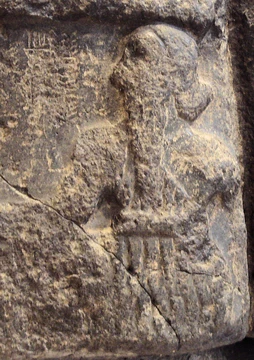
Esarhaddon
King of the Neo-Assyrian Empire, conqueror of Egypt.

Esarhaddon (also known as Essarhaddon, Assarhaddon, or Ashurhaddon; in Akkadian, Aššur-aḫa-iddina, meaning "Ashur has given me a brother") ruled the Neo-Assyrian Empire from 681 to 669 BC. The third king of the Sargonid dynasty, he is best known for conquering Egypt in 671 BC—an achievement that made his empire the largest the world had yet seen—and for rebuilding Babylon, which his father had destroyed.
His path to power was violent. Sennacherib’s original heir, the crown prince Aššur-nādin-šumi, was captured by Elamites in 694 BC; his ultimate fate remains unknown. The next heir, Arda-Mulissu, was replaced in 684 BC by the younger Esarhaddon. Enraged, Arda-Mulissu and another brother, Nabû-šarru-uṣur, murdered their father in 681 BC and tried to seize the throne. Esarhaddon had to defeat them in a six-week civil war before he could become king.
The attempted coup left Esarhaddon deeply paranoid. He distrusted his officials, governors, and male relatives for the rest of his reign. As a result, he relied heavily on his female relatives—especially his mother Naqiʾa—who wielded considerable political influence. Despite a short and difficult reign marked by paranoia, depression, and constant illness, Esarhaddon is considered one of Assyria’s greatest kings. He quickly crushed his brothers in 681 BC, undertook ambitious building projects in Assyria and Babylonia, campaigned successfully in Media, Persia, Elam, Arabia, Anatolia, the Caucasus, and the Levant, defeated the Kushite Empire, and conquered Egypt and Libya. He also imposed a vassal treaty on the Medes and Persians and arranged a peaceful transfer of power after his death: his son Ashurbanipal inherited the empire, while another son, Šamaš-šuma-ukin, became king of Babylonia.
Quick Facts
- Title
- King of Assyria · King of Babylon · King of Sumer and Akkad · King of the kings of Egypt and Kush · King of the Four Corners · King of the Universe
- Reign
- 12 regnal years / 681 BC (accession) / 680–669 BC (reign)
- Predecessor
- Sennacherib
- Successor
- Ashurbanipal · (King of Assyria) · Šamaš-šuma-ukin · (King of Babylon)
- Mother
- Naqiʾa
- Dynasty
- Sargonid dynasty
- Issue
- Šērūʾa-ēṭirat / Ashurbanipal / Šamaš-šuma-ukin
- Issue Link
- #Family and children
- Issue Pipe
- Among / others
- Death Place
- Harran / (now Şanlıurfa, Turkey)
Facts from the source article.
Lore & Background
Esarhaddon was the third king of the Sargonid dynasty, ruling from 681 to 669 BC. After his father Sennacherib's crown prince Aššur-nādin-šumi was captured by Elamites in 694 BC (his ultimate fate unknown), the new heir was Arda-Mulissu. However, in 684, Esarhaddon, a younger son, was appointed instead. Angered, Arda-Mulissu and another brother, Nabû-šarru-uṣur, murdered their father in 681 and planned to seize the throne. Esarhaddon defeated his brothers in a six-week-long civil war and ascended the throne.
Reader's Guide
Esarhaddon's reign, though short and difficult, is recognized as one of the greatest and most successful of Assyrian kings. He quickly defeated his brothers in 681, completed ambitious building projects in both Assyria and Babylonia, and campaigned successfully in Media, Persia, Elam, the Arabian Peninsula, Anatolia, the Caucasus, and the Levant. His conquest of Egypt in 671 BC made his empire the largest the world had ever seen. He also enforced a vassal treaty upon the Medes and Persians and ensured a peaceful transition of power to his two sons and heirs Ashurbanipal as ruler of the empire and Šamaš-šuma-ukin as king of Babylonia after his death. Plagued by paranoia, depression, and constant illness, he distrusted his male relatives and officials, leading him to reside in high-security fortifications outside major cities. His female relatives, such as his mother Naqiʾa and his daughter Šērūʾa-ēṭirat, wielded considerably more influence and political power than women in any previous period of Assyrian history, with the possible exception of Sammuramat in the 9th century BC.
Did You Know?
- Esarhaddon's name means 'Ashur has given me a brother' in Neo-Assyrian Akkadian.
- He conquered Egypt in 671 BC, making his empire the largest the world had ever seen.
- His father Sennacherib was murdered by Esarhaddon's brothers Arda-Mulissu and Nabû-šarru-uṣur in 681 BC.
- Esarhaddon's mother Naqiʾa wielded considerable political influence during his reign.
Frequently Asked Questions
Who is Esarhaddon?
Esarhaddon was a Neo-Assyrian monarch who held the throne from 681 to 669 BC as the third ruler of the Sargonid line. His Akkadian name, Aššur-aḫa-iddina, carries the meaning 'Ashur has given me a brother.' Fans also encounter him under variant spellings such as Essarhaddon, Assarhaddon, or Ashurhaddon.
What is Esarhaddon known for?
He is most celebrated for his 671 BC campaign that brought Egypt under Assyrian control, a feat that pushed his realm to the greatest size the ancient world had ever known. He is equally remembered for the ambitious rebuilding of Babylon after his father Sennacherib had razed the city.
Why is Esarhaddon important in the broader narrative?
He marks the moment Assyrian power reached its absolute peak, with the Egyptian conquest creating a territory no prior empire had encompassed. His dual legacy of military expansion and civic restoration—particularly the rebuilding of Babylon—gives him a uniquely complex role among the kings.
How did Esarhaddon rise to the throne?
His succession was secured through the violent loss of his predecessors in the line: his elder brother Aššur-nādin-šumi was seized by the Elamites in 694 BC, and the next heir, Arda-Mulis, also lost his claim. With both older siblings gone, Esarhaddon became the surviving heir of the Sargonid dynasty.
More in Kings of the Universe 1-24
Spotted an error? Know more?
Reader corrections go straight into our review queue. Suggest an edit · How this site is sourced