Enlil-nadin-apli
Briefly ruled Babylon, attempted to march on Assur, overthrown by his uncle.

Enlil-nādin-apli, meaning “Enlil gives an heir,” ruled from around 1099 to 1096 BC. He was the fifth king of the Second Dynasty of Isin and also part of the Fourth Dynasty of Babylon. The son of Nabu-kudurri-usur, he took the throne after his father and was later overthrown in a rebellion led by his uncle, Marduk-nādin-aḫḫē.
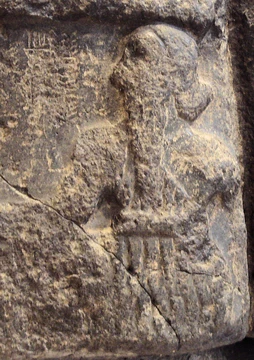
Very few objects from his short reign survive. One is a bronze dagger from Lorestān that bears his name and title. A kudurru (boundary stone) records an inquiry he ordered in his fourth year about land claimed by a temple estate. The governors of Bit-Sin-magir and the Sealand, Ekarra-eqisha and Eanna-šuma-iddina, investigated and upheld the temple’s claim, which rested on a boundary set by the earlier king Gulkišar for the goddess Nanshe. This stone contains one of the earliest known *Distanzangaben* statements, noting that 696 years had passed between Nabu-kudurri-usur (Enlil-nādin-apli’s father) and Gulkišar, a contemporary of Samsu-ditāna.
Another undated kudurru is also thought to come from this period, belonging to a man named Gula-eresh. It features the same governor, Eanna-šuma-iddina, granting five *kur* of land to his servant. This stone is notable for its elaborate curses, which call on gods like Anu, Enlil, Ea, and Ninmaḫ to curse any violator with an unbreakable curse, tear out his foundation and seed, and clothe him with leprosy so he must live by the city wall.
The Walker Chronicle describes an aborted march Enlil-nādin-apli led against Assur. According to the chronicle, he set out to conquer the city, but his uncle Marduk-nādin-aḫḫē and other nobles rebelled. Enlil-nādin-apli returned to his own land and city, where they killed him with a sword before any conquest could take place.
Quick Facts
- Title
- King of Babylon
- Predecessor
- Nabû-kudurrī-uṣur
- Successor
- Marduk-nādin-aḫḫē
- Royal House
- 2nd Dynasty of Isin
Facts from the source article.
Lore & Background
The Walker Chronicle recounts that Enlil-nādin-apli marched toward Assur to conquer it, but his uncle Marduk-nādin-aḫḫē and the nobles rebelled against him before he could engage the city. He returned to his land and city, where they killed him with the sword.
Reader's Guide
Enlil-nādin-apli's significance lies in his brief and violent reign, which illustrates the political instability of the period. His campaign against Assur, though unsuccessful, reflects ongoing conflicts between Babylon and Assyria. The kudurru from his 4th year is historically important for its Distanzangaben statement, which provides a chronological link between the 2nd dynasty of Isin and the 1st dynasty of the Sealand, offering a rare fixed point for ancient Near Eastern chronology. The second kudurru, with its vivid curses, provides insight into the legal and religious practices of the time. His overthrow by his uncle Marduk-nādin-aḫḫē highlights the dynastic struggles that characterized the end of the 2nd dynasty of Isin. Despite the scarcity of artifacts, these documents preserve details of land disputes, governance, and royal authority, making Enlil-nādin-apli a minor but notable figure in Babylonian history.
Did You Know?
- His name means 'Enlil (is) giver of an heir.'
- A Lorestān bronze dagger is inscribed with his name and title.
- A kudurru from his 4th year records a land dispute and includes a Distanzangaben statement of 696 years.
- He was killed with the sword after a rebellion led by his uncle Marduk-nādin-aḫḫē, before his march on Assur could succeed.
Frequently Asked Questions
Who is Enlil-nadin-apli?
He was a short-lived ruler of Babylon and Isin who held the throne for roughly three years in the late 11th century BC. His name translates to "Enlil gives an heir," and he belonged to both the Second Dynasty of Isin and the Fourth Dynasty of Babylon.
What was Enlil-nadin-apli's role as a ruler?
As king of the combined Isin-Babylonian territories, he governed from around 1099 to 1096 BC and is recorded as having ordered an investigation into a temple estate's land claim in his fourth regnal year. He also launched a military march aimed at Assur, though that campaign did not succeed.
Why is Enlil-nadin-apli important to the broader Babylonian narrative?
He represents a transitional moment in which the Isin and Babylonian dynastic lines were still intertwined under a single ruler. His failed push against Assur and his swift overthrow underscore how fragile these short-lived dynastic claims could be in the late 11th century.
What physical artifacts survive from Enlil-nadin-apli's reign?
A bronze dagger from the Lorestān region carries his name and royal title, making it one of the rare tangible links to his rule. A boundary stone (kudurru) also documents a fourth-year inquiry he commissioned regarding a dispute over temple-claimed land.
More in Kings of the Universe 1-24
Spotted an error? Know more?
Reader corrections go straight into our review queue. Suggest an edit · How this site is sourced