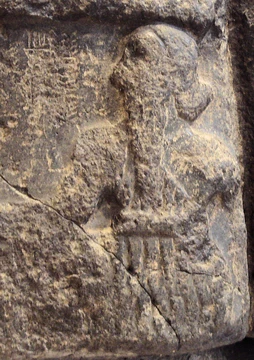
Šamaš-šuma-ukin
Babylonian vassal king who rebelled against his brother Ashurbanipal.

Šamaš-šuma-ukin was a king of Babylon as a vassal of the Neo-Assyrian Empire from 668 BC to his death in 648. He was the son of the Neo-Assyrian king Esarhaddon and the younger brother of Esarhaddon's successor Ashurbanipal. Despite being the younger son, he was bypassed as heir to Assyria and instead designated as heir to Babylonia, a plan devised by Esarhaddon to counteract future rivalry. His reign ended in a failed revolt against his brother and a subsequent damnatio memoriae campaign.
Quick Facts
- Title
- King of Babylon · King of Sumer and Akkad · King of the Four Corners of the World · King of the Universe
- Reign
- 668–648 BC
- Predecessor
- Esarhaddon
- Successor
- Kandalanu
- Birth Date
- before 685 BC
- Death Date
- 648 BC
- Dynasty
- Sargonid dynasty
- Mother
- Ešarra-ḫammat
- Succession
- King of Babylon
Facts from the source article.
Lore & Background
Šamaš-šuma-ukin was probably the second eldest son of Esarhaddon, younger only than the crown prince Sin-nadin-apli. After Sin-nadin-apli's unexpected death in 674 BC, Esarhaddon designated Ashurbanipal as heir to Assyria and Šamaš-šuma-ukin as heir to Babylonia, calling them 'equal brothers' but requiring Šamaš-šuma-ukin to swear allegiance to Ashurbanipal. The reason for bypassing the younger son is unknown, though one hypothesis suggests different mothers. As crown prince, Šamaš-šuma-ukin trained in royal duties and shared administrative tasks with Ashurbanipal during their father's illness.
Šamaš-šuma-ukin acceded to the Babylonian throne months after Ashurbanipal became king of Assyria. His coronation was marked by the return of the Statue of Marduk, stolen by his grandfather Sennacherib twenty years prior. He assimilated well into Babylonia, using Babylonian imagery and rhetoric in his inscriptions and participating in the New Year's festival. However, he was a closely monitored vassal, not entrusted with all of Babylonia or substantial military forces, and his decisions required Ashurbanipal's approval.
Resentment grew due to Ashurbanipal's overbearing control. In 652, Šamaš-šuma-ukin revolted, inspiring Babylonians and recruiting a coalition including Elamites, Chaldeans, Arameans, and perhaps Medes. After an initially indecisive conflict, Babylon was captured by Ashurbanipal in 648 after a lengthy siege. Šamaš-šuma-ukin died, though the exact circumstances are unclear. After his defeat, a large-scale damnatio memoriae campaign mutilated images of the king, erasing his face.
Reader's Guide
Šamaš-šuma-ukin is significant as a rare example of an Assyrian prince who ruled Babylon without ever ruling Assyria, and as the central figure in a major civil war within the Neo-Assyrian Empire. His reign illustrates the tensions inherent in Assyrian attempts to control Babylonia through a vassal king, especially one who was both a brother and a rival. His revolt, though ultimately unsuccessful, drew in multiple neighboring powers and nearly destabilized the empire. The damnatio memoriae that followed his death shows how thoroughly Ashurbanipal sought to erase his brother's legacy. Šamaš-šuma-ukin's adoption of Babylonian traditions, despite his Assyrian ethnicity, highlights the cultural complexity of the period. His story also underscores the dangers of divided succession, echoing the earlier conflict between Esarhaddon and his brother Arda-Mulissu. The return of the Statue of Marduk under his rule was a significant religious and political gesture, but it did not secure him genuine autonomy.
Did You Know?
- Šamaš-šuma-ukin's name means 'Shamash has established the name' in Neo-Assyrian Akkadian.
- He was a vassal king of Babylon under the Neo-Assyrian Empire, not a ruler of Assyria itself.
- The Statue of Marduk, returned at his coronation, had been stolen from Babylon by his grandfather Sennacherib twenty years prior.
More in Kings of the Universe 1-24
Spotted an error? Know more?
Reader corrections go straight into our review queue. Suggest an edit · How this site is sourced