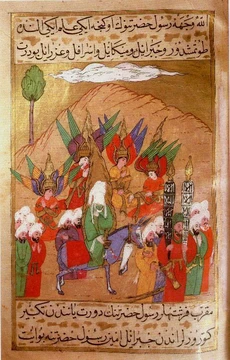
Surid Ibn Salhouk
Legendary antediluvian king credited with building the Pyramids of Giza.

Sūrīd ibn Salhouk, also known as Saurit, Saurid, and more commonly as Surid, is a legendary king from medieval Coptic and Islamic lore. He is said to have lived 300 years before the biblical flood and is often conflated with the biblical prophet Enoch, the Muslim prophet Idris, and Hermes Trismegistus. His name has been speculatively linked to the historical Pharaoh Khufu (known as 'Souphis' in Manetho's writings), but this connection is not supported by mainstream Egyptology or historical linguistics.
- Also known as
- Saurit, Saurid, Surid
- Lived
- 300 years before the biblical flood
- Field
- Legendary king, builder
- Known for
- Building the Pyramids of Giza as antediluvian tombs and repositories of knowledge
Lore & Background
Surid is said to have lived 300 years before the biblical flood. According to legend, he had a terrifying dream of the world's end: the fixed stars came down, grabbed people, and hurled them between two mountains that closed over them, and the shining stars became dark and gloomy. After consulting his trusted advisor Philemon, Surid ordered the construction of the pyramids so they could serve as his tomb and house all the knowledge of Egypt, ensuring its survival during the flood.
Reader's Guide
Surid ibn Salhouk is significant as a figure who bridges medieval Coptic and Islamic traditions, offering a shared narrative ground for Muslims and Christians regarding the pyramids. The story of Surid assigns the pyramids a place in sacred history, presenting them as antediluvian structures built to preserve knowledge before the flood. This legend reflects medieval beliefs that the pyramids predated the biblical flood, and it conflates Surid with major prophetic and hermetic figures, thereby integrating ancient Egyptian monuments into a monotheistic framework. The derivation of his name from Manetho's Souphis (Khufu) shows how historical and legendary elements merged over time. The tale, as noted by Martyn Smith, establishes neutral narrative ground for interfaith agreement.
More in Islamic mythology 1-24
Spotted an error? Know more?
Reader corrections go straight into our review queue. Suggest an edit · How this site is sourced