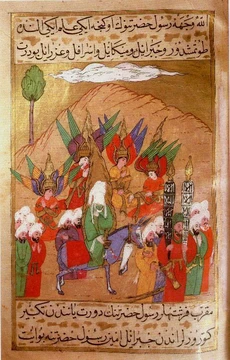
Abraham in Islam
Prophet and patriarch revered as a model of faith in Islam.

Wikimedia Commons · CC0
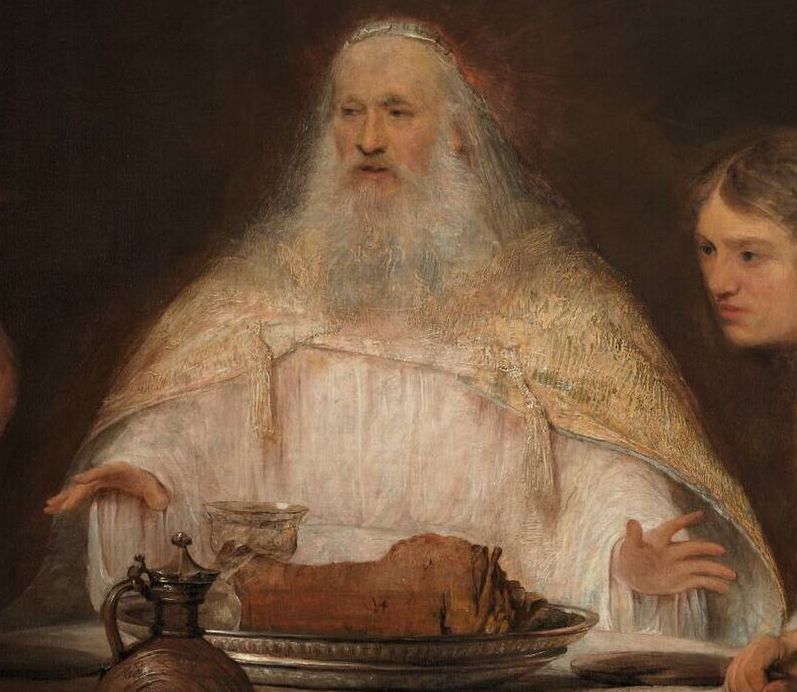
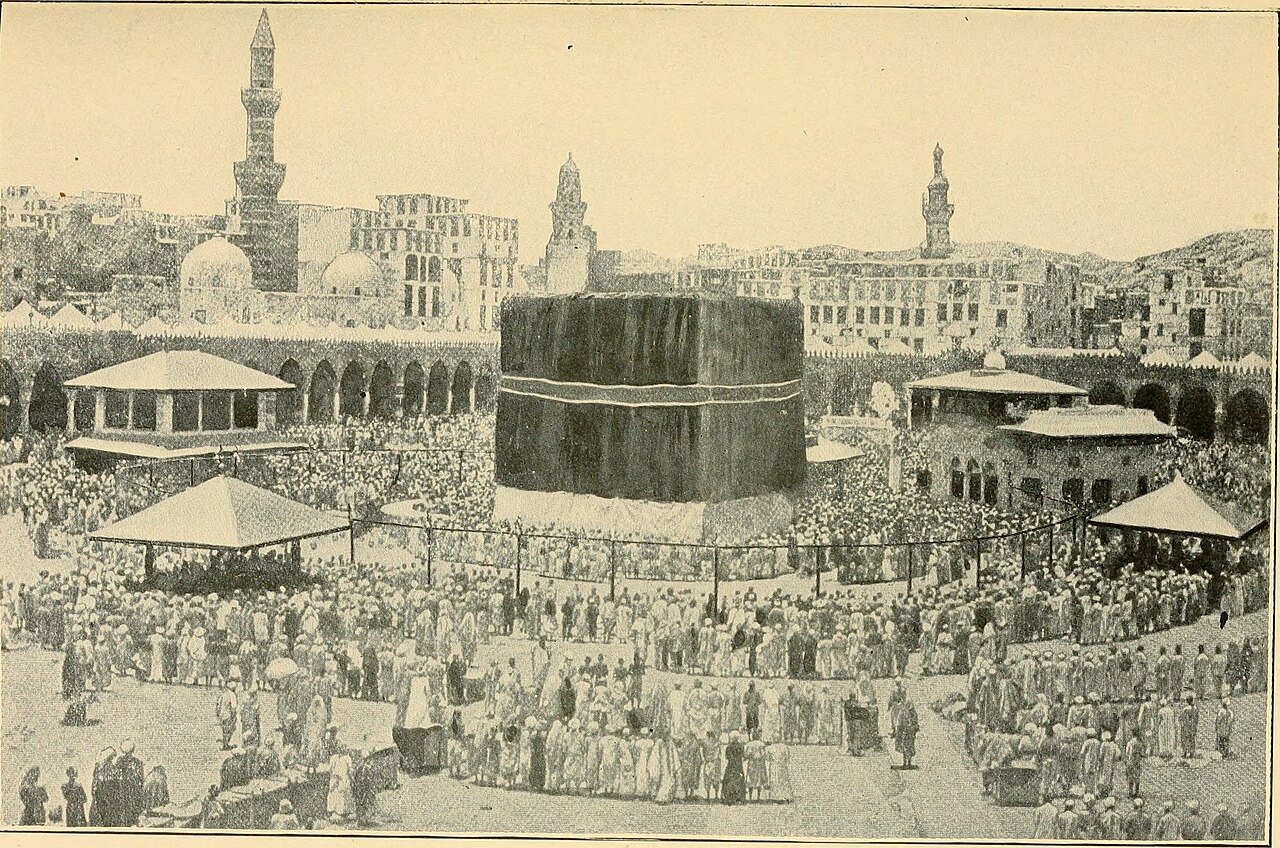
Abraham, known as Ibrahim in Islam, is recognized as a prophet and messenger of God, and is considered a forefather of both the Ishmaelite Arabs and the Israelite Hebrews. Across Judaism, Christianity, and Islam, he stands out as a key example of faith. Muslims believe Abraham fulfilled every commandment and trial God set for him, and because of his steadfast belief, God promised to make him a leader for all nations. The Quran praises Abraham as a model of obedience who rejected idolatry, describing him as representing the original human state of total surrender to God before religions split into different forms. Most Muslims hold that Abraham and his son Ishmael built the Kaaba in Mecca as the first place of worship on Earth. The Islamic holiday Eid ul-Adha marks Abraham’s willingness to sacrifice his son at God’s command, and also concludes the Hajj pilgrimage to the Kaaba.
Muslims believe Abraham became the leader of the righteous in his era, and through him came both the Ishmaelites and Israelites. He is credited with opposing idolatry among his own people, and with purifying the Kaaba as a center for monotheistic worship (Quran 2:125). Along with Ishmael, Abraham established the rites of the Hajj pilgrimage that Muslims still follow. Muslims also hold that Abraham asked God to bless both his lines of descendants—through Ishmael and Isaac—and to keep all his progeny under God’s protection.
In the Quran, Abraham is repeatedly established as a patriarch, with many important descendants mentioned, including Isaac, Jacob, and Ishmael. His role becomes more prominent in later chapters. The Quran states that Abraham and Ishmael reformed and set up the Kaaba in Mecca as a center for monotheistic pilgrimage. Islam is consistently referred to as the “Religion of Abraham” (millat Ibrahim), and Abraham is given the title Hanif (the pure, true in faith, or upright man). He is also called Khalil-Allah (Friend of God), a title some see as derived from the patriarch’s name Qal El. The Quran briefly recounts events such as Abraham’s rescue from a fire his people threw him into, his pleading for his father, his argument with a wicked and powerful king, and the miracle of the dead birds. These stories are expanded in Muslim tradition, especially in works like the Stories of the Prophets.
Quick Facts
- Religion
- Islam
- Honorific Prefix
- Prophet
- Native Name
- إِبْرَاهِيْمُ / Abraham
- Honorific Suffix
- Alayhi as-Salam
- Other Names
- Khalīlullāh (Friend of God)
- Birth Place
- Ur al-Chaldees, Bilād / ar-Rāfidayn
- Birth Date
- 1996 BCE
- Known For
- Being an ancestor of the Ishmaelites and the Israelites / Building the Kaaba
- Death Place
- 1821 BCE (aged 175) Hebron, Shaam
- Resting Place
- Ibrahimi Mosque, Hebron
- Children
- Isma'il (Ishmael), Isḥaq (Isaac)
- Parents
- Tarakh / Mahalath (mother)
Facts from the source article.
Lore & Background
Abraham was born into a house of idolaters in the ancient city of Ur of the Chaldees. His father Azar was a well-known idol-sculptor. As a child, Abraham would mock the idols, asking why they could not move or respond, and his father would scold him for not following ancestral rituals. Despite this, his father sent him to sell idols in the marketplace. During festivals, Abraham questioned the people, asking why they worshipped idols that could neither hear nor help, but they replied it was the way of their forefathers. Abraham declared, 'I am sick of your gods! Truly I am their enemy.'
Reader's Guide
Abraham's significance in Islam is profound. He is considered the leader of the righteous in his time and instrumental in cleansing the world of idolatry, purifying both the Arabian peninsula and Canaan. The Quran repeatedly establishes his role as patriarch, mentioning descendants including Isaac, Jacob, and Ishmael. Muslims believe Abraham and Ishmael built the Kaaba in Mecca as the first house of worship and established the rites of pilgrimage (Hajj) still followed today. The Quran refers to Islam as 'the Religion of Abraham' (millat Ibrahim) and gives him the title Hanif (the pure, upright man). Abraham is also called Khalil-Allah (Friend of God). The Islamic holiday Eid al-Adha commemorates Abraham's willingness to sacrifice his son Ishmael as an act of obedience to God, before God provided a sheep instead. Abraham's legacy endures as a primordial model of universal surrender to the Divine Reality before the fragmentation of religions.
Did You Know?
- Abraham was thrown into a great fire by his people, but God commanded the fire to be coolness and safety for him, and he emerged unscathed.
- The Quran mentions a brief confrontation between Abraham and an unrighteous king, often identified in tafsir as Nimrod, who claimed divinity.
- Abraham's father Azar was a well-known idol-sculptor whose idols Abraham mocked.
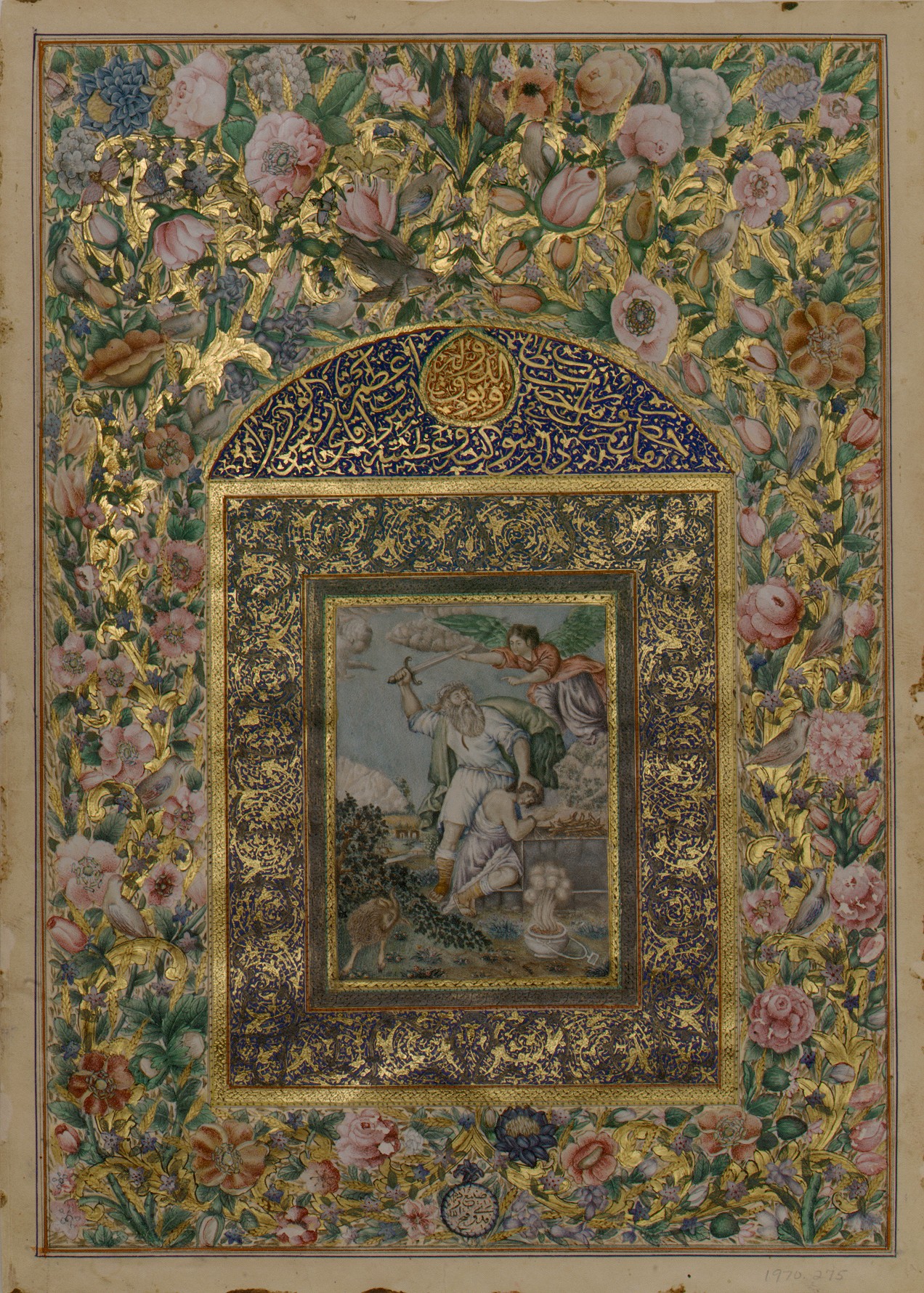
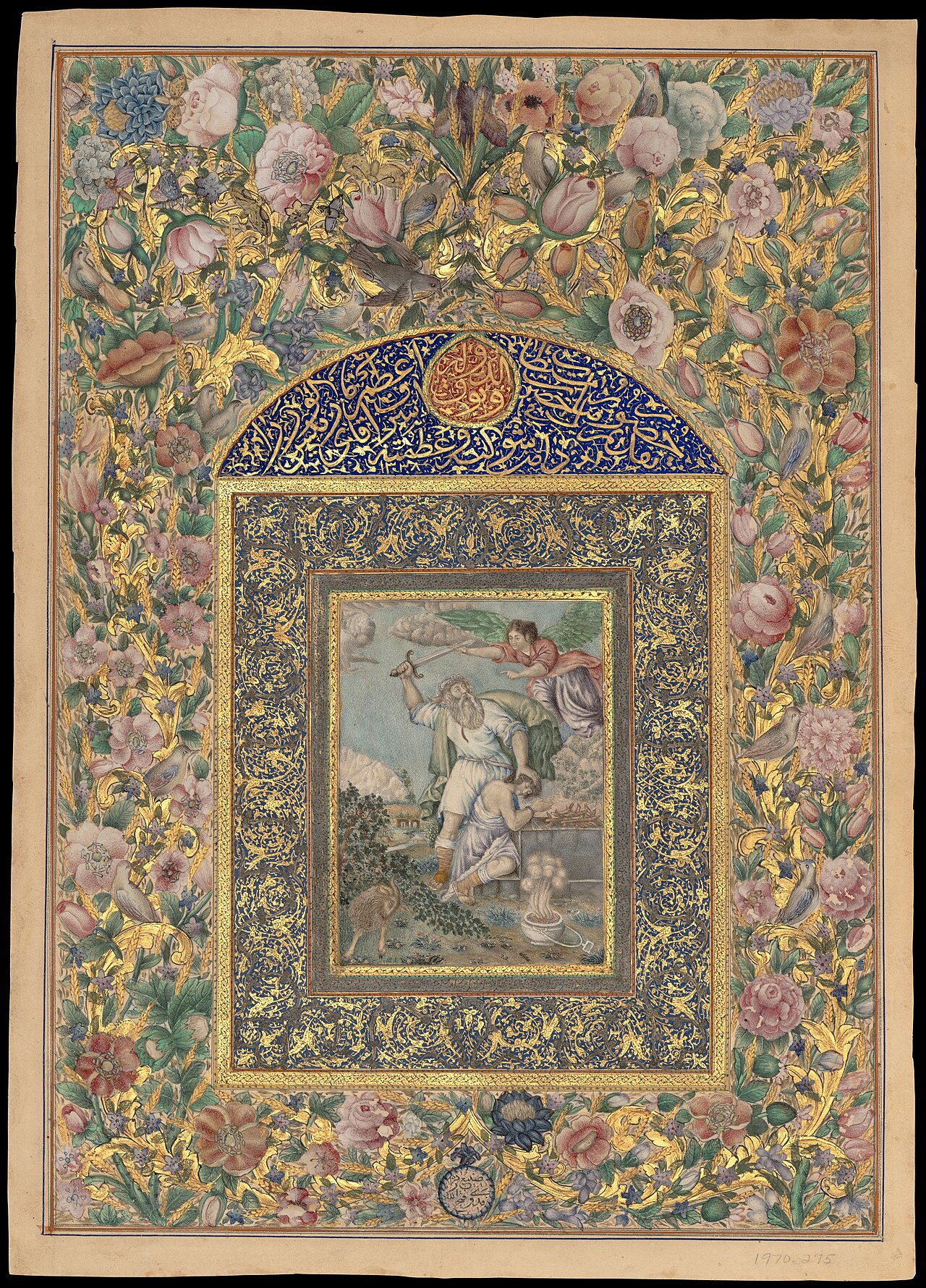
- The Islamic holy day Eid al-Adha is celebrated in commemoration of Abraham's willingness to sacrifice his son Ishmael on God's command.
Abraham Among the Biblical Figures in Islamic Scripture
The Quran does not present its prophetic narratives as extended, continuous stories. Instead, it alludes to them in service of a broader theological message. Abraham, like other biblical personalities, appears within this selective framework. Islamic scriptures contain a number of legendary narratives about figures from the Judeo-Christian tradition, and these accounts sometimes diverge from their Jewish and Christian counterparts in specific details. The Quran's engagement with these earlier accounts is partial rather than comprehensive. Scholars note that certain biblical stories were either unfamiliar to the early seventh-century Arabian community or simply not essential to the particular message the Quran sought to convey. It was only later, as Muslim scholars began reconciling Quranic passages with the fuller Biblical material, that more detailed prophetic biographies took shape in works of history, poetry, and mystical commentary. Abraham's story, therefore, exists in Islam not as a standalone saga but as a fragment woven into a larger theological argument about monotheism and divine purpose.
The Kaaba and Distinctively Islamic Narrative
The Oxford Companion to World Mythology singles out the story of the Kaaba as one of the narratives that is distinctively Islamic, setting it apart from the creation and afterlife myths shared across the Abrahamic family. This distinction matters because it places the Kaaba tradition in a category where Islamic theology carves out its own identity rather than simply echoing earlier Judeo-Christian material. While the broader Islamic scriptural corpus draws on Middle Eastern cosmogonic and anthropogonic descriptions, the Kaaba narrative represents a uniquely Islamic contribution to the prophetic heritage. It is within this distinctively Islamic layer that Abraham's association with the sacred structure acquires its particular theological weight. The narrative does not function as a standalone myth in the popular sense; rather, it is embedded in a religious system whose primary concern is social order, legal practice, and the rational application of divine law. The Kaaba story thus operates as a theological anchor point, grounding Islamic identity in a physical and historical locus that differentiates the faith from its sister traditions.
The Quran's Fragmentary Style and Prophetic Allusion
A defining feature of the Quranic approach to prophetic material is its refusal to narrate events as a continuous, linear story. The scripture alludes to creation, lineage, and the deeds of earlier prophets in order to illustrate a theological point, leaving the full narrative arc to later interpretive traditions. This means that Abraham, as a figure referenced within the Quran, is presented through selective allusion rather than through a complete biographical account. The fuller stories that later readers encounter—found in hadith collections, Arabic and Persian literary works, the genre of Qiṣaṣ al-anbiyāʾ, Muslim poetry, philosophical treatises, and mystical writings—are expansions that grew up around the Quranic seed-words. These later compositions drew on Middle Eastern descriptive traditions and, through syncretic processes, absorbed elements from African and Asian belief systems while reshaping them to conform to the Quranic insistence on strict monotheism. The result is a layered tradition in which the Quranic reference remains the authoritative core and the surrounding narrative elaboration serves to make that reference intelligible to successive generations.
Islam's Law-Centered Framework and the Place of Prophetic Narrative
Islam is fundamentally oriented toward social order, legal practice, and the rational application of divine law rather than toward ritual spectacle or mythic elaboration. This theological priority shapes how prophetic figures like Abraham are understood within the faith. The religion depends considerably less on mythology than Judaism or Christianity, and its canonical narrative reserves supernatural elements for a small number of key events—most notably the divine revelation of the Quran and the night journey and ascension of the Prophet Muhammad. Within this restrained framework, the stories of earlier prophets serve a didactic and legal function: they illustrate principles of submission, monotheistic devotion, and the proper relationship between humanity and the Creator. The academic discussion of these narratives as 'myths' remains controversial, since the term carries a legacy of derogatory early Christian usage that equated mythos with fiction or falsehood. In scholarly discourse, however, the word can denote a story that defines a culture's fundamental worldview or a narrative a community regards as true. Abraham's story in Islam occupies this latter category: it is not a fable but a truth-claim embedded in a law-centered religious system.
Gallery
Frequently Asked Questions
Who is Abraham in Islam?
In Islamic tradition, Abraham is known as Ibrahim and is honored as a prophet and messenger of God. He is regarded as the patriarch of both the Ishmaelite Arab and Israelite Hebrew lineages, and he is celebrated across the Abrahamic faiths as a supreme example of unwavering devotion to the one God.
What is Abraham's role in Islamic theology?
Ibrahim is presented in the Quran as a model of complete obedience and surrender to God, embodying the original human state of pure monotheism before religious divisions emerged. He is specifically praised for rejecting the idolatry of his people and for fulfilling every trial God placed before him.
What did Abraham build in Islamic tradition?
According to Islamic sources, Ibrahim and his son Ishmael constructed the Kaaba in Mecca as a house of worship dedicated solely to God. This act also established the foundational rites of the Hajj pilgrimage that Muslims perform to this day.
How does Abraham's story conclude in Islamic belief?
The Quran does not give a specific account of Ibrahim's death, but it affirms that God honored him by making him a leader and guide for all nations as a reward for his steadfast faith. His legacy endures through the Kaaba, the Hajj, and his position as a forefather of two major lineages.
Why is Abraham considered so important in Islam?
Muslims revere Ibrahim as one of the greatest prophets who perfectly submitted to God's will, earning the title Khalilullah (Friend of God). His life exemplifies the core Islamic principle of tawhid—absolute monotheism—and his story is repeatedly cited in the Quran as an inspiration for believers to remain firm in their faith.
More in Islamic mythology 1-24
Spotted an error? Know more?
Reader corrections go straight into our review queue. Suggest an edit · How this site is sourced