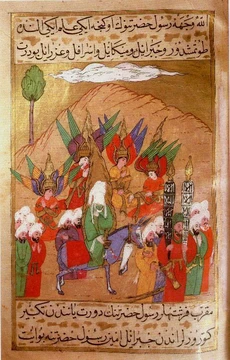
L'histoire de Joseph d'après un manuscrit oriental
Analysis and translation of a verse Joseph story from a manuscript purchased in Egypt, with the text composed there, though the surviving copy was likely made in the Ottoman Empire.

Georges Ancey · Public domain
L'histoire de Joseph d'après un manuscrit oriental is a 1989 scholarly volume by Faïka Croisier, published in Geneva by Labor et Fides as part of the Arabiyya series (volume 10). The work provides an analysis and annotated translation of a previously unedited verse account of the Abrahamic prophet Joseph, based on a manuscript held in Geneva, Bibliothèque de Genève, MS orient. 13.
Quick Facts
- Author
- Faïka Croisier
- Country
- Switzerland
- Language
- French
- Genre
- Non-fiction
- Publisher
- Labor et Fides
- Pub Date
- 1989
- Media Type
- Isbn
- 9782830901351
Facts from the source article.
Lore & Background
While fundamentally based on the Qur'ānic Sūrat Yūsuf, the text belongs to the Yūsuf and Zulaykha type, claiming that while a slave in Egypt Joseph eventually marries his would-be seductor Zulaykha, the wife of his master. Croisier's volume includes four chapters: the first examines the manuscript, its author, the literary genre of the qiṣṣa, and the development of the Joseph story, with a table of differences between key versions (pp. 32–45). The second chapter covers religious themes such as God's supremacy, Joseph as a prophet, repentance, and revelation. The third addresses literary content, including hagiographical aspects, storytelling style, grammatical and lexical details, and prosody. The fourth chapter is an annotated translation of the text (with no edition of the Arabic; pp. 103–238).
Reader's Guide
Croisier's volume is significant as it makes accessible a previously unedited verse account of the Joseph story, expanding the corpus of Islamic narrative literature available to scholars. By providing an annotated translation and analysis, it allows researchers to compare this version with other Joseph narratives, particularly those of the Yūsuf and Zulaykha type. The work's detailed examination of the manuscript's provenance—purchased by Jean-Joseph Marcel during Napoleon's Egyptian expedition—and its attribution to Aḥmad ibn ʿĪsā, a Muslim composer in 1565 CE, situates the text within its historical and cultural context. The inclusion of a table charting differences between key versions (pp. 32–45) offers a useful comparative tool. The volume's focus on religious themes, literary style, and prosody provides a multifaceted approach to understanding the text. Its legacy lies in its contribution to the study of Islamic hagiography, Arabic prosody, and the transmission of biblical and Qur'ānic stories in the early modern period.
Did You Know?
- The manuscript was purchased in Egypt by the Arabist Jean-Joseph Marcel during Napoleon Bonaparte's expedition there.
- The text was composed by Aḥmad ibn ʿĪsā in Egypt in 973 AH / 1565 CE.
- The text claims that Joseph eventually marries Zulaykha, the wife of his master, a feature of the Yūsuf and Zulaykha type.
Gallery

Frequently Asked Questions
What is L'histoire de Joseph d'après un manuscrit oriental?
It is a 1989 scholarly volume that presents an annotated translation and analysis of a previously unedited Arabic verse narrative about the Abrahamic prophet Joseph (Yusuf). The work was produced by Faïka Croisier and released by Labor et Fides in Geneva as volume 10 of the Arabiyya series.
What manuscript does the book translate, and where is it held?
The text is drawn from a single verse manuscript catalogued as MS orient. 13 in the Bibliothèque de Genève in Geneva. The copy was originally acquired in Egypt, where the composition itself was produced, though the surviving physical exemplar was most likely copied later within the Ottoman Empire.
Who is the protagonist of the verse story, and how does this differ from the Qur'anic account?
The central figure is Joseph (Yusuf), the son of Jacob, whose story of betrayal by his brothers, imprisonment, and rise to power in Egypt is retold here in poetic verse. Unlike the Qur'an, which presents the narrative in prose, this manuscript renders the plot in a rhymed, expanded form typical of popular Ottoman-era storytelling traditions.
Why is this particular manuscript significant for fans of Islamic mythological literature?
Before Croisier's edition, the verse Joseph account in MS orient. 13 had never been edited, translated, or made accessible to scholars. The book therefore opens a rare window into how a well-known prophetic story was reshaped for a popular audience in the Ottoman period, preserving details and embellishments absent from canonical sources.
Where and when was the book published, and what series does it belong to?
Labor et Fides published the volume in Geneva in 1989 as the tenth installment of their Arabiyya series, a collection dedicated to making lesser-known Arabic texts available in annotated French translation. Its placement in that series signals its value as a primary-source contribution to the study of Arabic narrative poetry.
More in Islamic mythology 1-24
Spotted an error? Know more?
Reader corrections go straight into our review queue. Suggest an edit · How this site is sourced