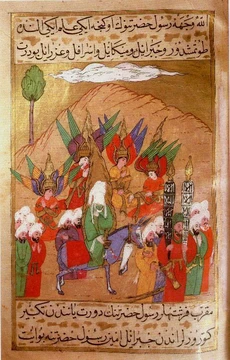
Dhu'l-Qarnayn
Quranic leader who built a barrier against Gog and Magog.

Yethrosh · CC BY-SA 4.0
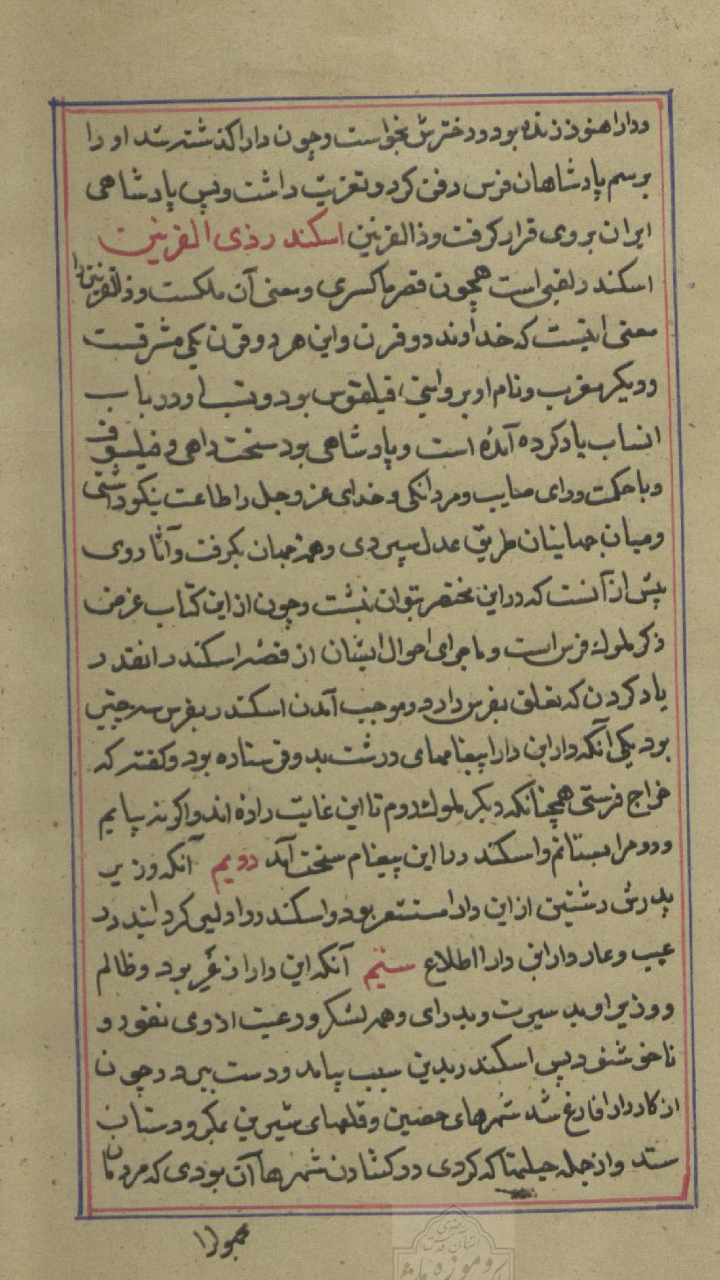
Dhu'l-Qarnayn (Arabic: ذُو ٱلْقَرْنَيْن, lit. 'The Owner of Two-Horns') is a figure described in the Qur'an, specifically in Surah al-Kahf (18), verses 83–101. He travels to the far west and east, and then builds a barrier to protect a people from Gog and Magog (Yaʾjūj wa-Maʾjūj). The Qur'an also states that the release of Gog and Magog from behind this barrier will signal the end of the world, and other apocalyptic writings say their destruction by God in a single night will precede the Day of Resurrection. Most historians trace the Qur'anic story to Middle Eastern legends about Alexander the Great, particularly the Syriac Alexander Legend, which presents Dhu'l-Qarnayn as a prophet-king. The most common identification among Western scholars is Alexander the Great, but the majority of classical and medieval Muslim exegetes identified Dhu'l-Qarnayn as a pre-Islamic righteous king or prophet, not specifically Alexander. However, some historical traditions have favored other figures, such as the mythical pre-Islamic Arabian king Sa'b Dhu Marathid of Himyar, the historical Lakhmid king al-Mundhir III ibn al-Nu'man (who died in 554), and, more recently among modern Muslim commentators, Cyrus the Great.
The story was revealed to Muhammad after his tribe, the Quraysh, sent two men to consult Jewish rabbis about whether he was a true prophet. The rabbis instructed the Quraysh to ask Muhammad about three things, including "a man who travelled and reached the east and the west of the earth." If he could answer correctly, they should follow him; if not, they should consider him a fraud. The relevant verses (18:83–98) describe Dhu'l-Qarnayn first reaching the western limit of travel, where he sees the sun set in a muddy spring, then the furthest east, where it rises from the ocean, and finally a mountainous region where a people suffer from Gog and Magog.
The meaning of "Qarnayn" is debated. A well-known narration from Ali, a Companion of Muhammad, denies that it literally means "horns," instead explaining that it refers to injuries on both sides of the ruler's head.
- Known for
- Building a barrier against Gog and Magog; traveling to the eastern and western limits of the earth
- Field
- Quranic figure, prophet-king
- Nationality
- Uncertain; identified variously as a pre-Islamic righteous king, Alexander the Great, a Himyarite king, or Cyrus the Great
- Appears in
- Qur'an, Surah al-Kahf (18), Ayahs 83–101
Lore & Background
The story of Dhu al-Qarnayn is related in chapter 18 of the Qur'an, al-Kahf, revealed to Muhammad when his tribe, Al-Quraysh, sent two men to discover whether the Jews could advise them on whether Muhammad was truly a prophet of God. The rabbis told the Quraysh to ask Muhammad about three things, one of them 'about a man who travelled and reached the east and the west of the earth, ask what his story was.' The verses show Dhu al-Qarnayn traveling first to the Western limit of travel where he sees the sun set in a muddy spring, then to the furthest East where he sees it rise from the ocean, and finally northward to a place in the mountains where he finds a people oppressed by Gog and Magog. He builds a barrier of iron and molten copper to contain them.
Reader's Guide
Dhu'l-Qarnayn's significance lies in his role as a prophetic figure in the Qur'an whose story connects to eschatological themes: the release of Gog and Magog from behind the barrier will signal the end of the world, and their destruction by God in a single night will usher in the Day of Resurrection. The figure has been variously identified by scholars and commentators, with most historians tracing the narrative to the Syriac Alexander Legend. The epithet 'Two-Horned' has been interpreted symbolically—for example, as 'He of the two Ages'—and a well-known narration from Ali denies that the term literally meant horns, instead referring to injuries on the sides of the ruler's head. The wall Dhu al-Qarnayn builds may reflect knowledge of the Great Wall of China or Sasanian walls in the Caspian region. Modern Islamic apocalyptic writers offer explanations for the wall's absence today, such as that God has concealed Gog and Magog from human eyes.
Did You Know?
- The name Dhu'l-Qarnayn means 'The Owner of Two-Horns' in Arabic.
- The wall Dhu al-Qarnayn builds may reflect a distant knowledge of the Great Wall of China or various Sasanian walls built in the Caspian Sea region.
- Some medieval exegetes believed there were two Dhu al-Qarnayns: one who lived in the time of Abraham and another who was Alexander.
The Threefold Journey in Surah al-Kahf
The story of Dhu'l-Qarnayn occupies verses 83 through 101 of the eighteenth chapter of the Qur'an, al-Kahf. According to the tradition of revelation, the passage was revealed in response to a challenge: the Quraysh tribe dispatched two men to consult Jewish scholars, who advised them to test the Prophet by asking about a traveler who had reached both the eastern and western extremes of the earth. The narrative that follows depicts three distinct journeys. First, Dhu'l-Qarnayn travels to the western limit, where he observes the sun sinking into what is described as a muddy spring. Next, he proceeds to the farthest eastern point, witnessing the sun rising above the ocean. Finally, he turns northward into a mountainous region, where he encounters a community suffering under the raids of Gog and Magog. There, he constructs a great barrier to contain them. The Quranic presentation casts him as a prophet-king who travels the world and calls people toward belief, a framing that scholars link to the Syriac Alexander Legend circulating in the Middle East.
The Identity Question: Who Was Dhu'l-Qarnayn?
The question of who Dhu'l-Qarnayn actually was has generated centuries of scholarly debate. The identification most widely accepted by both Western historians and traditional Muslim commentators is Alexander the Great, with the Quranic narrative understood as drawing on the Syriac Alexander Legend that circulated through the Middle East. The first-century historian Josephus preserves a related tradition in which Alexander erects an iron wall at a mountain pass, possibly in the Caucasus, to block incursions by the Scythians, a group he elsewhere equates with Magog. Yet this dominant reading is not universal. Some pre-Islamic Arabian traditions point instead to the mythical king Sa'b Dhu Marathid of Himyar or to the historical Lakhmid ruler al-Mundhir III ibn al-Nu'man, who died in 554 CE. In more recent decades, Cyrus the Great has gained considerable traction among modern Muslim commentators. A minority of exegetes, following al-Azraqi and Ibn Abi Hatim, even placed Dhu'l-Qarnayn near the era of Abraham. The multiplicity of candidates reflects the figure's function as a literary and theological archetype rather than a single fixed historical person.
Decoding the Name: Horns, Injuries, and Ages
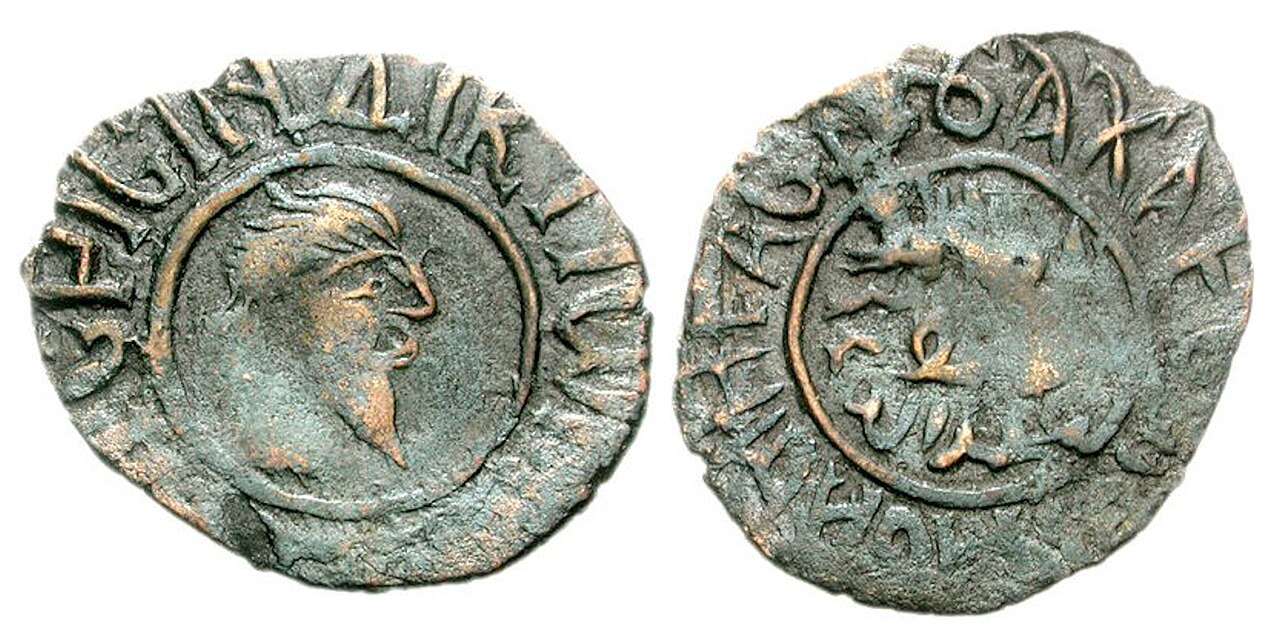
The epithet Dhu'l-Qarnayn, literally the Owner of Two Horns, has resisted a single straightforward explanation. The companion Ali is reported to have denied any literal reading of horns, offering instead that the term referred to injuries on two sides of the ruler's head. The ninth-century scholar al-Tabari proposed a geographical interpretation: the horns represented the two extremities of the world that the ruler traversed. The Arabic word qarn carries a dual meaning, both horn and period or century, which opened the door to symbolic readings. Cyril Glasse, for instance, suggested He of the Two Ages, capturing the eschatological span from Alexander's era to the end of the world. The classical commentator Al-Qurtubi, drawing on Al-Suhayli, entertained the possibility that the name actually referred to two distinct individuals: one living in the time of Abraham and another in the time of Jesus. The epithet first appears in the Qur'an itself; earlier Syriac sources consistently used Alexander's Greek name. Some scholars trace the imagery to the horned depiction of Alexander on Hellenistic coins, inspired by his claimed descent from the ram-god Zeus-Ammon.
The Barrier, Gog and Magog, and the End of Days
The barrier Dhu'l-Qarnayn builds against Gog and Magog is not merely a historical structure but a central element of Islamic eschatology. The Qur'an states elsewhere that the release of these two groups from behind the barrier will serve as a sign of the approaching end of the world. Apocalyptic writings further predict that God will destroy them in a single night, an event that will inaugurate the Day of Resurrection. The physical location of the wall has been the subject of much speculation: some have connected it to the Great Wall of China, since the twelfth-century geographer Muhammad al-Idrisi placed the Land of Gog and Magog in Mongolia on a map for Roger II of Sicily, while others see it as a reference to Sasanian fortifications in the Caspian region, or a conflation of both. A minority of Muslim commentators identify Gog and Magog with specific pre-Biblical North Asian tribes. Modern Islamic apocalyptic writers, confronted by the wall's absence from the observable world, have offered explanations ranging from divine concealment to the principle that not everything in existence is visible to the human eye, much as angels or human intelligence are not directly seen.
Gallery
Frequently Asked Questions
Who is Dhu'l-Qarnayn?
Dhu'l-Qarnayn is a Quranic prophet-king granted extraordinary authority by God, featured in Surah al-Kahf (18:83–101). He is depicted as a ruler who travels to the farthest reaches of the earth and carries out great deeds for the communities he encounters along the way.
What does the name 'Dhu'l-Qarnayn' actually mean?
The Arabic title translates literally as 'The Owner of Two Horns,' though the Quran never spells out what the horns symbolize. Traditional commentators have offered readings ranging from dominion over two vast territories to a purely royal epithet.
What is Dhu'l-Qarnayn's most famous deed?
His signature act is forging a massive barrier of iron and molten copper to wall in the tribes of Gog and Magog (Ya'jūj wa-Ma'jūj) and shield the people beyond them from their destructive raids. The Quran adds that the eventual breaking of this barrier will serve as a sign heralding the end of the world.
Who do scholars think Dhu'l-Qarnayn historically was?
Most modern historians link the Quranic narrative to Middle Eastern legends about Alexander the Great, while earlier Islamic sources also proposed a Himyarite king or Cyrus the Great. The Quran itself deliberately leaves his historical identity open, presenting him simply as a divinely guided ruler.
What happens to Gog and Magog after the barrier is built?
The Quran states that the barrier holds them in until God wills their release, which marks a major eschatological sign before the Day of Judgment. Apocalyptic traditions further describe their destruction by divine power in a single night preceding the Resurrection.
More in Islamic mythology 1-24
Spotted an error? Know more?
Reader corrections go straight into our review queue. Suggest an edit · How this site is sourced